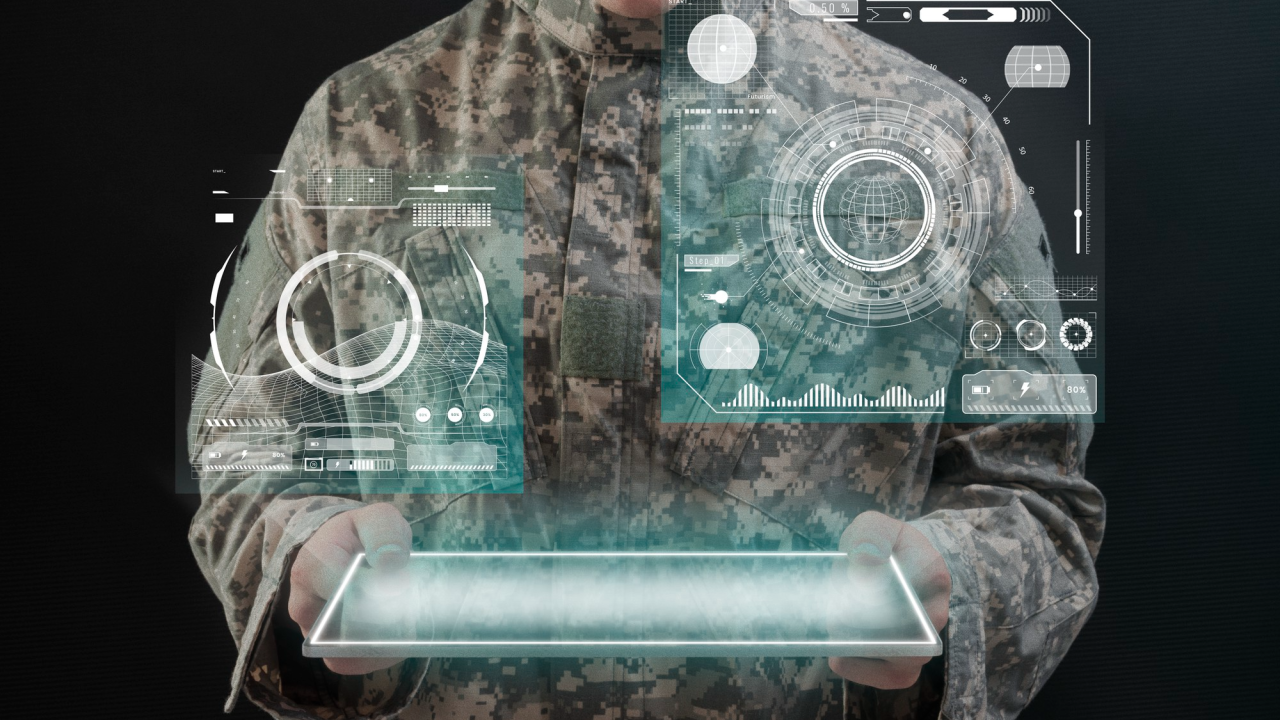
AI is no longer a secondary aid in the creation of defense systems. Today, it has become the basis of how states conduct their actions regarding the existing military and security situation. From military intelligence to cyberdefense, the presence of artificial intelligence in the work of the armed forces is gradually becoming obvious.
Modern reports on defense note that a fundamental change takes place at the moment in the field of military affairs all over the world. Nowadays, many armies tend to incorporate AI in surveillance, logistics, threat detection, and strategy planning processes. It should be noted that contemporary military strategies are based on systems that are able to process information much more quickly than people can.
The most valuable thing about such changes is that, besides speed and efficiency, the accuracy and prediction become more apparent.
AI Is Changing the Foundation of Modern Defense
National defense is no longer only about manpower or equipment. It is about information advantage. The use of AI technology is vital when gathering, analyzing, and understanding large quantities of information gathered by satellites, sensors, and digital communications networks.
In the past, defense departments have relied on human analysts to interpret information; today, however, they utilize AI technology to identify patterns that could be risky in the future.
AI is also improving coordination between different defense units by creating a connected system of real-time intelligence sharing. This reduces delays and improves overall operational readiness.
Smarter Decision-Making on the Battlefield
The ability for rapid decision-making is one of the key contributions of AI to the strategy of defense. It is a high-speed environment, and at times, decisions must be made within seconds and not minutes.
AI technologies assist in decision-making through analysis of the available data from the battlefield, identification of potential threats, and suggestion of courses of action based on that data.
Key improvements include the following:
- Faster threat detection and response planning
- Real-time battlefield mapping and analysis
- Improved accuracy in identifying targets and risks
- Reduced delays in communication between units
On the other hand, however, defense experts insist on the necessity of human oversight as the means of making an ethical and strategic decision.
The Role of AI in Intelligence and Surveillance
Collecting information has always been at the core of national security operations, and now AI is changing everything about how intelligence is collected. With the help of modern surveillance equipment enabled by AI technology, large territories can be constantly watched and analyzed for unusual patterns.
Thus, defense analysts can concentrate on the interpretation of intelligence.
In many cases, AI is now used for:
- Satellite image analysis
- Border surveillance systems
- Cyber threat detection
- Signal and communication monitoring
The integration of AI into intelligence systems is also reducing the time between data collection and actionable insight. This speed is becoming a key advantage in modern defense planning.
Operational Efficiency and Resource Management
Apart from combat and intelligence, AI is also helping to enhance logistics and resource management within the defense sector. Military operations rely on logistics and supply chains, among other things.
Through predictive maintenance and optimization of supply lines, AI makes logistics and resource management more efficient.
This is where support systems like eCommerce virtual assistant models are increasingly referenced in digital transformation discussions. While traditionally used in business operations, similar structured assistance models are now being adapted into defense logistics thinking to reduce manual workload and improve efficiency.
Cybersecurity and Digital Defense Strengthening
With the increasing occurrence of warfare in digital environments, cybersecurity has become a critical pillar of national defense. Artificial intelligence plays an essential role in detecting cyber threats, preventing attacks, and identifying vulnerabilities before they can be exploited.
Much like healthcare SEO services rely on continuous monitoring and data analysis to identify issues and improve performance, AI-powered security systems constantly assess network activity to detect unusual behavior and respond to emerging threats.
Unlike traditional cybersecurity tools, these AI-driven solutions continuously learn from new attack patterns, making them more adaptive and effective against evolving risks. They also significantly reduce response times, enabling defense organizations to contain cyber incidents faster and strengthen their overall digital resilience.
Integration With Modern Defense Ecosystems
Defense systems of today are not standalone systems anymore. Rather, they operate as part of an ecosystem that comprises land, air, sea, cyber, and space domains working together.
This is because AI provides the necessary platform that allows the unification of the defense systems through the collective analysis of data collected from various sources.
This integrated approach is helping military organizations improve coordination and reduce blind spots in strategy execution.
Likewise, structured service delivery models such as those provided by companies like Outsource SEO can show how distributed expertise helps in increasing efficiency and scalability, which are concepts that are becoming increasingly reflected in the defense technology ecosystem.
Strategic Growth and Digital Transformation in Defense
As defense systems evolve, many organizations are also working with external experts and technology partners to scale their capabilities. This includes outsourcing certain digital functions, improving analytics systems, and adopting advanced AI tools for operational planning.
Meanwhile, healthcare SEO is at times mentioned within the context of structured data management and optimization in other industries, proving that the use of data-driven frameworks is also affecting the public and private spheres of activity.
This connection demonstrates that the process of AI-driven transformation does not have any boundaries and influences the way people perceive the concepts of efficiency and intelligence in different sectors.
Challenges That Still Need Attention
AI in the defense realm is not without its problems, despite the great strides forward made. The problem areas include data integrity, ethical issues, system bias, and reliance on automated systems; all of these continue to be actively explored. It has been stressed by defense specialists that AI should aid the decision process but never take the place of human thought.
Conclusion
Artificial intelligence is changing the defense policies of nations in an understated manner. Artificial intelligence is revolutionizing intelligence operations, making decisions faster, boosting cybersecurity, and reinventing how militaries function in modern times.
This is what has been shown through various defense conferences around the world; artificial intelligence is simply making the defense policy of nations more efficient and powerful.
Buy Me A Coffee
The Havok Journal seeks to serve as a voice of the Veteran and First Responder communities through a focus on current affairs and articles of interest to the public in general, and the veteran community in particular. We strive to offer timely, current, and informative content, with the occasional piece focused on entertainment. We are continually expanding and striving to improve the readers’ experience.
© 2026 The Havok Journal
The Havok Journal welcomes re-posting of our original content as long as it is done in compliance with our Terms of Use.


