By Lt. Col. Les Carroll (Ret.) U.S. Air Force/Air National Guard
As an Air Force and Air National Guard public affairs officer, I spent my career telling our stories, the successes of my unit and the men and women who contributed to those accomplishments. Besides the hundreds of newspaper articles, press releases, and media events, I wrote and produced a documentary film for the sixtieth anniversary of the South Carolina Air National Guard. The documentary was one of the most meaningful achievements of my career. My fighter wing had deployed many times, but as a support guy, I was not on those deployments. As I got into my later career, I realized I didn’t want to retire without making a contribution to the “war effort.” So, I volunteered, and the last five years of my nearly three-decade-long service turned my career from good to extraordinary.
My first deployment opportunity came in 2008. Iraq or Afghanistan? I was given the option, so I took Afghanistan. My friend and colleague Jim St. Clair had also volunteered, so the programmers plugged me in for the first six months, while Jim would follow and fill the same tasking for another six months.
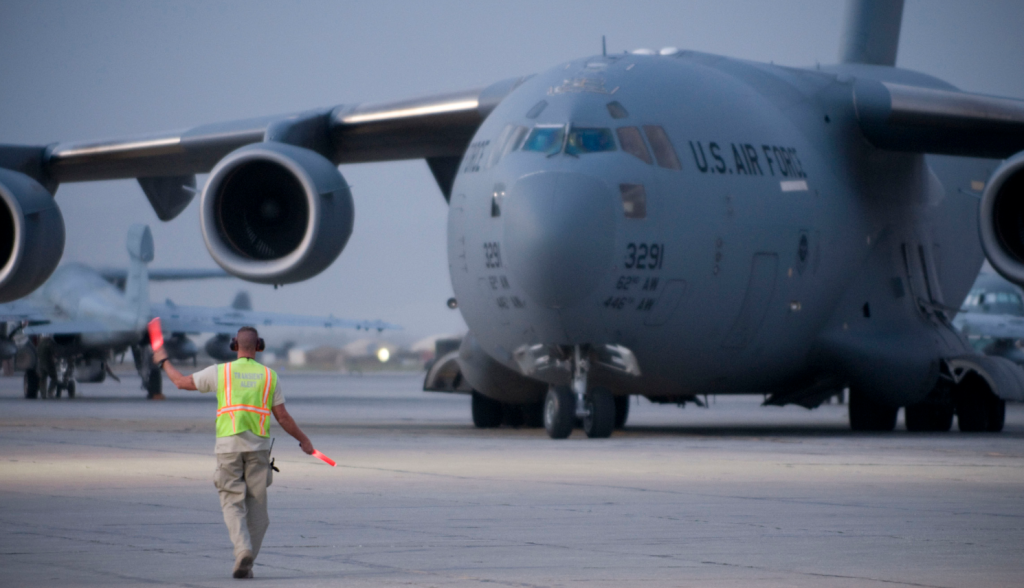
A few months before my scheduled departure, I completed pre-deployment training with a bunch of young Air Force officers and airmen, some half my age. I showed up in Texas in pretty good shape, but at forty-eight, my age sometimes manifested itself. I survived. I was easily the most senior officer, in rank and age, among the group, which gave me some leadership responsibilities to go along with training requirements. I departed for Afghanistan and first landed at Bagram Air Base. I thought I had dropped into a Vietnam-era movie, like those scenes in Forrest Gump and Platoon when soldiers egressed a helicopter first, followed by their various duffel bags that were tossed on the ground beside them.
A few hours later, I got my first real look at Afghanistan from a UH-60 Black Hawk on a quick flight from Bagram to Kabul International Airport. Two special operators sat across from me, fully armed and geared up. I had not even taken my M9 pistol out of the case. I rested my helmet on my lap like a large bowl, just in case I threw up. Below our aircraft, Afghanistan looked like a flat brown rug with odd-shaped objects trapped beneath. The compounds below puzzled me, and I could actually see people moving inside their walls. I wondered what life must be like down there. I would never know, even after eventually completing two Afghanistan deployments and spending a year on the ground there.
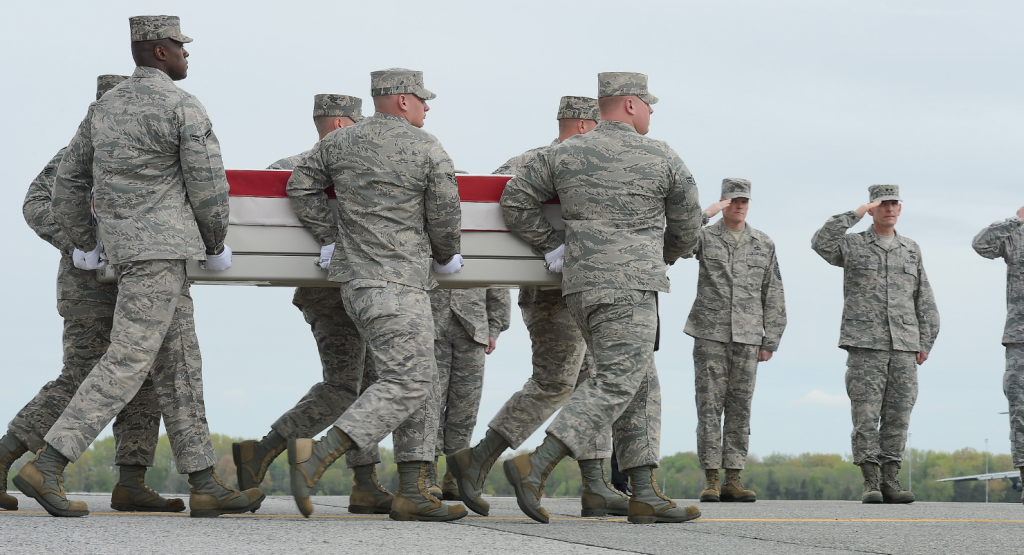
After Afghanistan, I went to the Air Force Mortuary at Dover Air Force Base. The work there was heartbreaking and important, stressful and extraordinary. When people tell me today that they couldn’t have done it, I can’t agree or disagree. Who knows what kind of bearing we have until we’re tested? It took a lot of fortitude on that tarmac. Not the kind of uncommon courage it takes to face an enemy head-on or jump on a grenade to save your battle buddies, but a different kind of steely nerves. The kind that allows you to stand for a hundred dignified transfers, or DTs, of fallen American service members, plus the seven CIA officers killed in Afghanistan by a suicide bomber in late 2009. Those few days working with the CIA were historic for all the wrong reasons. Somehow, I found myself right in the middle of it.
At noon on New Year’s Day, an entourage of CIA officers and support staff, led by a very confident woman, marched into the mortuary’s front offices. She briefed us on exactly how CIA Director Leon Panetta, the former White House chief of staff, expected the dignified transfer of his seven CIA officers to be executed. One of the most memorable days of my life unfolded exactly as he dictated.
It was a bitterly cold day, made more uncomfortable by a lively, sweeping wind that raced across the tarmac. I stood just feet behind the husband and children of the woman who had led the team in Afghanistan. The solemnity of the moment was unsettled by the cries of crushed family members, rocked by the shocking realization that the metal cases coming off the aircraft contained the shredded remains of their loved ones: moms and dads, wives and husbands, daughters and sons, sisters and brothers.
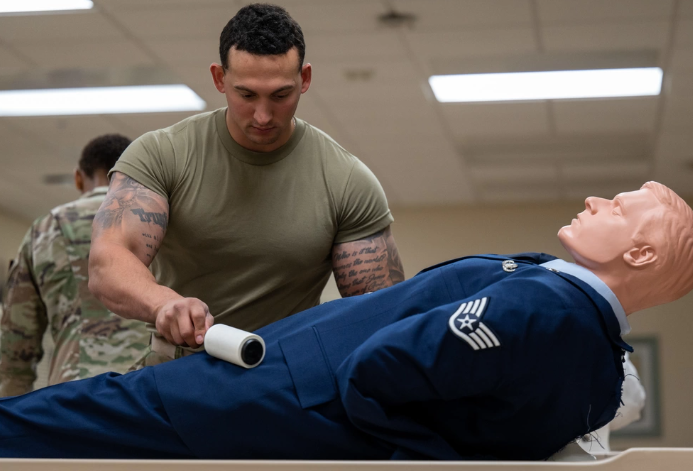
The day after the DT, as if always in the wrong, or maybe right, place, I was standing by the front desk when the husband and young daughter of the CIA team leader walked into the mortuary. The daughter had selected the dress she wanted her mother to be buried in. I delivered the bag to the mortuary staff in the back of the house and later saw the agent in that same dress before her family took custody of the body for the private funeral service she had planned in advance, just in case she came home the way she had.
In Afghanistan three years later, when the movie Zero Dark Thirty exploded in popular culture, I watched alone late one night in my room. It was like I had been there, like I knew her. She was a real person, not just a movie character. She had a name, Jennifer Matthews, and she was a wife, mother, and American patriot.
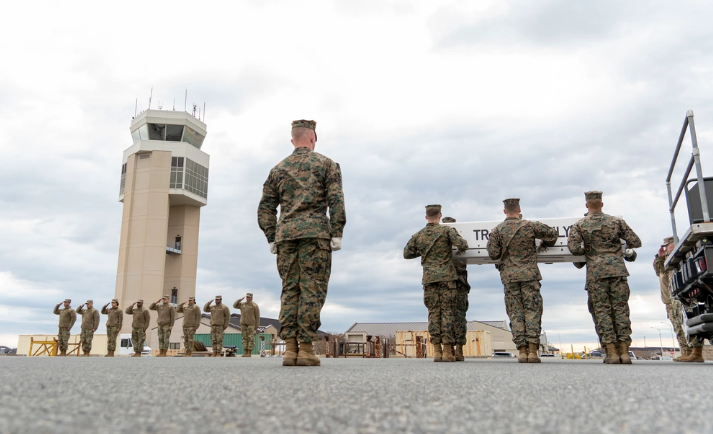
During my last week in Dover, eight fallen Marines arrived, including four on a bright but cold and windy Saturday. They hailed from Virginia, Indiana, Rhode Island, and Pennsylvania. Family and friends poured into the Dover area for the DTs, eventually totaling almost one hundred. It was a rare daytime DT when we could easily see the faces of the family members. I saw parents of one of the fallen Marines, then the wife, parents, and sisters of another. Finally, the family and friends of the nineteen-year-old Marine from Pennsylvania piled off the second bus. Upon seeing the flag-draped cases on the aircraft, the tears erupted immediately.
We had briefed the families on the order in which the cases would be carried down the aircraft ramp, so they knew when it was their loved one being carried. The first case came off, a sergeant from Indiana. I saw his father’s arms wrap tighter around his mother and hold her closer. She sucked in her breath and remained composed, somehow. The second case came off, and the sisters of the corporal broke down, providing a sample of what was to come.
Then the Marine carry team started the slow ceremonial march down the C-17 ramp with the nineteen-year-old lance corporal from Pennsylvania. The emotions from the family and friends rose with every step. When the team passed in front of the official party, the emotional outburst reached a frantic crescendo: crying, howling, sobbing. I heard the deep voice of a man call out, but the chaos around him distorted his words. The voice called out again, and this time I heard clearly, “Larry, son. I love you, son. You’re my hero.”
I heard sniffling from my team of officers and NCOs. I stood firm, but my knees knocked and my body trembled beneath several layers of clothing. The emotions, bright sunlight, and biting wind chiseled away at my military bearing. What started as a beautiful chilly Saturday escalated into the toughest day of my deployment, magnified by the extension of my tour. I understood why we were only tasked there for three months. I thought to myself, This is it. I have to go home now. I can’t do this any longer.
Minutes later, the exhausted visitors loaded back onto the buses. When they were gone, the media representatives and my public affairs team remained strangely quiet, just going through the motions we had memorized. The captain pushed back tears. He looked like an NFL tight end, but he still struggled not to cry. I trembled inside, and with the family, carry team, and official party off the ramp, I thought maybe I would cry as well. We stood there for a few more seconds.
“That was tough,” I mumbled.
“Sure was,” the captain managed.
“It’s harder in the daylight,” I said. “You can see the family members. You hear them and see them.”
“You could see me too,” he said, “crying like a baby.” He lowered his head. “I’m sorry.”
“For what? If you can get through that without feeling like your knees are gonna buckle, then you’re not alive.”
At Dover, I started to think about books and documentary films I could write and produce. During my first Afghanistan deployment, I had thought about how difficult it would be to tell my family about what I experienced. This predicament troubled me during my Dover assignment and second Afghanistan deployment. But I realized that, by writing about my unique experiences, I could write about the service and sacrifice of others.
I retired from the Air Force after completing my second Afghanistan deployment. I was young and certainly not ready to retire. But after several years of working actual paying jobs, I devoted my post-military writing to telling stories of brave men and women on and off the battlefield, Gold Star families, and fallen heroes.
It started with the documentary film Bringing the Fallen Home in 2014, which aired nationally on public television. My novel This Troubled Ground is based on my own experiences and mirrors the anecdotal material in this story. Charlie Minto’s Pyramid Scheme stirred around in my head and on paper in various forms for a dozen years. But from the start, the main character was always going to be a United States Marine. My newest novel, Last Day on the Blue Wonder, begins with extraordinary courage on the battlefield. Creating the primary characters was easy: an Army Ranger and a female medic who is a Silver Star recipient aligned with my commitment to honor those who have served and pay tribute to those who gave everything.
While researching the novel, I met a combat-wounded veteran of Afghanistan. Not a fictional character, but a real soldier carrying the visible and invisible reminders of war long after returning home. Meeting him reinforced something I had learned through my own military service: deployments eventually end, but their effects rarely do. The battlefield follows service members home in ways large and small, shaping their relationships, their communities, and the stories they carry for the rest of their lives.
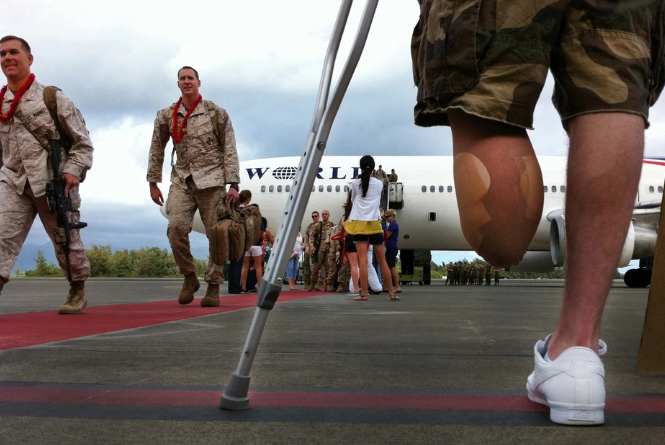
That is why telling these stories matters. For most Americans, war is something distant, something glimpsed through headlines, documentaries, or history books. For veterans and military families, it remains present long after the uniform comes off. Through documentary filmmaking and fiction, I have tried to bridge that divide, honoring those who served while helping others better understand the sacrifices that continue beyond the battlefield.
Last Day on the Blue Wonder, a story of courage, romance, survival, protection, and second chances, gave me another opportunity to do just that. If my writing accomplishes anything, I hope it reminds readers that service does not end when a tour is over, and that the stories of those who serve, and those who sacrifice alongside them, are always worth telling.
_____________________________
Les Carroll is a retired U.S. Air Force and Air National Guard lieutenant colonel, author, and documentary filmmaker. During nearly three decades of service, he worked as a public affairs officer, completed two deployments to Afghanistan, and served at the Air Force Mortuary at Dover Air Force Base. His books include This Troubled Ground and Last Day on the Blue Wonder.
As the Voice of the Veteran Community, The Havok Journal seeks to publish a variety of perspectives on a number of sensitive subjects. Unless specifically noted otherwise, nothing we publish is an official point of view of The Havok Journal or any part of the U.S. government.
Buy Me A Coffee
The Havok Journal seeks to serve as a voice of the Veteran and First Responder communities through a focus on current affairs and articles of interest to the public in general, and the veteran community in particular. We strive to offer timely, current, and informative content, with the occasional piece focused on entertainment. We are continually expanding and striving to improve the readers’ experience.
© 2026 The Havok Journal
The Havok Journal welcomes re-posting of our original content as long as it is done in compliance with our Terms of Use.


