By Cristóbal Berry-Cabán
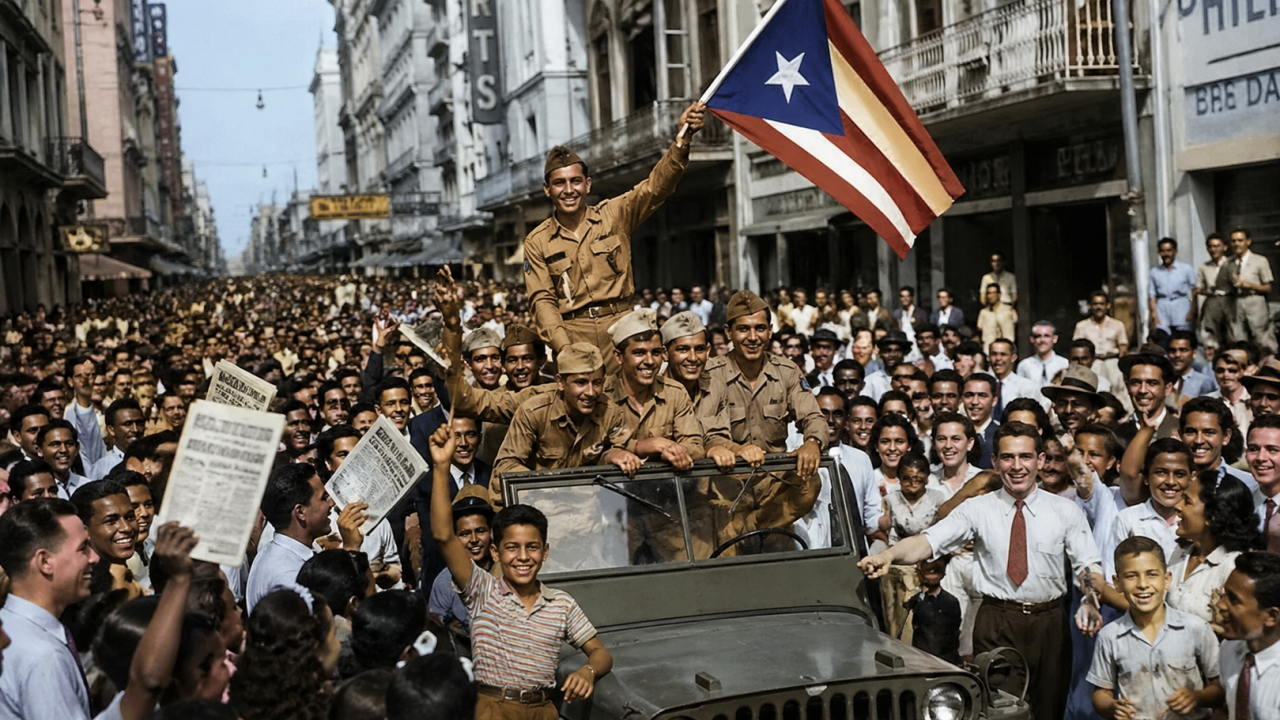
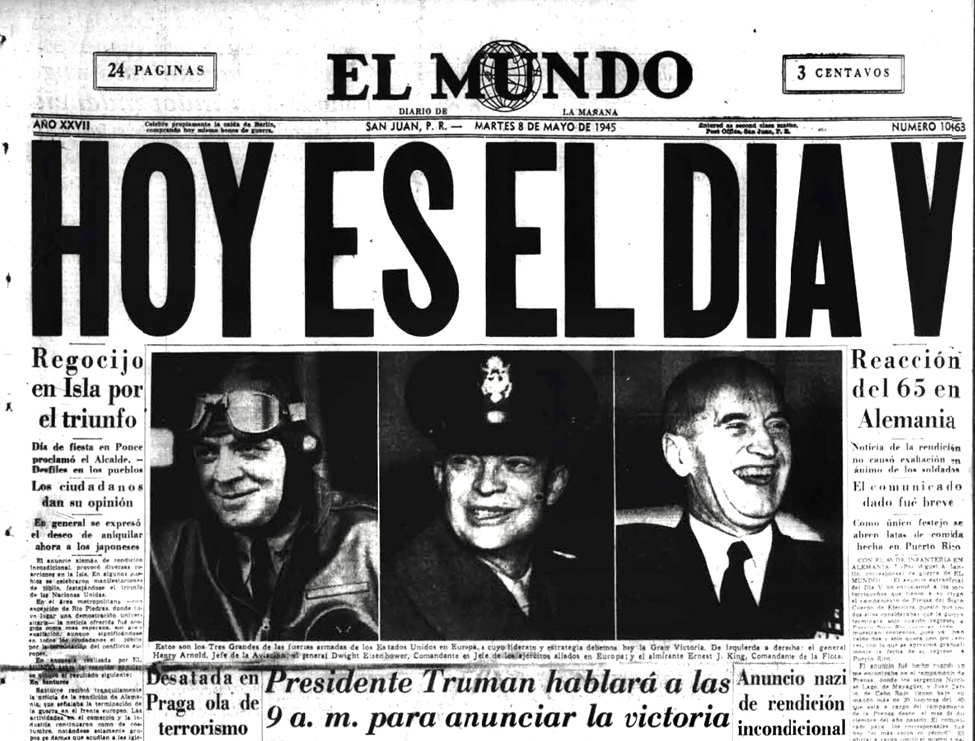
“Today is V Day,” read the headline of El Mundo, one of Puerto Rico’s most widely read newspapers. The date was Tuesday, May 8, 1945, V-E Day. Nazi Germany had unconditionally surrendered, ending World War II in the European theater. Below its headline, the newspaper ran photographs of the “Big Three” military leaders credited with securing victory: Gen. Henry “Hap” Arnold of the Army Air Forces, Gen. Dwight D. Eisenhower, supreme Allied commander, and Adm. Ernest J. King, commander of the fleet.
While the global significance of V-E Day was undeniable, for Puerto Ricans the celebration was layered with personal meaning. The island had endured years of war-induced uncertainty, hardship, and sacrifice. When the surrender was announced, relief and joy swept across the island. Cities erupted into spontaneous celebration.
Rexford Guy Tugwell, a Wharton-educated economist and former member of President Franklin D. Roosevelt’s “Brain Trust,” served as the appointed governor of Puerto Rico throughout the war. In a solemn proclamation to the people of the island, Gov. Tugwell announced the end of the war in Europe, expressing both relief and deep reverence. He honored the immense sacrifices made by soldiers, noting that while victory had been secured, it was shadowed by profound sorrow for the fallen and the wounded. Tugwell called for celebrations to be marked by solemnity and respect, reminding the people that the war in the Pacific raged on and that the nation was still mourning the loss of President Roosevelt. It was, he urged, a time for gratitude, reflection, and a sober recognition of the challenges yet to come. “If we consider all that was at stake and how unprepared we were to face the brutal challenge posed to democracy, we have done well,” he affirmed.
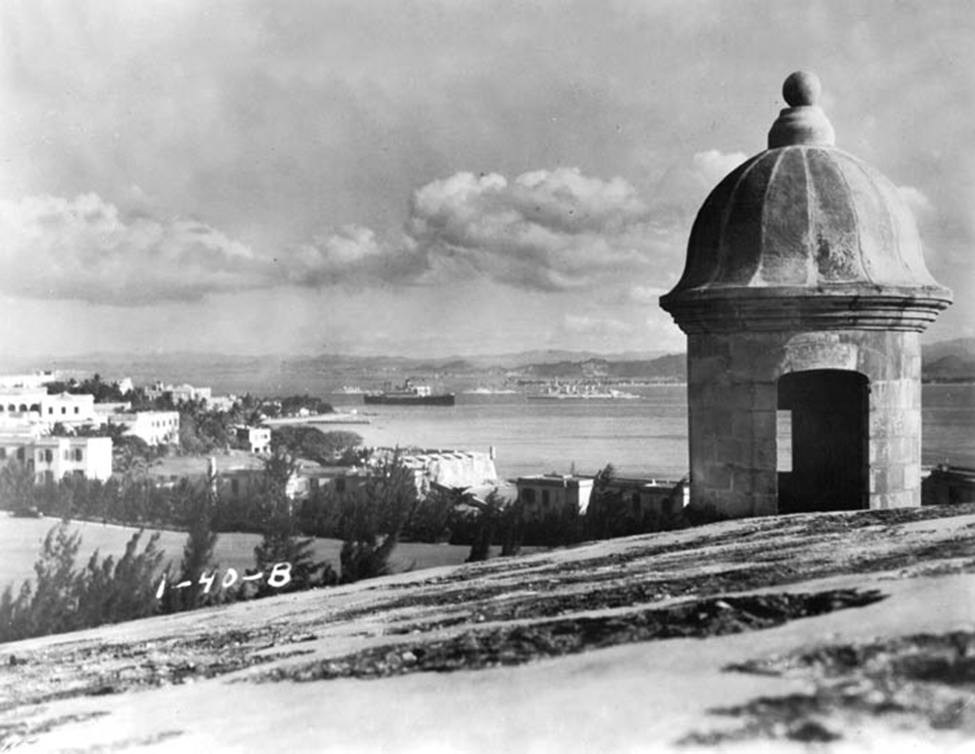
Puerto Rico’s involvement in World War II was rooted in its colonial status. After Spain ceded the island to the U.S. in 1898, Puerto Rico became a key strategic site during World War II. Its proximity to the Panama Canal and Atlantic shipping lanes led to heavy militarization. Roosevelt Roads and Isla Grande Naval Air Station were constructed, complemented by Borinquen Field. This influx of military spending spurred economic growth, helped modernize infrastructure, and created jobs. But it also came at a cost. The U.S. military seized large swaths of land, displacing residents and triggering local tensions.
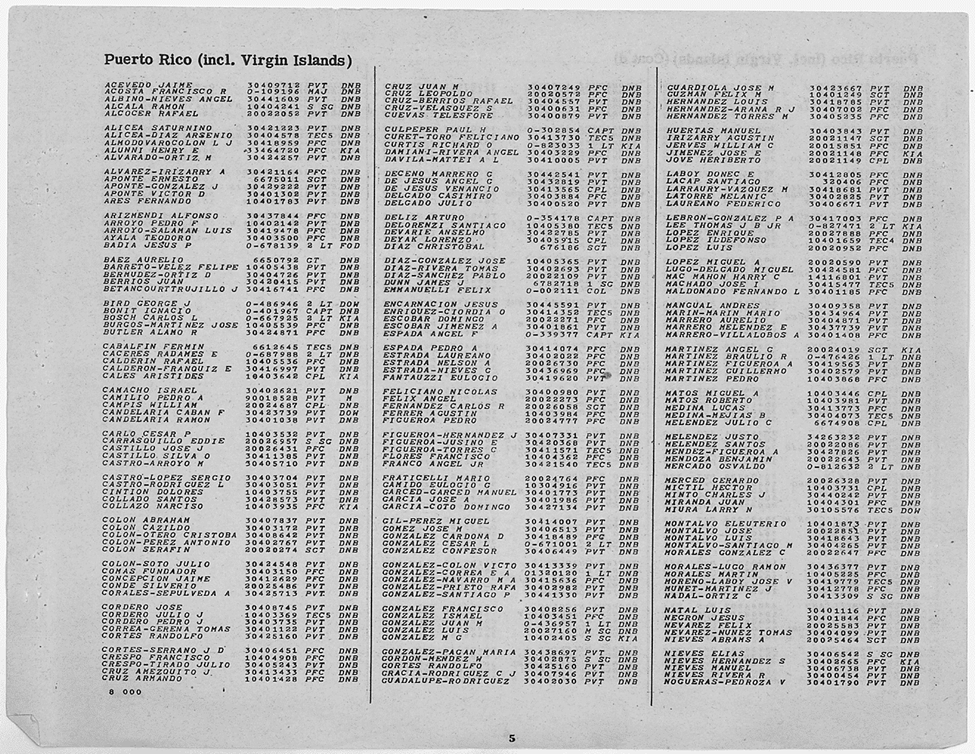
One of the most glaring contradictions in American history is that the United States waged its most significant war, against a racist regime, while upholding segregation and racial inequality within its own military and society. More than 65,000 Puerto Ricans served in the armed forces, many within the 65th Infantry Regiment, the Borinqueneers. Though they served with dedication, discrimination and segregation shaped their experience. Language barriers and racist assumptions about their capabilities often limited their roles and advancement. Nevertheless, the 65th served with distinction in Panama, North Africa, and Europe, often under-resourced but unflinching.
Puerto Rican casualties in the war were significant: more than 350 killed, more than 700 wounded, and many missing. In the Battle of the Bulge, Company L of the 65th Infantry suffered its first combat losses: Sergeant Angel Martinez and Private Sergio Sanchez-Sanchez.
War correspondent Miguel Santín captured the subdued mood among Puerto Rican troops who had been fighting in Germany as V-E Day was declared: “They believed the war would only end once they returned to Puerto Rico,” he wrote. At the Sixth Army Corps Press Camp, Sergeant Marcelo Lago of Mayagüez celebrated news of the victory by opening several cans of pasteles, a type of Puerto Rican tamale made at home, that Lago had been saving for a “special occasion.” The celebratory meal was accompanied by “rice with chicken,” “grapefruit and orange candy,” and mofongo, a classic island plantain dish made of fried plantains, mashed and mixed with garlic paste and chicharrón, crispy pork cracklings.
Over on the Pacific front, Puerto Rican Marine Corps officer Brig. Gen. Pedro A. del Valle was locked in the Battle of Okinawa. On the very day victory was declared in Europe, he was awarded the Navy Gold Star in recognition of his distinguished service during the liberation of Guam the previous autumn.

Back home, islanders navigated a daily reality of food rationing, labor shortages, and skyrocketing prices. They poured their energy into the war effort through industrial labor and war bonds, all while carrying the heavy emotional toll of the conflict.
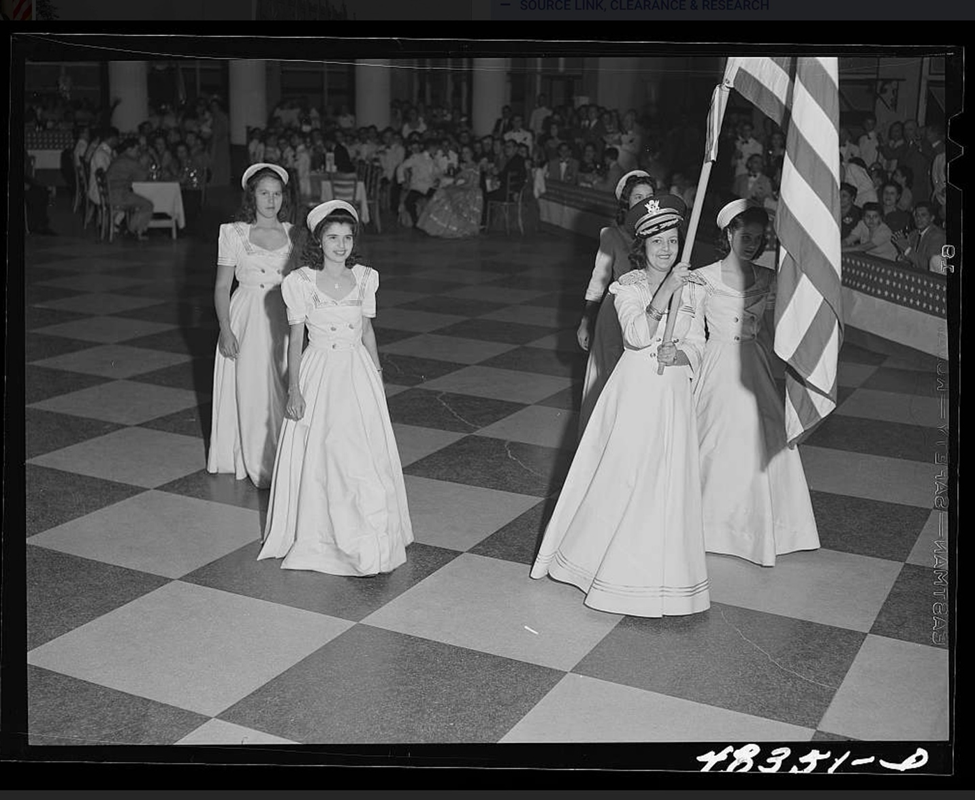
Yet life persisted in spite of the struggle. Just weeks before V-E Day, El Mundo featured the quinceañera of my mother, María Lourdes Cabán of Santurce, a celebration of hope held amid wartime uncertainty, made even more special by her cousin, Private Teófilo Fitte, being home on leave.
Her father, Santiago Cabán Vélez, better known as “don Chago,” operated a grocery store named Las Flores Provisions. Though he opened the doors in 1941 using borrowed capital and faced early financial hurdles, a local street construction project eventually helped sales pick up. However, the onset of the war brought a new set of challenges: Strict government rationing meant that only merchants with official quotas could stock essential goods.
Initially denied a quota, don Chago turned to his network for survival. With the help of his neighbor, don Alberto Pérez, and Ramón Carrel, a former government official, he finally secured the necessary license and certificate. Recalling the moment of victory, he said:
“The next morning, I brought it to Mallito Nevares, who called the quota office and said, ‘Put Cabán on list No. 2 with a weekly quota.’ That saved my business.”
Following this intervention, the shipments began to flow. By early February 1945, Cabán’s supply chain was robust enough that he was allotted 337 boxes of cigarettes, cementing the store’s future.
Radio helped define the wartime experience. It was the island’s primary source of news, updates, and entertainment. May 8 broadcasts on WIAC included “Diario Matinal” and “La Hora del Soldado.” WKAQ and WNEL aired news, music, and drama. American Armed Forces Radio carried programs like “Yank Bandstand” and “The Shadow of Fu Manchu.” Radio served not only to inform but to comfort, connecting soldiers to home and civilians to the wider world.
Movies were another vital form of entertainment. During the war, Puerto Ricans, like the rest of the United States, primarily watched films from Hollywood. By 1945, an estimated 85 million Americans were going to the movies each week, and Puerto Ricans embraced the cinema just as enthusiastically. Popular films such as “Casablanca,” “Mrs. Miniver,” “Bambi,” and “Guadalcanal Diary” were widely seen. Patriotism proved highly profitable for Hollywood, which capitalized on the war with its usual shameless flair. Amid the flood of releases, a few genuine classics emerged, alongside countless forgettable films.
On V-E Day, the Paramount Theater offered audiences “A Song to Remember,” a dramatized account of Polish composer Frédéric Chopin’s life, starring Paul Muni and Merle Oberon. The Paramount proudly advertised that “A Song to Remember” “as of yesterday had already been seen by 20,390 patrons.” Meanwhile, at the Teatro Matienzo, viewers could enjoy “El abanico de Lady Windermere” (“Lady Windermere’s Fan”), a 1944 Mexican adaptation of Oscar Wilde’s 1892 play, directed by Juan José Ortega and featuring Susana Guízar, Anita Blanch, and René Cardona.
Wartime advertising was less about selling products and more about selling a sense of shared sacrifice. Companies pivoted their marketing to champion patriotism, urging the public to buy war bonds and conserve essential resources. Even businesses with no direct link to the front lines used this strategy to weave their brand into the national fabric.
A striking example of this comes from Muebles Finos Tartak, a furniture store located at Stop 19 on the Santurce trolley line. Its advertisement from May 8, 1943, captures the era’s domestic anxiety through a quiet, evocative scene:
The ad depicts a woman gazing longingly out of a window. Beside her hangs a service flag with a single star, a poignant signal to the community that a loved one was away at war. In the shadows of the room, her husband sits at a desk, hunched over a letter.
The copy avoids a hard sales pitch, opting instead for an emotional appeal that links the geopolitical struggle to the sanctity of the living room:
“VICTORY means peace… and peace is home… When you think of your home, you think of your comforts.”
By framing furniture not as a luxury but as the “comfort” one earns through victory and peace, Tartak successfully positioned its brand as a guardian of the very lifestyle the soldiers were fighting to protect.
As the war drew to a close, Puerto Rico found itself at a pivotal crossroads, caught between newfound economic momentum and a deepening political identity crisis. Before the conflict, the island’s economy was tethered almost exclusively to sugar cane production, leaving much of the population in systemic poverty. However, the surge in U.S. military spending and wartime labor demands provided a temporary yet significant economic lift.
This shift in the financial landscape coincided with a total transformation of the island’s political stage. While the Liberal Party saw its influence wane, the Popular Democratic Party, under the charismatic leadership of Luis Muñoz Marín, surged to the forefront. By 1944, its platform of aggressive reform and economic development had secured it a dominant position in Puerto Rican governance.
On V-E Day, while the world celebrated the end of the war in Europe, El Mundo turned its focus to the U.S. Senate. Muñoz Marín had just testified the day before regarding a high-stakes referendum proposed by Sen. Millard Tydings and Resident Commissioner Bolívar Pagán. The bill outlined three potential futures for Puerto Rico: independence with specific economic concessions, statehood, or dominion status modeled after the frameworks of Canada or Australia.
Despite the push for autonomy, Muñoz Marín offered a sobering assessment of immediate independence. He argued that the island’s deep-seated economic dependency on the United States made a sudden break a matter of life or death. He famously warned the committee: “Within five years, Puerto Ricans would die physically.”
His testimony underscored a harsh reality: for Muñoz Marín, political sovereignty was a hollow victory if it led to economic collapse. This pragmatic approach would go on to define the island’s unique and complex relationship with the United States for decades to come.
A longtime critic of colonialism, Muñoz Marín had concluded by 1944 that independence was unworkable under current conditions. He believed U.S. policies had created a lopsided economy, reliant on sugar exports, burdened by unemployment and low wages, and vulnerable to external shocks. A sudden separation from the U.S. would cripple the island.
As the sun set on May 8, 1945, the air in Puerto Rico was thick with the scent of celebratory asopao and the crackle of radio broadcasts finally delivering the news the world had been holding its breath for. In Santurce, the lights of the Paramount Theater burned a little brighter, and in grocery stores like Las Flores Provisions, the heavy veil of wartime anxiety began to lift, replaced by a jubilant, collective exhale. The peace that Muebles Finos Tartak had promised was no longer a distant marketing dream; it was a dawning reality.
There was an undeniable electricity in the streets, a sense that the island had not just survived a global cataclysm but had been fundamentally forged anew by it. From the distinguished service of the Borinqueneers to the strategic transformation of the island’s coastline, Puerto Rico emerged from the shadows of the conflict with a newfound sense of its own agency and importance on the world stage.
Yet, as the church bells rang out for victory, they also signaled the start of a complex new chapter. The island’s “physical death” that Muñoz Marín warned of had been averted, but the path ahead remained a narrow tightrope. The island stood at the threshold of modernity, armed with an industrial spark and a burgeoning political voice, yet still tethered to the complexities of its colonial legacy.
Victory in Europe was a finish line for the soldiers, but for Puerto Rico, it was a new beginning. The future was bright with the promise of reform and development, but it was tempered by the sobering knowledge that the quest for true identity, neither fully separate nor fully integrated, was a struggle that would outlast the echoes of the war. Today, there was music, there were pasteles, and there was hope; tomorrow, there was the work of building a nation.
_____________________________
Cristóbal S. Berry-Cabán, Ph.D., has more than 30 years of experience conducting research on military health as an epidemiologist at Womack Army Medical Center, Fort Bragg, and the Geneva Foundation in Tacoma, Washington. He currently lives in Southern Pines, North Carolina.
As the Voice of the Veteran Community, The Havok Journal seeks to publish a variety of perspectives on a number of sensitive subjects. Unless specifically noted otherwise, nothing we publish is an official point of view of The Havok Journal or any part of the U.S. government.
Buy Me A Coffee
The Havok Journal seeks to serve as a voice of the Veteran and First Responder communities through a focus on current affairs and articles of interest to the public in general, and the veteran community in particular. We strive to offer timely, current, and informative content, with the occasional piece focused on entertainment. We are continually expanding and striving to improve the readers’ experience.
© 2026 The Havok Journal
The Havok Journal welcomes re-posting of our original content as long as it is done in compliance with our Terms of Use.


