Getting into or staying consistent with strength training after your 30s looks different than it did in your 20s. Life gets fuller. Work demands increase. Sleep can suffer. Recovery feels slower.
But here’s what the science tells us:strength training becomes more important after 30, not less.
And for many New Yorkers juggling long hours, commuting stress, and limited space, virtual personal training has become one of the most effective ways to make it sustainable.
Let’s break down why.
Why Strength Training Matters After 30
Muscle mass and strength naturally decline with age, a process called sarcopenia.According to the National Institute on Aging, adults can lose approximately 3–8% of muscle mass per decade after age 30 if inactive.
That decline accelerates after 60.
But it’s not inevitable.
Resistance training has been shown to significantly slow and even reverse age-related muscle loss. It also:
- Improves insulin sensitivity
- Increases bone mineral density
- Supports metabolic rate
- Enhances functional strength
Bone health is especially critical for women. Peak bone mass is typically reached by the early 30s, and bone density can begin declining thereafter, particularly as estrogen levels shift. Strength training stimulates bone remodeling and helps reduce long-term fracture risk.
Public health guidelines reinforce this. The CDC reports that fewer than 1 in 4 U.S. adults meet both aerobic and muscle-strengthening guidelines, which recommend muscle-strengthening activities at least two days per week.
The American College of Sports Medicine (ACSM) further recommends:
- Training all major muscle groups
- 2–3 sets of 8–12 reps
- Progressive overload over time
After 30, structured progression is no longer optional; it’s essential.
What Changes After 30 And Why Training Must Adapt
The reason workouts feel different after 30 isn’t just psychological. There are real physiological shifts happening.
1. Hormonal Changes
- Testosterone levels in men gradually decline beginning in the early 30s.
- Estrogen fluctuations begin in women as early as mid-30s.
- Chronic stress common in NYC can elevate cortisol levels.
Higher cortisol combined with lower anabolic hormone levels can impact muscle recovery and growth.
2. Muscle Protein Synthesis Slows
The body’s ability to build muscle from protein intake becomes slightly less efficient. This means:
- Protein intake becomes more important.
- Recovery time matters more.
- Random workouts produce inconsistent results.
3. Recovery Capacity Changes
Late nights, long workdays, and poor sleep affect progress more dramatically.
Sleep is when growth hormone peaks and tissue repair occurs. After 30, getting 7–9 hours of quality sleep becomes a performance strategy not a luxury.
4. Mobility Becomes Critical
Years of desk work, subway commuting, and city stress lead to:
- Tight hips
- Rounded shoulders
- Limited thoracic mobility
Strength programs must now include mobility and stability work to prevent injury.
Why Virtual Personal Training Works So Well in NYC
Virtual coaching works in New York because it removes friction and after 30, consistency is everything.
Most adults in NYC are balancing demanding work schedules, long commutes, social obligations, and limited living space. Even highly motivated people struggle to maintain a rigid gym schedule when meetings run late or energy is low. Traditional in-person training often adds logistical stress: commuting to a gym, coordinating fixed session times, and paying premium per-session rates.
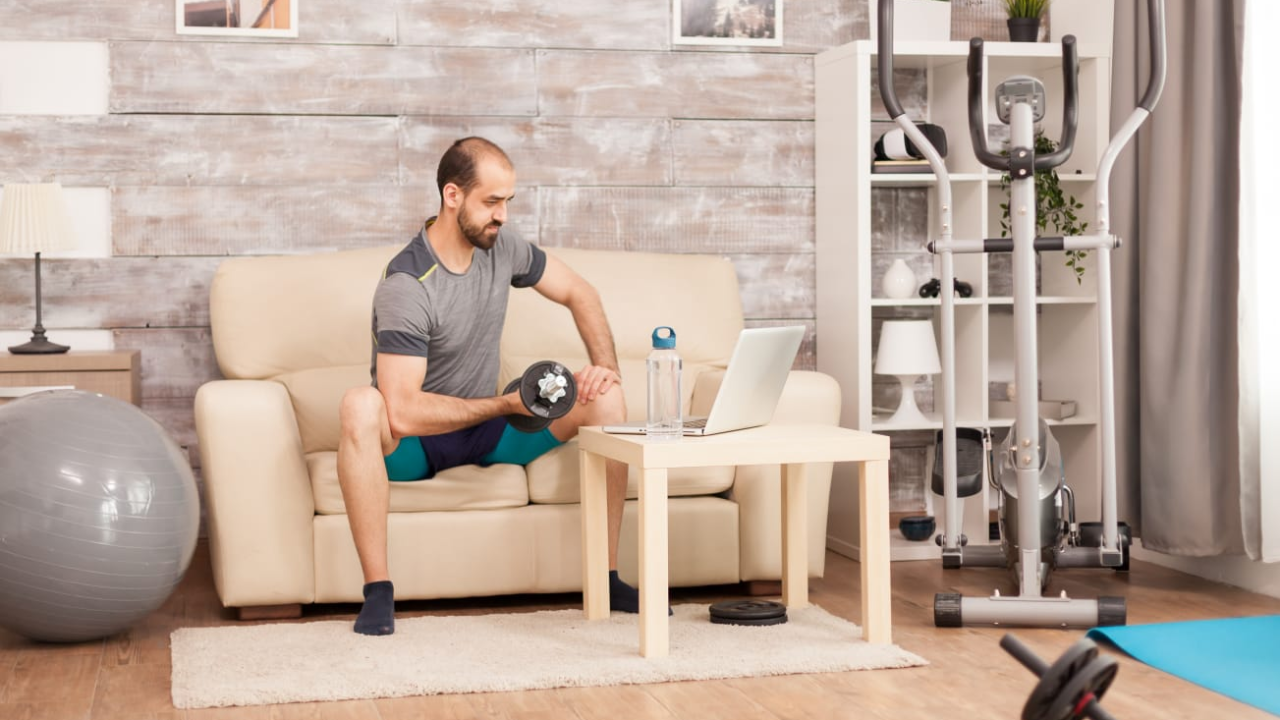
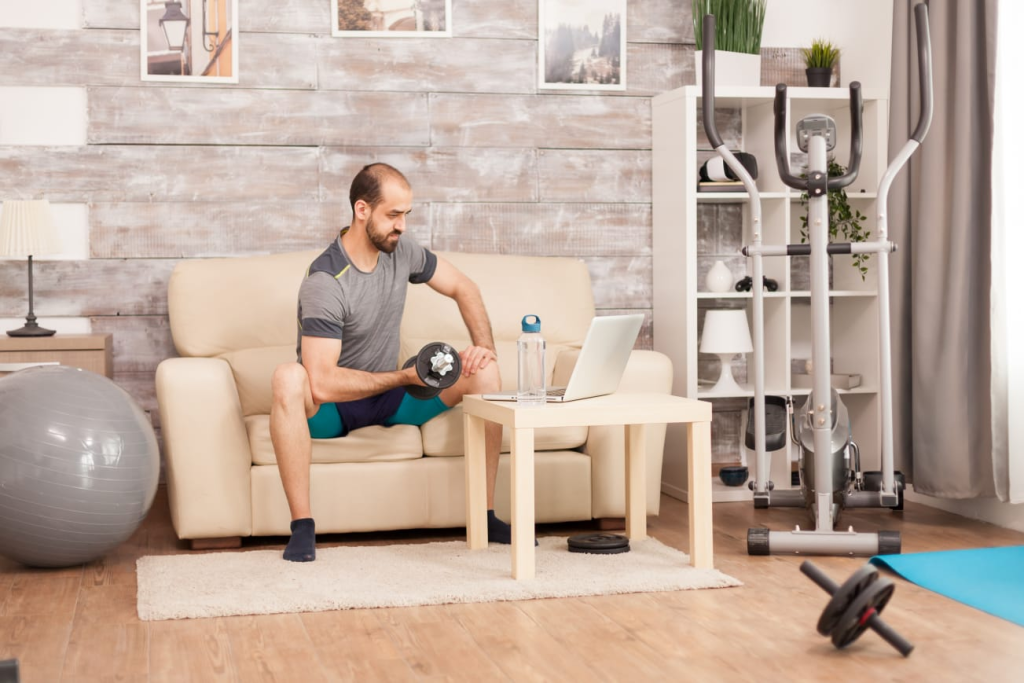
Virtual personal training allows structured strength training at home without sacrificing progression, accountability, or expert oversight.
Virtual coaching eliminates those barriers while keeping structure intact.
1. It Fits Into Real NYC Schedules
Instead of rearranging your life around the gym, your training fits into:
- Early mornings before work
- Lunch breaks
- Evenings at home
- Travel weeks
There’s no subway ride, no locker room wait, no cancellation pressure. Removing commute time alone makes 30–40 minute sessions realistic and sustainable.
2. It Reduces Environmental Friction
New York living presents unique challenges:
- Small apartments
- Crowded gyms
- High membership costs
- Winter weather disruptions
- Frequent work travel
Virtual programs are designed around your available space and equipment. If you only have dumbbells and resistance bands, the plan adapts. If you travel, workouts adjust. The structure continues even when location changes.
3. It Prioritizes Structure Over Random Workouts
After 30, random intensity doesn’t produce reliable results.
Virtual coaching provides:
- Progressive overload planning
- Deload weeks
- Recovery adjustments
- Long-term periodization
- Clear performance tracking
Instead of chasing sweat, you follow a system. That system builds strength steadily while protecting joints and recovery capacity.
4. It Encourages Long-Term Consistency
The biggest advantage isn’t convenience, it’s continuity.
With virtual coaching, you typically receive:
- Weekly check-ins
- Program updates
- Performance tracking
- Ongoing communication
- Form review through video
That accountability prevents the common cycle of “start hard, burn out, restart.”
For adults over 30, consistency over months not weeks drives visible change.
5. It Lowers the Psychological Barrier
Many adults avoid heavy strength training because:
- They feel unsure about form
- They feel intimidated in gym settings
- They worry about injury
Training at home removes that pressure. Video feedback replaces public performance. Progress happens privately and confidently making strength training more approachable for many adults over 30.
6. It Often Costs Less Over Time
In-person training in NYC is typically priced per session. Virtual coaching is often structured monthly, allowing:
- Lower overall cost
- Ongoing programming
- Continuous support
- Greater flexibility
For many professionals, that makes expert guidance more sustainable long term.
Virtual coaching works in New York because it reduces time cost, mental cost, and logistical cost without sacrificing structure.
In a city where time and energy are limited resources, a system that removes friction while maintaining accountability often produces better long-term outcomes than traditional gym-based training.
How to choose a virtual coach in NYC
- Credentials & experience: Look for certified personal trainers with strength credentials (CSCS, NASM, or similar) and a track record training adults 30+.
- Programming vs. live sessions: Decide if you want structured programming with weekly check-ins (cheaper, flexible) or regular live sessions (more hands-on).
- Feedback tools: Do the personal trainers review video form? Do they offer rep-by-rep logging or weekly KPIs?
- Local knowledge: personal trainers familiar with NYC living (small spaces, times, NYC stair/climb norms) will give more practical exercise swaps.
- Trial & communication: Many personal trainers offer a trial session and a simple 2-week roadmap use it to assess fit.
Quick 6-point starter checklist
- Pick one measurable goal (e.g., deadlift +20 lb in 8 weeks, 10 push-ups unbroken).
- Book one trial session with a coach who trains adults 30+.
- Buy or borrow a basic adjustable dumbbell or kettlebell + band.
- Schedule 3 weekly 35-minute slots – treat them as non-negotiable.
- Record one movement video (squat or hinge) and ask the coach for form cues.
- Track sessions and sleep – recovery equals results.
Common Strength Training Mistakes After 30
These derail progress quickly:
- Training like you’re still 22
- Skipping warm-ups
- Doing too much HIIT
- Not eating enough protein
- Ignoring sleep
- No structured progression
- Pushing through chronic joint pain
Virtual coaching often corrects these mistakes early.
The Real Goal After 30: Strength That Lasts
After 30, strength training isn’t about chasing gym ego, it’s about investing in decades of function, health, and resilience.
Virtual coaching makes that investment feasible for busy New Yorkers by delivering structured programming, accountability, and individualized progression without requiring you to rearrange your whole life.
If you want help vetting coaches or crafting a 30-day plan tailored to your schedule and equipment, tell me what you have at home (dumbbells, bands, gym access), and I’ll draft a ready-to-use plan.
Buy Me A Coffee
The Havok Journal seeks to serve as a voice of the Veteran and First Responder communities through a focus on current affairs and articles of interest to the public in general, and the veteran community in particular. We strive to offer timely, current, and informative content, with the occasional piece focused on entertainment. We are continually expanding and striving to improve the readers’ experience.
© 2026 The Havok Journal
The Havok Journal welcomes re-posting of our original content as long as it is done in compliance with our Terms of Use.