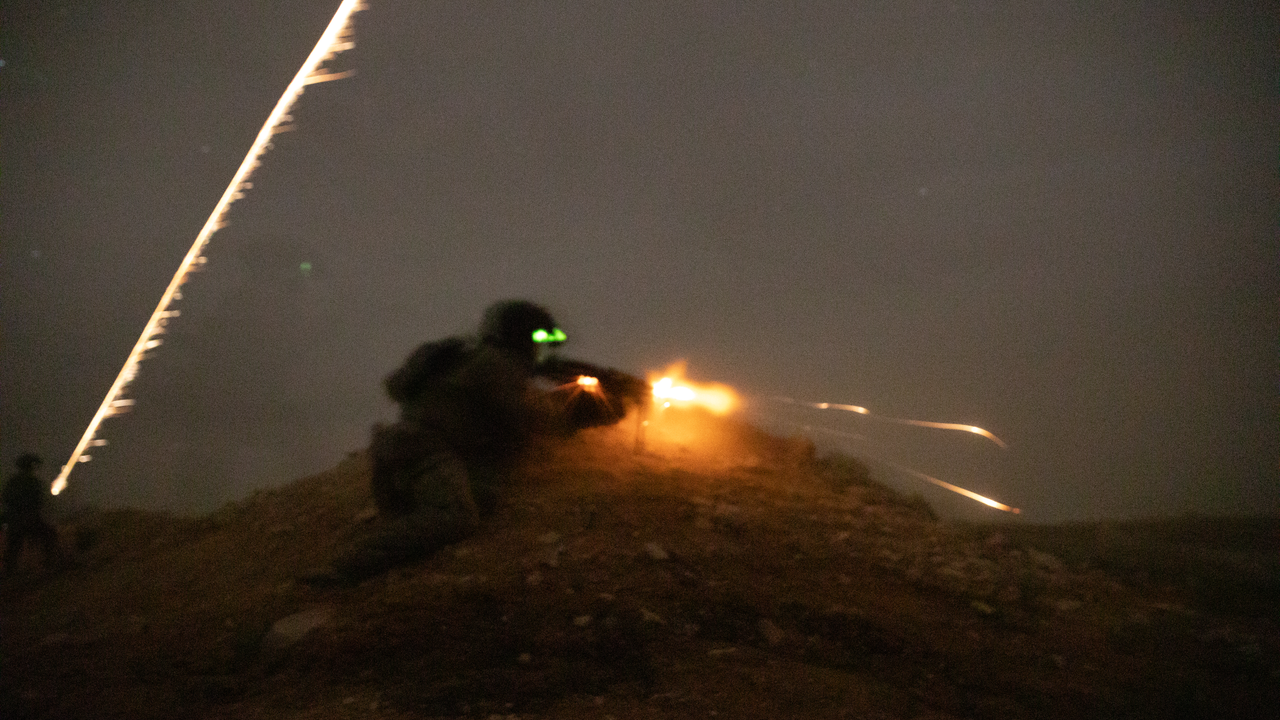
Combat veterans are often described as having difficulty returning to the “real world.” The phrase is revealing because it assumes civilian life represents reality and combat represents an interruption, a temporary departure from normal existence. Under this assumption, the veteran’s task is to leave the war behind, readjust to ordinary priorities, and become psychologically capable of living as he did before.
When that transition does not occur, the veteran’s behavior is commonly interpreted through the language of trauma: isolation, hypervigilance, confusion, social anxiety, emotional distance, loss of interest, difficulty finding purpose, and an inability to tolerate crowds, superficial conversations, or the manufactured urgency of everyday life.
These experiences can be real. The suffering they sometimes produce can be real. But the explanation attached to them is not necessarily definitive.
What if some veterans are not simply unable to return to the old world? What if they have concluded, consciously or otherwise, that the old world was never as real as everyone pretended it was? What if some of what we classify as post-traumatic stress is actually the difficult integration of an experience related to death, not merely the fear of death, but a fundamental transformation in how life, consciousness, and death are understood?
What if certain combat veterans are living through something resembling the aftermath of a near-death experience?
The Label Is Not the Explanation

Post-traumatic stress disorder is a clinical classification. It organizes reported experiences and observable behaviors into a diagnostic category. That does not make it meaningless, but neither does it make it a scientifically complete explanation.
There is no blood test, brain scan, genetic marker, or singular biological finding that can conclusively establish PTSD in an individual. The diagnosis depends upon reported experiences, behavioral observations, diagnostic criteria, and interpretations of those criteria. The symptoms may be undeniable. The explanation remains contestable.
A diagnostic label can describe a pattern without identifying its origin. It can tell us that several people exhibit similar behaviors without proving those behaviors arise from the same internal process. That distinction matters because radically different experiences can look alike from the outside.
Isolation may indicate fear-based avoidance, or it may reflect difficulty relating to people who no longer seem to inhabit the same reality. Loss of interest may indicate depression, or it may reflect the collapse of interest in values that once seemed important but now feel artificial. Hypervigilance may indicate a nervous system that cannot recognize safety, but it may also contain elements of a heightened awareness developed in an environment where attention was inseparable from survival. Emotional distance may indicate psychological numbing, or it may reflect the inability to explain an experience to people who have no framework through which to understand it.
Difficulty returning to civilian life may indicate unresolved trauma. Or it may indicate that the veteran is not returning to the same world from which he departed. The geography is familiar. The worldview is not.
When Life Becomes Terribly Simple
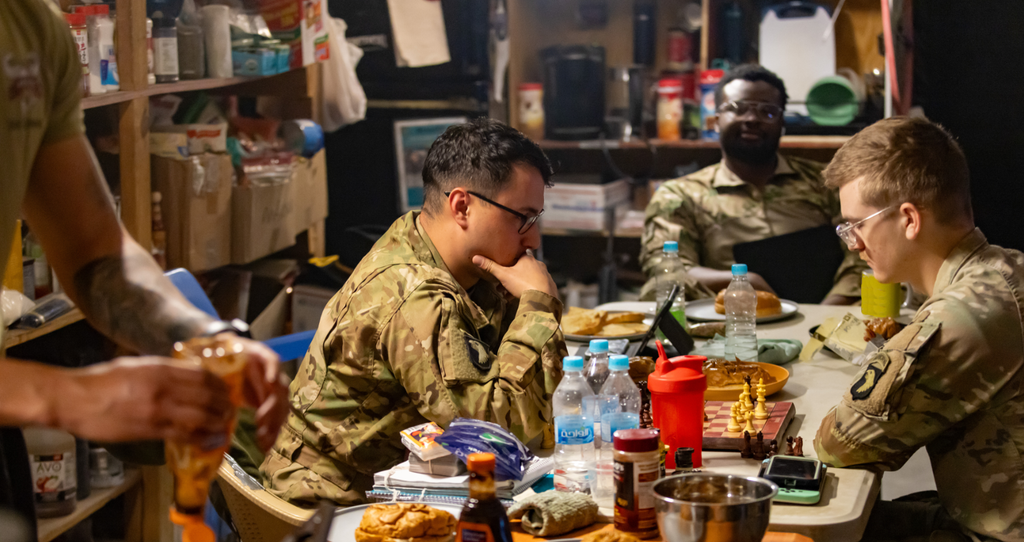
There is nothing objectively easy about combat. Death is present. Violence is possible at any moment. Comfort is limited, separation from family is real, and the consequences of a mistake can be permanent.
Yet veterans sometimes describe life in combat as strangely simple. There are fewer distractions. The people around you matter. The task in front of you matters. Food, water, shelter, movement, trust, and survival matter. Everything feels intensely alive.
The conventional explanation is survival mode. The nervous system recognizes danger, releases stress hormones, narrows attention, and prepares the body to respond. That may account for part of the experience, but what if survival mode can also become a form of radical presence? What if the individual does not merely become alert to danger but temporarily encounters reality without the abstractions, distractions, and manufactured concerns that dominate ordinary life?
In combat, death is no longer an intellectual concept. It is not hidden inside hospitals, funeral homes, medical terminology, or polite euphemisms. It occupies the same physical and psychological space as the living. Time changes. Attention changes. Relationships change. The boundary between the individual and the group can become less distinct because survival depends upon others, and their survival may depend upon the individual. Trust is no longer a sentiment, and love is no longer merely spoken. Both become actions with immediate consequences.
The trivial falls away because the environment has no room for it. If a person remains within that reality long enough, why would we assume he can return unchanged simply because the deployment ends?
The Experience Ends. The Transformation Does Not.
Large prospective studies involving cardiac arrest survivors have documented recurring features among people who report near-death experiences. These can include separation from the body, encounters with light, altered experiences of time, life reviews, profound peace, encounters with deceased persons, and entry into a reality described as more real than ordinary waking consciousness.
Debate continues over what these experiences are and what causes them. Neurological, psychological, spiritual, and metaphysical explanations compete with one another, and no interpretation has resolved every question. But the most relevant aspect of the research may not be what people experience while near death. It may be what happens after they return.
Near-death experiencers frequently describe lasting changes in values, identity, relationships, and worldview. Fear of death may decline. Money, social status, possessions, and professional advancement may lose their importance. A greater sense of interconnectedness may develop. Religious beliefs may deepen, change, or disappear. Some experiencers become more compassionate while simultaneously becoming less comfortable in ordinary social environments. Life before the event may begin to feel distant or strangely unreal.
These changes are not always peaceful. Integration may take years. Isolation, confusion, anxiety, depression, relationship problems, and difficulty functioning can follow an experience the individual does not regard as pathological. This creates an important paradox: an experience can be profoundly meaningful while its aftermath is profoundly disruptive.
From the outside, that disruption may resemble a psychiatric condition. But resemblance is not proof of equivalence.
What Is a Combat Near-Death Experience?
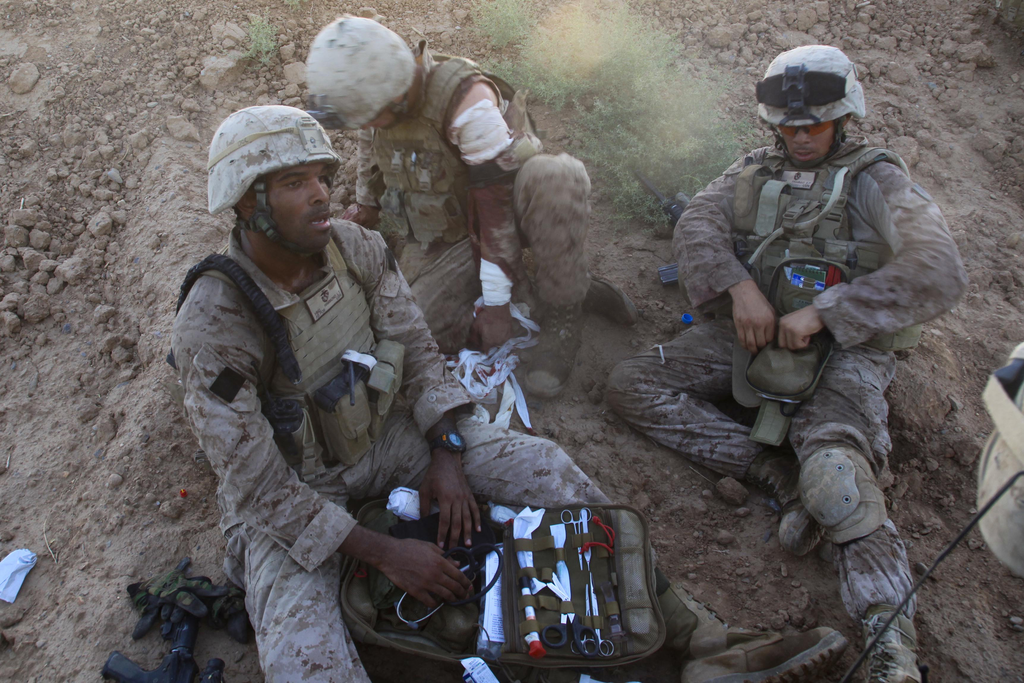
How close must someone come to death before an experience qualifies as near-death? Must the heart stop? Must the person lose consciousness or sustain catastrophic injury? Does a bullet have to miss by inches? Must a vehicle explode or an aircraft crash? Or can someone experience psychological and existential proximity to death without suffering physical harm?
These questions assume proximity to death can be measured only by physical distance or medical condition. Combat complicates that assumption because death is not always confined to a single event. It can become an environment.
A service member may never be shot, wounded, or declared clinically dead. Yet that person may spend months living where death is continuously anticipated, witnessed, discussed, and accepted. Friends die. Strangers die. Enemies die. Civilians die. The individual repeatedly confronts the possibility of his own death and may privately accept it long before any particular incident occurs.
Life and death cease to appear as separate territories. They begin occupying the same ground.
A person in that environment may experience something that cannot adequately be described as merely fearing death. He may undergo a fundamental change in consciousness through prolonged intimacy with it. That does not necessarily make the experience a conventional NDE. Expanding the term too broadly would eventually make it meaningless. But refusing to consider anything outside its conventional definition may cause us to overlook a larger phenomenon.
The Combat Threshold Hypothesis
The Combat Threshold Hypothesis proposes that acute or prolonged immersion in combat can produce an enduring transformation in consciousness resembling the aftereffects of a near-death experience. It does not assume every veteran undergoes this transformation or that every difficulty following combat is transcendent. It asks whether the current diagnostic framework may be grouping fundamentally different experiences beneath one label.
The transformation could occur through several pathways. One veteran may survive a crash, blast, severe wound, loss of consciousness, blood loss, drowning, or other event and report recognizable NDE phenomena. Another may fully expect to die without experiencing a tunnel, light, life review, separation from the body, or other conventional features, yet still emerge with a transformed understanding of existence. A third may experience no single catastrophic incident. Sustained exposure to death, collective vigilance, and radical presence may gradually alter his relationship with life.
The third person may never have been clinically near death, but death was near him.
Perhaps proximity is not merely physical. Perhaps human consciousness responds not only to bodily shutdown but also to prolonged immersion in an environment where the separation between life and death becomes psychologically unstable. If the aftereffects resemble those reported by noncombat near-death experiencers, that possibility deserves investigation rather than automatic psychiatric interpretation.
Similar Behaviors, Different Meanings

Consider the veteran who withdraws socially after returning home. A PTSD-centered interpretation may identify avoidance, detachment, depression, or emotional numbing. Those interpretations may be correct. But near-death experiencers also report isolation and difficulty participating in relationships that once felt natural. They may feel separated from others by an experience too large for ordinary language. The outward behavior is similar. The internal meaning may be entirely different.
Consider the veteran who no longer cares about career advancement, status, possessions, or conventional measures of success. That may be interpreted as depression or loss of motivation. Yet similar shifts are repeatedly reported following near-death experiences. Previous ambitions lose meaning because the person’s understanding of life has changed.
Consider the veteran who says he felt more alive in combat. The immediate assumption may be adrenaline dependence or attraction to danger. But perhaps what he misses is not violence. Perhaps he misses presence. Perhaps he misses living where attention was complete, trust was consequential, relationships were stripped of performance, and every moment carried undeniable meaning.
If clinicians begin with the assumption that these expressions are symptoms, they may never ask what the veteran is actually trying to describe.
War as an Altered State
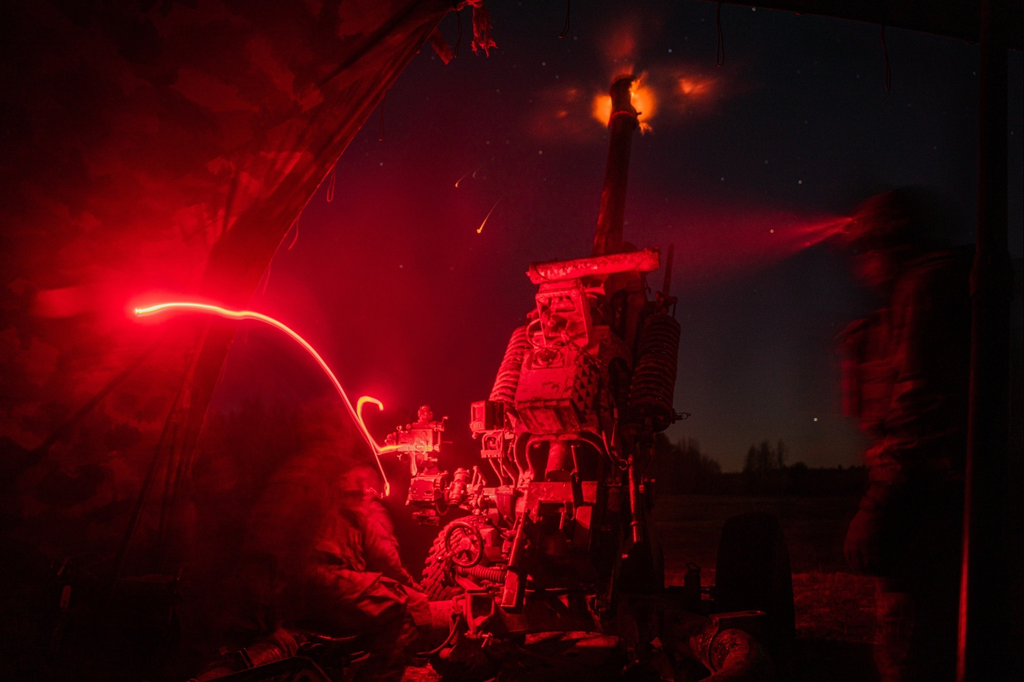
Combat compresses time, moves attention into the present, strips away social disguises, and makes trust tangible. Love is demonstrated through action. People become responsible for lives beyond their own. The individual may experience himself less as an isolated person and more as part of an interconnected human system.
This does not make war good. Destruction, suffering, and death should never be romanticized. But war can possess what might be called ontological intensity. It forces questions most people spend their lives avoiding: What am I? What actually matters? What is worth dying for? Where does the individual end and the group begin? Why can life feel most vivid when death is closest? What remains when comfort, possession, status, and social performance no longer matter?
These are not merely psychological questions. They are philosophical, spiritual, and possibly metaphysical.
Civilian reintegration asks the veteran to return to a society structured largely around avoiding them. Death is hidden. Aging is resisted. Discomfort is medicated. Attention is monetized. Identity is constructed through possessions, occupations, status, and public performance. The veteran may therefore return from an environment of terrible clarity to a culture of comfortable distraction.
Is it surprising that some struggle to adjust? More importantly, is adjustment always the proper objective?
An Ancient Similarity
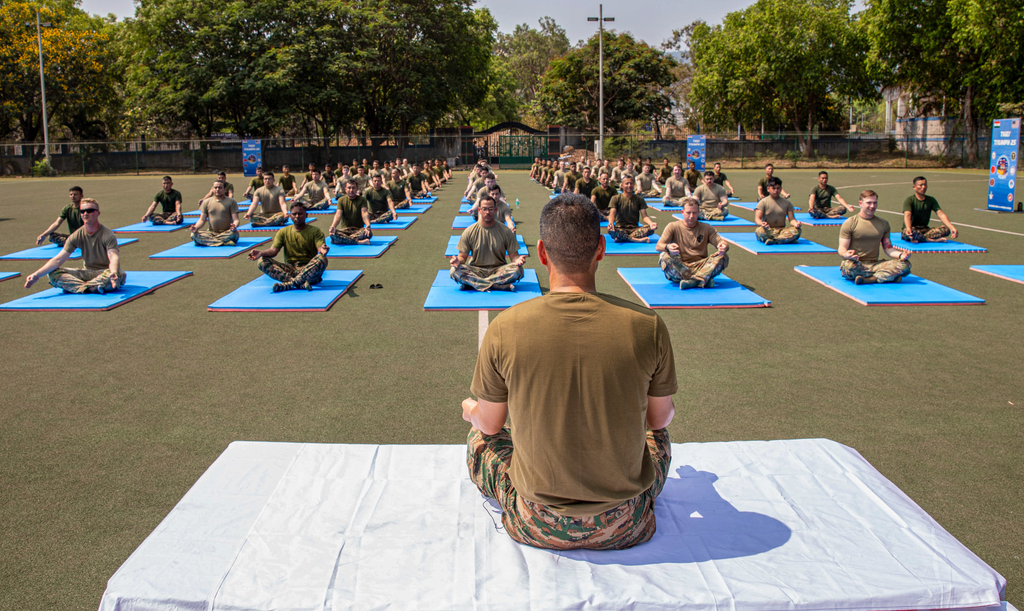
Accounts of near-death experiences frequently resemble concepts found in Vedic literature. Experiencers speak about oneness, consciousness extending beyond the individual body, interconnected energy, vibration, light, timelessness, and dissolution of the separate self. Many return believing that love is not merely an emotion but a fundamental choice, or perhaps a fundamental property of existence.
These similarities do not prove a particular explanation of consciousness, creation, or the afterlife. Such experiences can be interpreted through neurological, psychological, religious, cultural, and metaphysical frameworks. But the correspondence deserves more than dismissal.
Vedic thought presents ordinary perception as incomplete. The separate self is not necessarily the final truth of human identity. Beneath apparent division is a deeper unity obscured by attachment, distraction, fear, and identification with the temporary. Near-death experiencers often return using remarkably similar language, sometimes without previous knowledge of those teachings.
Combat may provide another route toward the edge of ordinary perception. Extreme danger strips away abstraction. Individual identity becomes inseparable from the group. Time collapses into the present. Life and death occupy the same field. The person may encounter interconnectedness not as philosophy but as lived necessity.
That does not establish a metaphysical conclusion. It establishes a meaningful question.
What If the Framework Is Wrong?

The central question is not whether near-death transformation can coexist with PTSD. Multiple experiences can obviously coexist within the same person.
The more disruptive question is this: How often are the aftereffects of combat-related encounters with death being interpreted as psychiatric symptoms because the clinical system has never seriously considered an NDE-related explanation?
If PTSD is treated as the established reality, every alternative interpretation is forced into a secondary position. The veteran has PTSD, and perhaps he also experienced growth. The veteran has PTSD, and perhaps his spirituality changed. The veteran has PTSD, and perhaps he discovered meaning.
That sequence predetermines the conclusion. It assumes the diagnostic category explains the veteran before the veteran’s experience has been fully understood.
The proper sequence should be reversed. First determine what happened. Then determine what, if anything, should be treated.
Some veterans may be suffering from severe nervous-system dysregulation. Some may be undergoing an existential or spiritual transformation they cannot integrate. Some may be experiencing both. Others may have received a psychiatric label because their values, priorities, behavior, and understanding of reality no longer conform to civilian expectations.
A system that begins by labeling every unfamiliar response a symptom may never learn the difference.
A Testable Hypothesis

The Combat Threshold Hypothesis can be studied. Veterans could be assessed not only for symptoms commonly classified as post-traumatic stress, but also for near-death features, moral injury, dissociation, post-traumatic growth, changes in fear of death, mystical experiences, material values, interconnectedness, identity, purpose, time perception, and civilian reintegration.
Researchers could compare veterans who survived discrete life-threatening events with those who experienced prolonged combat exposure but no identifiable near-death incident. Both groups could then be compared with noncombat NDE experiencers.
Such research might reveal veterans experiencing fear-based distress without transformative features; veterans experiencing transformation without substantial distress; veterans experiencing both; and veterans exhibiting neither despite significant combat exposure. Those populations should not be assumed to share the same underlying condition simply because some behaviors overlap.
Maybe He Is Not Trying to Go Back

Society often speaks about bringing veterans all the way home. Geographically, many returned years ago. Psychologically, it is often said that some part of them remains overseas. That may be true. Human beings can remain trapped within memories and physiological reactions long after danger has ended.
But there is another possibility.
Perhaps the veteran is not trapped in the past. Perhaps he experienced a kind of presence in war that he cannot locate in civilian life. Perhaps death stopped being an abstraction. Perhaps he witnessed humanity at its worst and best without the protective distance society normally provides. Perhaps the boundaries between self, team, enemy, life, and death became less certain. Perhaps the world everyone calls “normal” now feels distracted, fragmented, shallow, and strangely asleep.
If so, his struggle may not be entirely about returning from war. It may be about learning how to live among people who have never encountered reality at that intensity.
This does not mean every painful response should be celebrated, destructive behavior excused, or help withheld from anyone who wants or needs it. It means an experience should be understood before others decide what it represents.
Something can wound a person. Something can transform a person. Something can do both. But those possibilities should be discovered through careful inquiry rather than decided in advance by a diagnostic label.
Perhaps some veterans are not broken. Perhaps they are standing between two worlds: one they can no longer inhabit and another they can no longer fully believe. Perhaps what appears to be withdrawal is an inability to pretend. Perhaps what appears to be dysfunction is, at least in part, the difficult integration of something few people ever encounter.
Before deciding what must be treated, we should determine what actually happened.
And before insisting that veterans return to normal, we should be willing to ask whether “normal” is too materialistic for them while living in such a magnificent post-near-death state of consciousness.
_____________________________
Kerry Patton is a U.S. Air Force veteran, writer, actor, producer, director, and stunt performer. His work for The Havok Journal spans veteran life, military culture, national security, intelligence, family, and public affairs, often examining identity, purpose, service, and the transition between military and civilian life. For The Havok Journal, he writes from a veteran perspective on war, service, culture, and the ways military experience can continue to shape life after the uniform.
As the Voice of the Veteran Community, The Havok Journal seeks to publish a variety of perspectives on a number of sensitive subjects. Unless specifically noted otherwise, nothing we publish is an official point of view of The Havok Journal or any part of the U.S. government.
Buy Me A Coffee
The Havok Journal seeks to serve as a voice of the Veteran and First Responder communities through a focus on current affairs and articles of interest to the public in general, and the veteran community in particular. We strive to offer timely, current, and informative content, with the occasional piece focused on entertainment. We are continually expanding and striving to improve the readers’ experience.
© 2026 The Havok Journal
The Havok Journal welcomes re-posting of our original content as long as it is done in compliance with our Terms of Use.


