
Military veterans have earned the right to complain about a lot of things. The VA can be a bureaucratic nightmare. Civilian employers often don’t understand military experience. Some marriages don’t survive the transition. Some wounds don’t show up on an X-ray, and there are plenty of people making decisions about veterans who have never worn the uniform. Those are legitimate frustrations, and pretending they don’t exist helps no one.
What does help, however, is recognizing the point where those frustrations stop being explanations and become excuses. That point is different for everyone, but eventually we all arrive there. Once we do, the only question that matters is whether we’re going to stay there.
I’ve known veterans who have spent years talking about what the military did to them. They replay the deployment that changed everything, the toxic leadership that wrecked their career, the injury that altered their future, or the marriage that fell apart after coming home. Some of those stories are heartbreaking, and many of them are absolutely true. But being true doesn’t make them useful if they’re only serving as reasons to stand still.
Here’s the hard truth that too many veterans need to hear: if you’re not changing it, you’re choosing it.
No, you didn’t choose the trauma. You didn’t choose the injuries, the PTSD, the divorce, or the bad leadership that left you disillusioned. Life handed you those things whether you wanted them or not. But every morning you wake up, you do choose whether those experiences will continue to dictate the direction of your life. That decision belongs to you, and no one else.
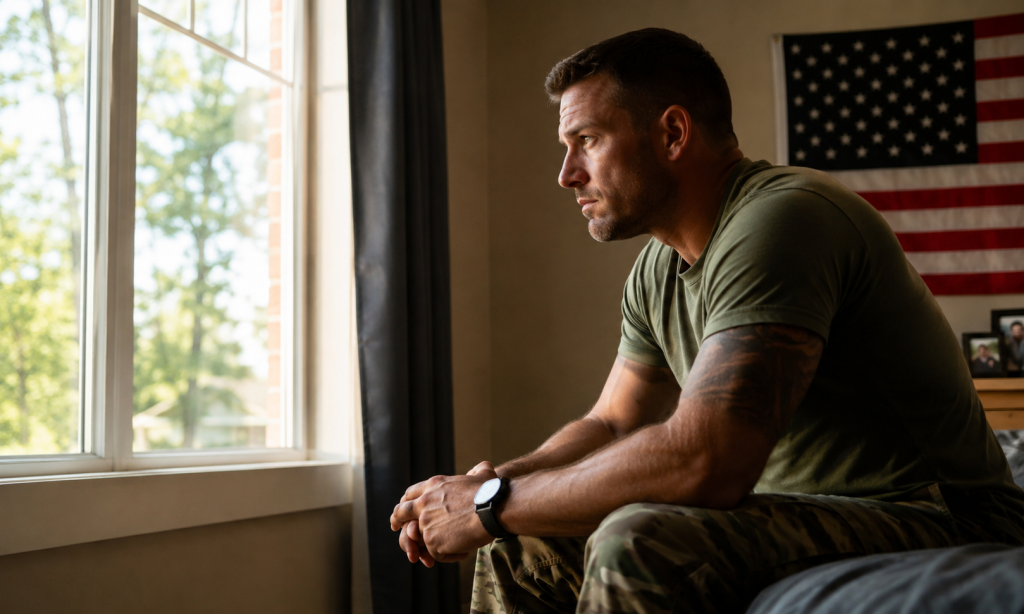
Some veterans eventually make victimhood part of their identity. Every conversation circles back to what happened to them. Every setback is explained by something someone else did years ago. Every opportunity is dismissed before it’s even attempted because civilians “don’t understand veterans.” Maybe they don’t. So what?
The world has never promised to be fair, and it certainly isn’t obligated to rearrange itself around our pain. That may sound harsh, but harsh and false aren’t the same thing. The sooner we accept that reality, the sooner we can start taking back control of our own lives.
One of the greatest lessons the military ever taught us was that nobody was coming to rescue us. When missions fell apart, we adapted. When plans failed, we improvised. We didn’t have the luxury of sitting on the objective explaining why success was impossible. We found another way because the mission demanded it.
Somewhere after taking off the uniform, too many veterans forgot that lesson.
Instead of adapting, they wait. They wait for the perfect opportunity, the perfect job, the perfect treatment program, or for someone else to finally recognize how badly they’ve been wronged. In the meantime, months become years, and years become a life spent standing in place.
Social media has only made the problem worse. It rewards victimhood with likes, sympathy, and endless validation. Post about how broken you are, and people will tell you how strong you are for surviving. While encouragement has its place, there’s a difference between supporting someone who is fighting to get better and applauding someone for staying exactly where they are.
Growth rarely feels as good as validation. Growth requires uncomfortable honesty. It means admitting that maybe you’ve become your own biggest obstacle. It means going to therapy when you’d rather isolate, putting down the bottle when it’s easier to pour another drink, applying for the job you’re convinced you won’t get, or accepting that your failed relationships weren’t entirely someone else’s fault.
None of those things are easy. That’s precisely why they’re worth doing.
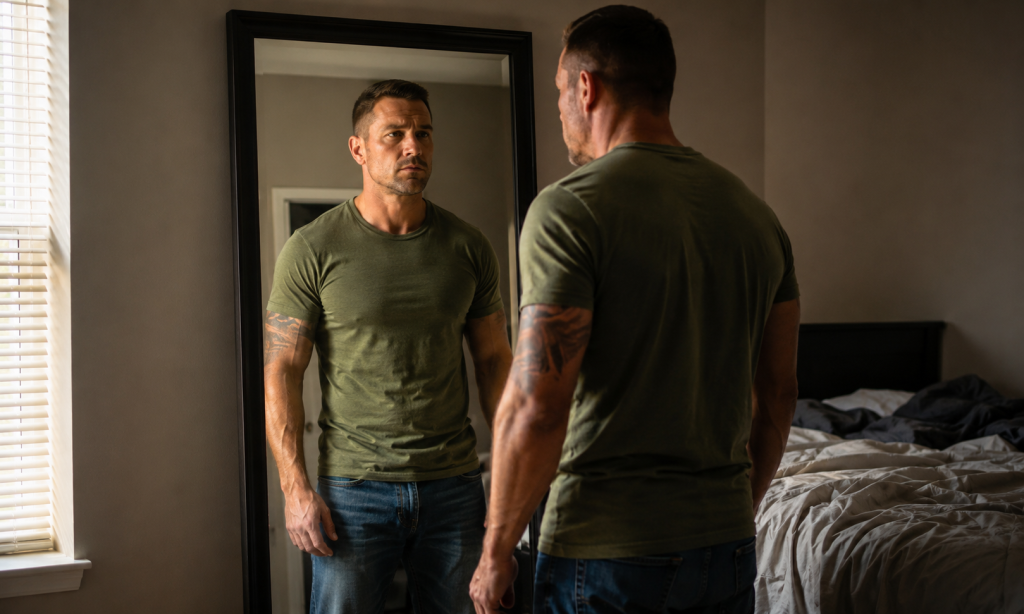
I’ve heard veterans say they feel stuck, but in many cases they aren’t stuck at all. They’re comfortable. Misery has become familiar, and familiar eventually feels safe. The problem is that nothing grows inside a comfort zone built on excuses. Changing your life requires uncertainty, risk, and the willingness to admit that the person staring back at you in the mirror has work to do.
This isn’t an argument against asking for help. There’s a tremendous difference between struggling and surrendering. There’s a difference between needing therapy and refusing therapy. There’s a difference between living with PTSD and using PTSD as permission to stop living. Asking for help is an act of responsibility. Refusing to take any responsibility because you’re waiting for someone else to fix your life is something entirely different.
Think about it this way. If your truck broke down on the side of the road, you wouldn’t climb into the back seat and decide to live there. You’d either fix it yourself or find someone who could. Yet that’s exactly what some veterans do with the wreckage of their own lives. They move into their problems instead of working their way out of them.
Nobody can do your pushups for you. Nobody can lose your weight, stay sober on your behalf, repair your marriage, or heal your mind if you refuse every hand reaching out to help. Responsibility isn’t a punishment; it’s power. The moment you accept responsibility for your future, you take that power back from everyone you’ve been blaming for your past.
If your finances are a disaster, make a budget. If you’re unemployed, send out applications. If you’re overweight, take a walk. If you’re drinking too much, ask for help today instead of promising yourself you’ll quit next Monday. One step won’t solve every problem in your life, but it will prove that your life is still moving in the right direction.
Veterans are capable of extraordinary things. We’ve watched ordinary Americans accomplish impossible missions under impossible conditions. We’ve endured hardship that most people will never understand. Surely we are capable of surviving civilian life without surrendering to self-pity.

Life isn’t fair, and it never has been. The question isn’t whether you’ve been dealt a bad hand. The question is what you’re going to do with the hand you’re holding today.
Because every day you spend waiting for someone else to rescue you is another day you’ve decided to remain exactly where you are.
If you’re not changing it, you’re choosing it.
_____________________________
Charles served over 27 years in the US Army, which included seven combat tours in Iraq and Afghanistan with various Special Operations Forces units and two stints as an instructor at the United States Military Academy at West Point. He also completed operational tours in Egypt, the Philippines, and the Republic of Korea and earned a Doctor of Business Administration from Temple University as well as a Master of Arts in International Relations from Yale University. He is the owner of The Havok Journal and the co-author of the book Violence of Action: The Untold Stories of the 75th Ranger Regiment in the War on Terror. His views expressed here are his own and are not necessarily reflective of the policy of the US Army or the United States Government.
As the Voice of the Veteran Community, The Havok Journal seeks to publish a variety of perspectives on a number of sensitive subjects. Unless specifically noted otherwise, nothing we publish is an official point of view of The Havok Journal or any part of the U.S. government.
Buy Me A Coffee
The Havok Journal seeks to serve as a voice of the Veteran and First Responder communities through a focus on current affairs and articles of interest to the public in general, and the veteran community in particular. We strive to offer timely, current, and informative content, with the occasional piece focused on entertainment. We are continually expanding and striving to improve the readers’ experience.
© 2026 The Havok Journal
The Havok Journal welcomes re-posting of our original content as long as it is done in compliance with our Terms of Use.


