By Charles Crespo, USAF Retired
When I retired from the United States Air Force and returned to Puerto Rico, I believed my family’s healthcare would follow us home. I served over two decades, deployed, moved where the mission sent me, and trusted that the benefits earned through service would remain dependable after retirement.
That trust did not survive contact with the healthcare system in Puerto Rico.
My family’s experience involved my wife’s OB/GYN care: the removal of an IUD, the purchase of a new IUD, and the placement of that new IUD. This was not experimental or cosmetic care. These services are explicitly covered by TRICARE. Before the appointment, I called TRICARE to confirm coverage. We also used an OB/GYN clinic in Puerto Rico that accepts TRICARE.
We did exactly what military families are told to do: checked first, verified coverage, used a participating clinic, and followed the process. Still, reimbursement took roughly six months.
The claim moved only after I opened a formal grievance and contacted my congressional representative for help. I also reached out to the office of Resident Commissioner Pablo José Hernández, whose staff assisted with my inquiry.
This was not just a paperwork delay. It was a warning flare.
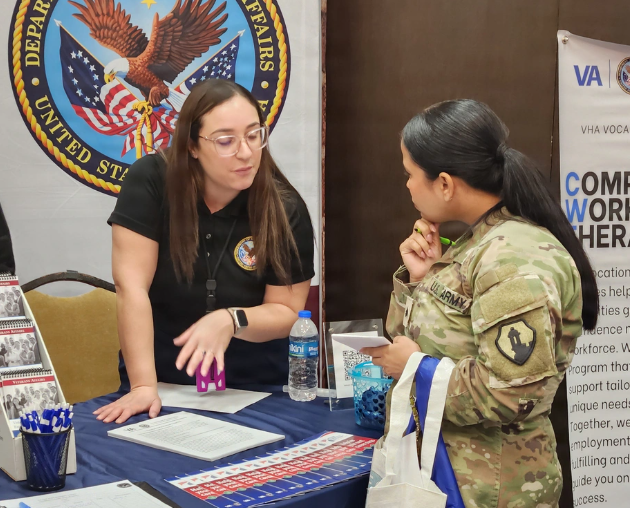
Like many retirees in Puerto Rico, my family made a difficult financial decision. We were paying about $6,000 a year for private medical coverage for my wife, son, and daughter just to have reliable local access to care. Meanwhile, retirees living on the mainland can often pay less than $900 a year for family coverage through TRICARE, with access to pharmacy benefits and eye care.
That difference is hard to ignore. Two families can serve under the same flag, earn the same benefit, and retire under the same military system, yet face completely different healthcare realities depending on where they live.
For my family, this is not theoretical. Both of my children require allergy and ophthalmology care numerous times a year. These are not optional appointments. They help keep them healthy, safe, and able to function like other children. When specialty access is uncertain, families are forced to decide whether to wait, pay out of pocket, rely on private insurance, or start another reimbursement fight.
Pharmacy access is another daily reminder that the system does not function here the way it should. In our experience, local pharmacy options for TRICARE Overseas Select are extremely limited. Walgreens has been our only reliable option and, thankfully, the one consistently positive interaction we have had with TRICARE Overseas Select. But one reliable pharmacy chain should not be the fragile bridge holding a family’s healthcare together.
Since I began speaking publicly and started a petition about TRICARE access in Puerto Rico, other retirees, veterans, and military families have shared similar stories. The pattern is clear: families who earned military healthcare benefits are still paying for private insurance, paying up front for care, chasing reimbursements, struggling with limited provider access, or delaying care because they cannot afford the financial risk.
One military family wrote that they have TRICARE Overseas but still pay for private insurance through Triple-S because TRICARE is “not reliable in Puerto Rico.” Another veteran who needed robotic cancer surgery said the VA in Puerto Rico did not have the capability and TRICARE did not have an available provider. He sought care outside the network, paid more than $15,000 up front, and waited almost a year before being reimbursed a little over $12,000.
That is not the promise we were given.
Puerto Rico is not a foreign country. Puerto Ricans have served in every major American conflict for generations. We have worn the same uniform, saluted the same flag, deployed to the same wars, and buried our dead under the same folded colors. Yet when many of us return home after service, healthcare access can feel conditional, inferior, and administratively abandoned.
The issue is not whether TRICARE technically exists in Puerto Rico. It does. The issue is whether TRICARE works here in a way that is practical, reliable, and equal to the benefit military families earned.
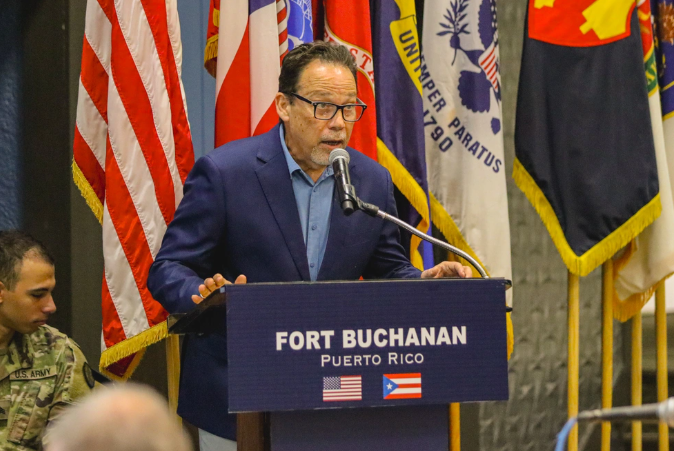
Healthcare in Puerto Rico operates differently than in many mainland communities. Provider networks are limited. Some doctors do not accept TRICARE. Billing and reimbursement can become confusing. Families may be required to pay up front and later seek reimbursement, creating a financial barrier many cannot absorb.
For a family living paycheck to paycheck, “pay first and claim later” is not real access. It is denial with extra steps.
This is why H.R. 2632 matters. The bill seeks to address TRICARE access and administration issues affecting Puerto Rico. Whether through improved provider access, better claims processing, stronger oversight, or a model that recognizes Puerto Rico’s unique healthcare system, Congress must treat this as more than an inconvenience.
This should not be a partisan issue. It is about whether military service means the same thing after you come home to Puerto Rico.
When my wife’s claim was delayed, quiet frustration was not enough. I had to file a grievance, get a case number, and contact congressional representation. That is why I encourage others to document their experiences, file official complaints, and seek congressional assistance when necessary. One complaint can be ignored. Hundreds of documented cases become harder to dismiss.
That is why I started the petition. I am not doing this because of one frustrating claim or personal inconvenience. I am doing this because the same stories keep surfacing from different families, towns, and military backgrounds. The details change, but the structure is the same: limited access, up-front costs, delayed reimbursements, pharmacy limitations, confusion, and families left to navigate the maze alone.
Military families in Puerto Rico are not asking for special treatment. We are asking for equal treatment.
Same service. Same sacrifice. Same earned benefit.
TRICARE should not become unreliable because of a ZIP code, an island, or an administrative label. Puerto Rico’s veterans and military families carried the mission. Now the system needs to carry its promise.
Respectfully,
Charles Crespo
USAF Retired
_____________________________
As the Voice of the Veteran Community, The Havok Journal seeks to publish a variety of perspectives on a number of sensitive subjects. Unless specifically noted otherwise, nothing we publish is an official point of view of The Havok Journal or any part of the U.S. government.
Buy Me A Coffee
The Havok Journal seeks to serve as a voice of the Veteran and First Responder communities through a focus on current affairs and articles of interest to the public in general, and the veteran community in particular. We strive to offer timely, current, and informative content, with the occasional piece focused on entertainment. We are continually expanding and striving to improve the readers’ experience.
© 2026 The Havok Journal
The Havok Journal welcomes re-posting of our original content as long as it is done in compliance with our Terms of Use.