By Dr. Wylie Brace and Samantha D. Glidewell
This article is the final installment in a three-part series adapted from qualitative research on veterans’ responses to the 2021 U.S. withdrawal from Afghanistan. The full manuscript, including methods, references, and broader clinical discussion, is available through a DOI-linked version here. Direct quotes are from anonymous study participants.
The Afghanistan withdrawal not only reopened grief but also damaged trust. For many veterans in this study, the way the war ended overshadowed the war itself. The execution of the withdrawal became the final lens through which years of deployment, sacrifice, injury, and death were reinterpreted.
One active-duty participant stated the feeling plainly:
“[Those] deaths were all for nothing. We gave the people a little better life for about 20 years. But now it means nothing.”
Another participant, reflecting on more than 20 years in the military, wrote:
“It was the biggest waste of human life in my opinion as of today.”
One participant went even further:
“I have an unfavorable opinion of how the ‘pullout’ was executed. Like crazy. Who in their right minds thought that would be viewed favorably by anyone? Not a healthy or logical way to sever a friendship. But, that was a political move. Nothing more. Fuck all the people that died before and after we left, they counted for naught.”
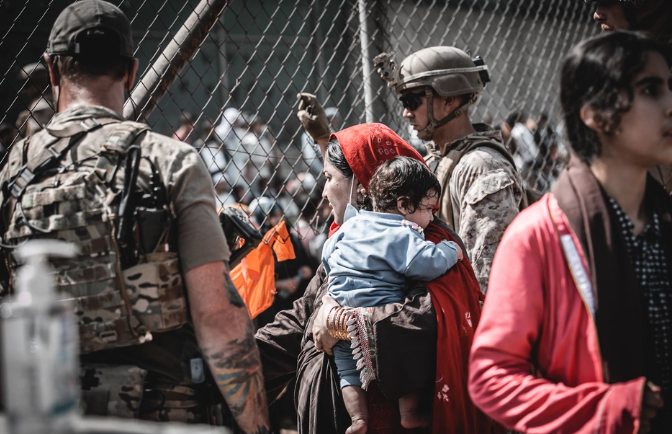
Across many responses, participants believed withdrawal itself was necessary. That is important. The anger was not always about leaving Afghanistan. In many responses, the anger was about how the United States left: the speed, the chaos, the abandonment of partners, the collapse of Afghan forces, and the sense that the country had failed to account for what that ending would do to the people who served.
One participant captured that distinction:
“I feel it was necessary to pull out, but the way it was done was haphazard at best.”
Another wrote:
“I wanted the war to end… we got embarrassed on the way out. Now I feel that we should have stayed forever.”
That contradiction is not confusion. It is the emotional reality of unresolved war. A veteran can want a war to end and still be devastated by how it ended. A veteran can understand the strategic case for leaving and still feel that the exit betrayed the people who fought, died, bled, interpreted for us, partnered with us, and believed.
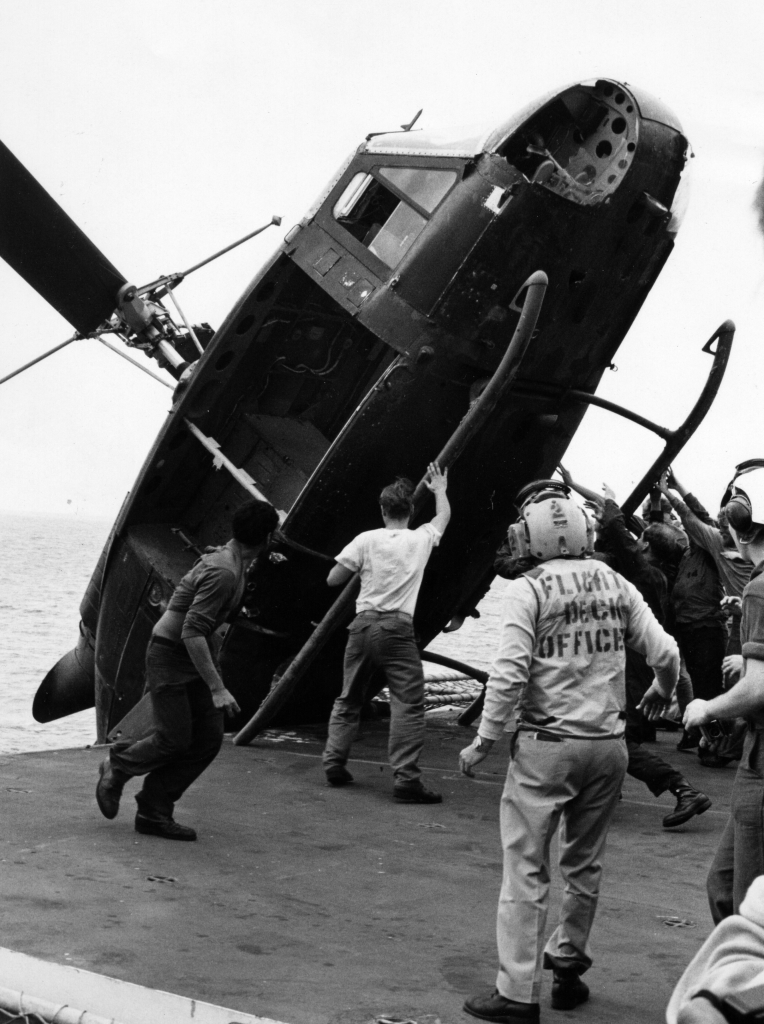
The Vietnam analogy appeared repeatedly. Veterans described broken promises, embassy evacuations, public humiliation, and the sense that leaders had insisted Afghanistan would not end like Vietnam, only to watch the same symbolic images return.
One participant lamented:
“It has been an open secret since 2014 that the war was unwinnable, though the Vietnam comparisons were out in force almost as soon as the war began.”
Another criticized:
“The result was chaos and absolute failure. It was as if we watched the withdrawal of Vietnam all over again.”
Whether the analogies are historically perfect is less important than what they reveal. Many veterans interpreted the withdrawal as abandonment, mismanagement, and national forgetting.
Furthermore, there appeared to be a disconnect between what wartime veterans felt about their sacrifices and what actually happened to Afghanistan after the war ended. Some responses reflected a belief that U.S. service had helped provide a period of relative freedom, especially for women and children, even if that outcome did not last. That created a painful tension: veterans had fought for rights and freedoms central to U.S. values while also recognizing that those aims did not align neatly with Afghanistan’s sociopolitical realities. One participant even foreshadowed part of the humanitarian crisis that would follow the Taliban’s return to power:
“I feel very sorry for the women and children of Afghanistan… it’s a shame that the women and young girls are not allowed to get an education or even provide for their families.”
A civilian respondent offered a broader critique of the mission itself:
“There’s no way you can expect to place full Western ideology within a Middle Eastern country and expect it to work.”
Overall, civilian participants often shared the view that the withdrawal hurt America’s image and damaged the fight against terrorism. But civilians also expressed greater uncertainty about what happened, why it happened, and what role the Taliban played. Some admitted they did not know enough, while others deferred to veterans and respected their insights more than their own. That gap matters because many veterans carry a detailed, personal, and embodied understanding of the war’s ending, while civilians often have only fragments from polarized and often shallow media coverage.
That mismatch can lead to isolation. Veterans may feel that civilians have moved on, do not understand, or do not want to understand. Civilians may avoid the topic because it feels political, complicated, or too painful. The result is silence, and silence is not neutral when people are carrying unresolved grief, anger, and moral injury.
For clinicians, the central lesson is straightforward: ask about the withdrawal directly. Do not assume that Afghanistan-related distress is only about firefights, IEDs, death, or fear-based trauma. Those experiences matter, but the withdrawal may have changed how veterans understand them.
That means therapists should be willing to ask questions such as:
• What did the Afghanistan withdrawal mean to you?
• What changed for you when Kabul fell?
• What feels unresolved or unforgivable?
• How did the ending affect the way you understand your service?
• What was lost beyond the people who were killed?
• Who or what do you feel has betrayed you?
• What parts of your service still feel honorable, even if the ending does not?
Those questions are not about turning therapy into a policy debate. They are about giving veterans room to express what the event meant to them. Many participants in this study described not only trauma symptoms but also moral pain, broken trust, grief without public recognition, and difficulty integrating the ending of the war into their sense of identity.
Families and friends can learn from this, too. When Afghanistan comes up, the goal does not need to be agreement. The goal is not to win an argument about whether the withdrawal should have happened. The better response is curiosity without interrogation: What part of it still stays with you? Are there things people often misunderstand? Is there anything you wish had been different?
Veteran organizations can also play a role by creating spaces where the withdrawal can be discussed without reducing it to partisan blame. The responses in this study did not fit neatly into party lines. Some blamed Biden, while others blamed Trump. Many blamed an entire institutional system. The common thread was not party politics. It was the belief that veterans had been asked to carry the burden of a war whose ending was mishandled and then quickly forgotten.
The broader public should understand that the withdrawal is not merely a matter of the past. For many veterans, it remains active, tied to grief, moral injury, institutional betrayal, anger, pride, shame, and the complex work of preserving meaning after a war ends badly.
That final point is what this research keeps returning to. The issue is not only whether the United States should have left Afghanistan. The issue is what the leaving did to the people who served there, lost people there, believed in something there, or tried to make sense of the war after watching it end on television.
The series began with grief, moved into betrayal and moral injury, and ends with a practical implication: veterans need space to talk about the withdrawal as more than a headline or a political stance. Clinicians need to ask about it. Families need to listen for the meaning beneath the anger. Veteran organizations need to keep the conversation alive. And the public needs to understand that national attention moved on faster than many veterans could.
One participant said it best:
“The nation has already moved on and forgotten the Afghanistan pullout debacle… but we haven’t. And never will.”
_____________________________
Dr. Wylie Brace served with 3rd Ranger Battalion, 75th Ranger Regiment, and is a cognitive psychologist. He is the founder of Brace Research & Consulting LLC and specializes in perception, decision-making, and applied veteran-focused research.
Samantha D. Glidewell is a doctoral researcher at Miami University specializing in the psychological impact of trauma and the factors that contribute to adverse mental health outcomes, including betrayal. Her clinical interests include psychological assessment, psychotherapy, and evidence-based treatment for individuals experiencing trauma-related and complex mental health concerns.
As the Voice of the Veteran Community, The Havok Journal seeks to publish a variety of perspectives on a number of sensitive subjects. Unless specifically noted otherwise, nothing we publish is an official point of view of The Havok Journal or any part of the U.S. government.
Buy Me A Coffee
The Havok Journal seeks to serve as a voice of the Veteran and First Responder communities through a focus on current affairs and articles of interest to the public in general, and the veteran community in particular. We strive to offer timely, current, and informative content, with the occasional piece focused on entertainment. We are continually expanding and striving to improve the readers’ experience.
© 2026 The Havok Journal
The Havok Journal welcomes re-posting of our original content as long as it is done in compliance with our Terms of Use.

