“I’d rather be lucky than good.” – Lefty Gomez
“Today we were unlucky, but remember we have only to be lucky once; you will have to be lucky always.” – Anonymous IRA spokesman
[Author’s note: even as I write this article, there have been constant updates as new information comes out about the assassination attempt. Those updates are reflected in in-text notes such as this.]
In Part 1 of this article, I discussed my analysis and opinion of the state of the protective security industry and some of the day-to-day challenges PSDs (Protective Security Details) have to grapple with from their clients/protectees, morals/ethics, and politics. I try to stay humble about my bona fides; I’m just a dude. Still, as a former PSS/DDM (protective security specialist/designated defensive marksman (counter-sniper)) with several additional years of private sector protective security experience, I feel like I have some unique insights into the failures that led to the assassination attempt on former President Trump last weekend.
As I stated in Part 1, I wasn’t there and only know what I have seen or read, so I will try not to air-chair quarterback what happened on July 13, 2024 too much until all the investigations and inquiries have concluded. However, I still would like to point out some undeniable failures visible to people without my knowledge and experience, mixed with some inside baseball analysis, and discuss what occurred and what undoubtedly resulted in Trump’s narrowly avoided assassination attempt.

Fumbling the Ball
Protection should match the threat level, and as I stated previously, Trump has a massive target on his back (I will save who put it there for another article), requiring a much larger and greater resourced protective detail. There are several reports that Trump’s team had been requesting additional personnel and assets but were denied and that many of Trump’s assigned PSD agents had been rotated off that day because they were overworked. The U.S. Secret Service (USSS) and Department of Homeland Security (DHS) have denied the former report, but the latter could be verified in action on the ground alone.
That personnel decision resulted in agents from other agencies like the Treasury Department and DHS filling the gaps. These agents did have some protective security training and experience, but nowhere near the caliber of the Secret Service, especially those who have been with Trump for years. This inexperience and lack of continuity and cohesion was immediately apparent to even the casual viewer.
Again, not to second-guess Trump’s security detail’s actions, but they stayed way too long on the “X” (kill zone) and let him expose himself to follow-on attacks. Body bunker your protectee and move them to the closest hard point, defendable cover, or a hardened vehicle to put as much distance between them and the threat as possible. Forget about his shoes – which his detail knocked him out of – or his hat; his staffers can get those later. However, Trump is Trump, and his reputation was lionized by a few now iconic pictures and videos as his PSD struggled to get him off the stage. Again, the biggest threat to a protectee is sometimes themselves. [More in-depth analysis does reveal that Trump’s detail was waiting for members of the CAT (counter-assault team) to escort them to the armored vehicle, and agents and ballistic shielding sufficiently covered him during that tactical pause.]
What also stuck out to me, and it took watching several different videos from differing angles, was that you can hear one of the female agents shouting, “What are we doing? Where are we going?” It appeared to be the same agent that unnecessarily drew her firearm and then struggled to get it reholstered as they were loading Trump into the armored SUV. There is no way this agent, especially if she was going to be in such proximity to the protectee as a post agent, that she was not briefed on the primary, secondary, and tertiary exfiltration plans. One could make a myriad of excuses ranging from “fog of war” to inexperience, but none are good. Recent DEI (diversity, equity, and inclusion) controversies involving the Secret Service also bring up some uncomfortable but necessary conversations about the merits and quality of the agents assigned, even temporarily, on Trump’s or any protective detail.
Familiarize Yourself With the Terrain
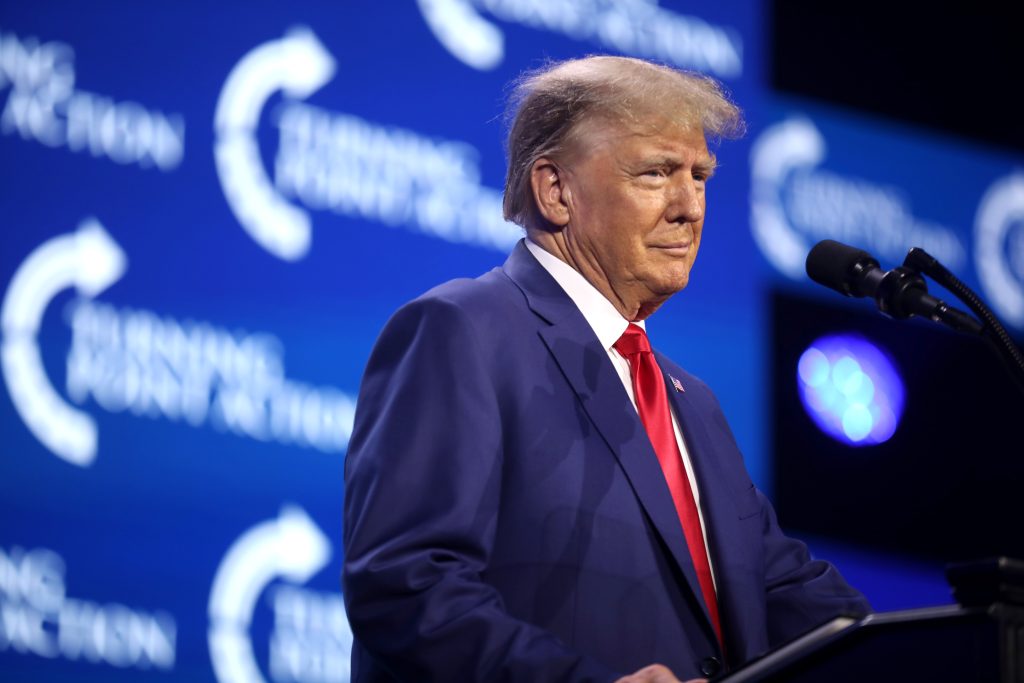
Before a protectee arrives, almost all PSDs send an advance team to conduct a site survey of the venue to be visited; the exception is unplanned stops, but the area is still assessed for threat zones, points of egress, and hard points (safe havens). The Butler, PA, rally was no exception. The rooftop where the would-be assassin fired from was identified days prior as a potential threat zone necessitating coverage. As a former sniper and DDM and predominately assigned to an advance detail, that would have been my primary area of focus because I would have taken a shot from there if I were a bad actor.
The official statement from the USSS is despicable and disingenuous in its absurdity. The USSS director Kimberly Cheatle claimed the rooftop in question was left unguarded because it was “sloped,” so local law enforcement officers [now reported as another counter-sniper team] were stationed inside the building… What?! The rooftop where the counter-sniper team that engaged the shooter was positioned appeared to have an even larger slope angle. Nevermind the ladder the shooter was able to use to gain access to that roof and was unchallenged in his approach and ascent. I don’t even know what to say. [Later reports state that outer perimeter security assets and the second counter-sniper team did identify the shooter as a suspicious individual (using a range finder!) almost thirty minutes earlier but lost sight of him until right before the shooting].
Every Soldier, a Sensor
Numerous members of the crowd outside of the rally and other bystanders identified the shooter at least a few minutes before the assassination attempt; a few were even able to get video and pictures of him getting into his firing position. They reported it to nearby law enforcement officers, but these reports seemingly went largely unheeded or resulted in confusion and a delayed response. Understanding that multi-agency communications are always abysmal and civilian reporting does not always translate to a clear understanding of the situation as it develops, would the previously mentioned high-threat area be of immediate interest, especially when numerous people are pointing at a gunman on the roof of a building opposite the stage? [Again, new reporting asserts that the secondary counter-sniper team inside the shooter’s building did make reports to the tactical operations center for the event thirty minutes before the shooting, but how effectively that information was disseminated and acted on was clearly lacking]
Rules of Engagement and Use of Force
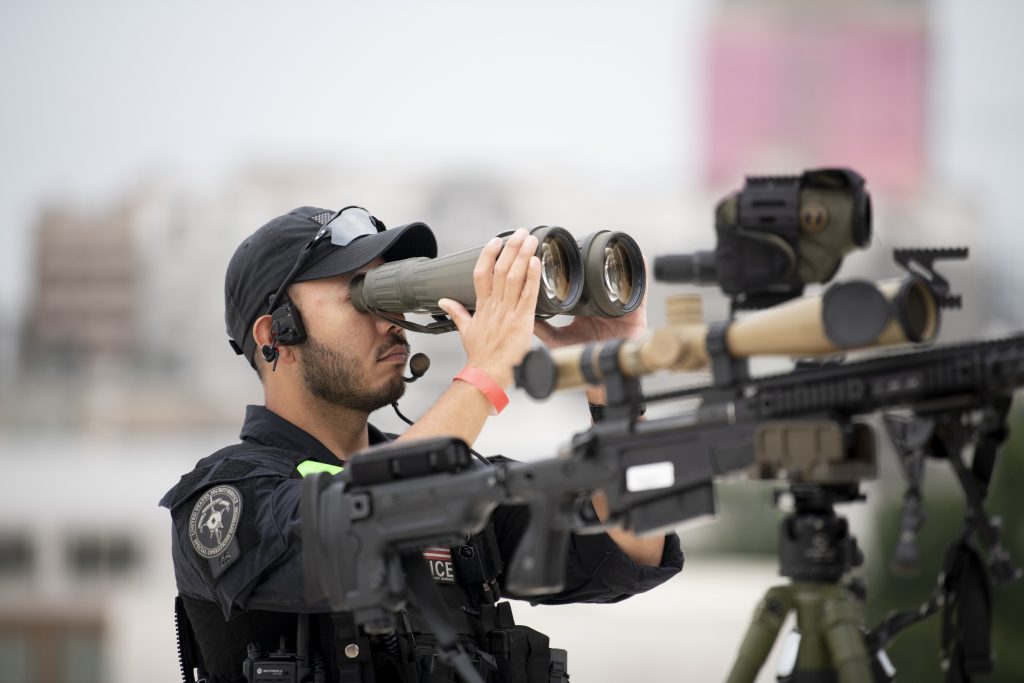
I will give the counter-sniper team a great deal of deference and the benefit of the doubt because I know how difficult that job is, especially when the threat is not always clear, and acting too hastily will have you sitting in a defendant’s chair. Nobody but those CS CAT officers looking through their scopes can tell you how well they could see the shooter, identify a weapon, if there was a friendly or innocent in the background, or any other conditions that delayed engagement or prevented them from taking preemptive lethal action. We also cannot forget that this administration has gone to great lengths to throw low-level agents, officers, and contractors to the wolves in the justice system for making a tactical decision doing what they believed was right. That alone is enough to make anyone in that position hesitate for a second or two.
Time to Fall on Your Sword
Some tough questions need to be answered about how this near nation-altering tragedy occurred. Why was Trump allowed to go on stage knowing there was a potential threat out there? Did Trump even know about the immediate threat, and if he did, was it his call to proceed? With the Iranian assassination threat the Intelligence Community is now reporting, why was Trump’s security footprint not increased? Why were there seemingly no aerial ISR (intelligence, surveillance, and reconnaissance) assets for this event?
We should also ask other less comfortable questions: Why is the DHS now stonewalling Congressional inquiries? Why is DHS Secretary Myorkas dishonest with the American public? Can we trust the FBI to conduct a thorough investigation of this attack given its recent track record, especially regarding Trump? Why is no one being held accountable for the bureaucratic and on-the-ground failures?
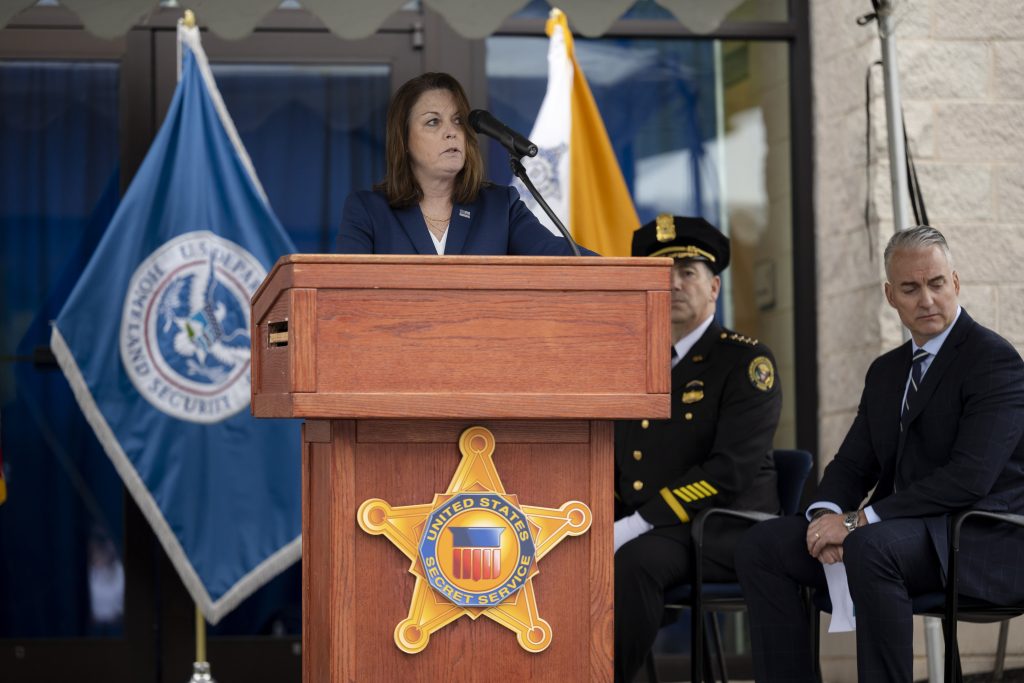
As USSS Director Kimberly Cheatle said, “The buck stops with me,” as the head of that organization, she should immediately resign. Similarly, DHS Secretary Myorkas, whose tenure as head of that agency (and umbrella overseer of the USSS) has been rife with abject failures, should also resign. I am honestly not shocked this happened, given the vile and inciteful rhetoric espoused and propagated by Trump’s critics and opponents over the last eight years (again, I’ll save that for another article), and I fear it will not be the last. I hope some people in positions of authority do the right thing and “fall on their swords” so some significant reforms can be made and this country can avoid near tragedies like this from happening in the future.
________________________________
Ben Varlese is a former U.S. Army Mountain Infantry Platoon Sergeant and served in domestic and overseas roles from 2001-2018, including, from 2003-2005, as a sniper section leader. Besides his military service, Ben worked on the U.S. Ambassador to Iraq’s protective security detail in various roles, and since 2018, he has also provided security consulting services for public and private sectors, including tactical training, physical and information security, executive protection, protective intelligence, risk management, insider threat mitigation, and anti-terrorism. He earned a B.A. and an M.A. in Intelligence Studies from American Military University, a graduate certificate in Cyber Security from Colorado State University and is currently in his second year of AMU’s Doctorate of Global Security program.
As the Voice of the Veteran Community, The Havok Journal seeks to publish a variety of perspectives on a number of sensitive subjects. Unless specifically noted otherwise, nothing we publish is an official point of view of The Havok Journal or any part of the U.S. government.
Buy Me A Coffee
The Havok Journal seeks to serve as a voice of the Veteran and First Responder communities through a focus on current affairs and articles of interest to the public in general, and the veteran community in particular. We strive to offer timely, current, and informative content, with the occasional piece focused on entertainment. We are continually expanding and striving to improve the readers’ experience.
© 2026 The Havok Journal
The Havok Journal welcomes re-posting of our original content as long as it is done in compliance with our Terms of Use.