
by Erfan Choobinebehrooz
November 14, 2019, Hamid, dressed in a dark blue suit, occupied one of the front guest seats in a rectangular narrow room with vertical double-slider clerestory windows separating the ceiling from the wall across from the interior door. A banner with a faded floral pattern, crafted in a vignette color scheme —whose blue tones deepened towards the edges— was hung right behind a dark brown executive desk with a built-in modesty panel. The banner read: The Baysunghur Research Institute convenes: A review of Kusuya Dar Emtedade Tarikh (the city of Kusuya, over the course of history) authored by Hamid Kamgar. “I felt quite content that I could do something for a somewhat obscure region in Herat,” Hamid recalled. Khalilulah Afzali, the founder of Baysunghur Institution, admired him as a “hardworking” person. “One of our objectives was to provide critical input and facilitate future studies on Herat,” Afzali said.
On August 12, 2021, Taliban militants seized control of Herat Province. Their return to power would soon alter the cultural dynamics not only in Herat but also in other Persian-speaking regions of Afghanistan. In an article published on August 8, 2023, in The Diplomat, Jaweed Ahwaar, an Afghan human rights activist, refers to the Taliban’s “Anti-Persianism” policy, which initially manifested itself through linguistic engineering. On September 21, 2022, Afghan media outlets, such as 8am, and on October 4, 2022, Afghanistan International reported on the Taliban’s authorization to change the term ‘Daneshgah’ (the Persian equivalent of ‘university’) to its Pashtu counterpart on university signs. To further expand their cultural imprint, the nascent Taliban government has also undertaken toponymical revisions. According to a report that appeared on December 12, 2022, in multiple media outlets such as Etilaat Rooz and Independent Persian, Taliban officials renamed ‘Charikar,’ the center of Parwan province, to ‘Imam ‘Azam’—an Islamic ecclesiastical title attributed to Abu Hanifa, the founder of the Hanafi School of Islamic jurisprudence.
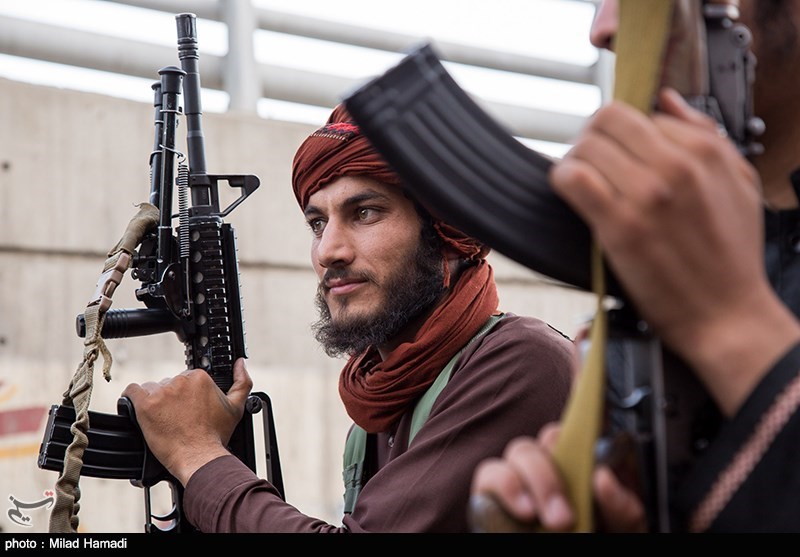
(Photo by Milad Hamadi for the Tasnim News Agency licensed under a Creative Commons Attribution 4.0 International License)
“I knew these days would come,” Hamid said. He turned 37 on August 15. With his dark, droopy eyes and salt-and-pepper asymmetrical hair, where both sides are trimmed slightly shorter than the rest, along with a full stubble, he carries an appearance that exudes a melancholic aura. He was born and raised in a country where people measured the last five decades by either coup d’états or wars. His father, a retired meteorologist, lost his job after the so-called Saur (June) coup in 1973. Years later, he would open a small bookshop in their hometown of Ghurian, a district located in the far west of Afghanistan, approximately 42 miles to the west of Herat and a similar distance to the east of the Iranian border. For Hamid, his father’s bookshop provided solace amid the escalating horrors in a war-torn country, offering a respite from the pervasive bleakness. “I adored reading books and developed a self-paced learning routine, enabling me to finish school early,” he said. Nevertheless, this kind of enterprise couldn’t withstand the harsh reality, where mostly illiterate and impoverished local settlers viewed books as out-of-reach commodities. “Later, I enrolled in the Faculty of Agricultural Sciences at the University of Herat but had to drop out due to my family’s financial difficulties,” Hamid recalled.
In 2008, he met with someone who would soon steer Hamid’s zeal for reading with new gusto: Nouria, a teacher of history and geography at the girls’ schools in Ghurian. They were married in the winter of that year. By then, Hamid had found a part-time job at an electrical substation in Ghurian. “Whenever I went to Herat to collect my salary, friends and colleagues would generously give me five to ten books on the history and geography of Afghanistan,” Hamid recalled. Nouria, the diligent teacher, and Hamid would meticulously comb through these preparatory materials before every class session. They often worked in tandem, with Nouria battening down the hatches, preparing for any potential “gotcha moments” at school, as Hamid recalled.
Henceforth, Hamid would be engrossed in the history of Afghanistan. “The more I read, the less I could justify the curiosity that drove me to explore the abandoned historical sites and monuments in Herat Province,” he said. He, therefore, embarked on overland exploratory trips to the forlorn districts of Herat. In areas inaccessible by car, he would trudge remote roads prone to fluid situations such as the risk of abduction by militia goons. These efforts ultimately paid off, and he was able to publish his findings in four different books, of which Kusuya Dar Emtedade Tarikh 2018 and Asar-e Ghurian 2017 (monuments of Ghurian).
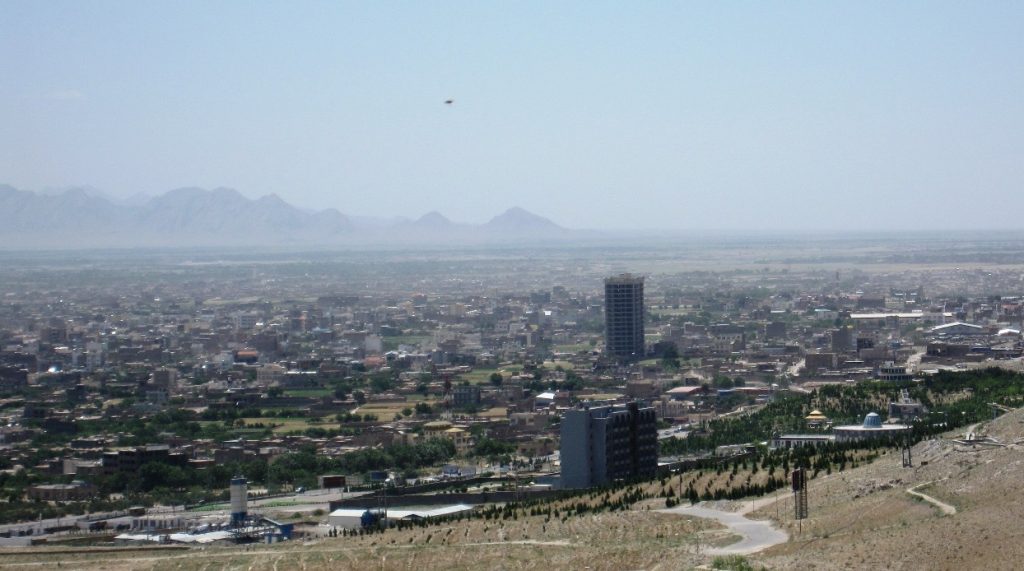
Khalilullah Afzali was in Kabul when he learned of the fall of Herat. A man in his forties projects a round face with short-trimmed, pitch-dark wavy hair. A neatly grown one-month stubble could barely conceal half of his naturally sun-kissed skin. Khalil, born in Iran, grew up in a state of circular migration between Iran and Afghanistan. This frequent relocation stemmed from “discrimination and xenophobia” experienced in the host country, as well as “political upheavals” rooted in Afghanistan, such as the Taliban’s rise to power in 1992, as he recalled. Khalil belongs to a prestigious Herati family. “My father, and great-grandfather were both high ranking military personnel,” he said. Khalil began to develop his cultural consciousness while at university. “In the penultimate year of my bachelor’s degree, I started reading materials that enlightened me about the historical misinterpretation and cultural retouch plaguing Afghanistan,” he recalled. Thanks to his father’s financial support and his dogged determination to stabilize the erratic pulses of Persian culture, he established the Baysunghur Institution and Publishing House soon after completing his Ph.D. at the University of Ferdowsi in Mashhad, Iran.
From 2017 to 2021, Baysunghur evolved into the hub of Persian culture and literature in Herat, sparking discussions on new scholarly work and a surge in the publication of books on the history and literature of the region. In 2019, Afzali and his colleagues launched the first issue of Name-ye Baysunghur, an academic annual focusing on history and literature of Herat. On March 13, 2021, five months prior to the collapse of the republic, they successfully published the second issue despite the increasing instability in Afghanistan. A few days before the siege of Herat, Khalil went to Kabul. While in Kabul, he requested his friends and colleagues to pack a thousand books he had collected for Baysunghur’s library and move them to a secure location. “I was afraid of Taliban militias looting the library” he explained. Concerned about a similar scenario, Hamid resolved to “bury books” with titles that might be interpreted as anti-Taliban.
For Heratis like Hamid and Khalil, the capitulation of Ismail Khan was the final nail in the coffin. “When the photo of Ismail khan circulated on social media, I felt disheartened,” Khalil recalled. Ismail Khan, a former Mujahedin fighter, served as the Minister of Energy and Water from 2005 to 2013. When the Taliban reached the gates of Herat, this 75-year-old former guerrilla warrior, part of a group that fought the Soviet Red Army with American support, faced the challenge. Dressed in crisp white gown with his head wrapped in a black and white turban, he moved through different corners of Herat to oversee the resistance. On August 13, 2021, the Taliban announced Ismail Khan’s defeat through a photo that depicted him seated on a three-seater leather couch, flanked by two Taliban fighters on his right and the other standing on his left. The snuggling posture of the Taliban militant sitting next to him added to the humiliation, further infuriating the people of Herat and beyond, as reported by BBC Persian on August 13.
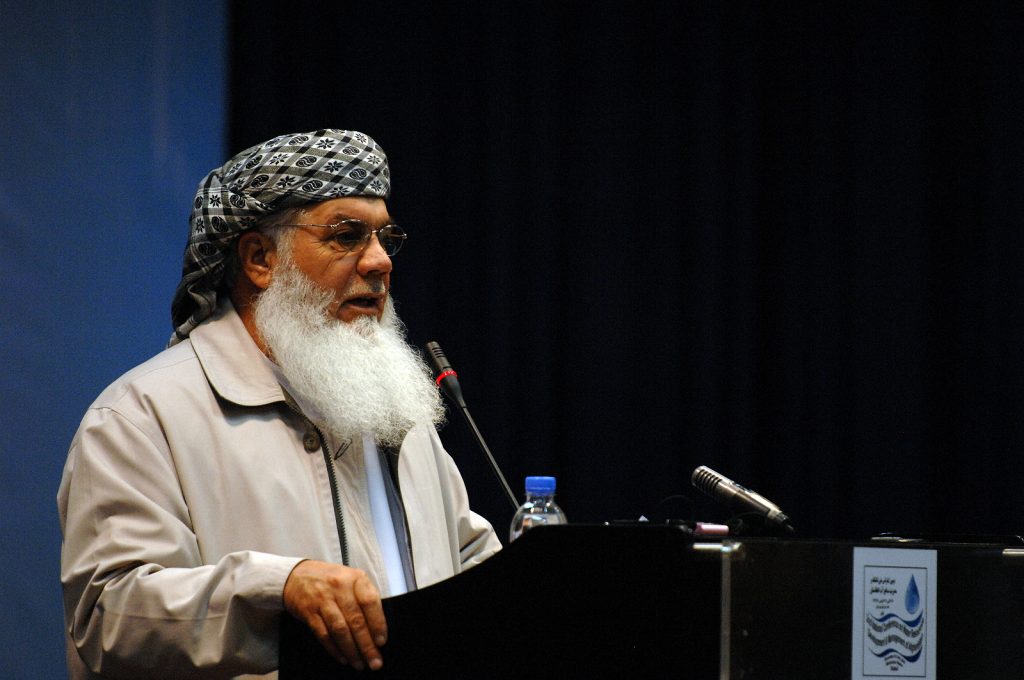
Ismail Khan at the second annual National Conference on Water Resources, Development and Management of Afghanistan. 7 December 2010. (Photo taken by U.S Embassy Kabul, Afghanistan staff: Public Domain)
“When I think about those days, tears well up in my eyes,” Khalil said. Shortly after the Taliban takeover, the Afzalis scattered to different parts of the world. “My father went to the Netherlands and I ended up in the United States,” he said. He is currently pursuing a fellowship program at the University of California, Los Angeles (UCLA). Hamid, however, did not join the mass exodus of Afghan refugees. “The situation is dire. My three daughters are desperate. We all are desperate,” Hamid said, referring to the closure of girls’ schools.
Last spring, Khalil faced uncertainty about Baysunghur’s future. He had to let go of female employees and adhere to the Taliban’s code of conduct to prevent immediate closure. Despite challenges during the republic era, he harbored hope and ambition to set a new standard for studying Herat’s history and literature, aiming to contribute positively to the city’s culture. “It wasn’t rocket science, but we wanted to do something meaningful,” Khalil said.
On October 7, 2023, two 6.3-magnitude earthquakes struck the Herat province, leaving nearly 3,000 casualties and injuring almost half of that number, according to reports from Iran International on October 8, 2023 and The Guardian on October 9, 2023. In comparison to the human toll, the quakes inflicted moderate damages on the two main standing monuments, The Ikhtiyaruldin Citadel, a fifteenth-century palace-fortress, and the elaborate Friday Mosque, originally constructed in tenth century. These remarkable monuments have endured through the tumultuous periods since the rise of the Taliban in 1992 and continue to stand to this day. Their enduring legacies still resonate with the historical significance that evokes nostalgia from a bygone era.
“The epicentre was quite close to Ghurian. Houses have been flattened. But we are fine,” Hamid said. Despite political and natural turbulences, he remains focused on preparing the third edition of his book Asar-e Ghurian as announced on November 19, 2023, via his Telegram Channel.
In the old city of Herat, nestled in the northern part of the Ikhtiyaruldin Citadel and adjacent to the entrance of Bazaar-e Asb (horse market), stands the Baysunghur building. This two-story building features arch windows and a façade decorated with vibrant yellow bricks, seamlessly blending with the traditional architecture of Herat. Khalil’s dedication and investment in establishing a cultural stronghold for the city have withstood the earthquakes. “The damage to the building is negligent and will be promptly addressed,” he assured. “By the way, here’s some good news: the third issue of Name-ye Baysunghur will be released by Christmas.”
On December 22, after a two-year hiatus, the Baysunghur institution officially announced the release of the third issue. To avoid any further interruptions, The Baysunghur team soon buckled down to prepare the fourth issue by calling for paper submissions starting on 20 May, 2024.
_________________________
Erfan Choobinebehrooz is an independent scholar specializing in Persian literature and an enthusiast of history and politics of Afghanistan. His contributions include multiple papers published in journals from both Iran and Afghanistan.
As the Voice of the Veteran Community, The Havok Journal seeks to publish a variety of perspectives on a number of sensitive subjects. Unless specifically noted otherwise, nothing we publish is an official point of view of The Havok Journal or any part of the U.S. government.
Buy Me A Coffee
The Havok Journal seeks to serve as a voice of the Veteran and First Responder communities through a focus on current affairs and articles of interest to the public in general, and the veteran community in particular. We strive to offer timely, current, and informative content, with the occasional piece focused on entertainment. We are continually expanding and striving to improve the readers’ experience.
© 2026 The Havok Journal
The Havok Journal welcomes re-posting of our original content as long as it is done in compliance with our Terms of Use.


