The author of this article prefers to remain anonymous. This list was compiled manually from publicly available government reports, court findings, and historical records. No artificial intelligence tools were used in its creation.
This conflict did not begin yesterday. For more than four decades, Iran and Iranian-backed groups have been implicated in attacks against Americans across the Middle East and beyond. The historical record is long, spanning hostage crises, embassy bombings, proxy militia operations, rocket and drone strikes, and assassination plots.
The list that follows is extensive, but it is not exhaustive. United States government findings, federal court rulings, and Pentagon assessments have linked Iran and its proxies to attacks that have killed more than a thousand Americans and wounded many more. For decades, Iran has funded, trained, armed, and supported regional militant groups whose operations have repeatedly targeted United States personnel and citizens.
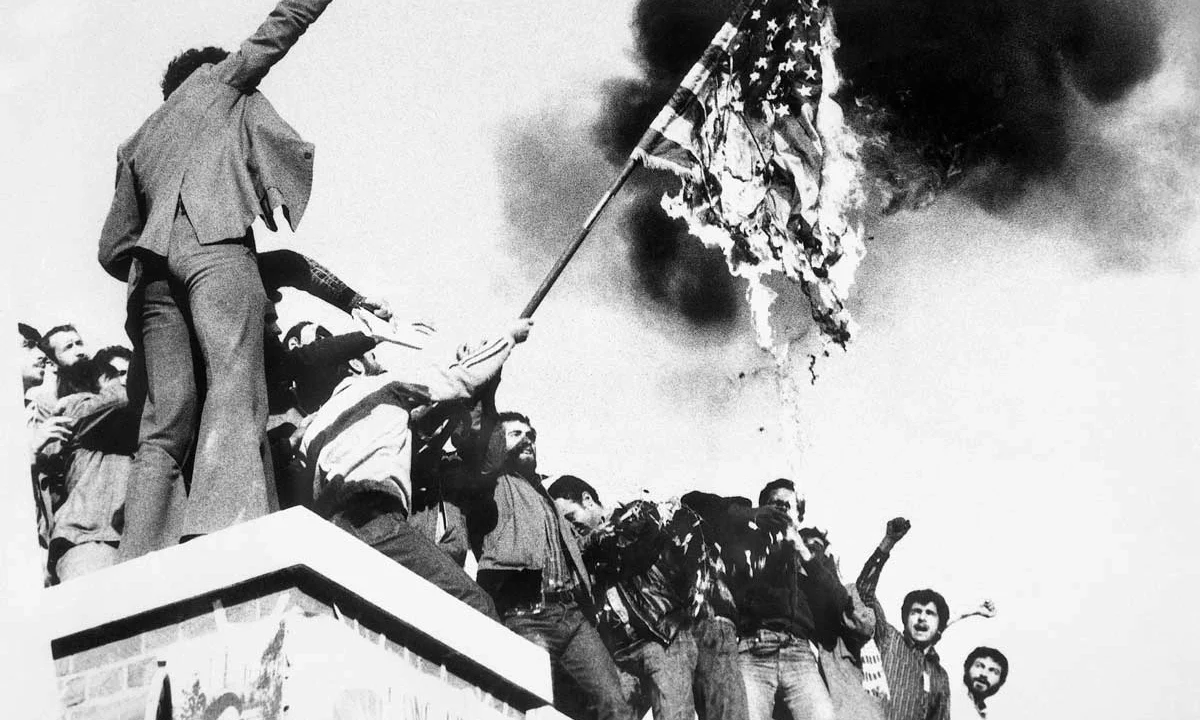
• 1979–1981: Tehran Hostage Crisis: Iranian students from the “Student Followers of the Imam’s [Ruhollah Khomeini] Line” seized the U.S. Embassy, capturing, torturing, and holding 52 Americans for 444 days.
• 1983: 18 April, U.S. Embassy Bombing (Beirut). A suicide attack by members of the Iranian Shiite Hezbollah “Party of God” killed 63 people, including 17 Americans (to include a Marine Corps guard, three soldiers, and seven CIA personnel) and my friend, SSG Terry Gilden. Terry was assigned to A Squadron, 1st SFOD-D, and was supporting the American Ambassador’s protective detail at the time of his death.
• 1983: 23 October, Beirut Barracks Bombing: A truck bomb at a U.S. Marine barracks killed 241 U.S. service members (220 Marines, 18 Sailors, and three Soldiers, along with sixty Americans injured). My brother was a gunnery sergeant in the BLT, and survived the bombing because he was out checking on his guards at the airport. The Islamic Jihad (Hezbollah) claimed responsibility for the bombing.
•1984–1992: Lebanon Hostage Crisis: Hezbollah kidnapped numerous Americans in Lebanon, including LTC William F. Buckley, who was kidnapped on 16 March 1984 and tortured for 15 months before dying from torture, illness, and heart issues.
• 1984: 20 September. The Shi’a Islamic militant group Hezbollah, with support and direction from the Islamic Republic of Iran, carried out a suicide car bombing targeting the US embassy annex in East Beirut, Lebanon, during the Lebanese Civil War. The attack killed 23 people and 1 attacker. Only two of the dead were American: Chief Warrant Officer Kenneth V. Welch of the US Army and Petty Officer 1st Class Michael Ray Wagner of the US Navy, who were both assigned to the US Defense Attache Office in Beirut. The rest of those killed were Lebanese, many of whom were applying for visas.
• 1984: 3 December. Four Hezbollah terrorists hijack Kuwait Airlines 221, murdering two Americans from USAID.
• 1985: 12 April. The Islamic Jihad bombed the El Descanso restaurant in Torrejon de Ardoz outside Madrid, Spain. The explosion caused the three-story building to collapse, crashing down on about 200 diners and employees, killing 18 people, all Spanish citizens, and injuring 82 others, including 15 American servicemen stationed at the nearby Torrejón Air Base who frequented the restaurant.
• 1985: 15 June. Hezbollah terrorists hijacked TWA Flight 847 (including 147 passengers and 8 crew) enroute from Athens to Rome. They held the hostages for 17 days. They tortured then executed U.S. Navy diver SW2-DV Robert Dean Stethem.
• 1985: 7/8 October. Achille Lauro cruise ship. On October 7, four hijackers from the Palestinian Liberation Front (PLF, an Iranian- backed terror group) took control of the liner off Egypt as it was traveling from Alexandria to Port Said, Egypt. Taking the passengers and crew hostage, they ordered the captain to travel to Tartus, Syria, and demanded the release of 50 Palestinians, then in Israeli prisons, including the Lebanese prisoner Samir Kuntar, who had been responsible for the murder of five civilians during a terrorist attack in 1979. The hijackers said that if the prisoners were not released, they would begin killing hostages: “We will start executing at 3:00 p.m. sharp.” Syria, having consulted with the U.S. and Italian governments, did not respond to any of the demands. As 3:00 p.m. neared, the terrorists began to decide who to kill by shuffling the U.S., British, and Austrian hostages’ passports. They selected Leon Klinghoffer, a wheelchair-bound Jewish American, to be killed first. One of the hijackers, Youssef Majed al-Molqi, forced a waiter to push Klinghoffer to the edge of the ship. Molqi shot Leon Klinghoffer once in the head and again in the chest. He died instantly, toppling onto his face. Molqi then went in and ordered De Souza to throw the body over the side of the ship. When De Souza was unable to do the task alone, Molqi found Italian hairdresser Ferruccio Alberti and forced the two of them at gunpoint to throw the body and then the wheelchair into the sea.
• 1988: 17 February. Hezbollah operatives kidnap, torture and execute CIA operative and U.S. Marine Corps Col William Higgins. On July 31, 1989, Hezbollah announced that it had executed Higgins by hanging and publicly released a videotape of the murder along with a statement calling the graphic footage “an opening gift” for Israel and the United States. Higgins was declared dead on July 6, 1990 His remains were recovered on December 23, 1991, by Major Jens Nielsen of the Royal Danish Army, who was attached to the United Nations Observation Group in Beirut. The remains were found in an advanced state of decomposition beside a mosque near a south Beirut hospital. His body had been buried for several months prior. After Higgins was murdered, his kidnappers buried the body. They then dug it out almost a year later when they released their public statements.
• 1995: 9 April. An explosives-laden van crashes into a bus near Kfar Darom in the Gaza Strip, killing one American and seven Israelis. Palestinian Islamic Jihad claims responsibility.
• 1995: 21 August. A Hamas suicide bomber blew up a bus in the Ramat Eshkol neighborhood of Jerusalem, killing an American and three other passengers and wounding more than 100.
• 1996: 25 February. A Hamas suicide bomber blows up a Jerusalem bus, killing three Americans and wounding three other Americans. A total of 26 people die in the attack, to include 9 Israeli soldiers, and 48 civilians were wounded.
• 1996: 4 March. A suicide bomber blew up the Dizengoff shopping center in Tel Aviv, wounding two Americans. Twenty people die and 130 others are injured in the attack. Both Hamas and Palestinian Islamic Jihad claim responsibility.
• 1996: 25 June. Khobar Towers Bombing (Saudi Arabia): A truck carrying 5,000 pounds of explosives blows up the Khobar Towers, a U.S. Air Force housing complex in the Saudi Arabian town of Khobar. Nineteen USAF personnel die and some 500 people are injured. The Iran-backed Hezbollah Al Hijaz, a terrorist group in Saudi Arabia, is deemed responsible.
•1997: 4 September. Three Hamas suicide bombers blow themselves up at the Ben Yehuda shopping mall in Jerusalem, killing a U.S.-Israeli dual citizen and wounding seven other American citizens. Four other people die and nearly 200 are wounded in the attack.
• 1998: 7 August. With the assistance of Hezbollah, al Qaeda suicide bombers almost simultaneously blow up the U.S. Embassies in Kenya and Tanzania, killing 224 people, including 12 Americans, and wounding over 4 thousand.
• 2000: 12 October. USS Cole bombing. Seventeen U.S. Navy sailors were killed and 37 wounded in the deadliest attack against a U.S. naval vessel since the USS Stark incident in 1987. (The USS Stark incident occurred during the Iran–Iraq War in the Persian Gulf on 17 May 1987, when an Iraqi jet aircraft fired two Exocet missiles at the U.S. frigate USS Stark. A total of 37 United States Navy personnel were killed or later died because of the attack, and 21 were injured. Iraq apologized, and Saddam Hussein said that the pilot mistook the frigate for an Iranian tanker.) Al-Qaeda claimed responsibility for the attack. A U.S judge has held Sudan liable for the attack, while another released over $13 million in frozen Sudanese frozen to the relatives of those killed. On 30 October 2020, Sudan and the United States signed a bilateral claims agreement to compensate the families of the sailors who died in the bombing. The agreement entered into force in February 2021.
In March 2015, U.S. federal judge Rudolph Contreras found both Iran and Sudan complicit in the 2000 bombing of the USS Cole by Al-Qaeda, stating that “Iran was directly involved in establishing Al-Qaeda’s Yemen network and supported training and logistics for Al-Qaeda in the Gulf region” through Hezbollah. Two previous federal judges had ruled that Sudan was liable for its role in the attack, but Contreras’s “ruling is the first to find Iran partly responsible for the incident.”
• 2001: 11 September. While the 9/11 Commission Report concludes that Iran had no foreknowledge of al Qaeda’s attacks on the World Trade Center, the report indicates that Tehran facilitated the travel of some of the terrorists. “In sum,” the report notes, “there is strong evidence that Iran facilitated the transit of al Qaeda members into and out of Afghanistan before 9/11, and that some of these were future 9/11 hijackers.”
• 2002: 16 January. Gunmen affiliated with the Iran-backed al-Aqsa Martyrs’ Brigade kill a U.S.-Israel dual citizen and wound another individual in the West Bank community of Beit Sahur.
• 2002: 31 July. A bomb planted by a Hamas terrorist kills five American students at Jerusalem’s Hebrew University, including an American-Israeli dual citizen and an American-French dual citizen. A total of nine people died in the attack.
• 2003: 11 June. An American citizen, along with 16 other people, died when a Hamas terrorist blew himself up on a bus in Jerusalem.
• 2003: 15 October. Terrorists from the Iran-backed Popular Resistance Committees killed three U.S. diplomatic personnel using an IED in a bus bombing in Gaza.
• 2003–2011: Iraq War Attacks. Iranian-backed militia explosives killed at least 603 U.S. troops in Iraq, according to the Pentagon. Iranian training and material support for Iraqi militias during the surge greatly increased the difficulty of U.S. forces to combat the insurgency and included some of the deadliest weapons used against American troops, including explosively formed penetrators (EFPs) and improvised explosive devices (IEDs).
• 2007: 20 January. Twelve men affiliated with the Quds Force of Iran’s Islamic Revolutionary Guard Corps (IRGC) *** disguised themselves as U.S. soldiers, entered the Provincial Joint Coordination Center in the Iraqi city of Karbala, killed five U.S. soldiers (PFC Johnathon Millican, CPT Brian Freeman, 1LT Jacob Fritz, SPC Johnathan Chism and PFC Shawn Falter) and wounded another three. *** Their executioners were captured January 22d by U.S. and Iraqi forces, but released by the Iraqi government as part of their terrorist reconciliation plan (and their unabashed cow-towing to Iran) and in partial exchange for five British civilian prisoners. The planner of the operation, Azhar al-Dulaimi, from the Khazali Network, a Mahdi Army faction, was tracked down and killed by U.S. forces on May 19, 2007, in Sadr City. Major General Qasem Soleimani, the Iranian financier and mastermind of the operation, was killed in Baghdad by a US air strike on 3 January 2020. Ali Mussa Daqduq had been captured by U.S. forces following the audacious 2007 raid that left five U.S. soldiers dead, but he was later released by the Iraqis. He was killed by Israel on 10 November 2024.
• 2015: 6 October. Hamas terrorists execute American citizen Eitam Simon Henkin and his wife Naama, residents of the West Bank community of Neria, in their car in a drive-by shooting. Their 4 children were also in the car, but survived. Israel sent hundreds of troops into the West Bank in pursuit of the Henkins’ killers, and on Monday, security officials said they had detained five members of a Hamas cell in connection with the shooting.
• 2019: 27 December. There were 31 107mm Katyusha rockets fired by Kataib Hezbollah, an Iran-backed militia, which killed an American security contractor and wounded four U.S. service members and 2 Iraqi security force personnel at the K1 military base in the Iraqi city of Kirkuk.
• 2019: Gulf of Oman Tanker Attacks: Iran was blamed for mining oil tankers, followed by the downing of a U.S. drone.
• 2020: 8 January. The Islamic Revolutionary Guard Corps (IRGC) launched 11 Qiam 1 missiles against the Ain al-Asad airbase in Iraq, which caused more than 110 U.S. troops to suffer traumatic brain injuries.
• 2020: 14 September. Intelligence reports indicated that Iran was plotting to assassinate Lana Marks, the U.S. Ambassador to South Africa.
• 2020: 31 December. Baghdad Embassy Attack. Kata’ib Hezbollah militiamen and their Popular Mobilization Forces (PMF) supporters (Iran-backed militias), as well as a local mob, attempted to burn down the U.S. Embassy in Baghdad. They were stopped by security personnel before they got 15′ – 20′ inside the embassy. Nobody else was injured.
• 2021: 15 February. A rocket attack of fourteen 107mm rockets fired by an Iran-backed militia at coalition forces in the Iraqi city of Erbil wounds a U.S. service member and four U.S. civilian contractors.
• 2021: 7 & 8 July. Iranian-backed militias conduct at least three rocket and drone attacks against U.S. forces within 24 hours in Iraq and Syria, wounding two U.S. service members in an attack involving 14 rockets at Ain al-Asad air base in Iraq.
• 2022: 18 September. An Iranian rocket attack of 3 107mm rockets kills an American citizen in Iraqi Kurdistan.
• 2022: 7 November. A captain in Iran’s IRGC orchestrates the killing of Stephen Troell, a 45-year-old American citizen and English teacher, who was shot and killed in Baghdad’s Karrada district on 7 November 2022, while driving in his car with his family. He had lived in Iraq since 2018 and worked for the Global English Institute, affiliated with a Texas-based NGO. An Iranian Islamic Revolutionary Guard Corps (IRGC) officer, Mohammad Reza Nouri, and four others were later convicted by an Iraqi court for orchestrating the murder. They were all sentenced to life in prison.
• 2023: 24 March. An Iranian (IRGC) drone killed an American contractor and wounded five U.S. service members and another contractor when it struck a coalition base near the Syrian city of Hasakah. The U.S. launched airstrikes against Iranian-linked targets in Syria in retaliation.
• 2023: 7 October. Hamas kills at least 48 Americans and kidnaps at least 12 Americans in a massacre of 1,200 people in southern Israel, which began with a barrage of 3,000 rockets and an assault by over 2,500 terrorists. Over 1,400 Israelis were killed.
• 2023: 25 December. A drone attack conducted by an Iranian-backed Iraqi militia against U.S. forces in Erbil wounds three American soldiers, including one critically injured with shrapnel to the head that placed him in a coma.
• 2024: 28 January. Tower 22 Attack, a U.S. military outpost in Rukban, northeast Jordan. A drone launched by Kataib Hezbollah killed three U.S. soldiers and wounded 47 more.
• 2024: November. A report released by the Foundation for Defense of Democracies indicates that Iran and its proxies have conducted more than 180 attacks against U.S. forces in the Middle East between October 17, 2023, and November 19, 2024, resulting in more than 180 wounded and three killed U.S. service members.
• 2024: 8 November. Farhad Shakeri, 51, of Iran; Carlisle Rivera, also known as Pop, 49, of Brooklyn, New York; and Jonathon Loadholt, 36, of Staten Island, New York, were charged today in a criminal complaint in connection with their alleged involvement in a plot to murder a U.S. citizen of Iranian origin in New York. Rivera was arrested in Brooklyn, New York, and Loadholt was arrested in Staten Island, New York, yesterday. Shakeri remains at large and is believed to reside in Iran. Rivera and Loadholt made their initial appearance in the Southern District of New York yesterday and were ordered detained pending trial.
• 2024: November. The U.S. Department of Justice announces charges against Asif Merchant, an Iranian national, and two American accomplices for plotting to assassinate President Trump. The scheme began to unravel when a Pakistani-American acquaintance, a former US Army linguist, alerted authorities after growing suspicious of Merchant’s plans. The FBI then arranged undercover meetings that were secretly recorded.
• 2025: 20 March. A U.S. jury convicted two agents of Iran (Rafat Amirov and Polad Omarov) for plotting to assassinate Iranian-American journalist Masih Alinejad in New York in 2022. Both men were sentenced to 25 years in federal prison. Prosecutors established that the men, part of an Eastern European criminal organization, were hired by the Iranian government to kill Alinejad due to her activism against the regime’s compulsory hijab laws.
• 2025: 14 and 23 – 24 June. At least three U.S. bases in Syria and two U.S. bases in Iraq were attacked with missiles and drones by Iranian-backed militias. There were no U.S. casualties.
• 2026: 28 February. Following attacks on Iranian leadership, Iran targeted U.S. assets in Gulf states (Bahrain, Kuwait, Qatar, UAE) and targeted U.S. shipping in the Strait of Hormuz. At the time of publishing this article, four soldiers were killed because of the attacks.
Cyberattacks: The FBI has repeatedly identified numerous cyber intrusions by Iranian actors against U.S. infrastructure and government agencies.
Assassination Plots: The U.S. Department of Justice has charged several IRGC members with plotting to murder former U.S. officials.
And here we are. Remember Everyone Deployed – especially those engaged in or supporting Operation Epic Fury.
_____________________________
As the Voice of the Veteran Community, The Havok Journal seeks to publish a variety of perspectives on a number of sensitive subjects. Unless specifically noted otherwise, nothing we publish is an official point of view of The Havok Journal or any part of the U.S. government.
Buy Me A Coffee
The Havok Journal seeks to serve as a voice of the Veteran and First Responder communities through a focus on current affairs and articles of interest to the public in general, and the veteran community in particular. We strive to offer timely, current, and informative content, with the occasional piece focused on entertainment. We are continually expanding and striving to improve the readers’ experience.
© 2026 The Havok Journal
The Havok Journal welcomes re-posting of our original content as long as it is done in compliance with our Terms of Use.


