
For most of American military history, tactical excellence has commanded the most attention, and battles are remembered by their maneuvers, commanders, and decisive engagements. Yet every major conflict, from World War II to current proxy wars, reveals the same enduring truth: logistics, industrial capacity, and acquisition velocity determine whether tactics can be applied at scale and sustained over time. In an era of great-power competition, the United States (U.S.) cannot assume industrial or technological overmatch. Adversaries are rapidly expanding their defense industrial bases (DIBs), particularly in mass-producing drones, long-range precision weapons, and munitions, and in some areas, they already outpace U.S. output.
Within this context, acquisition reform is not a bureaucratic nicety; it is a war-fighting imperative. A system that delivers capabilities too slowly, in quantities too small, or at costs too high effectively surrenders the logistics fight before tactics can even be brought to bear. The adage “logistics lead the fight, tactics finish it” captures the central argument that only by transforming the acquisition system, leveraging defense partners, and fully integrating sustainment tools such as SUSPoE and OCS can the U.S. ensure that tactical units arrive at the decisive point with the right capabilities, in the right quantity, and at the right time. Accordingly, the U.S. must reform its acquisition system so that logistics can “lead the fight” by delivering timely, scalable, and affordable capabilities, enabling tactics to finish the fight.

The Strategic Imperative for Acquisition Reform
The Department of Defense (DoD) has recognized that legacy acquisition processes are too slow and inflexible for today’s threat environment. In 2020, it implemented the Adaptive Acquisition Framework (AAF), a set of tailored pathways for urgent capability acquisition, middle-tier acquisition (MTA), major capability acquisition, software, defense business systems, and services to accelerate delivery and better align the life cycles of different capabilities. These reforms are intended to reduce time-to-field, encourage iterative development, and enable greater agility in matching acquisition strategy to operational needs.
Recent government oversight has emphasized both the promise and the uneven implementation of these reforms. The Government Accountability Office (GAO) found that while the AAF provides more flexible pathways, military departments have not consistently collected data on outcomes such as cost, schedule, and performance, limiting their ability to assess whether the reforms are fully delivering as intended. In parallel, the 2025 Acquisition Transformation Strategy calls for removing unnecessary regulations and digitizing acquisition processes, using artificial intelligence, data analytics, and streamlined middle-tier pathways to deliver capability faster than adversaries.
The Army has described ongoing changes in its acquisition system as shifting away from tailored, slow-moving, government-unique solutions toward commercially available technologies, new portfolio structures, and greater openness to nontraditional vendors. This recognition emphasizes that future wars will be won not only by better concepts and doctrine, but by an acquisition system that can translate those concepts into fielded capability at the speed of relevance.

Defense Contractors and the Modern Arsenal
Defense contracting companies form a critical part of the U.S. DIB. Prime contractors and a vast network of subcontractors design, manufacture, integrate, and sustain the systems that give U.S. forces their edge, from unmanned systems and precision munitions to armored vehicles and communications networks. Acquisition reform that ignores this ecosystem risks being purely theoretical.
In great-power competition, the role of defense contractors is evolving in several key ways:
- Innovation at speed. Many cutting-edge capabilities, especially in autonomy, artificial intelligence, cyber, and small unmanned systems, originate in the commercial sector or in nontraditional defense firms. Modern acquisition reform efforts emphasize flexible contracting mechanisms, such as Other Transaction Authorities (OTAs) and middle-tier pathways, to engage these actors quickly and reduce the barriers to entry that historically favored large primes.
- Industrial surge and resilience. The war in Ukraine has demonstrated how rapidly modern conflicts consume drones, artillery shells, long-range munitions, and armored platforms. Analysis of the current DIB argues that existing U.S. production capacity, on the order of tens of thousands of drones per year, would be insufficient for a prolonged, high-attrition conflict with a peer adversary, especially when compared with Ukraine’s ability to scale domestic drone production into the millions annually. Defense contractors must be incentivized and structurally enabled to surge production while maintaining quality and security.
- Allied and partner integration. Emerging policy discussions argue for an “alliance-enhanced DIB,” in which the U.S. co-produces drones, munitions, and platforms with allies to build redundancy and distribute risk across multiple industrial bases. This approach requires acquisition policies that facilitate technology sharing, joint production lines, and aligned export controls.
In this environment, defense contractors are not just vendors but are strategic partners in deterrence and warfighting. Acquisition reform must ensure that contract structures, incentive models, and regulatory frameworks support speed, scalability, and innovation while preserving competition, accountability, and ethical standards.

Scalability and Surge Capacity
Scalability is central to making logistics the decisive factor in conflict. Recent conflicts have shown that adversaries are rapidly increasing their output of drones and munitions, sometimes with help from foreign suppliers and access to commercial dual-use technology. Scalable acquisition involves several interlocking considerations:
- Modular designs and open architecture. Systems designed with modular, open architectures are easier to upgrade, maintain, and produce at scale. Common components can be manufactured by multiple suppliers, mitigating single points of failure and enabling surge capacity when demand spikes.
- Distributed and redundant production. Relying on a small number of large facilities creates vulnerability to disruption from cyberattacks, supply chain shocks, or kinetic strikes. Lessons from Ukrainian and Russian drone production suggest the value of dispersed manufacturing lines, smaller facilities, and flexible assembly processes that can be rapidly relocated or expanded.
- Long-term industrial planning. The DIB cannot be turned on and off like a light switch. Skilled labor, specialized tooling, and supply chains for critical materials like explosives, propellants, and microelectronics require years of investment. Analyses highlight that the U.S. must rethink its industrial posture to support “systems competition,” not just platform competition, and to ensure sustained output of key systems over time.
Acquisition reform should therefore prioritize scalability as a performance metric on par with cost, schedule, and technical performance. Contracts must require and fairly compensate the industry for maintaining latent capacity, diversified supply, and surge potential, capabilities that are strategically essential but not always profitable under narrow, program-by-program thinking.

Cost-Saving Measures and Affordability
Affordability is the bridge between logistics and tactics. If key capabilities are too expensive to field in sufficient numbers, commanders will be forced to ration their use, undermining tactical concepts that depend on mass, persistence, or attrition. The trends below shape the cost dimension of acquisition reform:
- Low-cost attritable systems. Adversaries’ use of relatively inexpensive drones to force high-end, high-cost interceptors (i.e., surface-to-air missiles) has created a cost-burden dilemma for the U.S. and its allies. Acquisition reform must emphasize low-cost platforms that can be fielded in large quantities without bankrupting the force.
- Life-cycle cost management. Traditional acquisition often underestimates sustainment and modernization costs over a system’s life cycle. The AAF emphasizes tailoring acquisition strategies and using data to manage long-term affordability across development, production, and sustainment. Better predictive models and digital engineering can identify cost drivers earlier and allow for design changes that reduce sustainment burdens.
- Digitization and AI-enabled procurement. The 2025 Acquisition Transformation Strategy calls for digitizing the acquisition process and applying AI to reduce administrative burdens, accelerate decision-making, and optimize procurement portfolios. Properly implemented, such tools can identify opportunities for bulk purchasing, common components, and smarter inventory management.
- Reforming requirements and oversight. Excessive or misaligned requirements, as well as layered oversight processes, can increase costs and extend schedules. Acquisition reform efforts increasingly advocate simplifying requirements documents, eliminating redundant approvals, and empowering program managers with greater flexibility while preserving accountability for performance and ethics.
Cost-saving measures must not be pursued in isolation; they must support strategic objectives. The central question is not simply, “What is the cheapest option?” but “What combination of cost, scale, speed, and capability provides the best advantage in a long, high-end conflict?”

Decentralized Acquisition and Adaptive Structures
Centralized, one-size-fits-all acquisition structures struggle to keep pace with diverse and rapidly evolving operational demands. Decentralization, under clear strategic guidance, can bridge this gap. The AAF already embodies some decentralization by allowing program managers and services to choose among multiple pathways. At the same time, the Army’s recent restructuring into portfolio acquisition executives, reporting to a transformation-focused command, reflects a move toward decentralized decision-making aligned with capability portfolios (fires, C2, sustainment, etc.).
Decentralized acquisition processes contribute to combat effectiveness in several ways:
- Speed and responsiveness. Lower-level commands and portfolio leads are closer to operational users and can respond more quickly to emerging needs. This is particularly important in areas like electronic warfare, counter-UAS, and cyber, where timelines are measured in months, weeks, or even days.
- Experimentation and iteration. Decentralized authorities enable rapid prototyping and field experimentation through pathways such as the Middle Tier of Acquisition, which move promising capabilities from concept to fieldable prototypes. Feedback loops with operational units can then drive iterative improvements.
- Diverse industry partners. Smaller, more agile programs and decentralized funding mechanisms can better engage non-traditional firms, startups, and niche technology providers who may lack the capacity or interest to participate in large, multi-year programs dominated by major primes.
However, decentralization must be balanced with enterprise-level integration, common data standards, interoperable architectures, and joint prioritization, to avoid fragmentation and duplication. The goal is not chaos, but adaptive, networked acquisition that mirrors the distributed, joint, and coalition character of modern operations.
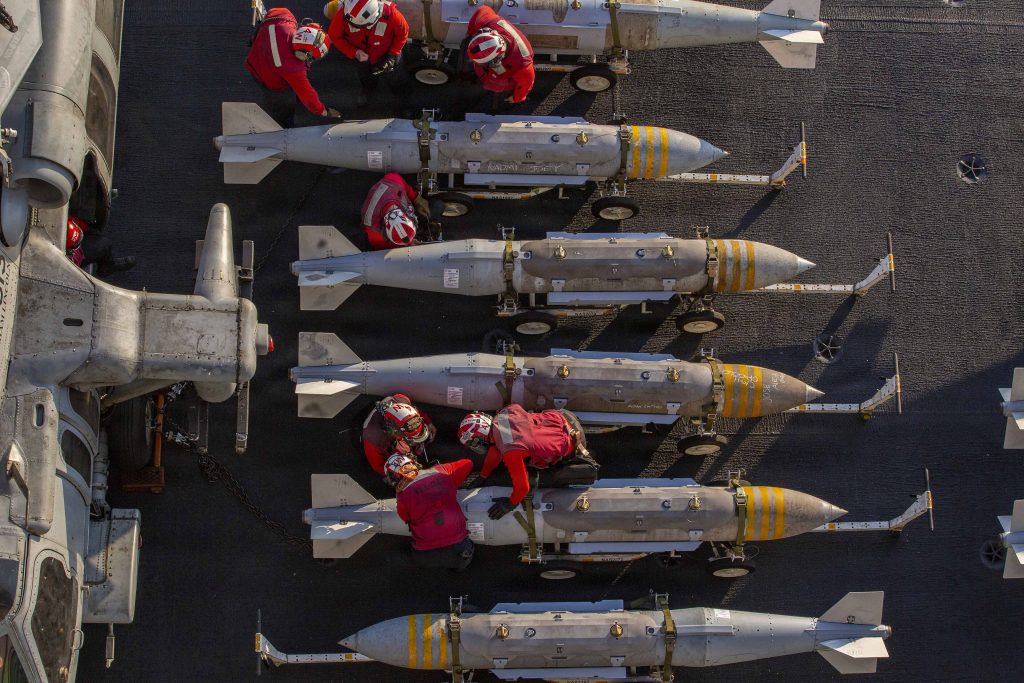
Outpacing Adversaries in Drones, Long-Range Precision Fires, Tanks, and Ammunition
The DIB sits at the center of a global competition for mass and precision. Recent analyses show that adversaries are generating enormous numbers of drones and munitions, leveraging both domestic production and foreign partnerships. At the same time, Russia and Ukraine’s experiences have revealed previously underappreciated demands for long-range precision fires, armored vehicle replacement, and ammunition production in sustained conflict. Outpacing adversaries in these areas requires:
- Drone and counter-drone ecosystems. The U.S. must field families of unmanned systems, air, ground, maritime, and autonomous sensors, at scale, with low unit costs and rapid refresh cycles. Acquisition reform should promote modular payloads, common control systems, and open software architectures to enable continuous updates as threats evolve.
- Long-range precision fires. The strategic environment demands not only high-end, exquisite long-range systems, but also robust stocks of medium-range precision munitions that can be produced in large quantities. Current analyses warn that U.S. inventories of some precision munitions could be exhausted quickly in a high-end fight if production is not increased substantially. Acquisition reform should align requirements, budgets, and industrial capacity to ensure sustained production lines for key munition families.
- Armored platforms and survivability. Even as drones and precision fires reshape the battlefield, tanks and armored fighting vehicles remain essential for breaching, maneuvering, and protection. The challenge is not simply designing better platforms, but ensuring that the DIB can repair, upgrade, and replace armored vehicles at a pace that matches or exceeds attrition in high-intensity conflict.
- Ammunition and propellants. Ammunition production, from artillery shells to small-arms rounds, has become a critical bottleneck. Industrial facilities for explosives and propellants are often old, specialized, and limited in capacity. Strategic investment, multi-year procurement, and co-production with allies are essential to ensure that ammunition stocks can support both routine operations and crisis surges.
In all of these areas, acquisition reform is the mechanism by which strategic intent becomes industrial reality. Without contracts, incentives, and regulatory frameworks that reward capacity, resiliency, and speed, the DIB cannot deliver the mass required to make logistics the decisive arm of national power.
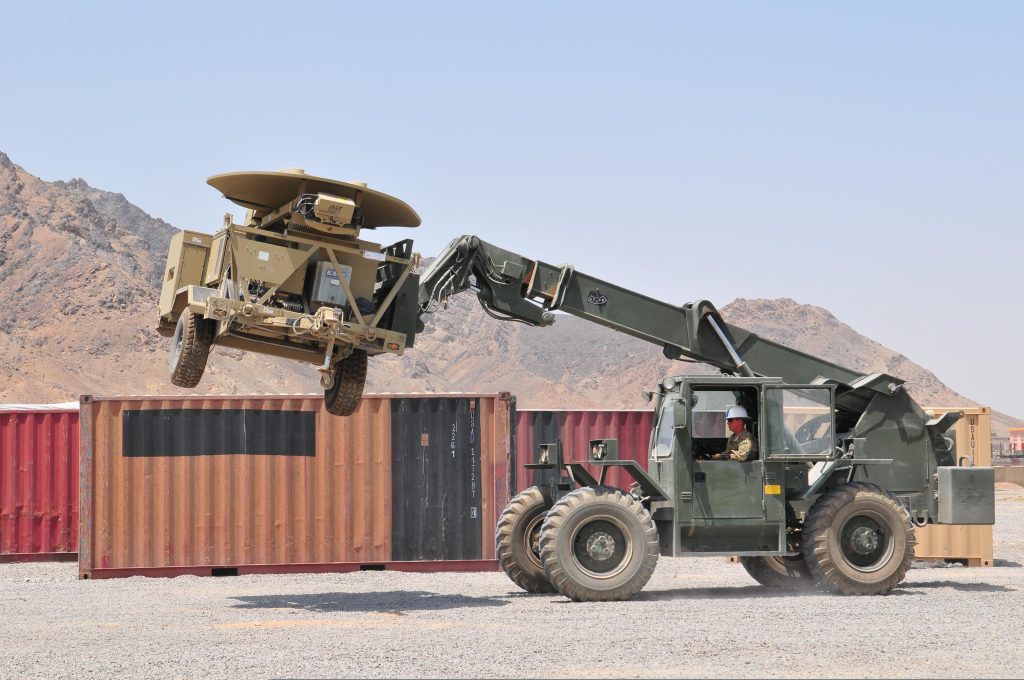
Sustainment Preparation of the Operational Environment (SUSPoE) and Operational Contract Support (OCS)
Acquisition reform and industrial capacity only matter if they translate into relevant capabilities at the right places and times. This is where sustainment doctrine, particularly Sustainment Preparation of the Operational Environment (SUSPoE, sometimes written SPoOE) and Operational Contract Support (OCS), connects strategic acquisition decisions to tactical outcomes.
Sustainment Preparation of the Operational Environment. Army doctrine defines sustainment preparation of the operational environment as the analysis of infrastructure, environmental factors, and resources in the operational area that will help or hinder the sustainment of the commander’s operations plan. SUSPoE tasks enable sustainment planners to understand host-nation infrastructure, ports, roads, supply sources, and industrial assets before operations begin, thereby tailoring sustainment concepts and anticipating constraints. Mapping the sustainment environment in advance ensures that the capabilities acquired through national-level processes can actually be received, stored, moved, and employed in theater.
Operational Contract Support. Operational Contract Support is defined in joint doctrine as the process of planning for and procuring supplies, services, and construction from commercial sources to support joint operations. JP 4-10 provides principles and guidance for planning, executing, and managing OCS, emphasizing that contracted capabilities are now a routine element of operations across all phases. Recent joint initiatives and training have underscored OCS as a “total force multiplier,” enabling commanders to access commercial capabilities rapidly and responsibly, including in contested environments.
Together, SUSPoE and OCS enable commanders to:
• Integrate theater-level sustainment planning with national-level acquisition and industrial capacity.
• Identify where commercial solutions, such as contracted logistics, construction, maintenance, and technical services, can fill gaps or augment organic capabilities.
• Anticipate and mitigate risks related to supply chains, infrastructure vulnerabilities, ethical standards, and legal requirements in contracted support.
When acquisition reform delivers more agile, scalable capabilities, SUSPoE and OCS ensure those capabilities are employable in specific operational environments. Logistics, in this sense, “leads the fight” by shaping the theater, securing supply lines, and delivering commercial and military capabilities forward. Tactics then “finish it” by applying those capabilities decisively.

Recommendations for Advancing Acquisition Reform
To fully realize the principle that “logistics lead the fight, tactics finish it,” the U.S. should pursue several lines of effort:
- Make scalability and surge capacity formal acquisition requirements. Program documentation and source selection criteria should explicitly evaluate a contractor’s ability to scale production, diversify supply chains, and maintain surge capacity, rather than merely meeting a narrow, steady-state demand signal.
- Fund industrial base capacity as a strategic asset. Congress and the DoD should treat key production lines for drones, long-range munitions, armored platforms, and ammunition as elements of the nation’s strategic deterrent, warranting multi-year funding and industrial base investment, including in facilities, workforce development, and critical materials.
- Deepen alliance-based co-production. Acquisition policy should expand mechanisms for co-developing and co-producing key systems with allies, particularly in the Indo-Pacific and Europe, to build redundant lines and reduce single-point vulnerabilities.
- Accelerate digitization and data-driven acquisition. Implement the Acquisition Transformation Strategy’s call for AI-enabled digital acquisition across services, using common data standards to track cost, schedule, performance, and industrial capacity, thereby continuously refining acquisition strategies.
- Expand and empower decentralized acquisition authorities. Continue restructuring acquisition organizations around capability portfolios, empower portfolio leads with flexible authorities, and integrate operational commands into rapid requirement and experimentation cycles.
- Strengthen the integration of SUSPoE and OCS into planning. Ensure that every major contingency and theater campaign plan includes detailed SUSPoE analysis and robust OCS planning, tightly linked to acquisition strategies for key capabilities.
- Measure success in war-fighting terms. Ultimately, acquisition reform should be evaluated based on how well it supports operational readiness, deterrence, and war-fighting effectiveness, not only on process compliance. Metrics should include time to field, operational availability, and the ability to sustain high-tempo operations against a near-peer adversary.

Conclusion
In contemporary great-power competition, logistics, industrial capacity, and acquisition speed are as decisive as armor thickness or maneuver doctrine. The U.S. faces adversaries who are rapidly expanding their production of drones, long-range precision fires, armored platforms, and munitions, often leveraging commercial technology and foreign support. If the U.S. fails to reform its acquisition system and revitalize its DIB, tactical excellence alone will not suffice.
Acquisition reform, through the AAF, the 2025 Acquisition Transformation Strategy, and service-level restructuring, offers a path to deliver capability at the required speed and scale. But reform must be more than policy language; it must reshape relationships with defense contractors, incentivize scalability and affordability, and enable decentralized, data-driven decision-making. At the same time, joint sustainment doctrines such as SUSPoE and OCS are essential to translating national-level acquisition decisions into theater-level logistics effects, ensuring capabilities arrive where needed, when needed, and in sufficient quantities.
When acquisition reform, industrial capacity, and sustainment doctrine are aligned, logistics truly “lead the fight,” shaping the operational environment, outpacing adversary production, and guaranteeing that combat formations are properly equipped. In that environment, tactics can “finish it” by employing massed, sustained combat power to achieve decisive outcomes. The stakes are nothing less than the nation’s ability to deter aggression and, if necessary, to fight and win the next war.

References
Defense Acquisition University. (n.d.). Adaptive acquisition pathways. https://aaf.dau.edu/
Goyette, T., & Knight, W. (2018, January). Tools and models for sustainment preparation of the operational environment. Army Sustainment. https://alu.army.mil/alog/2018/JANFEB18/PDF/194810.pdf
Helwig, B. (2025, September 16). Recalibrating the defense industrial base for systems competition. The Alexander Hamilton Society. Security and Strategy Journal. https://alexanderhamiltonsociety.org/security-strategy/issue-five/recalibrating-the-defense-industrial-base-for-systems-competition/
Joint Chiefs of Staff. (2019). Joint publication 4-10: Operational contract support.
Joint Knowledge Online. (2025, July 30). Operational contract support (OCS): Total force multiplier and training enabler. https://www.jcs.mil/JKO/Latest-News/JKO-Customer-Spotlights/Article/4259482/operational-contract-support-ocs-total-force-multiplier-training-enabler/
Park, A. (2025, October 13). AUSA News: Army Secretary Puts contractors on Notice; Acquisition Disruption Coming Soon. National Defense. https://www.nationaldefensemagazine.org/articles/2025/10/13/army-acquisitions-due-for-complete-disruption-secretary-says
Popescu, I. (2025, March 20). Adapting US defense strategy to great-power competition. U.S. Army War College Publications. https://publications.armywarcollege.edu/News/Display/Article/4129357/adapting-us-defense-strategy-to-great-power-competition/
Revels, M. & Uribe, E. (2025, December 5). War: An alliance-enhanced defense industrial base: Reimagining the arsenal of freedom. Modern War Institute at West Point. https://mwi.westpoint.edu/an-alliance-enhanced-defense-industrial-base-reimagining-the-arsenal-of-freedom/
Riley, J. (2024, February 12). Sustainment: Creating freedom of action. Havok Journal. https://havokjournal.com/culture/military/sustainment-creating-freedom-of-action/
U.S. Department of the Army. (2012). Army doctrine reference publication 4-0: Sustainment.
U.S. Department of Defense. (2025, November 10). Acquisition transformation strategy. https://media.defense.gov/2025/Nov/10/2003819441/-1/-1/1/ACQUISITION-TRANSFORMATION-STRATEGY.PDF
U.S. Government Accountability Office. (2024, December 12). DOD acquisition reform: Military Departments Should Take Steps to Facilitate Speed and Innovation. https://www.gao.gov/products/gao-25-107003
_____________________________
Sergeant Major (Retired) Daniel L. Dodds is a Military Police Senior Noncommissioned Officer. He has served in every leadership position from Patrolman to Battalion Command Sergeant Major. He is currently assigned as the Director of Operations Sergeant Major for the United States Disciplinary Barracks, the only Level III maximum-security prison in the Department of Defense. His civilian education includes an associate’s degree from Excelsior University and a Bachelor of Arts in Leadership and Workforce Development from the Army Command and General Staff College (CGSC). He is pursuing a Master of Public Administration from Excelsior University.
As the Voice of the Veteran Community, The Havok Journal seeks to publish a variety of perspectives on a number of sensitive subjects. Unless specifically noted otherwise, nothing we publish is an official point of view of The Havok Journal or any part of the U.S. government.
Buy Me A Coffee
The Havok Journal seeks to serve as a voice of the Veteran and First Responder communities through a focus on current affairs and articles of interest to the public in general, and the veteran community in particular. We strive to offer timely, current, and informative content, with the occasional piece focused on entertainment. We are continually expanding and striving to improve the readers’ experience.
© 2026 The Havok Journal
The Havok Journal welcomes re-posting of our original content as long as it is done in compliance with our Terms of Use.


