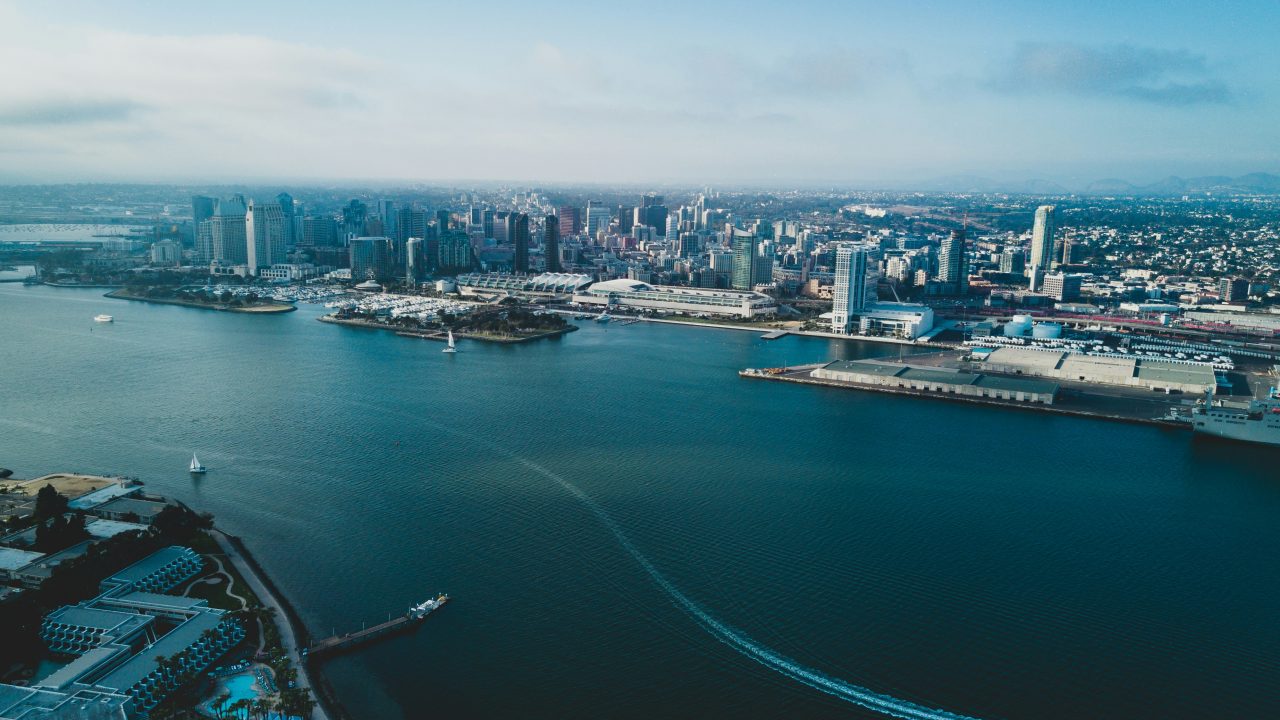
Photo by Daniel Guerra on Unsplash
You are three months from opening a renovated hotel property in San Diego. The furniture vendor shipped six weeks early. The case goods are sitting on a truck with nowhere to go because the floors are not ready. The mattress delivery is scheduled for next Tuesday, and the GC just told you that wing two will not be cleared for another ten days.
This is not a hypothetical. It is the standard operating reality for most hospitality FF&E rollout managers working in a market like San Diego, where hotel renovation and new build activity has stayed steady and staging space near the property is not easy to come by.
The instinctive responses to this situation usually make it worse.
Accepting early deliveries on site creates congestion, increases damage risk, and puts the GC in a position where they are working around pallets instead of finishing rooms. Asking the vendor to hold shipments delays the entire install sequence and often triggers storage fees at the vendor’s facility that rival what a local warehouse would charge.
Renting a temporary container or trailer in a parking lot works for a few pallets of décor but breaks down completely when you are staging hundreds of room kits, headboards, desks, and bathroom fixtures across multiple phases.
What the project actually needs
A hotel FF&E rollout in San Diego, whether it is a renovation of an existing property in the Gaslamp Quarter or a new build in Mission Valley, requires three things from its logistics setup.
First, secure warehouse space close enough to the property that deliveries can be made in the same morning they are requested. In San Diego, that means a facility within 20 to 30 minutes of the project site, ideally with dock access for both inbound LTL and outbound local delivery trucks.
Second, the ability to receive vendor shipments on a rolling basis, inspect and inventory them against the FF&E spec, and stage them by room, floor, or phase so they can be released in the exact sequence the install crew needs.
Third, a partner who can handle the outbound delivery, including the white glove placement where required, and then manage debris removal after the install is complete. Mattress packaging, pallet wrap, cardboard, and broken fixtures all need to leave the property on a schedule that does not interfere with the next phase of the rollout.
When all three of those capabilities sit with one provider, the PM has a single point of coordination. When they are split across a storage unit, a local trucking company, and a junk hauler, the PM becomes a logistics coordinator instead of a project manager.
Why San Diego FF&E projects hit this wall more often than other markets
San Diego has a few characteristics that make FF&E logistics harder than comparable metro areas.
The industrial real estate market is tight. Short term warehouse space that a PM can lease for four to six months is difficult to find, and what is available often requires a 12 month commitment. That mismatch between the project timeline and the lease term is the first friction point.
The city’s geography creates delivery constraints. Properties in coastal neighborhoods, downtown, and the resort corridor along Hotel Circle often have limited dock access, narrow loading zones, and time of day delivery restrictions. Staging needs to happen off site by default, not by choice.
Tourism seasonality adds pressure to timelines. A hotel renovation in San Diego is almost always scheduled around occupancy windows. Missing the opening date by two weeks can mean losing peak season revenue. The FF&E logistics plan is not a back office detail. It is on the critical path.
The contract warehousing model for hospitality projects
The model that works for most hotel FF&E rollouts in this market is contract warehousing with integrated staging, sequencing, and local delivery. The warehouse provider dedicates space for the project’s inventory, receives and inventories inbound shipments, stages them by install phase, and delivers to the property on a schedule the PM controls.
This is not self storage. It is not a pod in a parking lot. It is a staffed warehouse with dock doors, forklifts, racking, and a team that understands how to handle furniture, fixtures, and equipment without damage.
For San Diego projects specifically, working with a provider that offers contract warehousing San Diego capacity along with local delivery and debris removal means the PM can manage the entire staging and install logistics chain through one partner. The alternative is patching together three or four vendors and hoping they stay coordinated through every schedule change, weather delay, and GC walkthrough.
What to look for in a San Diego FF&E logistics partner
The evaluation should start with these questions.
Does the provider own and operate the warehouse, or are they subleasing space? Asset based providers control the facility and the labor. If a delivery needs to move up by 48 hours, there is no third party approval required.
Can they receive, inspect, and inventory FF&E against your spec sheet? A warehouse that stores pallets is not the same as a warehouse that tracks individual items by room and phase.
Do they have local delivery trucks and crews who can handle white glove placement? If the warehouse provider hands off to a separate carrier for the final mile, you have introduced a gap in accountability at the most visible stage of the project.
Can they handle debris removal from the install site? The packaging waste from a 200 room hotel renovation is substantial. If it is not removed on a rolling basis, it slows the next phase.
The real cost of getting this wrong
A missed opening date on a San Diego hotel project is not an inconvenience. It is lost revenue, contractual penalties, and a ripple effect through every department that staffed and marketed around that date. Most of the time, the cause is not a design failure or a construction delay. It is FF&E that arrived at the wrong time, in the wrong sequence, with no plan for getting it from a warehouse to a finished room.
The logistics plan is the part of the project that protects every other part of the project.
Buy Me A Coffee
The Havok Journal seeks to serve as a voice of the Veteran and First Responder communities through a focus on current affairs and articles of interest to the public in general, and the veteran community in particular. We strive to offer timely, current, and informative content, with the occasional piece focused on entertainment. We are continually expanding and striving to improve the readers’ experience.
© 2026 The Havok Journal
The Havok Journal welcomes re-posting of our original content as long as it is done in compliance with our Terms of Use.

