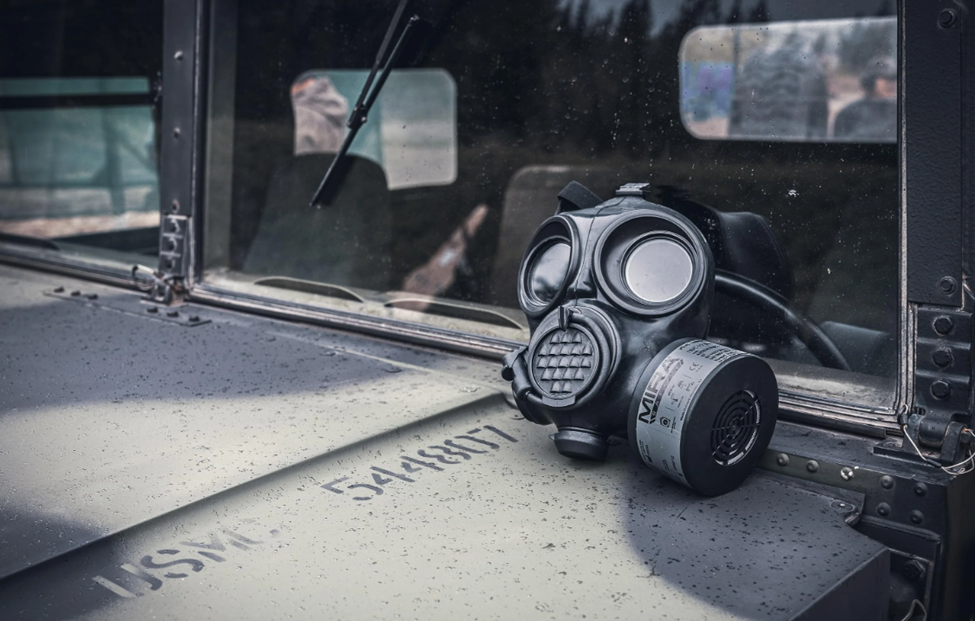
Civilian interest in emergency preparedness has grown significantly over the past several years, and with it comes a massive market for protective gear. A search for respiratory protection online returns thousands of confusing options for the average buyer.
You will find legitimate military-grade equipment, certified professional respirators, surplus gear past its service life, and outright counterfeits that offer zero protection. For someone without formal training, that landscape is genuinely difficult to navigate.
Without the knowledge that veterans acquire through training and real-world deployment, civilians can spend serious money on equipment that will ultimately fail them.
This happens not because they chose poorly, but because nobody taught them what professionals learn before they ever wear a mask operationally. The gear alone cannot save you without the proper operational foundation.
This article bridges that knowledge gap by bringing military training to the civilian sector. What follows are three principles derived from military service translated into practical, actionable guidance for civilians at any level of preparedness experience.
This is not about fear-mongering or panic, but about making informed decisions with absolute confidence.
1. Match Masks to the Threat
The Common Misconception
There is a widespread assumption that the most expensive mask is automatically the best choice for any situation. On the other hand, some believe that any basic gas mask provides adequate protection from any environmental hazard.
Both beliefs are entirely wrong, and in a real emergency, either one can be fatal. In the military, protective posture is always threat-driven rather than equipment-driven.
What the Military Taught Me
Before any unit moves into a potentially contaminated environment, the question is what agent we are facing and what level of protection it requires.
This is formalized through Mission-Oriented Protective Posture levels, a graduated framework used to calibrate protection based on the identified threat.
The system exists because wearing maximum protection in every situation is both physically unsustainable and operationally unnecessary. The absolute goal is calibrated and appropriate protection for the specific scenario.
Threat Matched Selection
The mask body and the filter canister are two completely separate decisions. When evaluating purpose-built filtration options or when viewing MIRA Safety’s gas mask for sale inventory, users will notice that professional equipment relies on specific filters.
These include NBC-rated filters, riot control agent cartridges, and carbon monoxide options engineered for distinct threat profiles rather than universal solutions. Always verify that your filters carry recognized certifications like NIOSH approval for the relevant hazard class.
Actionable Steps
You can improve your readiness immediately by following these basic acquisition steps.
- Identify the most likely hazard scenarios in your region before acquiring equipment.
- Verify that every filter you own is specifically certified for your identified threat.
- Confirm your mask body accepts standard NATO 40mm threaded filters for maximum flexibility.
- Cross-check any acquisition against proper certification records to avoid counterfeits.
| Key Insight: A high-quality full-face mask paired with the wrong filter is completely unprotected equipment. Always verify your filter carries the specific NIOSH or CBRN certification for the exact hazard you are facing. |
2. Fit Is the Primary Mission
The Dangerous Misconception
Many people assume that simply buying a quality mask means they are automatically protected. This is the most dangerous assumption in civilian preparedness, and it is the exact mentality the military gas chamber cures permanently.
Gas chamber training exists for exactly one reason, which is to teach personnel what happens when a mask does not seal correctly.
The sensation of CS gas bypassing a tiny gap at the jawline is not a lesson anyone forgets. Fit tests confirm that a respirator forms a tight seal to your face before you use it in the workplace.
A professional-grade mask that does not achieve an airtight seal offers the same protection as no mask because contaminated air will always take the path of least resistance.
Common Seal Failures
The two most common seal failures are straightforward and easily preventable. Facial hair can impact the fit of your respirator. Even a short beard or heavy stubble breaks the face-to-mask seal at the contact points.
Gas masks are not one-size-fits-all, so incorrect sizing will cause critical failures. An oversized mask gaps at the cheeks or chin, while an undersized mask places improper pressure on your facial structure.
Civilians must perform reliable fit tests at home using methods derived from OSHA respirator fit-testing protocols.
Negative Pressure Check
This simple test confirms that air is not leaking into your mask.
- Don your mask and achieve your normal fit.
- Block all filter port openings with your palms or the included port caps.
- Inhale gently and steadily and hold for ten seconds.
- The mask should collapse slightly inward and hold without air leaking in at the seal.
Positive Pressure Check
This test ensures your exhalation valve works properly without breaking the face seal.
- With your mask donned, locate and block the exhalation valve with your finger.
- Exhale gently.
- The mask should puff outward slightly without air escaping at the face-to-skin seal.
| Warning/Important: A professional-grade mask without an airtight seal offers the exact same protection as wearing no mask at all. Contaminated air will always bypass the filter to take the path of least resistance through microscopic gaps. |
3. Filters Expire, but Training Endures
The Equipment Myth
Buying gear and forgetting about it is one of the most consequential mistakes in emergency readiness. Equipment alone is never true readiness, but equipment paired with knowledge and maintenance creates a resilient system.
In military service, protective equipment is treated as a system under continuous management where filters are tracked and rotated constantly.
Personnel discover cracked seals and expired filters during routine inspections rather than during an emergency.
Cartridges, filters, and masks get old. If the filter cartridges are outdated, have been open to the air, or are damaged, you may not be protected. An unopened filter in its original factory seal can maintain viability for a substantial period.
Filter Shelf Life
An open, used, or improperly stored filter is a completely different matter. Activated carbon begins adsorbing ambient contaminants the moment it is exposed to the air.
Surplus filters purchased through secondary marketplaces represent a significant risk because they lack a verifiable certification history.
The elastomer components of a gas mask also degrade over time. Before trusting any mask, you must inspect the face seal for cracking, hardening, or deformation.
Check the lenses for deep scratches or distortion, and inspect the straps for brittleness or loss of elasticity before confirming the exhalation valve opens cleanly.
Building a Maintenance Routine
Implementing a set maintenance schedule keeps your equipment ready for action.
| Frequency | Inspection Tasks |
| Quarterly | Visual inspection of mask body, face seal, lenses, straps, and fit test verification. |
| Annually | Check and log filter expiration dates, rotate old filters, and perform full mask cleaning. |
| After Exposure | Full decontamination protocol, discard old filters, and full inspection of all components. |
Actionable Steps
Keep your gear fully operational with these simple habits.
- Audit every filter you own to verify the expiration date and seal integrity.
- Discard any filter with a compromised seal, missing certification, or unknown storage history.
- Inspect your mask body for rubber degradation, lens condition, and strap integrity quarterly.
- Store all masks and sealed filters in a cool, dry, and dark location away from direct sunlight.
| Pro Tip: Maximize your filter’s lifespan by storing it in its original factory vacuum seal in a cool, dark, and dry environment. The moment a filter is exposed to ambient air, its activated carbon begins degrading. |
Putting It All Together
Professional agencies never issue protective equipment and consider the job completely done. They train personnel on threat identification, verify fit before operational deployment, and inspect equipment on a strictly defined schedule.
The gear and the operational knowledge work as a seamless unified system to preserve human life.
Civilian preparedness functions the same way when executed properly. The three principles outlined here dictate the difference between equipment that protects and equipment that provides a false sense of security.
They are learnable, actionable, and entirely within your control to implement right now.
Start today with a single concrete step by retrieving your current mask and filter to perform the two-minute fit test. Verify that your filter is actually certified for your most likely hazard scenario before an emergency strikes.
What separates effective preparedness from acquiring an expensive shelf decoration is understanding how to evaluate, fit, and maintain that equipment correctly.
Buy Me A Coffee
The Havok Journal seeks to serve as a voice of the Veteran and First Responder communities through a focus on current affairs and articles of interest to the public in general, and the veteran community in particular. We strive to offer timely, current, and informative content, with the occasional piece focused on entertainment. We are continually expanding and striving to improve the readers’ experience.
© 2026 The Havok Journal
The Havok Journal welcomes re-posting of our original content as long as it is done in compliance with our Terms of Use.


