
Is It Legal Under U.S. Law to Enter a Church During Worship to Protest?
The Minneapolis/Don Lemon Case as a Real-World Test
The short answer is no, not in the way many activists assume. The longer answer is where the Minneapolis incident involving Don Lemon matters, because it illustrates how quickly “protest” becomes “criminal interference” once it crosses the threshold of a worship service.
This article combines the general legal framework with the specifics of the Minneapolis case to answer one question cleanly: what does U.S. law actually allow, and where does it draw a hard line?
The foundational rule people keep misunderstanding
The First Amendment restricts government action. It does not grant a roaming right to use private property as a protest venue.
A church sanctuary, during worship, is private property hosting a private religious gathering. Even if the doors are open to the public, that does not convert the space into a public forum for expressive activity unrelated to worship.
This distinction has been settled law for decades. The Supreme Court has consistently held that private property owners may exclude speech they do not consent to, even if the property is generally open to the public. The First Amendment does not compel a private entity to host protest activity inside its own space.
Once you accept that baseline, everything else falls into place.

What changes when a protest moves inside a church
Standing on a public sidewalk outside a church is one legal universe. Entering the sanctuary during worship is another.
Inside the building, protesters are no longer exercising speech rights in a public forum. They are engaging in conduct on private property, and that conduct is regulated by generally applicable laws. Those laws do not care about the content of the message. They care about behavior.
Common charges triggered by disruptions inside worship services include trespass, disorderly conduct, and violations of state or local laws that specifically prohibit disturbing religious worship. These statutes exist across the country and are rarely controversial when applied to someone interrupting a funeral, a wedding, or a religious service.
The government does not have to disagree with your message to enforce them. It only has to show that you interfered with others’ lawful activity.
The federal layer most people don’t anticipate
Many activists assume that the worst consequence of disrupting a church service is a local misdemeanor. That assumption is increasingly wrong.
Federal civil-rights law protects the free exercise of religion. One statute in particular, commonly associated with abortion-clinic protests, also applies to places of religious worship. It prohibits using force, threats, or physical obstruction to intentionally interfere with someone’s ability to worship or access a place of worship.
That statute does not require violence. Physical obstruction, intimidation, or coordinated interference can be enough. And unlike trespass, it brings federal charges, federal prosecutors, and potentially severe penalties.
This is not a theoretical risk. It is exactly what surfaced in Minnesota.
What happened in Minneapolis
In January 2026, activists entered a Sunday worship service at Cities Church in the Minneapolis–St. Paul area to protest the pastor’s alleged connections to immigration enforcement. The protest involved chanting and confrontation during the service itself.
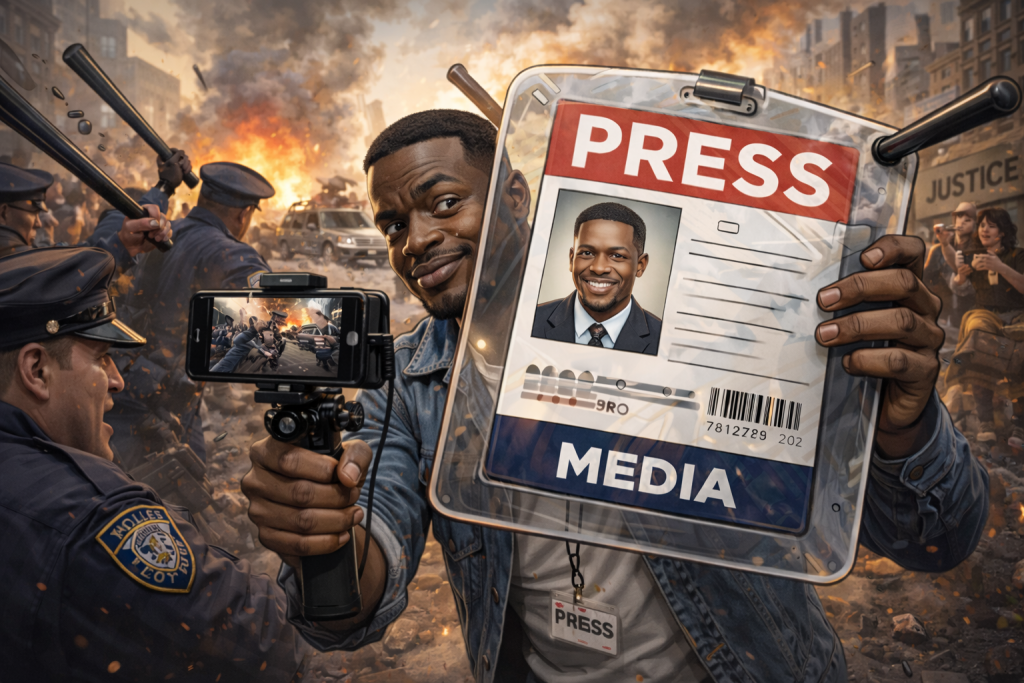
Federal prosecutors later charged multiple participants with conspiring to interfere with religious worship. Among those charged was Don Lemon, who had entered the church while livestreaming the disruption and claimed he was present solely as a journalist documenting events.
The government’s position is straightforward: entering a worship service as part of a coordinated action that disrupts or obstructs worship can constitute unlawful interference with religious exercise, regardless of whether a participant labels themselves a protester or a journalist.
Lemon was arrested outside Minnesota and released pending further proceedings. The case is ongoing, but the legal posture alone sends a clear signal.
Why the “journalist” argument is not a shield
Journalists do not have a general exemption from neutral criminal laws. The First Amendment protects newsgathering, but it does not authorize participation in unlawful conduct.
If a reporter is lawfully present and merely observing, recording, and reporting, that activity is protected. But if prosecutors can show that the journalist knowingly entered a private religious service during a coordinated disruption, and that their presence furthered the interference, the legal analysis changes.
The Minneapolis case raises a difficult question: where is the line between reporting on a protest and being part of it? Courts have not fully resolved that question yet, which is why this case is being watched closely. But nothing in existing law guarantees that “I was livestreaming” defeats an interference charge.
What this means for protesters, practically and legally
Legally, the rules are not subtle.
You may protest about a church’s teachings or leadership in public spaces. You may hold signs, chant, and leaflet on sidewalks and parks, subject to ordinary time, place, and manner restrictions.
You generally may not enter a worship service and disrupt it without exposing yourself to criminal liability. That liability can be local, state, or federal depending on the conduct involved.
Practically, the Minneapolis case demonstrates something else. Once a protest crosses into worship, the narrative shifts instantly. The issue stops being the protesters’ cause and becomes the denial of others’ right to worship. Jurors understand that intuitively, and prosecutors know it.
Civil disobedience is a real tactic, but it is not a legal defense. It is a conscious decision to violate the law to draw attention, with the expectation of arrest or prosecution. Confusing civil disobedience with constitutional protection is how people end up shocked when the handcuffs appear.
The Havok Journal takeaway
You can criticize religion. You can protest religious leaders. You can oppose what a church stands for.
What you cannot do, under U.S. law, is commandeer someone else’s sanctuary during worship and claim the First Amendment as cover. The Constitution protects speech. It also protects the free exercise of religion. When the two collide, entering a church to disrupt worship is where the line is drawn.
The Minneapolis incident involving Don Lemon did not create new law. It simply exposed how firmly that line already exists.

References
United States Supreme Court decisions on private property and First Amendment limits, including Lloyd Corp. v. Tanner and Marsh v. Alabama.
Federal civil-rights statutes protecting access to places of religious worship.
State and municipal “disturbing religious worship” and disorderly conduct laws.
Public reporting on the January 2026 Cities Church disruption and subsequent federal charges.
Department of Justice explanations of interference with religious exercise statutes.
_____________________________
Dave Chamberlin served 38 years in the USAF and Air National Guard as an aircraft crew chief, where he retired as a CMSgt. He has held a wide variety of technical, instructor, consultant, and leadership positions in his more than 40 years of civilian and military aviation experience. Dave holds an FAA Airframe and Powerplant license from the FAA, as well as a Master’s degree in Aeronautical Science. He currently runs his own consulting and training company and has written for numerous trade publications.
His true passion is exploring and writing about issues facing the military, and in particular, aircraft maintenance personnel.
As the Voice of the Veteran Community, The Havok Journal seeks to publish a variety of perspectives on a number of sensitive subjects. Unless specifically noted otherwise, nothing we publish is an official point of view of The Havok Journal or any part of the U.S. government.
Buy Me A Coffee
The Havok Journal seeks to serve as a voice of the Veteran and First Responder communities through a focus on current affairs and articles of interest to the public in general, and the veteran community in particular. We strive to offer timely, current, and informative content, with the occasional piece focused on entertainment. We are continually expanding and striving to improve the readers’ experience.
© 2026 The Havok Journal
The Havok Journal welcomes re-posting of our original content as long as it is done in compliance with our Terms of Use.


