
Awareness. Discipline. Action.
There is no shortage of people today willing to sell you a mindset. Open social media for five minutes and you will find an endless stream of “warrior philosophies,” motivational slogans, hyper-aggressive branding, and recycled Stoic quotes pasted over cinematic music and shirtless workouts. Everyone claims to have a code. Everyone claims to have discipline. Everyone claims to have unlocked some ancient secret to mental toughness.
Most of it falls apart the moment real pressure enters the room. Because pressure exposes what performance hides. I have spent enough time in the military, law enforcement, SWAT operations, and leadership positions to understand something simple: people do not rise to the level of the philosophy they post online. They fall to the level of the habits they have actually built. Under stress, there is no performance. There is only conditioning.
That realization is what led me toward something I now call The Sapient Doctrine. Not a motivational system. Not a social media brand. Not an attempt to sound profound by recycling ancient warrior culture through a modern algorithm. A doctrine. A way of operating. A framework centered on awareness, discipline, adaptability, and self-command under pressure.
The word “sapient” matters here. Sapient means wise. Aware. Conscious. Capable of thought and understanding. In a culture increasingly driven by reaction, emotional impulsivity, outrage, ego, and noise, awareness itself has become a rare skill. And yet awareness is where everything starts.

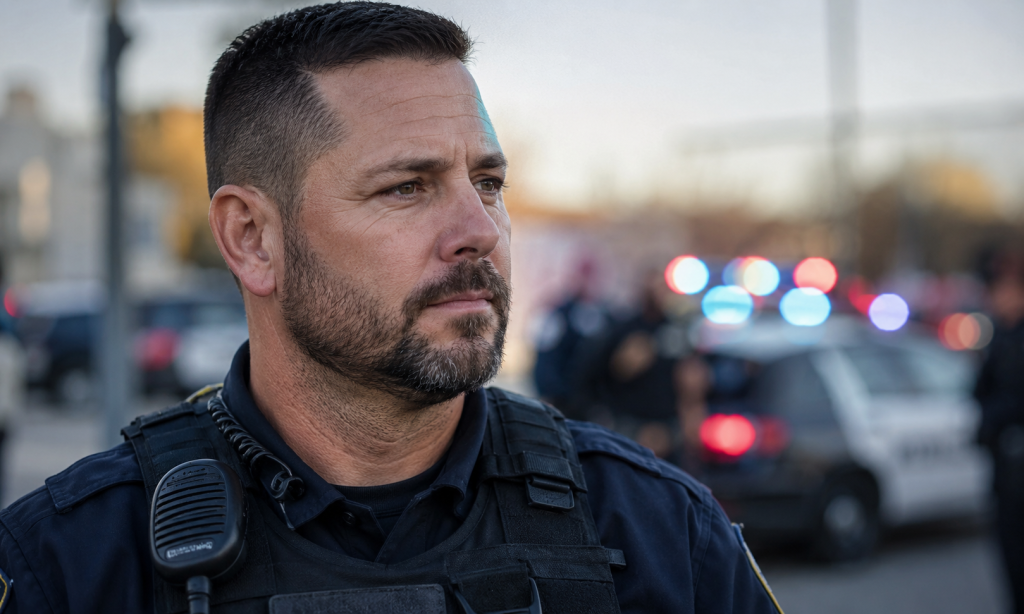
Pillar I — Awareness
Every tactical decision begins with awareness. Every leadership failure begins with a lack of awareness. Every emotional overreaction begins with a failure of awareness. Most preventable mistakes occur because someone was operating on autopilot instead of conscious thought.
People often think awareness simply means paying attention to your surroundings. That is only part of it. True awareness is much deeper than observation alone. It is the ability to consciously process reality without immediately becoming consumed by emotion, assumption, ego, or impulse. Awareness is what creates the space between stimulus and response. Inside that space is where judgment lives.
Without awareness, people react automatically. And automatic reactions are often driven by fear, anger, insecurity, stress, exhaustion, ego, or conditioning people do not even realize is controlling them.
The Sapient Doctrine is built around one fundamental sequence: Awareness. Discipline. Action.
Not action first.
That distinction matters because modern culture conditions people toward immediate reaction. Move fast. Speak fast. Respond emotionally. Escalate quickly. Social media itself has trained people to react before thinking. Entire systems now reward outrage, impulsivity, emotional certainty, and instant judgment.
But disciplined people understand something others often miss: awareness must come before action or the action becomes reckless. Action without awareness is impulsivity disguised as decisiveness. In policing, this matters enormously because law enforcement operates inside constantly changing environments filled with uncertainty, incomplete information, emotional volatility, and high consequences. Decisions made in seconds can carry legal, moral, psychological, and life-altering consequences for everyone involved.
The officers who consistently perform well under pressure are rarely the loudest people in the room. They are rarely the ones constantly trying to project toughness or dominance. In my experience, some of the best officers I have ever worked with were calm, observant, emotionally regulated individuals who understood how to mentally slow situations down while everything around them sped up physically.
That ability is not accidental.
It comes from awareness. They noticed details others missed because their perception was not hijacked by emotional noise. They listened more carefully. They observed behavior instead of immediately forcing assumptions onto situations. They controlled their breathing. They controlled their body language. They understood that their emotional state directly affected everyone around them. Calm is contagious. So is panic.
Awareness allowed them to maintain access to judgment under stress because they were not consumed by ego, anger, frustration, fear, or emotional static. That emotional regulation gave them options. And options matter in high-pressure environments.
People often lose awareness long before they realize they are losing control. Stress narrows perception. Anger narrows perception. Fear narrows perception. Ego narrows perception. Once emotional arousal reaches certain levels, people stop seeing reality clearly and begin reacting primarily through survival-based filtering. The nervous system prioritizes immediate threat response over careful analysis.
That is why awareness must also become internal. Situational awareness alone is incomplete if a person lacks awareness of themselves.
The Sapient Doctrine emphasizes awareness of your emotional state, your physiology, your habits, your blind spots, your biases, and the internal dialogue shaping your decisions long before you consciously recognize it. Most people dramatically underestimate how much internal narrative affects behavior. Human beings are constantly interpreting reality through internal filters built from stress, memory, trauma, ego, beliefs, and past experiences.
If those filters go unrecognized, they begin making decisions for you automatically.
That is how emotional reactivity becomes identity. That is how cynicism becomes personality. That is how burnout becomes normalized. That is how leaders unintentionally poison organizational climates because they lack awareness of the emotional energy they continuously project into their teams. Awareness is what interrupts those unconscious loops.
It allows individuals to recognize rising frustration before it becomes aggression. It allows leaders to recognize stress responses before they spread emotionally throughout an organization. It allows officers to recognize physiological escalation before panic overrides decision-making.
This is why awareness is not passive. It is active regulation. It is conscious observation without immediate emotional surrender. And without awareness, there is no adaptation.
People cannot adjust to conditions they refuse to recognize. They cannot evolve beyond patterns they are unaware of. They cannot improve leadership climates they cannot accurately perceive. They cannot regulate emotions they do not consciously acknowledge.
Without awareness, deterioration begins quietly. Habits deteriorate first. Then communication deteriorates. Then emotional control deteriorates. Then judgment deteriorates. Over time, people stop consciously operating and begin merely reacting to life moment by moment.
That is not discipline. That is drift. The Sapient Doctrine rejects drift entirely. It demands conscious living under pressure. It demands awareness before reaction. It demands enough self-command to observe reality clearly before deciding how to respond to it. Because the moment awareness disappears, people stop controlling themselves. And once that happens, stress, ego, fear, anger, and impulse begin controlling them instead.
Pillar II — Self-Command
Before you can lead others effectively, you must first learn to regulate yourself. That sounds obvious. It is not.
Most people associate leadership with directing others, making decisions, giving orders, or managing performance. But leadership becomes fragile very quickly when the person leading lacks control over themselves. A person who cannot regulate their own emotions under pressure will eventually project that instability into everyone around them. Stress spreads. Emotion spreads. Fear spreads. Ego spreads. Leadership is never isolated to the individual. It radiates outward into the environment they create.
Many people can control others through positional authority. Very few can consistently control their own emotions under stress. Very few can regulate anger, ego, insecurity, impulsivity, or fear once pressure spikes. Anyone can appear composed when conditions are comfortable. The real test comes when certainty disappears, when emotions rise, when information becomes incomplete, when fatigue sets in, or when the outcome becomes personally threatening.
That is when pressure reveals the truth.
Pressure strips away performance. It strips away rehearsed identity. It strips away titles, slogans, and appearances. Under enough stress, people eventually default to the level of conditioning beneath the surface.
Your nervous system does not care about your rank. Your physiology does not care about your title. Stress responses are deeply biological. Heart rate rises. Breathing changes. Perception narrows. Fine motor skills deteriorate. Emotional reactivity increases. Cognitive processing changes under stress whether a person acknowledges it or not.
This is why self-awareness and emotional regulation matter so much in leadership. The body will always expose what the mind attempts to hide.
Someone may project confidence externally while internally operating from insecurity. Someone may project authority externally while internally being emotionally reactive and unstable. Over time, those internal conditions eventually leak into behavior because the nervous system cannot maintain performance indefinitely under sustained stress.
The Sapient Doctrine rejects the idea that leadership is dominance. Leadership is not intimidation. It is not emotional volatility disguised as passion. It is not ego disguised as confidence. It is not controlling every movement of your people because uncertainty makes you uncomfortable.
Leadership begins with self-command. The ability to remain composed when others become reactive. The ability to think clearly when chaos tries to narrow your perception. The ability to control ego when authority tempts you toward arrogance. The ability to absorb pressure without immediately transmitting that pressure into everyone else around you. That last part matters enormously.
Many leaders unconsciously transfer their internal instability into their organizations. An insecure leader creates insecure environments. An emotionally volatile leader creates emotionally volatile teams. A reactive leader conditions everyone around them to operate defensively because people begin managing the leader’s emotional state instead of focusing on the mission itself.
This happens constantly in high-stress professions. People stop speaking honestly because they fear emotional reactions. People stop taking initiative because they fear public criticism. People stop adapting because they become psychologically focused on avoiding leadership rather than solving problems. That is not leadership. That is emotional contamination. Strong leadership creates stability, not emotional turbulence.
This is where many people misunderstand emotional control entirely. The Sapient Doctrine is not advocating emotional suppression. Suppression eventually fails because emotions pushed down without awareness eventually emerge elsewhere through anger, burnout, cynicism, impulsivity, withdrawal, or emotional exhaustion.
Suppression is not control. Avoidance is not control. Numbing is not control. True regulation is different. Emotional regulation is the ability to experience emotion without surrendering decision-making to it. It is grounded awareness under pressure. It is recognizing anger without becoming controlled by anger. Recognizing fear without allowing fear to dictate behavior. Recognizing stress without unconsciously transmitting stress into everyone around you.
That level of regulation requires awareness because people often lose emotional control long before they consciously realize it is happening. Stress narrows perception. Ego narrows perception. Fear narrows perception.
Once emotional arousal reaches certain levels, human beings begin reacting more instinctively and less consciously. The nervous system prioritizes survival over careful thought. This is why disciplined breathing, composure, and physiological regulation matter so much in both leadership and tactical environments.
The calmest person in the room is often the most dangerous because they are not emotionally controlled by the environment around them. Calm should never be mistaken for weakness. Calm preserves judgment. Calm preserves awareness. Calm preserves adaptability.
Reactive people are easier to manipulate because their emotions can be controlled externally. Grounded individuals are harder to destabilize because their decisions are not entirely dictated by the emotional temperature of the room.
That is one of the central ideas within The Sapient Doctrine. The goal is not emotional numbness. The goal is stability under pressure. There is a major difference between becoming emotionless and becoming regulated. Emotionless people often disconnect from others entirely. Regulated people remain fully aware of emotion while maintaining control over how they respond to it.
That distinction matters tremendously in professions like law enforcement, military service, emergency response, and leadership because those environments constantly test emotional stability. Exposure to conflict, trauma, uncertainty, danger, and chronic stress changes people over time. Without awareness and regulation, many individuals slowly become consumed by anger, cynicism, hypervigilance, emotional exhaustion, or ego-driven identity.
The Sapient Doctrine rejects that drift. It demands self-command before leadership. Because people who cannot regulate themselves eventually become controlled by the very emotions they believe they are hiding. And leaders who cannot control themselves eventually create environments where instability becomes culture.
True leadership begins long before commands are given. It begins with mastery over the self.

Pillar III — Physical Readiness
The body and mind are inseparable under stress. Fatigue changes decision-making. Poor recovery changes emotional regulation. Sleep deprivation impacts reaction time, impulse control, memory, attention span, and judgment. Breathing affects heart rate. Heart rate affects cognition. Cognition affects performance.
This is not motivational rhetoric. This is neurophysiology. The body keeps score long before the mind consciously understands what is happening.
That is why physical readiness inside The Sapient Doctrine is not about vanity. It is about operational capability. Strength matters. Endurance matters. Recovery matters. Breath control matters. The ability to remain physically functional under stress directly impacts the ability to remain mentally functional under stress.
I have seen this personally. I have seen heart rates spike during high-risk operations. I have experienced the emotional crash that sometimes follows intense incidents once the nervous system finally exits survival mode. I have watched officers carry years of accumulated stress while pretending they were fine because the culture conditioned them to suppress rather than process.
Resilience is not the absence of stress. It is adaptation to stress without losing yourself inside it.

Pillar IV — Disciplined Action
Awareness without action becomes passivity. Action without discipline becomes chaos. The Sapient Doctrine requires both.
Discipline is the bridge between thought and execution. It is consistency without external validation. It is doing what must be done regardless of mood, comfort, or convenience. Real discipline is not loud. It is repetitive. Built quietly through habits, standards, routines, and decisions made daily when nobody is watching.
Under pressure, people do not suddenly become disciplined. They reveal the level of discipline they already built beforehand. That is why training matters. That is why repetition matters. That is why standards matter.
Too many organizations train for compliance instead of adaptability. People become technically certified but psychologically unprepared. They know policy but cannot regulate themselves under pressure. They know procedure but cannot think critically once conditions become unpredictable.
Rigid thinkers break under stress. Disciplined thinkers adapt.

Pillar V — Leadership Climate
One of the biggest failures I have witnessed in law enforcement is the confusion between authority and leadership. Many people believe leadership comes from rank, stripes, bars, stars, or position. It does not. Leadership is behavioral before it is organizational.
Some leaders walk onto scenes announcing their presence like actors entering a stage production. They publicly chastise subordinates. They micromanage basic decisions. They create environments where officers become so conditioned to second-guessing themselves that independent thought eventually disappears.
I have seen officers call supervisors asking permission to eat. Think about how dangerous that is organizationally. When leadership creates an environment where people fear making small decisions, hesitation eventually appears during major decisions too. And hesitation under pressure can get people hurt.
The Sapient Doctrine rejects leadership through intimidation, ego, and unnecessary control because those things do not create strength inside an organization. They create dependency, hesitation, resentment, and fear. At first, fear-based leadership can look effective from the outside because people comply quickly. Orders are followed. Nobody challenges authority. Everything appears controlled. But underneath that surface, the organization slowly begins to weaken psychologically.
People stop thinking independently. They stop taking initiative. They stop adapting. Every decision becomes filtered through fear of criticism, punishment, or embarrassment instead of through problem-solving and professional judgment. That kind of environment eventually creates operational paralysis.
I have seen officers become so conditioned to micromanagement that they hesitate over even basic decisions because they are afraid of being second-guessed later. They become more focused on avoiding criticism than solving problems. That hesitation does not stay confined to small moments either. It eventually appears during high-stress situations where hesitation carries real consequences.
Leadership climate directly affects human performance. A calm leader does more than create comfort. Calm regulates environments physiologically and psychologically. Human beings unconsciously mirror the emotional states around them. If a leader walks onto a chaotic scene emotionally reactive, angry, frantic, or ego-driven, that emotional state spreads rapidly through the team. Stress compounds stress. Chaos feeds chaos.
But when a leader remains composed under pressure, it creates psychological stability inside unstable environments. People think more clearly. Communication improves. Decision-making sharpens. Emotional contagion works both ways.
That is why composure is not weakness. It is force multiplication.
Emotionally volatile leaders rarely realize the amount of damage they create over time because volatility normalizes dysfunction. Teams eventually begin operating in survival mode around leadership itself. Officers become hyper-focused on avoiding the leader rather than focusing on the mission. Creativity disappears. Honest communication disappears. Trust deteriorates quietly. People become guarded. The organizational culture shifts from growth to self-protection.
Fear may create temporary compliance, but it destroys long-term adaptability.
Empowered teams function differently. When leaders create climates where people are trusted to think critically, solve problems, and make decisions within intent rather than waiting for permission on every detail, confidence grows. Ownership grows. Adaptability grows. Teams become more resilient because individuals inside the system are psychologically allowed to function instead of simply obey.
That does not mean the absence of accountability. In fact, accountability becomes stronger in healthy environments because people are not operating from fear alone. They understand expectations clearly. They understand standards clearly. They understand purpose clearly.
Strong leadership is not about controlling every movement of your people. It is about creating an environment where disciplined people can perform effectively without unnecessary interference.
The best leaders I have ever seen did not dominate rooms with intimidation. They stabilized rooms with presence. They did not need to constantly remind everyone of their authority because their behavior already established credibility. They understood that leadership is less about projecting power and more about regulating environments.
That regulation matters because organizations eventually mirror the emotional habits of leadership.
Micromanagement creates hesitation. Ego creates division. Emotional instability creates distrust. Calm creates clarity. Trust creates initiative. Consistency creates confidence.
The environment leaders create eventually becomes the behavior their people display because human beings adapt psychologically to the conditions surrounding them. That is not motivational philosophy. That is behavioral science. That is stress psychology. That is organizational reality.
In the end, leadership is not measured by how much control a person demands. It is measured by what kind of people and culture develop under their influence.
Pillar VI — Adaptability
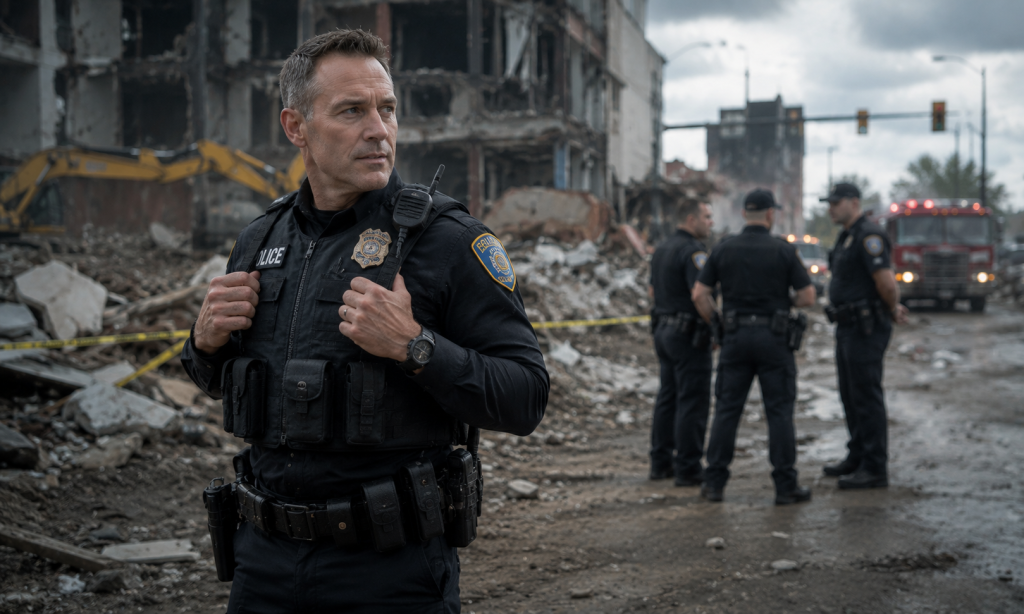
Reality is adaptive. No operation unfolds exactly according to plan. No leadership challenge follows a script. No human being behaves exactly as expected every time.
People like certainty because certainty creates the illusion of control. We build policies, procedures, operational plans, contingency plans, training scenarios, and organizational structures because they help create order inside environments that are naturally unpredictable. There is value in that. Preparation matters. Discipline matters. Structure matters.
But problems begin when people confuse preparation with predictability.
Real life does not care about your perfect plan.
The suspect does not move the way you expected. The officer does not respond emotionally the way you anticipated. The call changes halfway through. The information turns out to be incomplete. Equipment fails. Communication breaks down. Stress alters perception. Human beings introduce variables no policy manual can fully account for.
That is reality.
And reality is adaptive.
The individuals who struggle most inside dynamic environments are usually not the least intelligent or least capable. Often, they are the people most emotionally attached to certainty. They need situations to unfold exactly the way they envisioned them mentally. When reality deviates from the script, frustration rises. Emotional control weakens. Decision-making narrows. Some become rigid. Others panic. Some attempt to over-control everyone around them in an effort to restore psychological certainty.
But control is not adaptability.
In fact, excessive control often becomes a liability under pressure because rigid systems break when conditions change faster than the system can adjust.
This applies tactically. Officers who become mentally locked into one expectation sometimes fail to recognize rapidly evolving threats or changing behavior because their mind is attached to a single interpretation of events. They stop observing reality and start defending assumptions.
It applies organizationally as well. Departments that refuse to evolve eventually become trapped by outdated leadership models, outdated communication styles, outdated training philosophies, and outdated cultural expectations. Organizations that cannot adapt eventually fracture under modern pressures because reality continues moving whether leadership evolves with it or not.
It also applies personally.
Some people spend years trying to force life into a version they can completely control. They resist change. They resist discomfort. They resist uncertainty. But life eventually disrupts everyone. Trauma disrupts people. Loss disrupts people. Leadership challenges disrupt people. Health issues disrupt people. Failure disrupts people.
Adaptability is what determines whether disruption destroys someone or develops them.
Some of the strongest people I have ever known were not the most aggressive. They were the most adaptable. They could absorb stress without becoming consumed by it. They could take criticism without collapsing emotionally. They could remain calm without becoming passive. They could remain disciplined without becoming robotic. They understood that flexibility and strength are not opposites.
In fact, true strength often requires flexibility.

The human body itself demonstrates this principle constantly. Materials with zero flexibility eventually snap under enough force. The nervous system behaves similarly. People who cannot psychologically adapt to stress eventually burn out, emotionally shut down, or become consumed by cynicism, anger, or exhaustion.
The Sapient Doctrine rejects the false idea that adaptability is weakness. Many people associate adaptability with softness because they confuse rigidity with strength. But there is nothing strong about fragility disguised as control.
Real adaptability requires awareness, confidence, and emotional regulation. It requires the ability to absorb new information without ego interfering. It requires the ability to shift tactics without feeling psychologically threatened by change. It requires enough self-command to recognize when adjustment is necessary instead of blindly forcing failing strategies out of pride.
This is especially important in leadership.
Rigid leaders often create rigid organizations. They over-control details, suppress independent thinking, and unintentionally punish initiative because unpredictability makes them uncomfortable. Over time, their people stop adapting too. Innovation disappears. Honest communication disappears. Everyone begins operating inside psychological guardrails designed more to avoid leadership reactions than solve actual problems.
Adaptive leaders create different climates entirely.
They provide intent instead of micromanaging every movement. They empower disciplined decision-making. They allow room for growth, problem-solving, and adjustment. They understand that trust and adaptability are connected because people who fear punishment for every mistake eventually stop thinking independently.
Adaptability also matters emotionally.
One of the most dangerous things a person can do is become psychologically frozen inside a single emotional state. Some people become trapped in anger. Others become trapped in bitterness, grief, cynicism, fear, or hypervigilance. Over time, those emotional states become identities instead of experiences.
Adaptive individuals process stress differently. They acknowledge difficult emotions without permanently attaching themselves to them. They understand that emotional flexibility is part of resilience. They can shift gears mentally when necessary. They can recover. They can recalibrate.
That ability sustains long-term performance.
Because performance is not built through intensity alone.
It is built through sustainability.
Anyone can operate at a high level temporarily through adrenaline, anger, ego, or sheer force of will. The real challenge is sustaining capability over years without psychologically collapsing under accumulated stress.
That is where adaptability becomes survival.
The Sapient Doctrine values flexibility because rigidity eventually breaks under sustained pressure. Adaptability allows individuals to evolve without losing themselves. It allows leaders to adjust without surrendering standards. It allows organizations to improve without abandoning identity.
Most importantly, adaptability allows people to remain functional inside environments that constantly change.
Because reality will continue adapting whether we are ready for it or not.
The question is whether we adapt with it—or break trying to force reality to remain predictable.
Pillar VII — Purpose
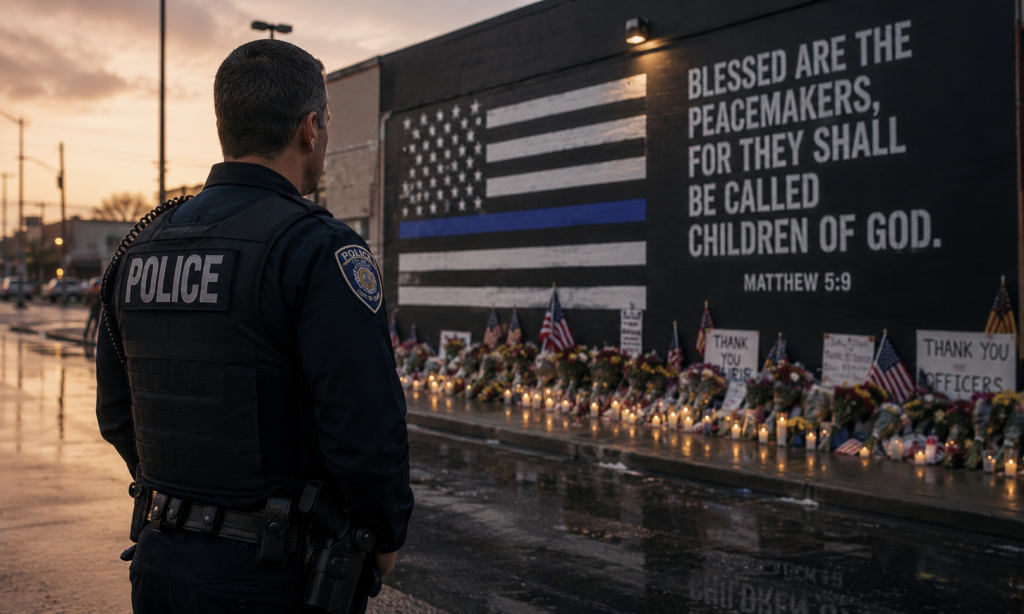
Without purpose, discipline eventually collapses. People can force themselves forward temporarily through anger, ego, fear, or external validation, but eventually those fuel sources run dry. Purpose sustains consistency. Purpose creates resilience. Purpose gives suffering direction.
In professions like law enforcement, military service, emergency response, and leadership, purpose matters because the work eventually tests identity itself. Years of stress, trauma exposure, cynicism, conflict, and responsibility change people. You cannot spend years around violence, tragedy, manipulation, and chaos without it affecting your nervous system.
You are not weak for being affected. You are human.
The problem begins when awareness disappears and people begin operating unconsciously through accumulated stress, emotional exhaustion, cynicism, anger, or detachment. Eventually those internal conditions spill outward into leadership, decision-making, relationships, health, and organizational culture.
Purpose anchors people against that drift. Not superficial motivation. Not performative toughness. Meaning. Responsibility. Service. Contribution. Direction.
The Sapient Doctrine is ultimately less about tactics and more about conscious living under pressure. It is about building individuals capable of maintaining awareness, discipline, adaptability, and humanity in environments constantly attempting to strip those things away. Not perfect people. Capable people. Grounded people. Aware people.
Because in the end, the real battle is rarely external alone. The real battle is whether pressure turns you reactive or refined. Whether stress controls you or strengthens you. Whether authority inflates your ego or deepens your responsibility. Whether hardship hardens you emotionally or sharpens your awareness.
The Sapient Doctrine is not about appearing dangerous. It is about becoming disciplined enough that danger does not control you.
The Sapient Doctrine is not about pretending to be fearless. It is not about appearing hardened, emotionless, or invulnerable. It is not another performative philosophy built for social media, where intensity is confused with strength and noise is confused with leadership.
It is about awareness. It is about self-command. It is about remaining capable under pressure without allowing pressure to consume who you are.
Modern society has conditioned people toward reaction. Faster opinions. Faster outrage. Faster escalation. But reaction is not mastery. Anyone can lose control. Anyone can become emotional, impulsive, ego-driven, or reactive when conditions become difficult.
The harder skill is remaining grounded when chaos attempts to pull you away from yourself.
That is what separates disciplined individuals from emotionally controlled ones.

Final Thoughts
The Sapient Doctrine exists because pressure eventually finds everyone. Tactical pressure. Leadership pressure. Emotional pressure. Personal pressure. Organizational pressure. Life itself eventually tests every weakness a person tries to hide beneath titles, achievements, status, or identity.
And when that pressure arrives, awareness matters. Self-command matters. Adaptability matters. Purpose matters. Because in the end, people do not break simply because life becomes difficult. They break because they lose awareness of themselves inside the difficulty. They lose discipline. They lose emotional regulation. They lose purpose. They drift unconsciously until stress begins controlling their thoughts, behaviors, relationships, leadership, and identity.
That drift is dangerous. Not just for individuals, but for organizations, teams, families, and entire cultures. The Sapient Doctrine rejects drift entirely.
It demands conscious living under pressure. It demands the ability to observe reality clearly before reacting emotionally to it. It demands leaders capable of regulating environments instead of destabilizing them. It demands adaptability without surrendering standards. It demands strength without ego and discipline without arrogance.
Most importantly, it demands responsibility for the self before responsibility over others. Because true leadership does not begin with controlling people. It begins with controlling yourself. And in a world increasingly driven by emotional reactivity, distraction, outrage, and instability, the individual capable of remaining calm, aware, disciplined, and adaptable under pressure becomes something increasingly rare.
Not just dangerous. Not just capable. But grounded. The Sapient Doctrine is ultimately not about becoming harder. It is about becoming harder to break.
_____________________________
Ayman Kafel is a patrol sergeant, combat veteran, and founder of Project Sapient, with more than 20 years of operational experience. He served in Iraq as a U.S. Army soldier and translator and has worked in law enforcement roles including SWAT, DEA task force work, and plainclothes interdiction; he also holds a master’s degree in counterterrorism. For The Havok Journal, he writes from that background on law enforcement, service, training, stress, resilience, and national security, often focusing on the physical and psychological demands of high-stress work. Follow Project Sapient on Instagram, YouTube, and all podcast platforms for engaging content. He can be reached at ayman@projectsapient.com.
As the Voice of the Veteran Community, The Havok Journal seeks to publish a variety of perspectives on a number of sensitive subjects. Unless specifically noted otherwise, nothing we publish is an official point of view of The Havok Journal or any part of the U.S. government.
Buy Me A Coffee
The Havok Journal seeks to serve as a voice of the Veteran and First Responder communities through a focus on current affairs and articles of interest to the public in general, and the veteran community in particular. We strive to offer timely, current, and informative content, with the occasional piece focused on entertainment. We are continually expanding and striving to improve the readers’ experience.
© 2026 The Havok Journal
The Havok Journal welcomes re-posting of our original content as long as it is done in compliance with our Terms of Use.


