What does it actually mean to be tactical?
Most people think they know the answer. Walk into any sporting goods store, gun shop, military surplus store, or spend enough time scrolling social media, and you’ll see the word tactical attached to almost everything imaginable. Tactical backpacks. Tactical pants. Tactical watches. Tactical flashlights. Tactical coffee mugs. Somewhere along the way, the word tactical stopped describing a way of thinking and became a marketing strategy.
The reality is that being tactical has very little to do with the equipment you carry and everything to do with how your brain functions under pressure. The most tactical people I have ever met were not necessarily the strongest individuals in the room. They were not always the fastest shooters or the most physically imposing operators. They were the people who could remain calm while everyone else became emotional. They could process information while others became overwhelmed. They could make decisions while others froze.
Modern neuroscience, military psychology, and performance science all point to the same conclusion: being tactical is not something you wear. It is a neurological adaptation.
For decades, popular culture has associated the word tactical with equipment. Images of rifles, plate carriers, body armor, and specialized gear immediately come to mind. While those tools certainly have their place, they are not what makes someone tactical. Equipment is simply an extension of capability. The true source of tactical effectiveness lies much deeper. It resides within the human nervous system.
The most tactical individuals are the people whose minds have adapted to function effectively in environments characterized by uncertainty, complexity, and stress. Their advantage comes from how they process information, regulate emotion, recognize patterns, and make decisions when others become overwhelmed.
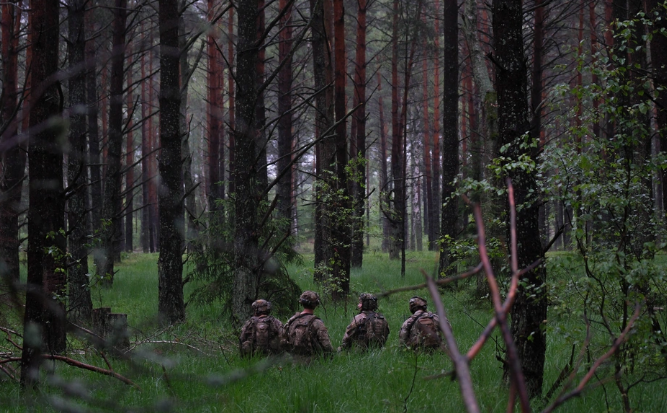
Neuroscience has shown that the human brain is constantly engaged in a process of prediction. Every second, it receives enormous amounts of sensory information and attempts to build an accurate model of reality. The challenge is that stress, fear, fatigue, and emotion can distort that model. Under pressure, people often experience tunnel vision, cognitive narrowing, auditory exclusion, and impaired decision making. The tactical individual is not immune to these biological responses. Rather, they have trained themselves to recognize and manage them.
Military psychology has long recognized that performance under pressure is not determined by bravery alone. Courage matters, but courage without control is simply unmanaged emotion. The elite operator, soldier, police officer, firefighter, or emergency responder learns to regulate physiological arousal while maintaining cognitive clarity. They understand that the body will naturally respond to danger with adrenaline, elevated heart rate, and heightened alertness. Instead of fighting those responses, they learn to channel them into purposeful action.
Performance science further reinforces this idea. Research consistently demonstrates that high performers across multiple domains share common characteristics. They maintain situational awareness under pressure. They recognize patterns quickly. They adapt to changing conditions. Most importantly, they continue making effective decisions when information is incomplete and the consequences of failure are significant.
This is where the true meaning of being tactical begins to emerge.
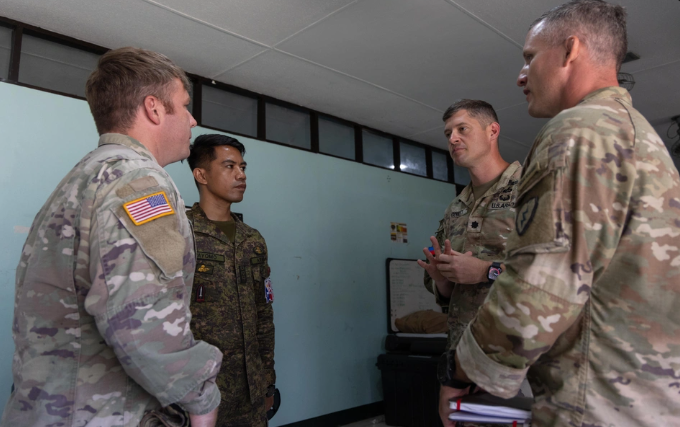
In my opinion, being tactical is the ability to perceive reality accurately despite the distortions created by stress. It is the ability to regulate your physiology when your nervous system is urging you to panic. It is the ability to make effective decisions when certainty does not exist. It is the ability to execute deliberate action while others are consumed by hesitation, confusion, or emotion.
At its core, being tactical is the science of adaptation.
Throughout human history, survival has never belonged exclusively to the strongest individuals. More often, it has belonged to those who adapted most effectively to changing circumstances. The same principle applies today. Whether on a battlefield, during a critical incident, in a boardroom, or within the challenges of everyday life, success often comes down to one’s ability to rapidly assess reality, adjust to changing conditions, and respond effectively.
The tactical mindset is therefore much larger than combat or law enforcement. It is a framework for navigating uncertainty. It is the disciplined pursuit of clarity in environments designed to create confusion. It is the ability to remain composed while others become reactive. It is the capacity to think clearly when chaos arrives.
In the end, the most important piece of tactical equipment any person will ever possess is not carried on their body.
It is carried between their ears.
Every human being believes they see reality as it exists. Science suggests otherwise. The brain processes an enormous amount of information every second. To prevent overload, it filters most of that information before it reaches conscious awareness. What remains is influenced by previous experiences, beliefs, emotions, memories, expectations, and biases. In other words, we do not experience reality directly. We experience our interpretation of reality.

In law enforcement, this becomes obvious very quickly. Two officers can witness the same event and describe it differently. Two witnesses can observe the same crime and provide contradictory accounts. Two people can experience the same situation and leave with entirely different conclusions. The difference is often not intelligence. The difference is perception.
The tactical professional understands this limitation and actively works to overcome it. They seek evidence rather than assumptions. They remain curious rather than emotionally attached to conclusions. They understand that what they think is happening and what is actually happening may be two very different things. Research has demonstrated that under stress, people experience tunnel vision, auditory exclusion, memory distortion, and altered perceptions of time. These effects are not signs of weakness. They are biological adaptations designed for survival.
The first step toward becoming tactical is understanding that your brain can deceive you. The second step is learning how to compensate for it.
Most people believe courage means the absence of fear. Biology tells a different story. Fear is not weakness. Fear is information. The moment your brain perceives a threat, the sympathetic nervous system activates. Adrenaline floods the bloodstream. Cortisol levels rise. Heart rate increases. Breathing accelerates. Vision narrows. Blood flow shifts toward large muscle groups. Fine motor skills begin to deteriorate.
For thousands of years, this response helped human beings survive predators, warfare, and environmental threats. The challenge is that modern tactical environments often require complex decision making rather than immediate physical action. A police officer responding to an active threat must simultaneously process legal, ethical, and tactical considerations. A military leader may need to coordinate multiple assets under extreme pressure. A firefighter must assess changing conditions while operating in a dangerous environment. The same physiological response designed to keep us alive can sometimes interfere with our ability to think.
This is where the tactical mindset separates itself from the emotional mindset. The tactical individual does not eliminate stress. They learn to manage it. Controlled breathing, visualization, realistic training, and repeated exposure to stress allow individuals to regulate their nervous systems when it matters most. Elite performers understand a simple truth. You cannot control the environment. You can control your response to it.
Long before a decision is made, the real battle is occurring inside the nervous system.
One of the greatest misconceptions about elite performers is the belief that they carefully compare multiple options before acting. Research suggests something different. Cognitive psychologist Gary Klein spent years studying firefighters, military commanders, emergency personnel, and law enforcement officers. What he discovered fundamentally changed our understanding of decision making under pressure.
Experts rarely compare numerous options. Instead, they recognize patterns. Klein called this process Recognition-Primed Decision Making. Experienced operators rapidly identify situations that resemble previous experiences and immediately generate workable solutions. The veteran patrol officer notices subtle behavioral indicators during a traffic stop. The seasoned infantryman recognizes signs of an impending ambush. The experienced detective identifies inconsistencies in a suspect’s statement. The accomplished leader recognizes organizational problems before they become crises.
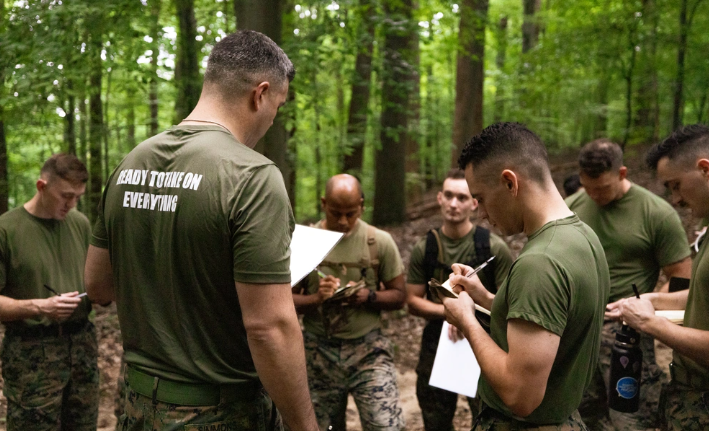
To outsiders, this often appears as intuition. In reality, it is pattern recognition developed through years of exposure and training. The tactical mind functions as a prediction engine. It continuously compares current information against previous experiences and searches for meaningful patterns. This is why experience matters. Experience compresses time. A novice sees chaos. An expert sees familiar pieces.
One of the most dangerous myths in any profession is the belief that people rise to the occasion. The evidence suggests something different. People generally fall to their level of training. Under stress, the brain defaults toward familiar patterns and practiced behaviors. This reality has profound implications for military personnel, law enforcement officers, first responders, and anyone operating in high-consequence environments.
I have argued with officers who would make the statement that adrenaline is all they need to perform better. That is a massive misconception. Adrenaline alone doesn’t suddenly make you a high-performing first responder. You need to train, train, and train some more. I spoke to a friend of mine, and we both came to the conclusion that mindset is something that can’t be trained. It’s something that certain people are born with. I find that most people who have those instincts did not have a choice.
You cannot simply learn information. You must experience it. This principle forms the foundation of stress inoculation training. By gradually exposing individuals to realistic stressors, the nervous system becomes familiar with functioning under pressure. The goal is not to eliminate stress. The goal is to normalize it.
Reality-based training, force-on-force scenarios, critical incident simulations, and decision-making exercises all help create this adaptation. Confidence is not built through motivational speeches. Confidence is built through evidence. Every repetition becomes evidence. Every challenge overcome becomes evidence. Every successful adaptation becomes evidence. Over time, the nervous system learns to trust itself. Trust creates resilience. Resilience creates performance. Performance creates survival.
One of the biggest mistakes people make is assuming tactical thinking only applies to military or law enforcement professions. Nothing could be further from the truth. A tactical parent anticipates challenges before they become crises. A tactical leader identifies organizational weaknesses before they become failures. A tactical business owner recognizes emerging threats before competitors notice them. A tactical spouse listens before reacting emotionally. A tactical human being understands that awareness creates options.
Most failures occur long before the critical moment. The critical moment simply reveals what was missed earlier. This is the essence of situational awareness. Situational awareness is not simply observing your surroundings. It is understanding relationships, recognizing patterns, and predicting likely outcomes.
The tactical mind constantly asks questions. What am I missing? What does not fit? What changes if this variable shifts? What happens next? These questions create adaptability. Adaptability creates resilience. Resilience creates success.
One of the defining characteristics of highly tactical individuals is their ability to remain calm when others become overwhelmed. This ability is rooted in neuroscience. The prefrontal cortex serves as the brain’s executive control center. It governs planning, decision making, impulse control, and judgment. During periods of extreme stress, activity in this region can decrease while more primitive survival systems become dominant.
This helps explain why intelligent people sometimes make poor decisions under pressure. The tactical professional trains to preserve executive functioning even when stress levels rise. Breathing techniques regulate autonomic arousal. Visualization improves mental preparation. Mindfulness enhances attentional control. Realistic training increases familiarity with stressful conditions. Over time, these practices strengthen the connection between emotional regulation and decision making.
The result is not fearlessness. The result is composure. Composure may be one of the most underrated tactical skills in existence. Anyone can remain calm when everything is going well. The true test occurs when uncertainty, danger, and chaos enter the equation.
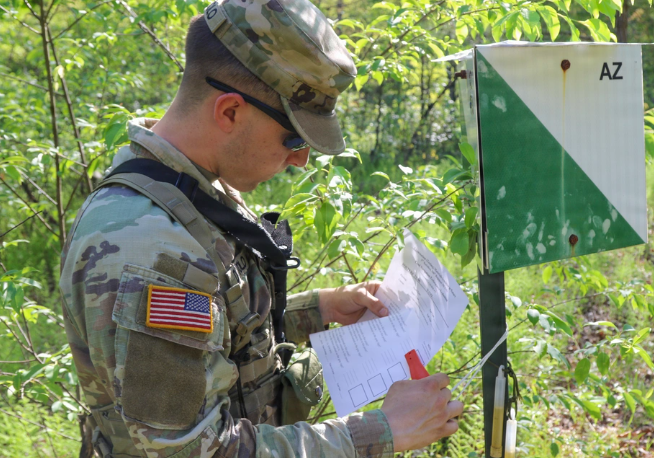
After years of military service, law enforcement work, leadership development, and studying human performance, I have come to believe that being tactical is ultimately a philosophy. It is a commitment to preparation, awareness, and disciplined action. It means refusing to become a prisoner of emotion. It means understanding that reality does not care about our preferences. It means accepting responsibility for our responses regardless of our circumstances.
The tactical mindset is not about becoming aggressive. It is about becoming adaptable. It is not about preparing for violence. It is about preparing for uncertainty.
Life itself is an unpredictable environment. Relationships change. Careers evolve. Health fluctuates. Challenges emerge without warning. The people who thrive are rarely the strongest or smartest. They are the most adaptable. They are the individuals capable of maintaining clarity when others lose perspective. They are the individuals capable of acting when others hesitate. They are the individuals capable of learning when others become defensive.
That is what it truly means to be tactical. Not the gear. Not the appearance. Not the image. The adaptation. The awareness. The discipline. The ability to think clearly when chaos arrives.
Because in the end, the most dangerous weapon any human being possesses is not something they carry.
It is the mind they have trained.
References
Sources of Power: How People Make Decisions, by Gary A. Klein (MIT Press).
On Combat: The Psychology and Physiology of Deadly Conflict in War and in Peace, by Dave Grossman and Loren W. Christensen (PPCT Research Publications).
Why Zebras Don’t Get Ulcers, by Robert M. Sapolsky (Holt Paperbacks).
Anxious: Using the Brain to Understand and Treat Fear and Anxiety, by Joseph LeDoux (Penguin Books).
“Physiology and Neurobiology of Stress and Adaptation: Central Role of the Brain,” by Bruce S. McEwen (Physiological Reviews).
“Toward a Theory of Situation Awareness in Dynamic Systems,” by Mica R. Endsley (Human Factors).
“Stress Signalling Pathways That Impair Prefrontal Cortex Structure and Function,” by Amy F.T. Arnsten (Nature Reviews Neuroscience).
_____________________________
Ayman Kafel is a patrol sergeant, combat veteran, and founder of Project Sapient, with more than 20 years of operational experience. He served in Iraq as a U.S. Army soldier and translator and has worked in law enforcement roles including SWAT, DEA task force work, and plainclothes interdiction; he also holds a master’s degree in counterterrorism. For The Havok Journal, he writes from that background on law enforcement, service, training, stress, resilience, and national security, often focusing on the physical and psychological demands of high-stress work. Follow Project Sapient on Instagram, YouTube, and all podcast platforms for engaging content. He can be reached at ayman@projectsapient.com.
As the Voice of the Veteran Community, The Havok Journal seeks to publish a variety of perspectives on a number of sensitive subjects. Unless specifically noted otherwise, nothing we publish is an official point of view of The Havok Journal or any part of the U.S. government.
Buy Me A Coffee
The Havok Journal seeks to serve as a voice of the Veteran and First Responder communities through a focus on current affairs and articles of interest to the public in general, and the veteran community in particular. We strive to offer timely, current, and informative content, with the occasional piece focused on entertainment. We are continually expanding and striving to improve the readers’ experience.
© 2026 The Havok Journal
The Havok Journal welcomes re-posting of our original content as long as it is done in compliance with our Terms of Use.


