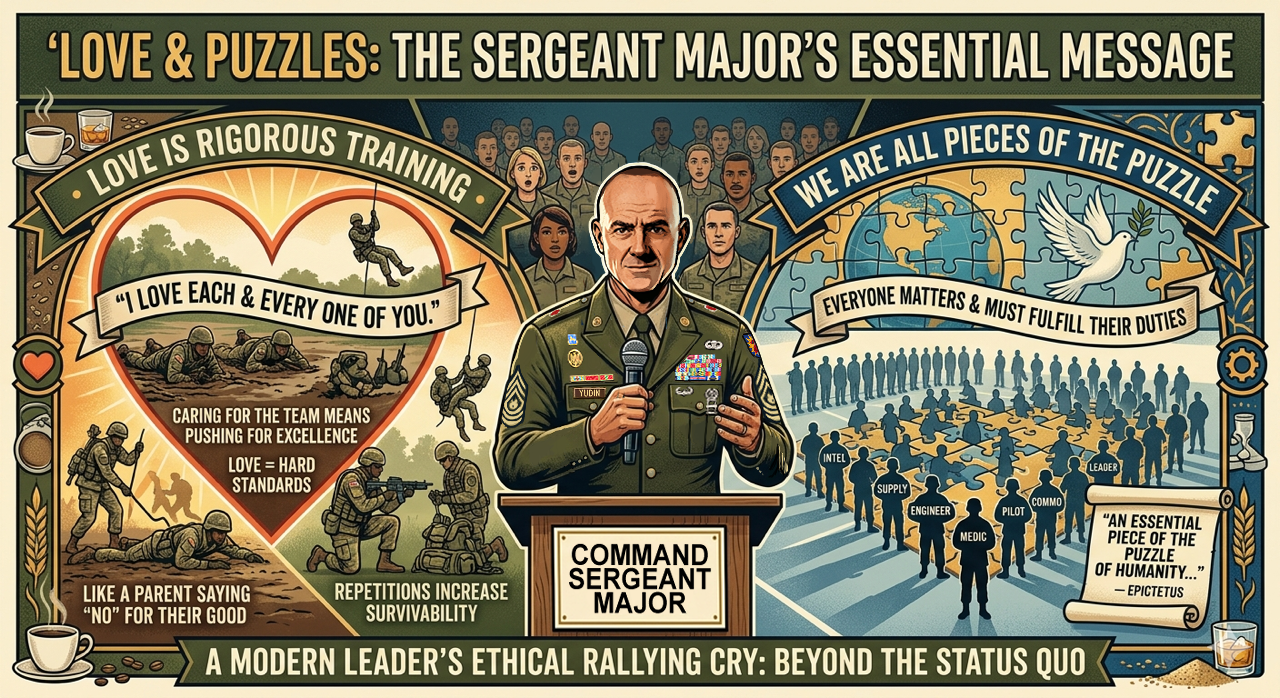
By Sam Yudin
The portrait of a sergeant major is usually painted the same way: a crusty, stubborn old soldier. Someone who clawed their way through one of the toughest professions on earth with grit, perseverance and sheer determination. The sergeant major is the one percent of the one percent, accomplished, confident, firm and often carrying that legendary grumpy demeanor.
They have done and seen more than there are grains of sand on the beach, and they do not hide their frustration when others make avoidable mistakes born from poor judgment or weak character. The stereotype suggests they are fueled by equal parts hate, coffee and whiskey.
But the Army is changing, and sergeants major are changing with it.
The openly gruff, movie-version sergeant major is no longer the standard. Today’s sergeants major are expected to be professional, engaged and even caring. They are still feared and revered, valued and forgotten, respected and occasionally resented, but the edge has shifted. The crust has softened just enough to let something more effective through.

To understand the mystique of the sergeant major is to live in that tension. There is the fear they can instill and the help they can provide, often at the same time. Their presence sharpens a room. You do not just stand at attention, you become aware. “On edge” does not quite capture it. It is closer to standing near an abyss you do not intend to fall into.
Within that atmosphere, emotion can swing wildly into what is called a significant emotional event. Joy, pride, frustration, embarrassment and even sadness can surface in an instant. Still, despite all of this, some leaders remain distant and unreachable, like a puzzle piece that never quite connects.
When soldiers assemble, sometimes in the dozens or hundreds, to hear a sergeant major speak, there is a familiar rhythm. A collective silence settles in, waiting and expecting.
They anticipate the usual themes, almost like verses from a well-worn hymnal: safety, discipline, professionalism and maybe a motivational push about being the tip of the spear. At that point, most either tune out or lean in for the performance.
In 2019, during a multinational, multi-service and multicomponent training exercise, I had one of those moments.
A year of planning led up to it with endless meetings, travel and coordination. Weeks before execution, the initial team moved out to set conditions. Then came the surge. Thousands of servicemembers from around the world funneled onto a small base, moving station to station for assignments, team placement and administrative tasks, until they were finally gathered together for the in-brief.
This was the moment. The commander would speak to the strategic importance of the mission. The senior enlisted leader, me, was expected to reinforce discipline, safety and standards.
That was the script.
I decided to tear it up.
Part of it was the situation. My commander often deferred to me on technical matters, which was unusual in itself. Once he was free of that burden, he focused on what he deemed more important things. He made sure there was a piñata with vampire teeth in it at the end of a training event. He made wildly inappropriate jokes, slipped into strange voices and cornered people to passionately explain Carl Jung like a man on a crusade.
So I figured no one would notice if I deviated.
I got on stage, introduced myself, welcomed everyone and told them I would only talk about two things: love and puzzles.
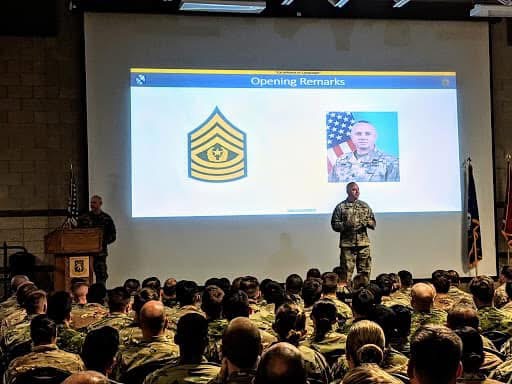
I paused.
You cannot hear thoughts, but you can feel confusion. For a split second, it likely sounded like, “Did he just say love and puzzles?” or certainly something less polite.
Good. I had them. Focused. Curious.
Even the most distracted soldier, the one we joked had circus music constantly playing in his head, was now locked in.
Then I said it.
“I love each and every one of you.”
I paused again.
In that first session, the silence was absolute. Not even a cough or the sound of a seat adjusting. Just wide eyes and dropped jaws. In later sessions, word got out. Someone would shout, “I love you too, Sergeant Major!” and I would respond, “Slow down, high speed. We are talking platonic love.”
But that first time was total shock.
That was the point.
Shock creates discomfort and attention. Attention and discomfort create opportunity.
Once I had that, I redirected.
“Who here has children?”
Hands went up.
“What is the worst thing your kid can say to you?”
Without hesitation, the answer came back.
“I hate you.”
Exactly.
Why do they say it? Because you told them no. Because you set a boundary. Because you did something they did not like because you love them.
You do not let your kids eat candy nonstop after Halloween. You do not let them stay out all night. In the moment, they hate you for it. Eventually, they understand. They mature, and they are grateful. So do Soldiers.
That is leadership.
That is hard, realistic training.
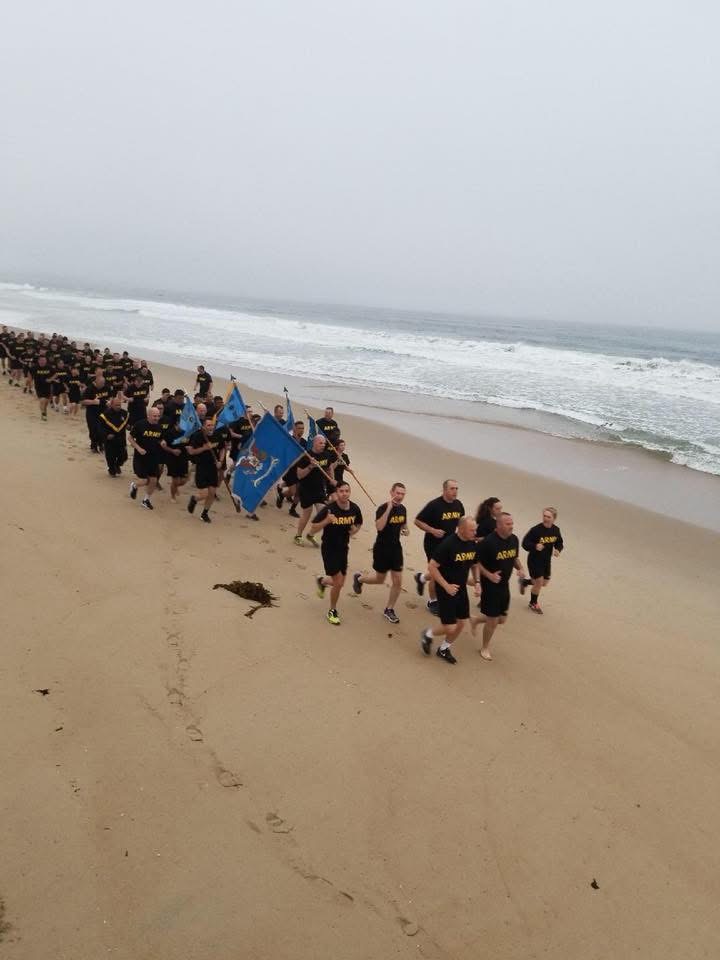
We were not running a summer camp. We were not the cool counselors letting everyone slide. Our obligation was to make training hard, realistically hard, because those repetitions translate directly to survivability and mission success.
Love in this profession does not look soft. It looks like standards. It looks like accountability. It looks like saying no when it would be easier to say yes.
Then I shifted.
“I love puzzles even more.”
I paused again.
When most people hear “puzzles,” they think of cardboard pieces on a table. That is not what I meant.
I started pointing around the room.
“Who is the most important person in this unit?”
Different ranks. Different roles. No clear answer.
That is because the question is flawed.
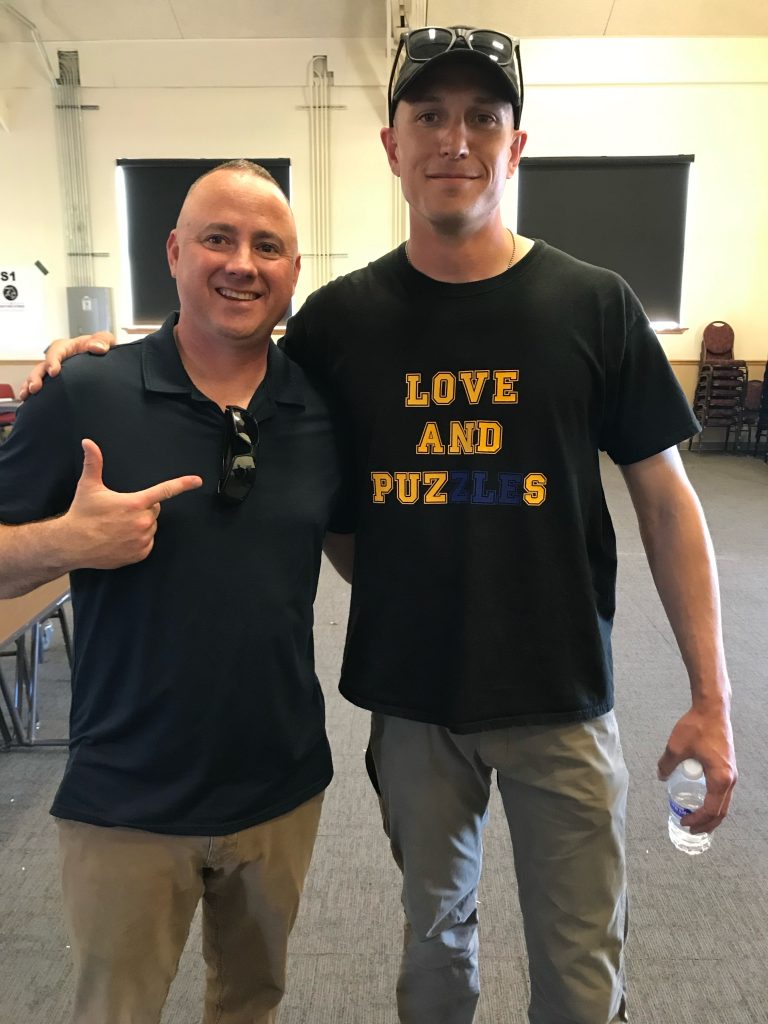
A puzzle does not have a most important piece. Corner pieces, officers, give structure. Edge pieces, noncommissioned officers, create boundaries. Center pieces fill the picture. Remove any one of them and the image is incomplete.
Some pieces are obvious and easy to place. Others are difficult, frustrating and easy to overlook. You might even set them aside for a while.
But every single piece matters.
More importantly, every piece only makes sense in relation to the others.
That is the unit.
You do not see the full picture from your position. No single soldier does. When every person understands their role, commits to their place and connects with the people around them, the picture comes together.
That is when the mission succeeds.
Love ensures we care enough to hold the standard.
The puzzle reminds us that none of us completes it alone.
If you are missing either one, the whole thing falls apart.
_____________________________
As the Voice of the Veteran Community, The Havok Journal seeks to publish a variety of perspectives on a number of sensitive subjects. Unless specifically noted otherwise, nothing we publish is an official point of view of The Havok Journal or any part of the U.S. government.
Buy Me A Coffee
The Havok Journal seeks to serve as a voice of the Veteran and First Responder communities through a focus on current affairs and articles of interest to the public in general, and the veteran community in particular. We strive to offer timely, current, and informative content, with the occasional piece focused on entertainment. We are continually expanding and striving to improve the readers’ experience.
© 2026 The Havok Journal
The Havok Journal welcomes re-posting of our original content as long as it is done in compliance with our Terms of Use.


