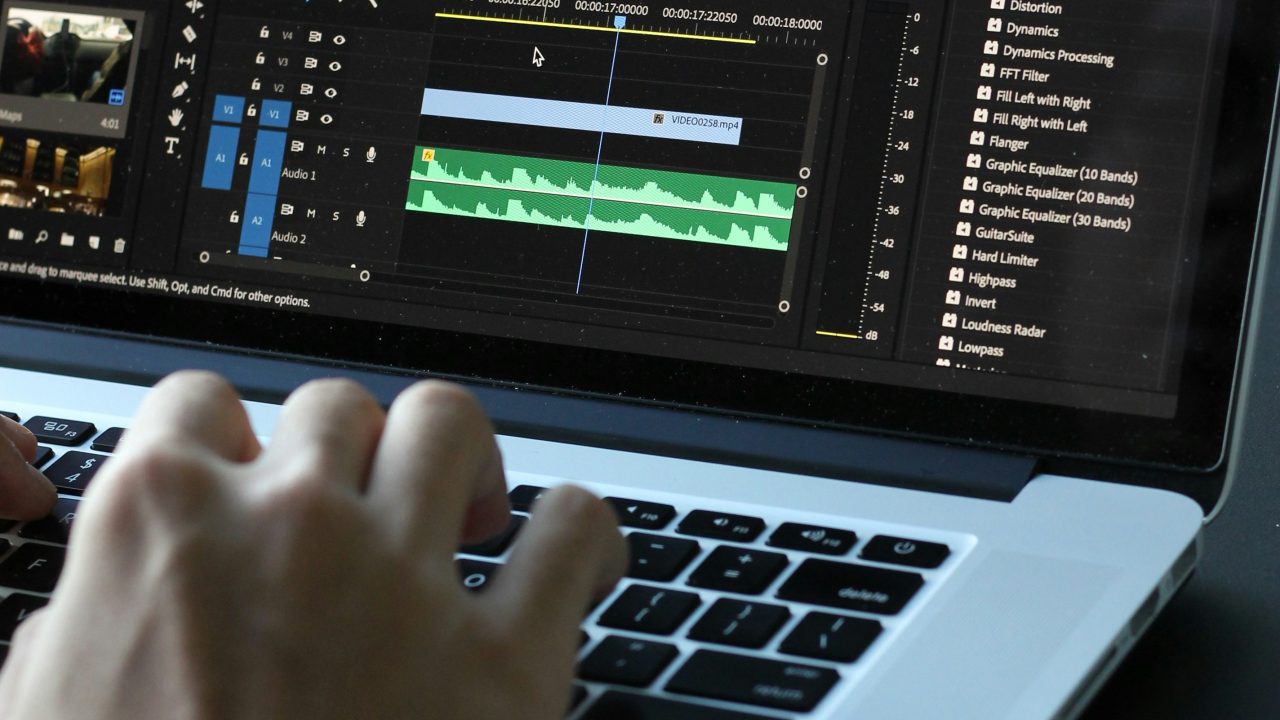
Photo by Matthew Kwong on Unsplash
Artificial intelligence has moved swiftly from experimental labs into the center of the content economy. In the past, producing a single professional video required cameras, lighting rigs, editing software, and a trained crew. Today, software platforms powered by generative AI can script, design, narrate, and assemble video assets in minutes. This shift is not merely incremental. It represents a structural change in how businesses think about scale, speed, and storytelling.
Companies once constrained by studio schedules and production budgets are now testing AI systems that generate entire campaigns from a text prompt. Marketing teams can produce product explainers, social media clips, and educational content without booking a shoot. Media startups that once required upfront capital for equipment can now allocate resources toward strategy and distribution. The economics of video production are being rewritten in real time.
The appetite for video content continues to grow across every major platform, from short form feeds to long form streaming. Yet the traditional production model has struggled to keep pace with demand. AI video creation offers a way to bridge that gap without sacrificing quality, like using Kling 3.0 video quality or consistency. As organizations search for leverage in crowded digital markets, automation has become less of an option and more of a competitive necessity.
From Camera Crews to Code: How the Production Model Is Changing
Traditional video production has always been resource intensive. It requires coordination among writers, directors, camera operators, editors, and talent. Each project involves scheduling, location planning, post production, and rounds of revision. Even modest campaigns can stretch across weeks, sometimes months, before reaching the audience.
AI video creation condenses many of these steps into software workflows. Script generation tools can analyze brand guidelines and produce tailored narratives in seconds. Synthetic voice technology can deliver polished narration without hiring voice actors or booking studio time. Visual elements such as stock footage, animation, and dynamic text overlays can be assembled algorithmically based on predefined templates and performance data.
This transformation is not simply about cutting costs. It is about removing friction from the creative process. When iteration becomes faster, teams are more willing to test new ideas and formats. Instead of betting heavily on a few high budget pieces, companies can experiment with dozens of variations. The result is a production environment that behaves more like software development than traditional filmmaking.
Scaling Content Without Scaling Headcount
The pressure to publish consistently has intensified as algorithms reward frequency and engagement. Brands are expected to appear daily in short form feeds, respond quickly to trends, and maintain a cohesive visual identity across multiple platforms. This expectation places strain on lean marketing teams that must balance strategy with execution. Expanding headcount can increase output, but it also raises fixed costs and adds layers of coordination. AI video creation offers a more scalable alternative by shifting the emphasis from labor to leverage.
With the right system in place, a single content lead can oversee a structured pipeline that produces dozens of videos each week. Templates standardize intros, transitions, captions, and calls to action, ensuring brand consistency without repeated manual effort. AI tools can adapt messaging for different audiences or platforms without rebuilding every asset from scratch. A single concept can be reformatted into multiple variations optimized for short form distribution. What once required several editors and production staff can now be guided through centralized automation.
To support this shift, some platforms now structure automation into repeatable workflows rather than isolated one off projects. Preset driven systems allow teams to automate both the creation and scheduling of recurring short form videos designed for platforms like YouTube, TikTok, and Instagram, where consistency directly influences reach and follower growth. Platforms such as RiseAngle reflect this evolution by enabling creators and brands to generate recurring short videos on autopilot from templated AI presets, helping them publish AI powered shorts at scale with minimal manual effort.
The Technology Stack Behind AI Video Creation
At the core of AI video creation lies a combination of natural language processing, computer vision, and generative design models. Large language models generate scripts based on prompts, brand tone, or performance data. Image and video generation models create backgrounds, transitions, and motion graphics tailored to the script. Text to speech engines provide natural sounding narration in multiple languages and accents.
These components are increasingly integrated into unified dashboards. Users input a concept, select a style, and define constraints such as duration or platform. The system then orchestrates the various models to produce a finished draft. In many cases, the output includes subtitles, background music, and aspect ratio adjustments optimized for specific channels.
The sophistication of these systems continues to improve. AI can now analyze engagement metrics and suggest revisions to hooks, pacing, or visual elements. Some tools even incorporate sentiment analysis to fine tune messaging. As machine learning models absorb more data, their recommendations become more aligned with audience behavior, narrowing the gap between automated production and human intuition.
Creative Control in an Automated Environment
One concern often raised about AI video creation is the potential loss of creative nuance. Critics argue that templated systems could lead to homogenized content. While this risk exists, it depends largely on how organizations implement the technology. AI can function either as a rigid template engine or as a flexible collaborator.
Effective teams treat AI as a starting point rather than a final authority. They use generated scripts as drafts that can be refined for clarity and brand voice. Visual layouts can be adjusted to incorporate proprietary assets or distinctive design elements. The speed of automation frees up time for higher level creative thinking, rather than replacing it outright.
Moreover, AI systems can be trained on a brand’s existing library of content. By feeding historical materials into the model, companies can preserve tone and stylistic consistency. This approach turns automation into an extension of the brand identity rather than a departure from it. The result is a workflow that blends efficiency with editorial oversight.
Cost Efficiency and Return on Investment
The financial case for AI video creation extends beyond lower production costs. Traditional shoots often involve fixed expenses that are difficult to amortize across small campaigns. Equipment rental, studio fees, and post production services can quickly erode margins. AI platforms, by contrast, typically operate on subscription models that scale more predictably.
This predictability allows marketing leaders to forecast output relative to budget with greater confidence. Instead of allocating funds to one large production, teams can distribute resources across continuous content streams. The marginal cost of producing an additional video approaches zero once the system is in place. Over time, this dynamic can significantly improve return on investment.
There are also opportunity costs to consider. Faster production cycles mean faster time to market. Brands can respond to news events, product launches, or viral trends without waiting for a production window. In competitive industries, this agility can translate directly into revenue gains. The ability to test and iterate rapidly becomes a strategic asset, not merely an operational convenience.
Ethical Considerations and Brand Responsibility
As AI video creation becomes more widespread, ethical considerations move to the forefront. Synthetic voices and avatars raise questions about transparency and authenticity. Audiences may not always distinguish between human produced and AI generated content. Brands must decide how openly to disclose their use of automation.
There is also the issue of data sourcing. Generative models are trained on vast datasets that may include copyrighted or proprietary materials. Companies using AI tools should understand the licensing frameworks behind the platforms they adopt. Legal clarity is essential to avoid reputational and financial risk.
Finally, the broader societal impact cannot be ignored. Automation in creative industries may displace certain roles while creating new ones in strategy, data analysis, and AI supervision. Organizations have a responsibility to manage this transition thoughtfully. The goal should not be to eliminate human creativity but to augment it in ways that expand opportunity and efficiency.
The Future of Content at Machine Speed
The trajectory of AI video creation suggests that automation will become embedded in everyday marketing operations. As models improve, the distinction between human and machine generated content will blur. What matters most will be relevance, clarity, and strategic alignment rather than the mechanics of production.
In this environment, competitive advantage will hinge on systems thinking. Companies that integrate AI into a broader content strategy will outperform those that treat it as a novelty. Automation can handle repetition and optimization, while human teams focus on positioning, storytelling, and brand differentiation. The combination of these strengths defines the next phase of media production.
The promise of AI video creation is not simply that it reduces the need for cameras. It is that it reshapes how organizations approach scale itself. By decoupling output from physical production constraints, businesses can operate at a cadence once reserved for major studios. In a marketplace defined by attention and speed, that capability may prove decisive.
Buy Me A Coffee
The Havok Journal seeks to serve as a voice of the Veteran and First Responder communities through a focus on current affairs and articles of interest to the public in general, and the veteran community in particular. We strive to offer timely, current, and informative content, with the occasional piece focused on entertainment. We are continually expanding and striving to improve the readers’ experience.
© 2026 The Havok Journal
The Havok Journal welcomes re-posting of our original content as long as it is done in compliance with our Terms of Use.