
By Cristóbal S. Berry-Cabán
For seventeen years I lived a ten-minute walk from the site of the historic Fayetteville Arsenal, destroyed more than 160 years ago on Monday, March 13, 1865. Nearly every week I would walk among what remains of its ruins.
My interest in the Civil War goes back to my youth. In February 1964, my father packed up my mother, my siblings, and me into a new cream-colored Ford Falcon, and we left Goldsboro, North Carolina, for the Port of Charleston, where we would return home to Puerto Rico. My father had just retired from the 335th Fighter Squadron after serving twenty years combined service in the Navy, Army Air Corps, and then the Air Force.
While in Charleston we visited Fort Moultrie and then Fort Sumter. I was eleven years old, and I must have been rather inquisitive, for at Fort Sumter a park ranger gave me a small piece of a clay pipe and two Civil War musket balls that I still possess. This, along with Bruce Catton’s American Heritage Picture History of the Civil War, began my long fascination with the Civil War past.
This early exposure to Civil War history ignited my lifelong interest in the subject, drawing me to the remnants of the past, including the ruins of the Arsenal. As I delved deeper into the war’s history, I became particularly interested in the final months of the conflict’s impact on Fayetteville. By March 1865, the war was drawing to a close, but its effects were still deeply felt, as evidenced by the news in the Fayetteville Observer detailing the turmoil, lawlessness, and shifting tides of the war.
Union Gen. William Tecumseh Sherman’s infamous march through the South embodied the harsh realities of total war. After capturing Atlanta in September 1864, Sherman, frustrated with the continued skirmishes against Confederate forces, proposed marching to the sea to divide the Confederacy. Despite initial hesitation from Gen. Ulysses S. Grant, Sherman assured that his troops could sustain themselves off the land while crippling the South’s ability to continue waging war. His forces, numbering more than sixty thousand, left Atlanta on Nov. 15, destroying everything of military value and plundering farms and plantations along their path. By the time they reached Savannah five weeks later, Sherman sent a telegram to President Abraham Lincoln: “I beg to present you, as a Christmas gift, the city of Savannah,” marking a significant Union victory.
Sherman then turned his relentless campaign toward South Carolina, a state seen by the North as the instigator of the rebellion. Unlike Georgia, where widespread burning was limited, South Carolina suffered far greater destruction, with entire towns set ablaze, culminating in the devastating fire in Columbia on Feb. 17-18, 1865, although it is not clear which side caused the fires. Natural obstacles such as swampy terrain and rain-swollen rivers slowed the massive Union army, yet Sherman’s engineering tactics impressed even Confederate generals, allowing his forces to advance steadily.
By the end of February, as Sherman’s army pressed into North Carolina, uncertainty loomed. Confederate foe Gen. Joseph Johnston, who said he had seen “no such Army since the days of Julius Caesar,” marveled at the agility and endurance of Sherman’s men as they rapidly marched from Savannah through South Carolina into North Carolina. Would the state suffer the same devastation as Georgia and South Carolina, or would its strong pro-Union sentiment offer some reprieve? With the final stages of his campaign unfolding, Sherman’s massive army was now just days away from Fayetteville, North Carolina.
The March 9, 1865, issue of the Fayetteville Observer noted the war’s impact on the local community. Confederate deserters wreaked havoc, looting freely across numerous surrounding counties. Daniel McNeill posted a $1,000 reward for the capture of Alexander W. Currie and Duncan Brown, who had robbed his home. In the same issue, it was reported that a group of men near Mount Vernon Springs in Chatham County, determined to end the violence caused by Confederate deserters, encountered five men who had just committed a robbery and killed two of them. The Observer also recorded local Fayetteville events such as marriages and deaths, noting the passing of Capt. Robert Marsh “in the 79th year of his age.”
However, the impending arrival of Sherman’s army overshadowed these daily occurrences. The Fayetteville Observer detailed Confederate Gen. Braxton Bragg’s “glorious victory” near Kinston, yet the news remained grim as it described Gen. Robert E. Lee’s strategy of potentially abandoning major population centers, including Richmond, the Confederacy’s capital, and retreating to either Danville, Virginia, or north-central North Carolina. It also printed an order from Lt. Col. Frederick L. Childs, commander of the Fayetteville Arsenal, that “All Contractors and Employees of Contractors for this Arsenal and Armory, will report to the Post for duty.” That was the last news printed in the Fayetteville Observer until 1883.
Two days later, on March 11, 1865, the 10th Iowa Volunteer Infantry Regiment marched into Fayetteville as part of Gen. Sherman’s formidable army. Among them was the 10th Iowa. My second great-grandfather, William Preston Berry, had the distinction of serving as the first captain of Company D of the 10th Iowa Infantry, having organized it in August 1861. Years earlier, he had fought as a sergeant in the Mexican War. However, his service was cut short in 1862 when illness forced him to muster out of the army after just a year.
The 10th Iowa had endured a long and grueling journey during the course of the war, fighting in critical battles that helped shape the Union’s victory. They played a key role in capturing New Madrid, Missouri, and Island No. 10, securing a vital stretch of the Mississippi River. They fought fiercely at Corinth, Mississippi, disrupting Confederate movements, and were instrumental in the siege and capture of Vicksburg, a decisive victory that secured Union control of the Mississippi. They later helped lift the Confederate siege of Chattanooga, charging up the slopes of Missionary Ridge.
By 1865, the veterans of the 10th Iowa, along with others who had reenlisted after their initial terms expired, formed the hardened core of Sherman’s army. These were survivors of what one soldier called “a rigorous weeding-out process” of Confederate bullets, relentless hardship, and disease. As Sherman’s men pushed rapidly from Savannah into North Carolina in early 1865, their reputation for endurance and agility was undeniable, a force that had marched through the heart of the Confederacy and was now closing in on its final battles.
“On the 12th of March we reached Fayetteville, on the Cape Fear river, via Laurel Hill, the terminous [sic.] of a railroad connecting with Cape Fear River, not far from Wilmington,” wrote Capt. George W. Pepper. “At Fayetteville the arsenal and public stores were destroyed and on the 16th we took the road to Goldsboro.”
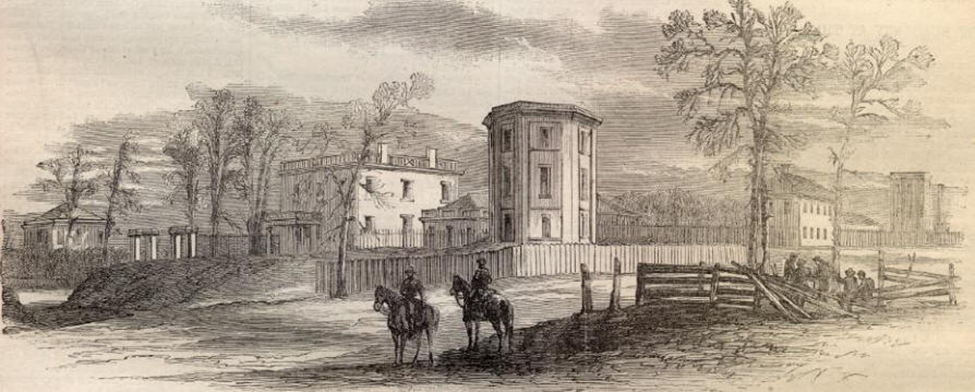
Fayetteville residents lamented the extensive property devastation that took place in their town. The destruction of the Arsenal, though militarily justified, held deeper significance for the community. Gen. Sherman, in correspondence with his wife, underscored its strategic importance. However, to the residents, including Alice Campbell, the Arsenal was a symbol of pride and a prominent landmark. Campbell described the destruction as the worst aspect of the devastation, saying, “The crowning point of this nightmare of destruction was the burning . . . of our beautiful and grandly magnificent Arsenal, which was our pride, and the showplace of our town.” The Arsenal was more than a military asset. It was a source of communal identity and pride.
The deliberate burning of factories and other buildings further disrupted the lives of Fayetteville’s citizens. Union Gen. Absalon Baird reported nonchalantly about the destruction of “2 iron foundries of some importance, 4 cotton factories and the printing establishment of 3 rebel newspapers [including the Fayetteville Observer].”
Fayetteville citizens complained about the liberal foraging by Sherman’s bummers, Union soldiers who foraged to supply food and other necessities to the army. Their actions created hardships for many of the locals caught in the path. Nellie Worth, who lived outside Fayetteville in Glen Burnie, wrote her cousin on March 21, 1865, how Union soldiers “carried off every single thing we had to eat, did not leave a grain of corn or coffee, or anything that would sustain life one day.” A letter published in the Hillsborough Recorder mentioned how the town was “in the greatest distress,” as Fayetteville only had “meal and meat to last us two weeks, by taking two meals a days” because of the damage Sherman and his men wrought. The town needed relief, as the writer feared, “If relief does not come soon many must starve to death.”
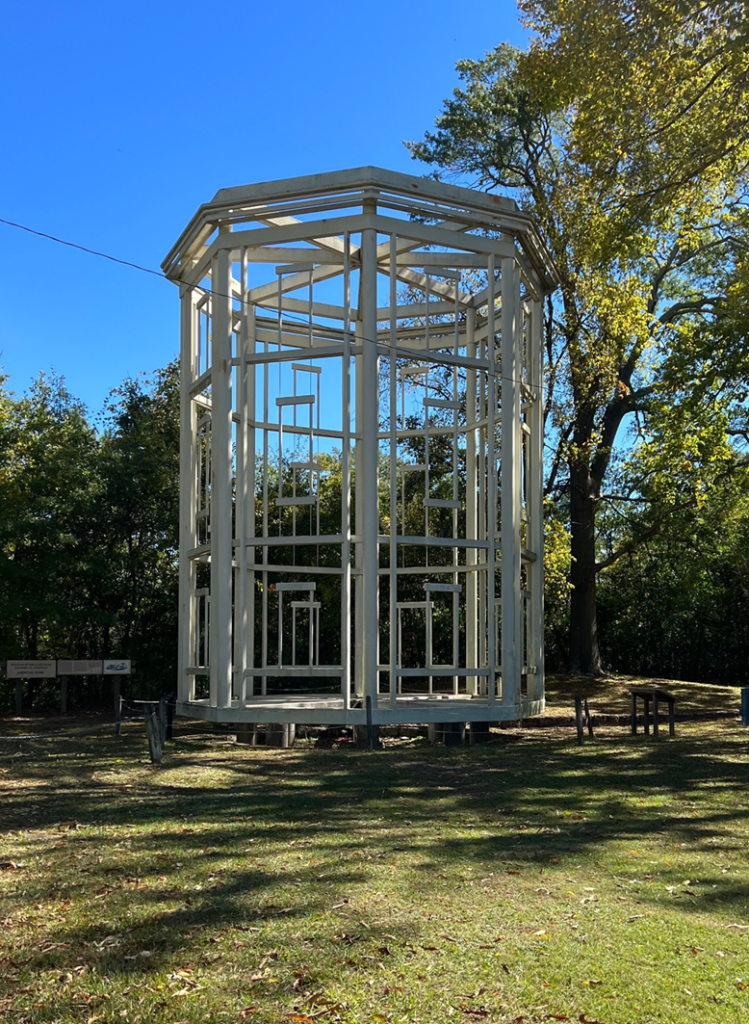
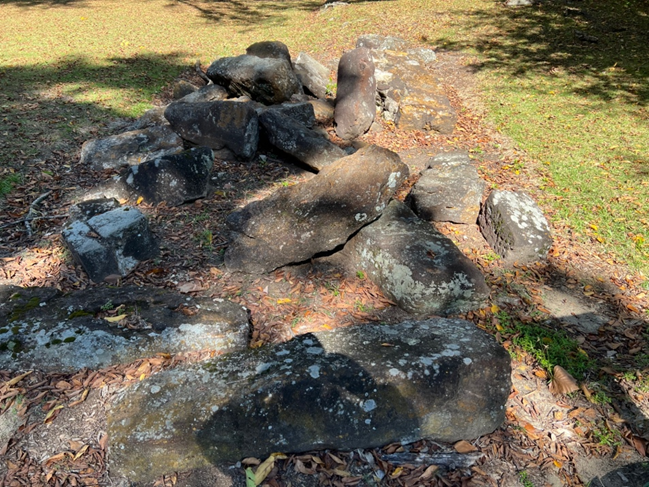
The echoes of Sherman’s march still resonate through Fayetteville, its ruins a silent testament to the war’s lasting impact. Walking among the remnants of the arsenal for years, I felt a deep connection to the past, not just through the ruins themselves, but through the personal history of my ancestor, William Preston Berry, and the countless others who endured the trials of war. The Civil War was not merely a distant event but a force that shaped communities, altered landscapes, and left scars, both physical and emotional, that endured for generations. The destruction of Fayetteville’s arsenal and the hardships faced by its citizens illustrate the war’s dual nature: a necessary military strategy from the Union perspective, yet a devastating loss for those who called the South home. My lifelong fascination with this era has been shaped by these stories of resilience, loss, and transformation, reminders that history is never far from us, but embedded in the very ground we walk upon.
_____________________________
Cristóbal S. Berry-Cabán, PhD, has more than 30 years of experience conducting research on military health as an epidemiologist at Womack Army Medical Center, Fort Bragg, and the Geneva Foundation, Tacoma, Washington. He currently lives in Southern Pines, NC.
As the Voice of the Veteran Community, The Havok Journal seeks to publish a variety of perspectives on a number of sensitive subjects. Unless specifically noted otherwise, nothing we publish is an official point of view of The Havok Journal or any part of the U.S. government.
Buy Me A Coffee
The Havok Journal seeks to serve as a voice of the Veteran and First Responder communities through a focus on current affairs and articles of interest to the public in general, and the veteran community in particular. We strive to offer timely, current, and informative content, with the occasional piece focused on entertainment. We are continually expanding and striving to improve the readers’ experience.
© 2026 The Havok Journal
The Havok Journal welcomes re-posting of our original content as long as it is done in compliance with our Terms of Use.


