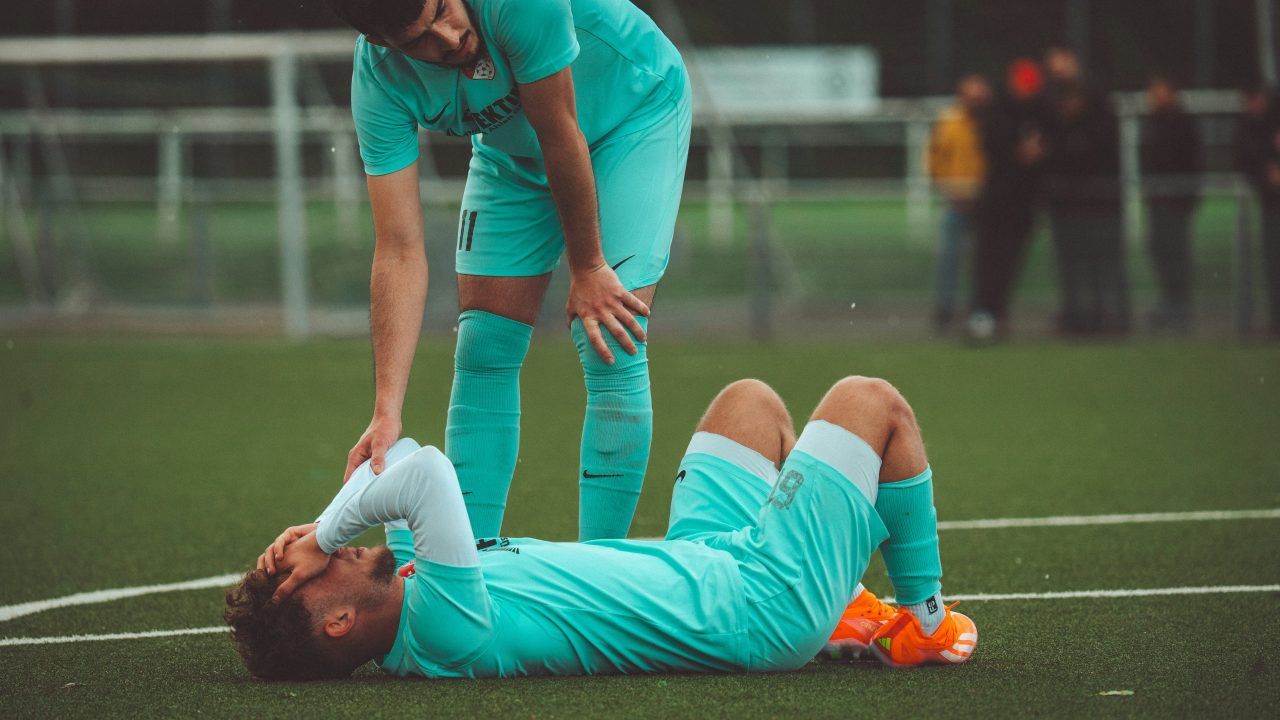
Photo by Omar Ramadan on Unsplash
Basketball causes many sports injuries because millions of people play it, and it involves frequent jumping, cutting, and contact. When people ask which sport has the most injuries, the answer depends on what they mean. Do they mean total cases or injuries per player?
Basketball often has the most injuries overall. Tackle football may have the highest injury rate among popular team sports. Age, competition level, exposure time, and the data source can change the ranking.
Key Takeaways
- Basketball produces one of the highest total numbers of sports injuries because of its popularity and repeated jumping, cutting, and contact.
- Tackle football may have a higher injury rate per participant, so total injuries and individual risk should be compared separately.
- Common injuries include ankle sprains, muscle strains, ACL tears, head injuries, and overuse problems.
- Injury patterns vary by sport, age, training level, and exposure time.
- Strength training, proper technique, gradual increases in workload, and adequate recovery can help reduce the risk of injury.
Total Injuries Versus Injury Rate
Two measurements help answer what sport causes the most injuries. Total injury count measures how many people get hurt, while injury rate measures how often injuries occur relative to participation or athletic exposure.
A popular activity may produce a high number of injuries even when each participant faces a lower individual risk.
An older American Sports Data study ranked basketball first in total injured participants, followed by running, soccer, and tackle football.
Yet tackle football recorded 18.8 injuries per 100 participants, compared with 7.6 for basketball and 9.3 for soccer. This distinction explains why lists of sports with the most injuries do not always match rankings based on individual risk.
The study reported these examples:
- Basketball – 2.783 million injured participants
- Running or jogging – 1.654 million
- Soccer – 1.634 million
- Tackle football – 1.084 million
- Baseball – 602,000
These figures come from an older national study and should not be treated as current annual totals. They remain useful because they show how participation volume can affect injury rankings.
Sports With the Highest Injury Risk
Contact and collision sports often have the highest injury rate because athletes experience tackles, falls, rapid changes in direction, and direct blows.
Football, ice hockey, basketball, and soccer combine speed with repeated physical contact. Johns Hopkins also reports that injury rates are highest in contact and collision sports.
Several activities regularly appear among sports with the highest injury burden:
- Tackle football – frequent collisions can affect the head, shoulders, knees, and ankles.
- Basketball – jumping, landing, and cutting place stress on the lower body.
- Soccer – running, tackling, and sudden turns increase the risk of lower-extremity injuries.
- Ice hockey – speed, boards, sticks, and player contact create several injury mechanisms.
- Recreational softball – sudden sprinting and throwing can challenge adults who are not regularly conditioned.
The exact order varies across studies because researchers may count emergency visits, reported school injuries, lost playing time, or injuries per unit of athletic exposure. No single ranking describes every athlete or level of competition.
Why Basketball Produces So Many Injuries
Basketball combines broad participation with demanding movement. Players accelerate, stop, pivot, jump, and land throughout a game, often while another player contests their movement.
These physical demands place repeated force on the knees, ankles, feet, and surrounding muscles.
Common injuries include ankle sprains, muscle strains, patellar tendon problems, finger injuries, and ACL tears. Contact under the basket can also cause falls or head injuries, although lower-body problems remain a major concern.
Poor landing mechanics, fatigue, and limited recovery can increase the risk of injury.
Players can reduce preventable risks by focusing on:
- Lower-body strength
- Balance and stability exercises
- Controlled jumping and landing mechanics
- Proper footwear
- Gradual increases in training volume
These measures cannot remove every risk, but they can prepare the body for the movements that basketball requires.
Football and Serious Injury Risk
Football may not always produce the highest total number of injuries, but its collision-based nature leads to high injury rates.
Tackling and blocking expose players to forceful contact during practices and games. Injuries include ligament damage, shoulder dislocations, fractures, muscle strains, and concussions.
A brain injury requires careful assessment because symptoms may develop immediately or gradually. Traumatic brain injuries in sports can result from direct impact or from forces that cause the brain to move inside the skull.
Johns Hopkins states that sports and recreational activities contribute to about 21 percent of traumatic brain injuries among American children, based on the statistics presented on its page.
Coaches and athletes should never treat a suspected concussion as a routine hit. The player should stop participating and receive evaluation from a qualified healthcare professional before returning.
Soccer Injury Patterns
Soccer injuries often affect the legs because players spend long periods running, changing direction, kicking, and challenging opponents for the ball.
Ankle sprains, hamstring problems, groin strains, knee injuries, and ACL damage are common patterns. Collisions and falls can also affect the upper body or head.
Female and male athletes may face different injury patterns due to anatomy, training history, competition level, and other factors.
Neuromuscular exercises that train balance, control, deceleration, and landing may help reduce some noncontact knee injuries. Consistent preparation matters more than a brief warm-up performed only before important games.
Baseball and Softball Injuries
Baseball and softball involve less continuous contact than football, but they still create injury risks. Throwing can place repeated stress on the shoulder and elbow, while batting, sliding, sprinting, and fielding can lead to acute injuries.
Weekend players may face increased risk when performing explosive movements without regular conditioning.
The main types of injuries include:
- Shoulder and elbow overuse injuries
- Hamstring pulls during sprints
- Ankle or knee injuries during slides
- Hand and wrist fractures
- Injuries caused by a thrown or batted ball
Youth pitchers need workload control because repeated throwing can overload developing tissues. Adults also benefit from progressive throwing programs instead of returning immediately to full-speed play after months of inactivity.
Youth and Adult Injury Differences
Children and teenagers may experience injuries related to growth plates, limited technique, intense schedules, or early specialization.
Johns Hopkins reports that sprains and strains are the most common youth sports injuries, while falls, collisions, overexertion, and being struck by an object also cause many emergency visits.
The same source states that many organized sports injuries occur during practice rather than competition.
Adults often face different problems, especially when they combine limited conditioning with demanding recreational physical activities. A person may play basketball or softball once a week but remain inactive on other days.
Sudden changes in speed or workload can then contribute to strains, tendon irritation, and joint injuries.
Acute and Overuse Injuries
Acute injuries occur during a specific event, such as a collision, a fall, a sudden twist, or an awkward landing. Overuse injuries develop gradually when repeated stress exceeds the body’s ability to recover.
Running, swimming, throwing, and year-round training can all cause pain without a single clear injury. Pain that persists, limits movement, or worsens during activity may require professional evaluation.
Athletes in New York City who need guided recovery after a sprain, strain, joint injury, or surgery may benefit from physical therapy NYC as part of a personalized rehabilitation plan. Treatment can help restore strength, mobility, balance, and confidence before returning to sports.
How Athletes Can Lower Their Risk
No prevention plan can guarantee that an athlete will avoid injury. Preparation can still reduce controllable risks and help the athlete respond before a small problem becomes more serious.
Useful steps include:
- Increase training volume gradually
- Strengthen the muscles used in the sport
- Practice safe movement and contact techniques
- Wear properly fitted protective equipment
- Schedule rest and recovery
- Stop playing when pain changes movement
- Follow medical return-to-play guidance
The answer to injury rates by sport depends on the population and measurement method.
Basketball often leads in total cases, while tackle football and other collision sports may place each participant at greater risk, so athletes should consider both the number of injuries and the conditions that cause them.
Buy Me A Coffee
The Havok Journal seeks to serve as a voice of the Veteran and First Responder communities through a focus on current affairs and articles of interest to the public in general, and the veteran community in particular. We strive to offer timely, current, and informative content, with the occasional piece focused on entertainment. We are continually expanding and striving to improve the readers’ experience.
© 2026 The Havok Journal
The Havok Journal welcomes re-posting of our original content as long as it is done in compliance with our Terms of Use.


