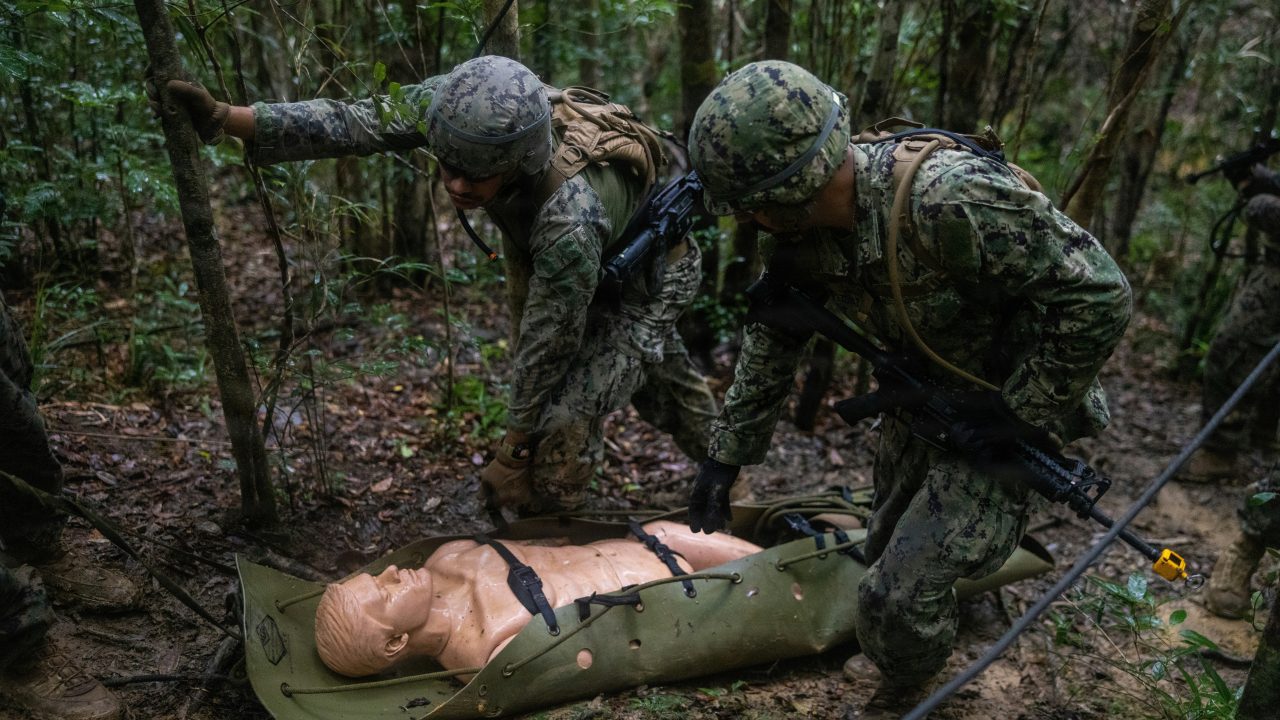
Photo by Navy Medicine on Unsplash
Durable stretchers designed for emergency medical care are an often-overlooked backbone of prehospital and in-hospital response. When minutes matter, responders depend on equipment that won’t fail—frames engineered to withstand repeated impacts, surfaces designed to resist contamination, and mechanisms that make lifting and patient transport predictable and safe. Working with a trusted provider like Stretchers R Us helps procurement decision-makers, facility managers, and clinical leaders identify stretchers built not just for routine use, but engineered to perform under crisis conditions. This article guides healthcare teams through the key design, testing, and purchasing considerations that separate standard transport equipment from emergency-ready stretchers.
Why Durability Matters In Emergency Stretchers
Durability in emergency stretchers affects three operational priorities: patient safety, responder efficiency, and long-term cost control. In high-pressure scenarios, road collisions, multi-victim incidents, or rushed intra-hospital transfers, equipment failure is not just an inconvenience: it’s a clinical risk. A fractured frame or unreliable wheel brake can convert a contained problem into an adverse event.
For organizations that run 24/7 operations, durability also ties directly to uptime and budget. Replacing or frequently repairing stretchers adds administrative overhead and reduces available units during peak demand. Durable stretchers minimize downtime, lower total cost of ownership, and preserve trust between clinical staff and their tools. Finally, when the work involves unpredictable environments, uneven terrain, stair carries, mass-casualty scenes, design longevity ensures performance remains consistent under stress.
Key Design Features Of Durable Stretchers
Durable performance is the sum of multiple design choices. The following subsections break down the elements that most influence longevity, safety, and day-to-day usability.
Frame Materials And Construction
High-strength aluminum alloys and stainless steel are the primary frame materials in modern stretchers. Aluminum offers a favorable strength-to-weight ratio, important for manual carries, while stainless steel provides exceptional impact resistance and corrosion protection for harsh settings. Weld quality, joint design, and the use of reinforcement plates at stress points determine how frames handle repetitive loading and accidental impacts.
Designers should favor continuous-frame geometries and heat-treated joints where feasible. Riveted or bolted assemblies are easier to repair in the field but must use grade-rated fasteners to avoid loosening over time. For agencies expecting heavy use, a galvanized or powder-coated finish extends life against moisture and cleaning chemicals.
Mattress, Padding, And Patient Comfort
Comfort is more than patient satisfaction: it affects clinical outcomes during transport. High-density foam cores with sealed, antimicrobial covers resist compression set and bodily fluid penetration. Seams and zipper locations should be minimal and covered to avoid ingress points. Memory-foam layers are useful for pressure redistribution but must be encased in materials that tolerate disinfectants.
Replaceable mattress modules simplify maintenance and extend service life by allowing worn components to be swapped without discarding the whole stretcher.
Load Capacity, Stability, And Safety Restraints
Load capacity ratings must be conservative and tested under dynamic conditions, not just static weight. Bariatric patients and equipment add real-world loads, and stability during elevation, tilting, or lateral movement is critical. Low center-of-gravity designs increase resistance to tipping when negotiating ramps or vehicle steps.
Five-point restraint systems, firmly anchored to the frame, reduce patient migration during transport. Fast, intuitive buckles improve compliance among clinicians and lower the risk of improper securing under pressure.
Mobility, Maneuverability, And Transportability
Wheels, casters, and suspension define how a stretcher moves in crowded EDs, tight hallways, and ambulances. High-quality polyurethane wheels paired with sealed precision bearings reduce rolling resistance and resist flat spots. Locking mechanisms need to be robust, clearly marked, and operable with one foot or hand.
Folding or detachable components aid vehicle stowage: but, these mechanisms must lock positively without play. Telescoping handles or integrated loading guides that mate with ambulance ramps shorten loading times and reduce strain injuries among ambulance crews.
Infection Control, Cleaning, And Maintenance
Durable stretchers are designed for frequent disinfection. Nonporous surfaces, minimal crevices, and compatible materials allow use of high-level disinfectants without degrading components. Manufacturers should provide a list of approved cleaning agents and cycle-life expectations for components exposed to chemical sterilants.
Modular parts and quick-release fittings reduce time spent in maintenance. Clear labeling for replacement intervals, mattress covers, straps, caster bearings, helps facilities predict consumable costs and schedule preventive maintenance, supporting infection control and maximizing service life.
Types Of Durable Stretchers And Typical Use Cases
Different mission profiles demand different stretcher architectures. Below are common categories and where each best fits operationally.
Ambulance And Prehospital Stretchers
Ambulance stretchers prioritize collapsibility, ambulance-compatibility, and rapid loading. Durable ambulance stretchers feature reinforced wheel columns, integrated loading latches, and shock-absorbing deck mounts to minimize jarring during transport. For EMS services, choosing stretchers with proven ambulance dock systems reduces on-scene time and failure points.
Emergency Department And Hospital Transport Stretchers
ED and hospital stretchers emphasize maneuverability, height and trendelenburg adjustment, and accessory integration (IV poles, monitor mounts). Durability measures include sealed hydraulic cylinders, wear-resistant scissor lifts, and reinforced side rails to withstand repeated bed-to-bed transfers and continuous cleaning cycles.
Tactical, Military, And Disaster Response Stretchers
In austere environments, stretchers must resist dust, moisture, and rough handling. Lightweight, foldable frames made from aircraft-grade aluminum or composite materials enable long carries, while detachable flotation or sled attachments expand operational flexibility. These units often sacrifice some patient comfort for extreme portability and survivability.
Bariatric Stretchers And High‑Capacity Options
Bariatric stretchers are engineered with widened frames, reinforced decks, and higher-rated lifting systems. They require attention to door widths, elevator capacities, and ambulance mounts during procurement, durability in these units must include heavy-duty hydraulics and redundant safety systems to protect staff and patients under high loads.
Standards, Testing, And Regulatory Considerations
Purchasers should verify compliance with internationally recognized standards and inspect test data that reflects realistic use cases.
Load Testing, Durability Assessments, And Certifications
Look for stretchers tested to applicable ASTM, EN, or ISO standards for medical stretchers and patient handling equipment. Important test types include static load tests, fatigue cycling (repeated opening/closing), and dynamic impact tests. Certification documentation and third-party lab reports provide objective evidence that units will meet published ratings over their expected lifespans.
Cleaning Protocols, Materials Compatibility, And Infection Control Standards
Regulatory bodies and hospital infection control committees often require documented compatibility with specific disinfectants and cleaning cycles. Request manufacturers’ validated cleaning protocols and evidence that key materials retain mechanical properties after repeated exposure to approved agents.
Buying Guide: How To Select The Right Durable Stretcher
Selecting a stretcher is a procurement decision that blends clinical needs with financial stewardship. The following framework helps narrow options efficiently.
Assessing Clinical Needs And Operational Constraints
First, map typical use cases. Are crews mostly performing urban ambulance runs, long rural transports, or facility transfers? Evaluate patient population demographics (bariatric prevalence), vehicle interfaces, storage spaces, and elevator dimensions. Match stretcher features to these constraints rather than chasing the most feature-rich model.
Balancing Upfront Cost Versus Total Cost Of Ownership
A low purchase price can mask high maintenance, consumable, and downtime costs. Calculate expected lifecycle costs: projected repairs, replacement parts, cleaning consumables, and mean time between failures. Organizations with high utilization typically save by paying more up front for units with proven longevity.
Supplier Reliability, Warranty, And Service Support
Evaluate supplier track records, availability of spare parts, and the responsiveness of field service. Warranties that cover structural components longer than consumables indicate manufacturer confidence. Ask for references from comparable services and check case studies where possible.
Integration With Workflow, Accessories, And Ergonomics
Durability includes how well a stretcher fits into existing workflows. Confirm compatibility with existing vehicle docking systems, monitor mounts, and lift-assist devices. Test ergonomics with real users: handgrip positions, lift heights, and control layouts can significantly affect staff injury rates and equipment longevity.
Conclusion
Durable stretchers designed for emergency medical care are an investment in safety, uptime, and cost control. By prioritizing proven frame construction, serviceable components, validated cleaning compatibility, and realistic testing data, organizations can choose equipment that supports rapid response without recurring surprises. Procurement teams should balance clinical requirements with total lifecycle costs, demand transparent test reports, and involve frontline staff in trials before purchase.
For operations that manage multiple asset types, whether ambulances, ED stretchers, or tactical carriers, standardizing on a small number of well-supported models simplifies maintenance and speeds training. In short: durability is not just a material property. It’s a design and procurement philosophy that pays back in fewer failures, lower costs, and smoother patient care.
Buy Me A Coffee
The Havok Journal seeks to serve as a voice of the Veteran and First Responder communities through a focus on current affairs and articles of interest to the public in general, and the veteran community in particular. We strive to offer timely, current, and informative content, with the occasional piece focused on entertainment. We are continually expanding and striving to improve the readers’ experience.
© 2026 The Havok Journal
The Havok Journal welcomes re-posting of our original content as long as it is done in compliance with our Terms of Use.


