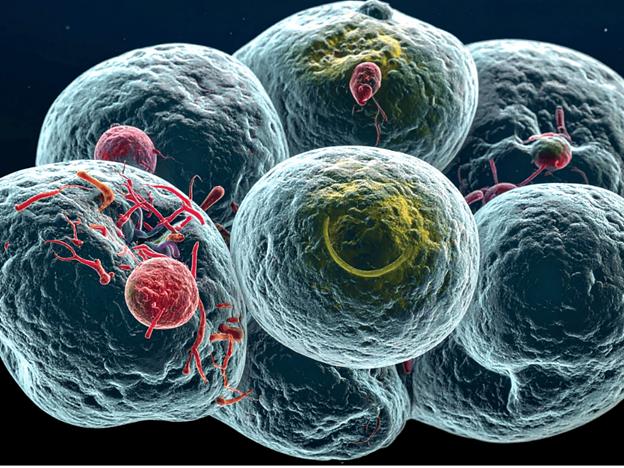
Aging is not only about time passing. It is also a shift in biology that changes how well the body maintains itself, recovers from stress, and repairs routine wear. One of the most consistent patterns researchers discuss is a gradual rise in chronic, low-grade inflammation, sometimes called “inflammaging.” Unlike short-term inflammation that helps the body respond to an infection or heal after an injury, persistent inflammation can linger quietly and influence many systems involved in long-term health.
Stem cells play a central role in repair and renewal across tissues. They are not one single cell type, but a family of cells in places like bone marrow, muscle, skin, and the gut that can self-renew and produce specialized cells when replacement is needed. With age, many stem cell populations become less responsive and less efficient. Inflammation is not the only driver of this decline, but it is a major influence because stem cells operate inside local microenvironments called niches, and those niches are shaped by immune signals, metabolism, and tissue damage.
In that context, interest in stem cell support often overlaps with a bigger question: how do inflammatory signals change the repair environment over time, and what does that mean for regeneration capacity as we age?
Inflammation and aging, what “inflammaging” means in practice
Inflammation is a normal part of immune function. In the right context, it helps clear damaged tissue, coordinates defense, and supports healing. The problem is not inflammation itself. The problem is inflammation that becomes chronic, stays activated longer than necessary, or turns on too easily and resolves too slowly.
With aging, several patterns become more common in many people:
- Baseline inflammatory signaling can rise
- The body may take longer to return to baseline after stressors like illness, injury, or sleep loss
- Innate immune responses can become more “primed,” reacting more strongly to smaller triggers
- Adaptive immune function can become less efficient, which can shift overall immune balance
These changes vary widely by person. Genetics, lifestyle, medical conditions, and environment all influence how much chronic inflammation is present. Still, a slightly more inflammatory baseline is common enough to matter when discussing aging and tissue repair.
How inflammation contributes to stem cell decline
Stem cells respond continuously to chemical and physical signals in their environment. Chronic inflammatory signaling can change how stem cells behave, how well they self-renew, and how supportive their niche remains.
Cytokines can push stem cells toward less sustainable patterns
Cytokines are immune signaling molecules that help coordinate inflammation. Short bursts of cytokine activity can support repair. When cytokines remain elevated chronically, they can shift stem cell behavior in ways that reduce long-term regenerative capacity. Depending on the tissue, chronic inflammatory signaling may:
- Reduce self-renewal, shrinking the “reserve”
- Increase differentiation pressure, using up stem cells faster
- Increase oxidative and metabolic stress inside stem cells
- Disrupt the supporting niche cells that normally regulate repair timing
In simple terms, persistent inflammatory signals can distort the instructions stem cells receive and the conditions they operate in.
The stem cell niche can become less supportive
Stem cells depend on their niche: neighboring support cells, extracellular matrix, oxygen gradients, blood supply, and growth factors. Chronic inflammation can remodel tissue structure and alter signaling, sometimes increasing fibrosis-like changes and reducing the clarity of repair cues. Even if stem cells are present, a degraded niche can make effective regeneration harder.
Senescent cells can amplify inflammatory feedback loops
Aging is also associated with an increased burden of senescent cells. These are cells that no longer divide normally but remain metabolically active and often release pro-inflammatory signals (sometimes referred to as SASP). Those signals can worsen local inflammation, disrupt normal tissue communication, and impair nearby stem cell function. This can create a reinforcing cycle: inflammation promotes dysfunction, and dysfunction generates more inflammation.
What researchers see across different tissues
The details differ by tissue, but the theme is consistent: persistent inflammation tends to reduce the efficiency and quality of repair.
Muscle regeneration and satellite cells
Skeletal muscle repair relies on muscle stem cells called satellite cells. In younger systems, inflammation after training or injury helps coordinate cleanup and rebuilding. With aging, the timing and resolution of that inflammatory response can become less precise. If inflammation lingers or resolves poorly, satellite cell activity can become less effective, contributing to slower recovery and reduced adaptation over time.
Blood and immune stem cells in bone marrow
Hematopoietic stem cells (HSCs) generate blood and immune cells throughout life. Chronic inflammatory signaling can bias how these stem cells differentiate, which can shift immune output and influence systemic inflammation. This matters because immune changes are not just a consequence of aging. They can also be part of what reshapes the inflammatory environment other tissues experience.
Barrier tissues like skin and gut
Skin and gut renew rapidly and face constant exposure to environmental stressors. Chronic inflammation in these tissues can disrupt normal turnover and weaken barrier integrity. A weaker barrier can increase immune activation, which may raise inflammatory load further, creating another self-reinforcing pattern.
Why inflammation tends to rise with age
There is no single cause. Several drivers often overlap.
Accumulated cellular stress
Over time, DNA damage, mitochondrial strain, and impaired protein quality control become more common. Stressed cells can release “danger” signals that activate immune pathways even without infection.
Metabolic health and visceral adiposity
Visceral fat is biologically active and can produce inflammatory mediators. Insulin resistance and disrupted lipid metabolism can also increase inflammatory tone. This is one reason metabolic stability is frequently linked to healthier aging trajectories.
Immune system remodeling
Across a lifetime, the immune system adapts to exposures, infections, and stress. With age, immune regulation can become less precise. That can increase background inflammation while also reducing protection against some threats.
Persistent immune triggers and microbiome changes
Some chronic infections can keep immune signaling elevated. Separately, changes in the gut microbiome and gut barrier function may increase exposure to inflammatory triggers. Individual variability here is large, and the research is still evolving.
Practical ways to reduce chronic inflammatory load
If the goal is to support long-term repair capacity, the most reliable strategies tend to be foundational and measurable.
Protect sleep quality and regularity
Sleep disruption can raise inflammatory signaling and impair immune regulation. Consistent sleep timing, fewer late-day stimulants, and a stable pre-sleep routine often have outsized effects because sleep influences nearly every recovery system.
Use exercise to improve inflammatory regulation
Regular physical activity is consistently associated with healthier inflammatory profiles. Resistance training supports muscle and metabolic health, while aerobic work supports cardiovascular function and recovery capacity. The key is sustainable intensity with adequate recovery.
Build a dietary pattern that supports metabolic stability
A pattern rich in fiber, minimally processed foods, and sufficient protein supports metabolic health and can reduce inflammation drivers like blood sugar instability. Long-term consistency typically matters more than short-term restriction.
Address hidden sources of inflammation
Oral health issues, smoking, unmanaged allergies, and poorly controlled chronic conditions can raise inflammatory burden. Reducing these sources often produces clearer benefits than chasing highly specific interventions.
The takeaway
Inflammation is a meaningful contributor to aging biology, and chronic, low-grade inflammation can impair stem cell function by changing stem cell behavior and weakening the niche that supports regeneration. The most dependable strategy is reducing inflammatory load through fundamentals like sleep, exercise, metabolic health, and appropriate medical care.
Buy Me A Coffee
The Havok Journal seeks to serve as a voice of the Veteran and First Responder communities through a focus on current affairs and articles of interest to the public in general, and the veteran community in particular. We strive to offer timely, current, and informative content, with the occasional piece focused on entertainment. We are continually expanding and striving to improve the readers’ experience.
© 2026 The Havok Journal
The Havok Journal welcomes re-posting of our original content as long as it is done in compliance with our Terms of Use.


