Editor’s note: Citation superscripts have been removed to align with The Havok Journal’s formatting. Full references remain listed at the end.
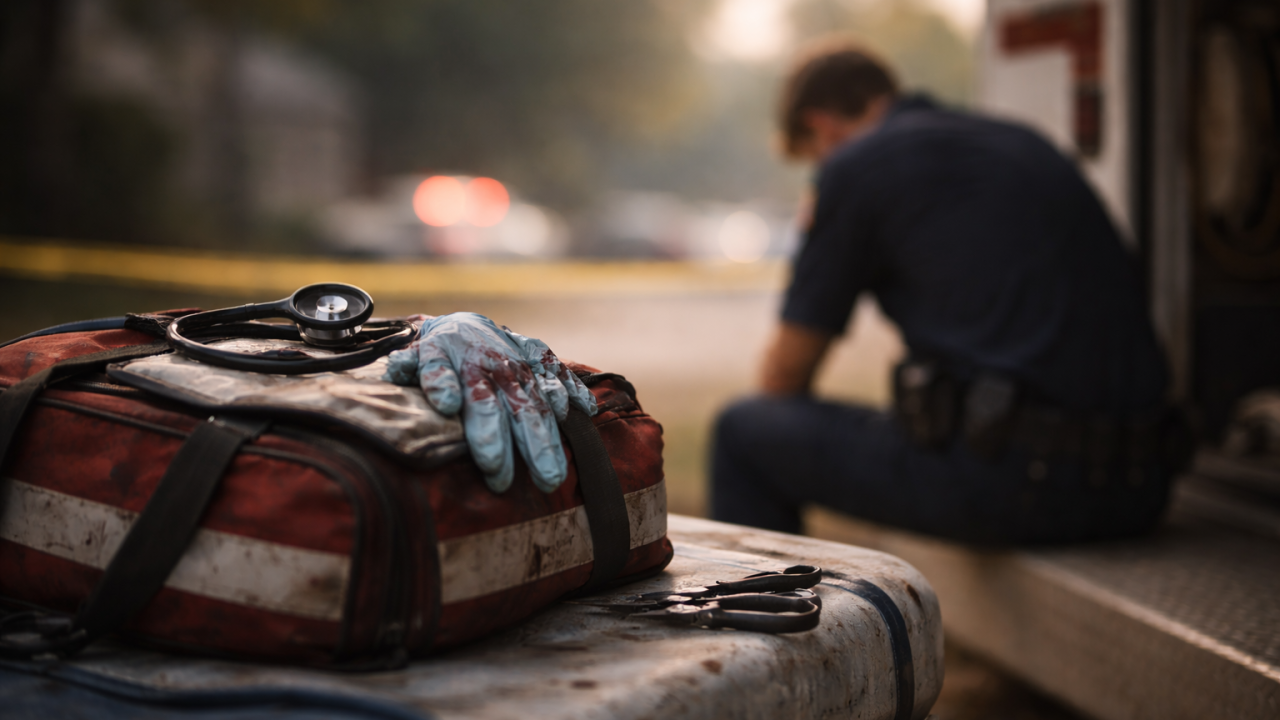
There is a phrase that quietly lives in the back of many first responders’ minds, though few are willing to say it out loud: “I see humans, but no humanity.” It sounds harsh. It sounds cynical. It almost feels wrong to admit. But if we are honest, this is a place many people in our profession eventually brush against.
I know because I felt it. And the first time it happened to me was not in policing. It happened during war.
War compresses the human experience into something raw and immediate. The world becomes simplified in a way most people never experience. Every decision carries weight. Every movement can mean life or death. Every person in your environment is both human and unknown.
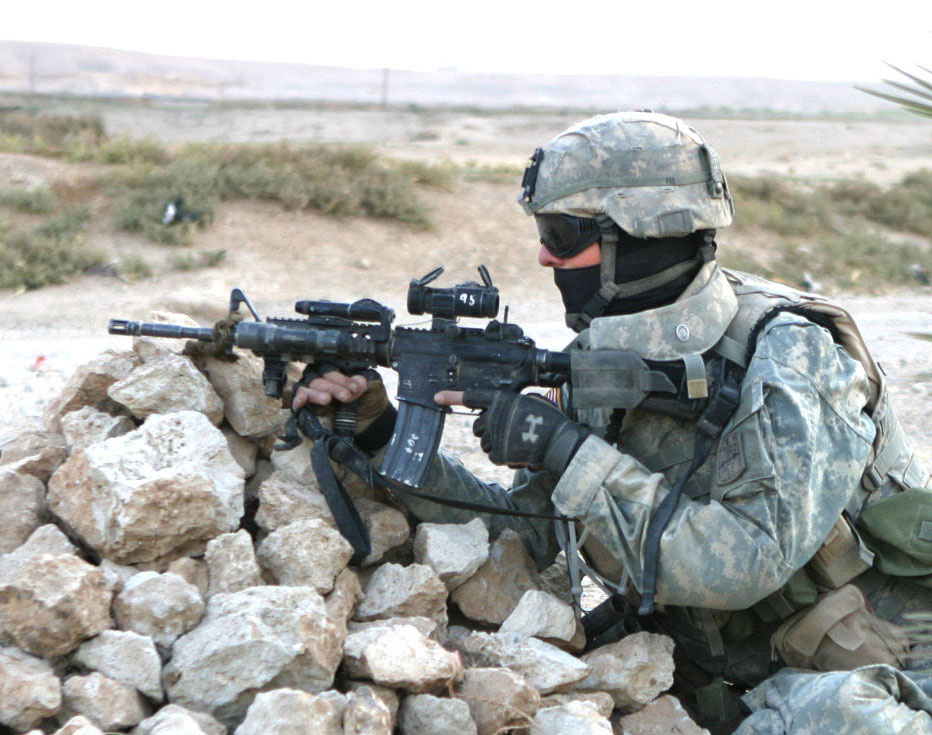
During my deployment fighting against Al-Qaeda in Iraq, I began to notice a subtle shift in my perception. At first, civilians looked like civilians. People living their lives in a place that had become a battlefield. But over time, something changed.
Crowds stopped looking like individuals. They started looking like movement. Variables. Angles. Potential threats. The brain adapts quickly when survival is on the line. You start noticing body language instead of faces. Hand placement instead of expressions. Movement patterns instead of personalities. You stop asking who someone is. You start asking what they might do.
At one point I caught myself thinking about civilians the way a rancher thinks about cattle moving through a field. Bodies moving through space. Noise. Motion. Density. That realization hit me harder than anything else, because I knew what it meant. My brain had started building distance between me and the people around me. Not because I hated them. Because the environment demanded it.
Desensitization had begun. And that realization forced me to confront an uncomfortable truth. Desensitization is not evil. But if left unchecked, it can slowly erode the very thing that anchors our judgment: our humanity.
Human beings are not designed to emotionally process trauma at the rate at which many first responders encounter it. The nervous system protects itself through adaptation. Psychologists refer to this process as habituation, a neurological mechanism where repeated exposure to a stimulus reduces the emotional response over time. In other words, the brain learns to dull the intensity of experiences that occur repeatedly. Without this mechanism, soldiers and first responders would quickly become overwhelmed by the emotional weight of their environments.
But this adaptation carries consequences. Research in neuroscience shows that repeated exposure to trauma alters how the brain processes threat and emotion. Under chronic stress, the amygdala becomes increasingly reactive, while areas responsible for empathy and executive regulation, particularly the prefrontal cortex, can become suppressed.
This shift is not psychological weakness. It is biology. The brain becomes more efficient at detecting danger. But it can become less responsive to emotional nuance. Over time, this creates a psychological posture that prioritizes vigilance over compassion. And while that posture can enhance survival, it can also reshape how we see people.

The human brain is fundamentally a pattern-recognition machine. We build mental shortcuts that allow us to make decisions quickly in complex environments. For first responders operating under pressure, this ability is essential. You learn to read posture, eye movement, and tone of voice. You notice hands before faces. You sense tension in a room before words are spoken. These instincts are not accidental. They are built through repeated exposure. And they can save lives.
But pattern recognition also has a shadow side. When the brain sees the same types of incidents over and over again, it begins to categorize people. Instead of individuals, we begin to see roles. You stop seeing a father. You see another domestic violence suspect. You stop seeing a struggling teenager. You see another repeat offender. You stop seeing a person experiencing pain. You see another call holding.
Psychologists describe this as schema formation, where repeated experiences create simplified mental categories that allow faster interpretation of events. Schemas are efficient. But they can flatten the complexity of human beings. When someone becomes a category rather than a person, empathy quietly begins to fade.
Some might argue that empathy is a liability in high-stress professions. That emotional distance makes decision-making cleaner. But that assumption misunderstands the role humanity plays in professional judgment. The real danger of losing humanity is not philosophical. It is operational. Control without compassion becomes cold. Authority without empathy becomes brittle. Power without humanity becomes dangerous.
Professional force requires emotional regulation, not emotional absence. A responder who sees nothing but threats will eventually react to threats that do not actually exist. A responder who sees nothing but problems will begin treating people like problems. Humanity acts as a stabilizing force in decision-making. It reminds us that every person we encounter is more than the moment we meet them in.
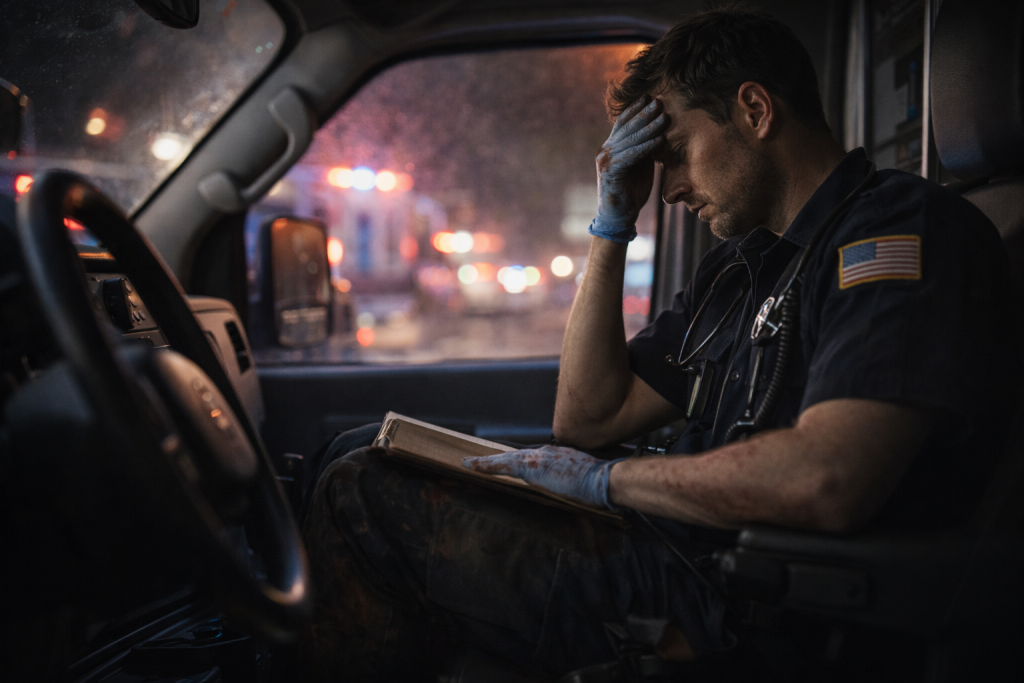
It is important to understand that desensitization is not the same as moral injury. Desensitization protects the nervous system. Moral injury wounds the conscience. Moral injury occurs when individuals experience or participate in events that violate deeply held moral beliefs. For soldiers, this might mean witnessing suffering that cannot be prevented. For first responders, it might mean repeatedly encountering tragedy that feels senseless or unavoidable.
Over time, these experiences can create a fracture between what a person believes the world should be and what they repeatedly witness it becoming. When desensitization and moral injury intersect, something dangerous can happen. You begin to detach not just from emotion, but from meaning itself. And when meaning disappears, cynicism often fills the void.
Most people do not wake up one day and decide to become cynical. It happens gradually. After long shifts. After stacked calls. After nights where the radio never stops. After scenes that linger in the mind long after the shift ends. Fatigue amplifies irritability. Irritability amplifies distance. Distance slowly becomes identity. And eventually the language begins to change.
“People are animals.”
“They’re all the same.”
“Nothing surprises me anymore.”
These statements are understandable. But they are warning signs. Not because they make someone a bad person. Because they signal that the job may be starting to reshape the lens through which we see the world.
Long before neuroscience began studying stress and emotional regulation, the Stoic philosophers recognized a fundamental truth about human behavior. External events are often outside our control. Our internal responses are not. The Roman emperor and Stoic philosopher Marcus Aurelius wrote, “You have power over your mind, not outside events. Realize this, and you will find strength.”
For those who operate in high-stress professions, this insight is more than philosophy. It is survival. We cannot eliminate the suffering we encounter. We cannot prevent every tragedy we respond to. But we can regulate how those experiences shape our character. Stoicism does not ask us to suppress emotion. It asks us to govern it. To remain steady without becoming numb. Disciplined without becoming detached.
This profession requires toughness. There is no way around that. We must be capable of confronting violence. We must make decisions under pressure. We must sometimes apply force in order to stop harm. But hardness alone is not strength. Strength is remaining steady under pressure without becoming calloused. Strength is regulating your internal state so that cynicism does not become your identity. Strength is remembering that the person standing in front of you, even at their worst, is still human.

The Stoic teacher Epictetus warned that hardship reveals who we are rather than creating it. “Circumstances don’t make the man. They only reveal him to himself.” The environments we operate in will reveal our internal structure. The question is whether we remain aware enough to guide what that structure becomes.
Maintaining humanity in professions exposed to constant crisis does not happen automatically. It requires discipline. It requires reflection. It requires awareness. Every responder should occasionally ask themselves difficult questions: Am I becoming numb? Am I losing patience faster than I used to? Am I starting to see people only as problems? Am I letting cynicism shape my character?
These questions are uncomfortable. But they are necessary. Because awareness is the first step toward correction.
The badge does not give you humanity. The uniform does not create it. The shield does not guarantee it. You bring your humanity with you when you take the oath. And over the course of a career, you must protect it just as fiercely as you protect your partners.
Because the public does not just need strong first responders. They need grounded ones. Self-aware ones. Professionals who can remain disciplined and decisive without losing their ability to see the human being standing in front of them. I’ve always said that just because a person wears a badge does not give them a moral compass. It only amplifies what’s already there.
If you have ever felt the edge of desensitization creeping in, you are not weak. You are human. Every soldier, police officer, firefighter, ER doctor, ER nurse, and paramedic who stays in this profession long enough will eventually brush against it. It is the quiet cost of standing between chaos and the rest of society.
But the danger is not that the job exposes you to darkness. The danger is when that darkness begins to rewrite who you are. If we are not careful, the job can convince us that people are nothing more than the worst moment we meet them in. It can slowly narrow our vision until all we see are threats, suspects, addicts, offenders, and problems. But that is not the whole truth. And if we allow ourselves to believe it is, something inside us begins to erode.
Humanity is not softness. It is not naivety. It is discipline. It is the ability to stand in the middle of chaos and still recognize the human being in front of you. It is the ability to carry authority without letting it turn into arrogance, to apply force without letting it become cruelty, and to endure suffering without letting it hollow you out.
That does not come from the badge or the uniform. You bring it with you, and over the course of a career, you will have to fight to protect it. Because the real test of this profession is not whether you can face violence, tragedy, and human failure. The real test is whether you can face all of that and still remain human.
See the human. Protect your humanity. That is the longer game.
References
- “Habituation: A Dual-Process Theory,” by P. M. Groves and R. F. Thompson (Psychological Review, 1970).
- “Stress Signalling Pathways That Impair Prefrontal Cortex Structure and Function,” by Amy F. T. Arnsten (Nature Reviews Neuroscience, 2009).
- Social Cognition: From Brains to Culture, by Susan T. Fiske and Shelley E. Taylor (SAGE Publications, 2017).
- “Moral Injury and Moral Repair in War Veterans,” by Brett T. Litz et al. (Clinical Psychology Review, 2009).
- Meditations, by Marcus Aurelius.
- Discourses, by Epictetus.
_____________________________
Ayman is a combat veteran and seasoned law enforcement leader with over 20 years of operational experience. He served in Iraq as a U.S. Army soldier and translator during the height of the war against Al-Qaeda, gaining firsthand exposure to combat stress and leadership under fire.
In law enforcement, Ayman has worked in diverse high-risk roles including SWAT, DEA Task Force Officer, DEA SRT, plain clothes interdiction, and currently serves as a patrol sergeant. His experience offers deep insight into the physical and psychological demands faced by tactical professionals.
Ayman holds a Master of Science in Counterterrorism (MSC) and is the founder of Project Sapient, a platform dedicated to enhancing performance and resilience through neuroscience, stress physiology, and data-driven training. Through consulting, podcasting, and partnerships with organizations across the country, Project Sapient equips military, law enforcement, and first responders with tools to thrive in high-stress environments.
Follow Project Sapient on Instagram, YouTube, and all podcast platforms for engaging content. Feel free to email Ayman at ayman@projectsapient.com.
Follow Project Sapient on Instagram, YouTube, and all podcast platforms for engaging content.
Contact: ayman@objectivearete.com
Project Sapient: https://projectsapient.com/
YouTube: https://www.youtube.com/channel/UC8cO-sLPMpfkrvnjcM8ukUQ
As the Voice of the Veteran Community, The Havok Journal seeks to publish a variety of perspectives on a number of sensitive subjects. Unless specifically noted otherwise, nothing we publish is an official point of view of The Havok Journal or any part of the U.S. government.
Buy Me A Coffee
The Havok Journal seeks to serve as a voice of the Veteran and First Responder communities through a focus on current affairs and articles of interest to the public in general, and the veteran community in particular. We strive to offer timely, current, and informative content, with the occasional piece focused on entertainment. We are continually expanding and striving to improve the readers’ experience.
© 2026 The Havok Journal
The Havok Journal welcomes re-posting of our original content as long as it is done in compliance with our Terms of Use.


