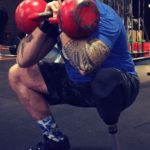
For those who have proudly served in our nation’s military, grappling with the realities of disability may seem like a different kind of war. Even though their spirits might still be unbreakable, it can be daunting to understand and find proper financial support. Sure, you can obtain payday loans for SSDI recipients. But here is where Social Security Disability Insurance (SSDI) comes in handy for disabled veterans.
The labyrinthine regulations and procedures associated with SSDI can prove too intricate for many former soldiers, leading to bewilderment and exasperation. Some may pursue alternative means of securing the support they should be entitled to regardless, such as handicap parking permissions. But don’t worry, we’ll help you to go through the maze. Together we’ll remove all confusion by simplifying everything about SSDI as it applies to disabled veterans.
Determining Your Eligibility: The Gateway to SSDI
To start your journey into Social Security Disability Insurance (SSDI), it’s important to grasp the criteria for eligibility. Although your service to the country is immensely valuable there are conditions that need to be fulfilled in order to qualify for SSDI benefits. So here are the requirements:
Work History:
- You must have worked in jobs covered by Social Security for a sufficient period of time, referred to as “work credits.” The exact number of credits needed depends on your age when you became disabled.
- Generally, younger individuals need fewer credits than older ones. You can earn up to four credits per year based on your annual earnings.
Medical Condition
Your disability must meet Social Security’s strict definition of disability. It must:
- Prevent you from performing substantial gainful activity (SGA), meaning work that involves significant physical or mental effort and earns you a certain amount of income.
- Be expected to last at least 12 months or result in death.
- Be supported by medical evidence from your treating physicians and specialists.
Non-Disqualifying Circumstances:
- You must not be engaged in substantial gainful activity (SGA) while receiving SSDI benefits.
- You must not be incarcerated for a crime (with a few exceptions).
- You must not be receiving workers’ compensation benefits at a level that completely offsets your SSDI benefits.
Military Service Considerations:
- Active duty military service can count towards work credits, even if the work itself wasn’t covered by Social Security.
- Veterans with a VA disability rating of 100% Permanent and Total (P&T) or those who developed a disability while on active duty after October 1, 2001, may have their SSDI applications expedited.
Calculating Your Compass: SSDI Benefit Amounts for Veterans
Knowing how much your probable SSDI benefit amount might be as a disabled veteran is like seeing the light at the end of the tunnel that will give you some financial stability. It is the basis of life time earning and not your VA disability rating that determines how benefits are calculated. This is why we need to demystify it.
Average Indexed Monthly Earnings (AIME)
It is from this AIME that SSDI calculations are made. It represents average monthly earnings under Social Security for your top 35 years, which were your highest earning years, unlike wages or salary rates in other words. Here’s how it’s done:
- Your lifetime earnings covered by Social Security are adjusted for inflation using an index called the Average Wage Index (AWI).
- Your top 35 years of adjusted earnings are then averaged to establish your AIME.
Primary Insurance Amount (PIA)
The basic rate of what you get on a monthly basis resulting from your AIME is called Primary Insurance Amount (PIA). This involves applying a formula established by the Social Security Administration. For example, it captures things like age and date when disability happens.
Benefit Dependents
Suppose there are eligible dependents such as spouse or minor children; they may lead to an increase in your basic PIA. This ensures that additional support is given to your family.
Maximum Payment Limits
There is no specific “veterans’ rate” for SSDI, but there is a limit on benefits. In 2024, for instance, the individual maximum stands at $3,627 per month.
Debunking the Myth: Disability Ratings and SSDI Benefit Levels for Veterans
A common misconception is that the level of your SSDI benefits corresponds to your VA disability rating. However, it has its own set of rules and regulations in place. That said, let’s debunk this fallacy and explain the relationship between disability ratings and SSDI benefits:
Independent Systems
The VA and Social Security Administration run their programs separately. Your VA disability rating that arises from service-connected disabilities does not make you eligible for SSDI or determine the amount you will get.
Different Focuses
The VA measures how your disability affects your day-to-day activities as well as functions linked to your military service. However, Social Security concentrates on ability to perform substantial gainful activity (SGA) in any competitive work setting irrespective of military connection.
VA Rating Can Help Your SSDI Claim
Having a VA disability rating is beneficial to your SSDI claim for various reasons including when it is 100 percent Permanent and Total (P&T):
- Expedited Processing: You may benefit from faster claim processing through a streamlined pathway.
- Supporting Evidence: Your VA medical records and rating serve as valuable evidence of your disability’s severity.
- Consistency: Demonstrating consistency in disability claims across both systems can bolster your case.
SSDI Determines Benefit Levels
Your qualification for certain levels of SSDI benefits is not determined by the level of your VA disability payment but rather by the nature of employment history and earnings. The Primary Insurance Amount (PIA) payable by the Social Security Administration is calculated based on Average Indexed Monthly Earnings (AIME) which has nothing to do with a VA rating like yours.
FAQ
How Much Is SSDI for 100% Disabled Veterans?
It may be possible that with a 100% VA disability rating you would think that you will get the highest possible SSDI benefit. Nevertheless, SSDI is determined by your earnings and work history before your disability started rather than on your VA disability rating. The average monthly amount paid out for SSDI in 2023 was $1,364, while its maximum for individuals is $3,627 per month.
How Much Is SSDI for Veterans in General?
Generally, like non-veterans, veterans are awarded a certain amount of SSDI depending on their work history and earnings. However, those veterans with disabilities may be able to apply faster if they have a VA disability rating of 100% Permanent and developed P&T while in service after October 1, 2000.
Can You Get VA Disability and Social Security?
Certainly! It’s allowed to receive both VA disability and SSDI benefits at once. Actually, having a VA disability rate might also expedite your SSDI application process.Remember it’s two different programs with different eligibility criteria as well as payout structures.
How Much Do Veterans Get for Social Security?
As stated earlier, the amount of money received by any veteran on account of SSID will depend on his/her own work record rather than his/her status as a disabled veteran under the V.A. There is no specific “veteran’s rate” for this form of insurance.
Do Veterans Get Extra Money from Social Security?
Although there isn’t any additional monetary gain simply because one is a veteran, there are several SSA programs and resources that exist which are specifically targeted towards veterans such as:
- SSDI claims approval sped up: Getting back to what was discussed earlier, certain qualifying disabilities would make it easier for ex-soldiers to get through the whole process more quickly.
- Ticket to Work program : This initiative helps disabled beneficiaries return to work slowly without losing their SSDI benefits.
- Vocational rehabilitation: To find suitable employment for beneficiaries with disabilities, the Social Security Administration can provide vocational rehabilitation services.
Buy Me A Coffee
The Havok Journal seeks to serve as a voice of the Veteran and First Responder communities through a focus on current affairs and articles of interest to the public in general, and the veteran community in particular. We strive to offer timely, current, and informative content, with the occasional piece focused on entertainment. We are continually expanding and striving to improve the readers’ experience.
© 2026 The Havok Journal
The Havok Journal welcomes re-posting of our original content as long as it is done in compliance with our Terms of Use.