
I recently had a conversation with a friend. We were talking about the word “we.” It seems like an innocent word, something we use constantly in everyday life when referring to family, religion, politics, nationality, profession, military service, law enforcement, culture, and almost every community to which we belong. We say, “We believe.” We say, “We Americans.” “We Christians.” “We Muslims.” “We veterans.” “We cops.” “We conservatives.” “We liberals.” Whatever comes after the word changes, but the structure does not. That led us to a larger question. Is “we” really the opposite of “I,” or is it simply another expression of the same attachment to identity?
The more we talked, the more I began seeing three different ways of understanding ourselves: “I,” “We,” and “All.” They are not the same thing. “I” is where most of us begin. We ask, “Who am I?” I am a father, a husband, a police officer, a veteran, a sergeant, an American, a writer, a student, a teacher. Those descriptions can all be true. They tell people something about the life I have lived, the experiences that have shaped me, and the responsibilities I carry. But are they actually me? That question is different.
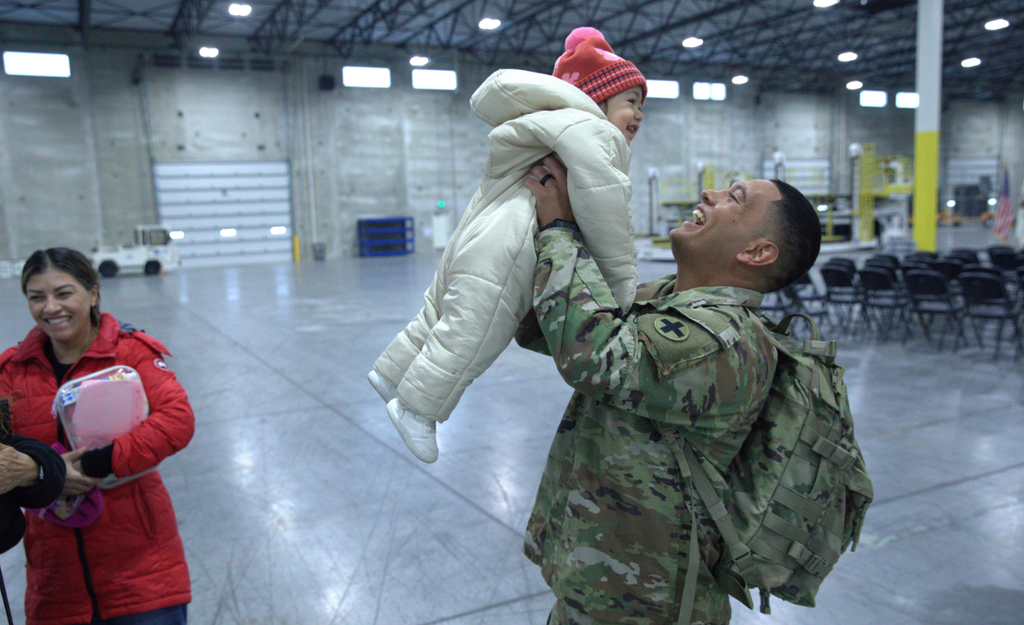
There is a difference between saying, “I am a police officer,” and understanding that policing is something I do. There is a difference between having served in war and allowing “warrior” to become the entirety of the person looking back at you in the mirror. Roles matter. Responsibilities matter. Character matters. Service matters. But perhaps freedom requires understanding that the role and the person occupying the role are not the same thing. If removing a title causes me to lose myself, was that title something I carried, or had it begun carrying me?
Psychology gives us an interesting framework for understanding this. Social identity and self-categorization research shows that people can understand themselves both as individuals and as members of groups. Which identity becomes most important can change according to circumstances. A person can think of himself as an individual in one moment, as a police officer in another, as an American in another, and as a member of a religious or political community in another. These identities do more than describe us. They can influence our attitudes, our behavior, the people we trust, the information we accept, and even how we interpret the actions of others.
That matters because identity can begin directing us without us realizing it. Once I become deeply attached to an identity, challenges to that identity can begin feeling like challenges to me. Question my profession, and I may feel personally attacked. Question my country, and I may become defensive. Question my religion, and I may interpret disagreement as disrespect. Question my political beliefs, and suddenly we are no longer discussing an idea. We are defending ourselves.
That is where ego becomes difficult to recognize. It does not always announce itself through arrogance or narcissism. Sometimes ego simply says, “This is who I am,” and then demands that we protect that construction. We convince ourselves that we are defending truth, tradition, country, profession, or faith when we may actually be protecting the identity we have built around those things.
At first glance, “we” appears to be an escape from “I.” Instead of thinking only about myself, I become part of something larger. There is enormous value in that. Human beings survive through cooperation. Families sacrifice for one another. Military units depend upon cohesion. Police officers trust one another in dangerous situations. Religious communities care for their members. Nations create shared institutions, histories, laws, traditions, and responsibilities. There is nothing inherently wrong with belonging, and I do not believe the answer is to become disconnected from family, community, country, profession, or faith.
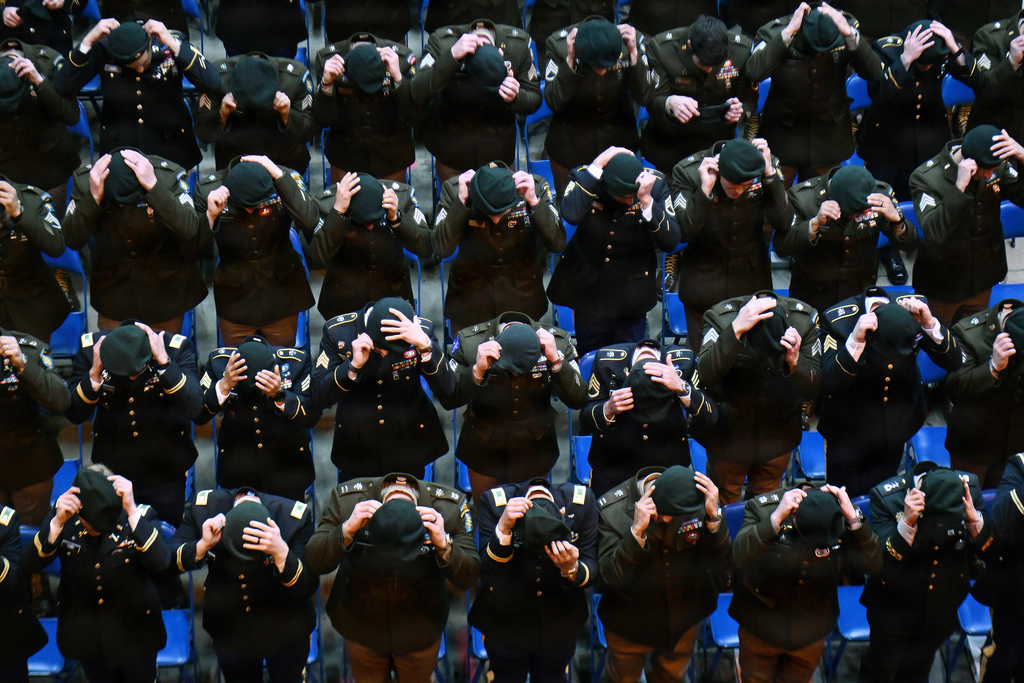
But belonging contains a danger we do not talk about enough. The ego can survive the transition from “I” to “we.” It simply gets bigger. Instead of “I am right,” it becomes “we are right.” Instead of “I am threatened,” it becomes “we are threatened.” Instead of “I am superior,” it becomes “we are superior.” Instead of defending myself, I am now defending the tribe.
Social psychology has spent decades studying these dynamics. Human beings can shift from seeing themselves primarily as unique individuals toward seeing themselves as representatives of a group. That shared identity makes cooperation possible. It can produce courage, sacrifice, service, loyalty, brotherhood, and community. I have experienced that kind of “we” personally. In military service, policing, and tactical environments, there are moments when the person beside you becomes more important than you are. People willingly move toward danger because someone else needs them. There is something deeply human and honorable about that kind of loyalty.
But the same ability that allows human beings to create an “us” can also create a boundary around everyone who does not belong to it. Once there is an “us,” there can be a “them.” That is where “we” deserves examination. The problem is not the word itself. The problem begins when belonging requires separation, and separation becomes hierarchy.
My country can become better than your country. My religion can become more worthy than your religion. My political movement can become more moral than yours. My profession can become more important than the people it exists to serve. My suffering can become more legitimate than your suffering. My dead can begin to matter more than your dead. Eventually, the people outside our group stop being individuals. They become categories.
Research on social identity helps explain some of this. When group identity becomes important, people can begin understanding themselves and others through the characteristics they associate with those groups. This does not mean that every strong group identity creates hostility. That would be an unfair and inaccurate conclusion. There is a meaningful difference between healthy pride in a group and needing that group to be superior.
Researchers studying collective narcissism make this distinction. A person can feel genuine pride, affection, and connection toward a nation, religion, profession, or community without hostility toward outsiders. Collective narcissism is different. It involves a belief that one’s group is exceptional, deserves special recognition, and is being insufficiently appreciated or respected by others. Research has associated that defensive form of group identity with greater sensitivity to perceived insult and greater hostility toward outsiders.
That distinction matters because loving something does not require diminishing something else. You can love your country without believing another people are inferior. You can practice your religion without believing someone of another faith possesses less human worth. You can be proud of military service without romanticizing every war. You can love policing while recognizing legitimate criticism of the profession. You can belong without needing an enemy.
The danger begins when our identity requires someone else to be beneath us for us to feel secure within it.
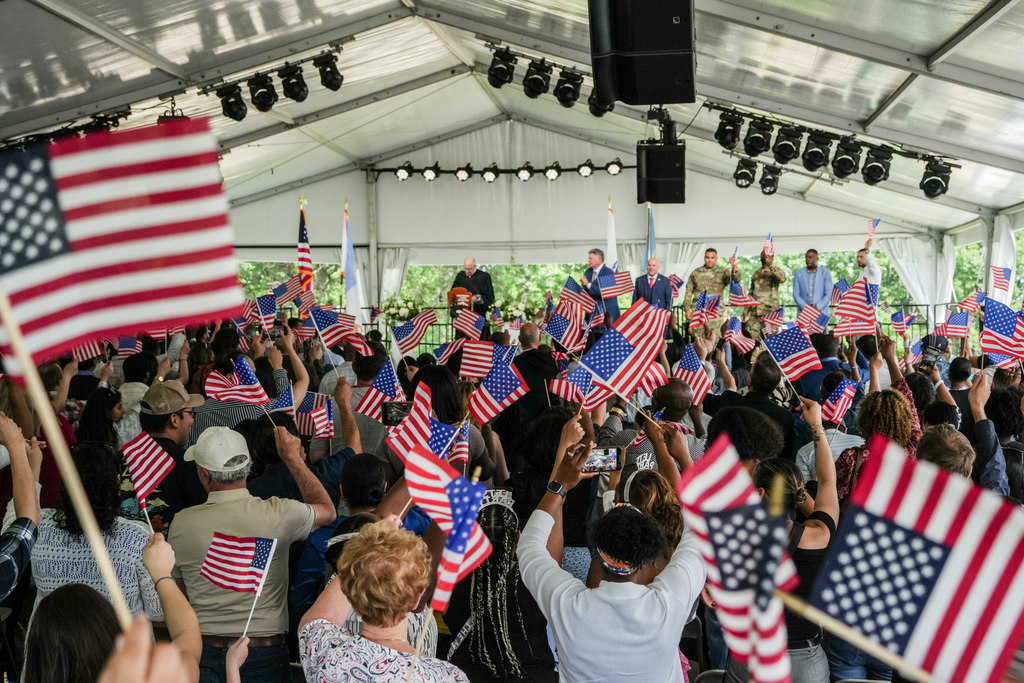
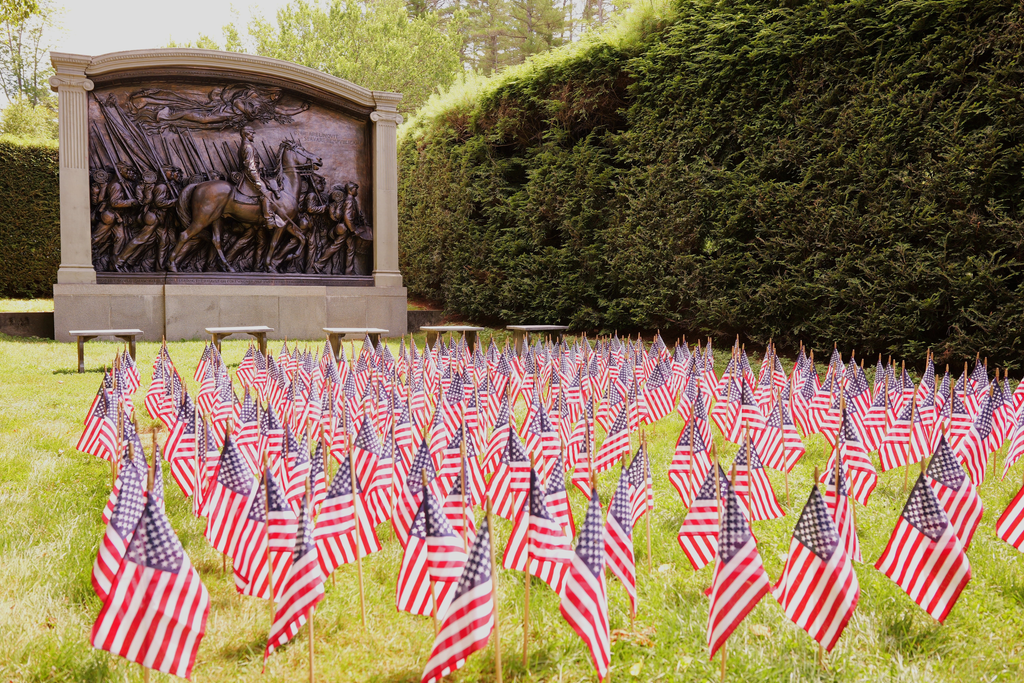
Religion and nationalism are powerful examples because both can reach deeply into identity. For many people, religion is not simply something they believe. It becomes part of who they understand themselves to be. Nationality can function similarly. A flag is physically only material, but human beings can invest it with extraordinary meaning. It can represent sacrifice, family, freedom, suffering, history, service, and people who died defending everything that symbol represents.
There is nothing inherently wrong with that either. Symbols matter because we give them meaning. But we should understand what happens when something becomes inseparable from our identity. Questioning it can become almost intolerable. The conversation stops being about whether an idea is true, useful, moral, or just. It becomes about protecting the tribe from perceived attack.
I can love America and still recognize that an Iraqi father loves his children. I can have deeply held convictions about faith while recognizing the humanity of someone who prays differently from me. I can honor soldiers while grieving civilians caught between armies. Those positions should not be contradictions. They only become contradictory when “we” demands absolute allegiance at the expense of everyone outside of it.
Human beings remain tribal creatures. That tendency did not disappear because we built cities, invented smartphones, developed social media, split atoms, or became technologically advanced. We simply created new tribes. Politics has tribes. Religion has tribes. Professions have tribes. Nations have tribes. Social movements have tribes. Even movements created to oppose tribal thinking can eventually become tribal themselves.
We create symbols, language, rituals, heroes, enemies, histories, grievances, and boundaries. Over time, we can begin filtering information through those boundaries. We stop asking only whether something is true and start asking whether it benefits our side. Does this make us look good? Does this make them look bad? Does this support our narrative? Does this threaten what we believe? Does this person belong to us?
That is not critical thinking. That is identity protection. And none of us are completely immune from it.
The interesting part is that this does not necessarily begin with hatred. Sometimes it begins with protection. Research on collective narcissism has found that perceived threats and insults toward a group can increase hostility, particularly when a person’s sense of group greatness depends upon recognition from outsiders. A study involving participants in Lebanon provides an interesting example of how complex this becomes. Researchers examined sectarian and national forms of collective narcissism and found different relationships with attitudes toward collective violence. Sectarian narcissism predicted greater support for violence against members of other sects, while national narcissism predicted opposition to that violence in that particular context.
That finding matters because it prevents us from reducing the entire discussion to “we equals bad.” It does not. Sometimes a larger “we” can weaken a smaller and more destructive tribal boundary. A Christian, Muslim, Sunni, Shia, Democrat, Republican, police officer, civilian, immigrant, or veteran may begin seeing another person through a larger shared identity instead. The circle expands.
Research behind the Common Ingroup Identity Model explores something similar. When people who initially see themselves as belonging to separate groups begin perceiving themselves as part of a larger shared group, some forms of intergroup bias can decrease. Someone who was once “them” becomes part of a larger “us.” That matters because perhaps one answer to tribalism is expanding the circle of belonging.
But this is also where I believe “All” is different from simply creating a larger “We.”
A larger “we” is still a group. It is still an identity. “All,” at least as I have begun thinking about it, is not another tribe. It is what remains when there is no one left outside the circle.
This is where the conversation with my friend changed. We started talking about something beyond “we.” “All.” Not “we are all,” but simply “All.” There is a difference. “We are all” can still begin with “we.” It can still contain possession. It can still unconsciously depend upon who is doing the speaking and who has been included within that word.
“All” removes possession from the equation.
All humanity. All life. All existence.
Call it consciousness, creation, God, nature, or humanity. Different philosophical and spiritual traditions have approached this question through very different language, and I am not suggesting they all teach the same thing. They do not. But human beings have been wrestling with some version of this question for thousands of years.
What remains when the labels disappear?

Who are you without your title? Who are you without your profession? Who are you without your nationality, your political affiliation, your reputation, or the story you have spent decades telling yourself about who you are?
Maybe the question itself eventually becomes unnecessary. Maybe there is no perfect identity waiting underneath all the identities we have accumulated. Maybe freedom is not finally discovering the right answer to “Who am I?” Maybe freedom begins when we no longer need to defend the answer.
This is not an argument that our differences are meaningless. Culture matters. History matters. Religion matters. Nationality matters. Family matters. Tradition matters. Experiences matter. I am not interested in some shallow version of unity that requires people to pretend our differences do not exist.
“All” does not erase differences. It refuses to turn those differences into division.
That distinction has become increasingly important to me. I used to think freedom meant knowing exactly who you are. I am no longer certain that goes far enough. Maybe real freedom is being able to carry an identity without needing to become it.
I can wear a uniform without believing the uniform contains the entirety of me. I can love my country without believing a border determines the value of another human being. I can honor my traditions without needing someone else’s traditions to disappear. I can hold convictions without believing disagreement makes another person my enemy. I can serve alongside other police officers and love them as brothers and sisters while still remembering that our profession exists to serve people who are not members of our tribe. I can honor military service without requiring war to remain part of my identity forever.
There is strength in knowing what you stand for. There may be even greater strength in knowing that what you stand for is still not the entirety of what you are.
That is the difference between identity and attachment.
The samurai contemplated impermanence because death stripped away illusions about permanence. Stoic philosophy repeatedly reminded people that status, reputation, possessions, titles, and circumstances should not determine the quality of one’s character. Eastern philosophical traditions have gone even further, questioning whether the independent self we spend our lives protecting is as fixed and permanent as we imagine.
Different traditions travel different roads, but they eventually place us in front of similar questions. Who are you when the title disappears? Who are you when the uniform comes off? Who are you when the career ends? Who are you when the political party changes, the nation changes, your status changes, your body changes, or the people who once validated your identity are no longer there?
Those questions make us uncomfortable because identity provides certainty. “All” requires humility.
I have seen what happens when human beings stop seeing the individual standing in front of them and begin seeing only the category. War makes this easy. Politics makes this easy. Extremism depends upon it. Dehumanization rarely begins with physical violence. Long before that, it begins with language.

Those people. Their kind. The enemy. The unbeliever. The criminal. The immigrant. The infidel. The occupier. The terrorist. The oppressor. The left. The right.
Once the human being disappears behind the category, things that once seemed morally impossible become easier to justify. We no longer see a father, mother, son, daughter, husband, wife, or child. We see the label. Once the label becomes more important than the person, compassion becomes conditional.
That does not mean evil does not exist. It does. It does not mean threats should not be confronted. They should. It does not mean societies should abandon laws, boundaries, accountability, or self-defense. They should not. Recognizing someone’s humanity does not require surrendering judgment.
I can oppose you without hating you. I can arrest you without dehumanizing you. I can fight you without convincing myself that your entire people are evil. I can disagree with your religion without believing you possess less dignity. I can love my country without requiring myself to hate yours. I can use force when force is necessary while still recognizing the humanity of the person against whom that force is being used.
That is not weakness. That requires discipline.
This is particularly important to me because I have spent much of my life inside cultures where “we” matters tremendously. Military units require cohesion. Police teams require trust. Tactical teams require people willing to move toward danger together. There are environments where hesitation can cost lives and where the person standing beside you needs to know that you will still be there when everything goes wrong.
That kind of “we” is necessary.
But even there, awareness matters. The warrior identity can become consuming if we are not careful. Eventually, the armor designed to protect us can become something we no longer know how to remove. We can begin interpreting ordinary life through combat. Every disagreement becomes confrontation. Every criticism becomes an attack. Every outsider becomes a potential threat. Every problem requires victory.
The identity that once helped someone survive can eventually prevent that person from learning how to live.
That is why I have become increasingly interested in what exists beyond the roles we carry. The uniform matters. The oath matters. The mission matters. The responsibility matters. But the human being wearing the uniform existed before it and, hopefully, will exist long after it is hung up for the last time.
If I cannot find that person without the uniform, perhaps the identity became too powerful.
One of the hardest disciplines in life may be looking at someone standing opposite us and refusing to reduce that person to the category we have assigned them. That does not mean pretending everyone is good. It does not mean abandoning discernment or becoming naive. It means refusing to surrender our own humanity while confronting the actions of another person.
There is a difference between saying, “What you did was evil,” and saying, “You are something less than human.” There is a difference between enforcing the law and needing to despise the person being arrested. There is a difference between fighting an enemy combatant and deciding that everyone who shares that person’s religion, nationality, or ethnicity must therefore also be your enemy.

Holding those distinctions under pressure takes self-command. Fear is powerful. Anger is powerful. Belonging is powerful. Identity is powerful. The tribe is powerful. A person without awareness can be moved by all of them while remaining absolutely convinced that he is thinking independently.
Perhaps maturity is not the destruction of identity. Perhaps it is seeing identity clearly enough that it stops owning us. We can participate in communities while understanding the temporary nature of the labels we carry. We can serve something larger than ourselves without turning that service into another expression of ego. We can love our people without requiring another people to become our enemy. We can say “we” while remaining conscious of who has been placed outside the circle.
Every once in a while, perhaps we should ask ourselves a difficult question: Who exactly do I mean when I say “we”?
Because that answer tells us a great deal about how we see the world.
“I” can separate me from you. “We” can separate us from them. “All” asks whether that separation was ever as absolute as we imagined.
I do not pretend to have the answer. The older I get, the less interested I am in pretending that I do. I have spent enough of my life around certainty to understand how dangerous certainty can become when it is never questioned. I have seen what happens when people become labels. I have seen what happens when “us” and “them” become more important than the human beings standing on either side.
But I have also seen the opposite. I have watched people risk themselves for complete strangers. I have watched human beings cross cultural, religious, professional, and political boundaries because another person needed help. Those moments remind me that the circle can expand.
Maybe real freedom is not about constructing a stronger identity. Maybe it is not about discovering the perfect tribe. Maybe it is not even about finally answering “Who am I?”
Maybe freedom is the ability to move through this life carrying identities without allowing any of them to become a prison.
Father. Husband. Veteran. Police officer. American. Writer.
Those words describe pieces of my experience. They do not contain the whole of me.
And the labels I place on another person do not contain the whole of them either.
Once I begin understanding that my identity is not the entirety of me, maybe I become less threatened by someone else’s identity. I no longer need your beliefs to disappear for mine to exist. I no longer need your country to be lesser for me to love mine. I no longer need your suffering to matter less for my suffering to matter. I no longer need you to become “them” so that I can understand myself as “us.”
Maybe that is what “All” means to me.
Not sameness. Not erasing culture. Not abandoning faith, tradition, responsibility, nation, or community. Not pretending that good and evil do not exist. Not pretending borders, laws, duties, and differences have no meaning.
“All” does not erase our differences. It refuses to turn those differences into division.
Maybe wisdom begins when we can hold two truths at the same time. I can be something, and I can be more than the something I call myself. I can belong somewhere, and I can still recognize the humanity of those who do not belong there with me. I can say “we” while remembering “All.”
Perhaps that is where freedom begins. Not in creating another identity, building another tribe, or finding another label, but in having enough awareness to recognize that whatever name we give ourselves, whatever flag we stand beneath, whatever uniform we wear, whatever God we pray to, whatever political philosophy we follow, and whatever story we tell ourselves about who we are, none of it gives us ownership over humanity.
We participate in it. For a brief period, we experience it. Eventually, every title and every label is surrendered.
What remains after that is a question each of us has to answer for ourselves.
Maybe the answer is not “I.”
Maybe it is not “We.”
Maybe it is something closer to “All.”
Real freedom may not come from finding a stronger identity. It may come from realizing that we are more than any identity we have ever claimed.

_____________________________
Ayman Kafel is a patrol sergeant, combat veteran, and founder of Project Sapient, with more than 20 years of operational experience. He served in Iraq as a U.S. Army soldier and translator and has worked in law enforcement roles including SWAT, DEA task force work, and plainclothes interdiction; he also holds a master’s degree in counterterrorism. For The Havok Journal, he writes from that background on law enforcement, service, training, stress, resilience, and national security, often focusing on the physical and psychological demands of high-stress work. Follow Project Sapient on Instagram, YouTube, and all podcast platforms for engaging content. He can be reached at ayman@projectsapient.com.
As the Voice of the Veteran Community, The Havok Journal seeks to publish a variety of perspectives on a number of sensitive subjects. Unless specifically noted otherwise, nothing we publish is an official point of view of The Havok Journal or any part of the U.S. government.
Buy Me A Coffee
The Havok Journal seeks to serve as a voice of the Veteran and First Responder communities through a focus on current affairs and articles of interest to the public in general, and the veteran community in particular. We strive to offer timely, current, and informative content, with the occasional piece focused on entertainment. We are continually expanding and striving to improve the readers’ experience.
© 2026 The Havok Journal
The Havok Journal welcomes re-posting of our original content as long as it is done in compliance with our Terms of Use.


