By Joseph G St Clair
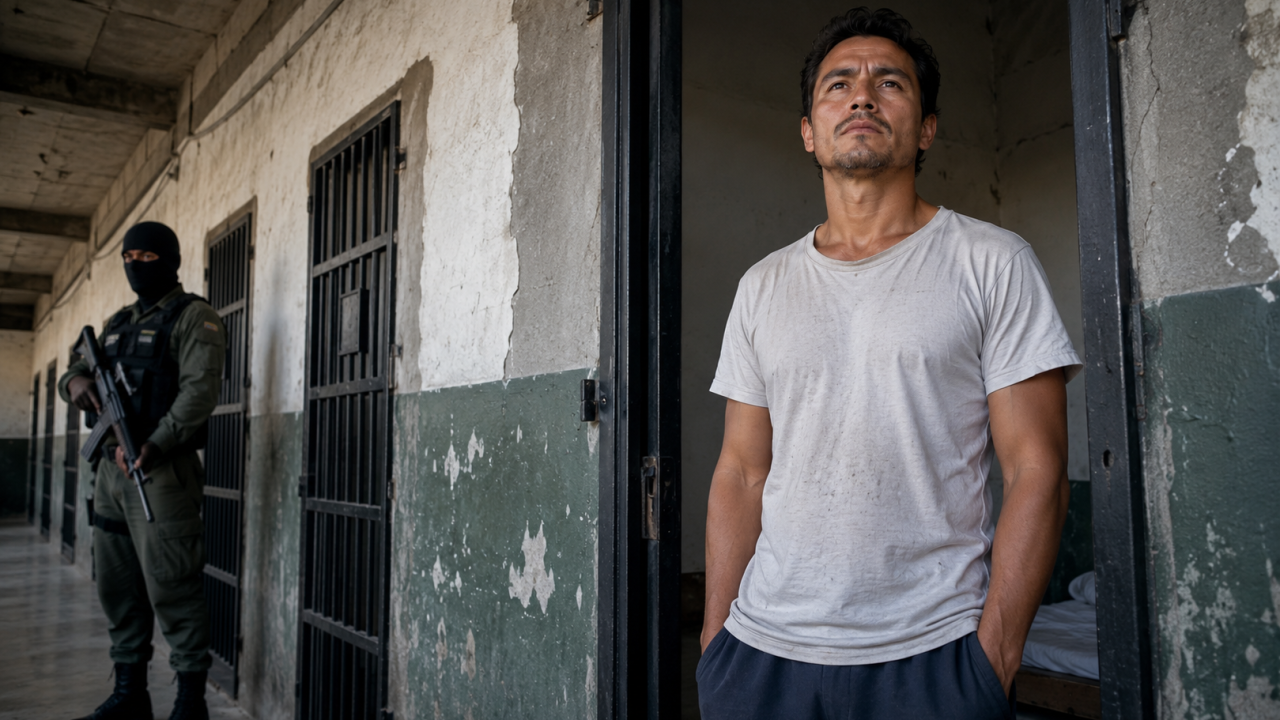
At Rodeo Uno, outside Guatire, Venezuela, the guards wore masks, military gear, and code names they had chosen to sound terrifying. One called himself “Hitler.” Another called himself “Thor.”
The pattern became obvious over time:
The fiercer the name, the weaker the guard.
They carried rifles and controlled the doors, the food, the water, and the punishments. Yet many of them looked miserable. They worked 12-hour shifts. Sometimes they were high. Sometimes they fell asleep outside our cells. If they were caught sleeping or using a phone, they could be tied to a post overnight.
They hated their lives, and they were terrified of the men above them.
Inside the cells, we slept on concrete slabs. Bugs fed on us during the day. At night, I pulled a sheet over myself and froze. A hole in the floor served as a toilet, and the smell of human waste never really left.
We passed the time however we could.
We talked through the walls. I taught languages. I worked out. Sometimes, if we were lucky, someone would give me a children’s Christian book.
Some men lay down and slowly disappeared into themselves.
The longer I was there, the more I understood that captivity was not distributed according to who carried the gun.
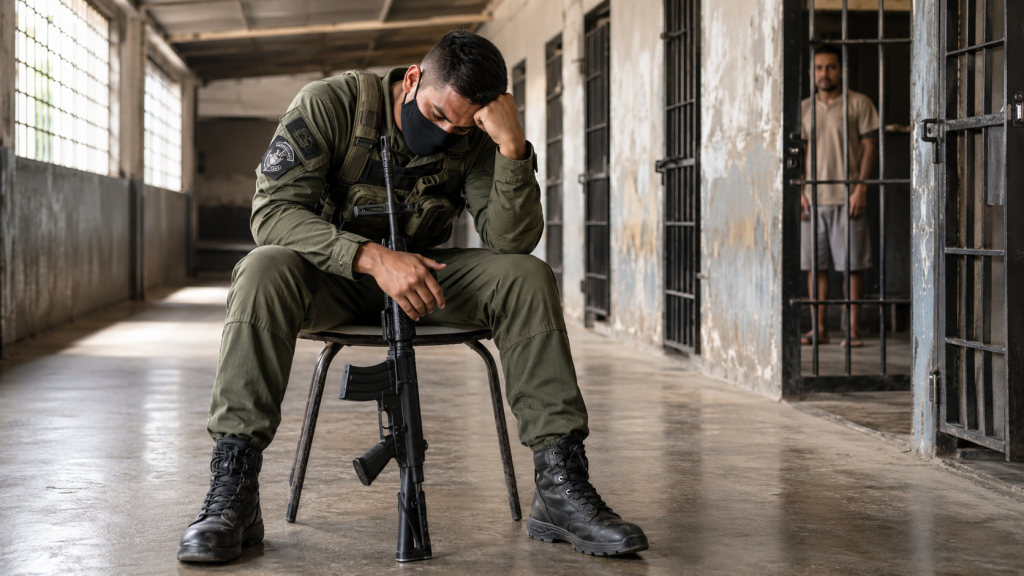
The guards controlled our bodies, but many of them had surrendered control of their own minds. They were afraid even to say Nicolás Maduro’s name. When they referred to him, they sometimes traced the shape of a mustache above their lips rather than speak openly.
Some whispered through the bars that they liked the United States. They wanted a relationship with us, but they feared being seen having one.
They feared every level of authority above them. Their pay could be docked. They could be imprisoned. Their families could be punished. Some worked for months without being allowed to go home.
Above them stood the tower bosses and prison directors, petty tyrants who enforced the system by humiliating the people beneath them. The abuse moved downward through the entire institution.
That did not excuse the guards.
They still participated. They still watched people get beaten. They still deprived prisoners of sleep, food, dignity, and medical care. Some seemed to enjoy it.
But understanding their fear helped me recognize something important:
A person can possess positional power while being inwardly enslaved.
Thor was a tall, skinny young guard who stood outside my cell. When I first arrived, he acted as though he needed to put me in my place.
Over time, our relationship reversed.
I reminded him constantly that I was human, that I was not Venezuelan military, and that I did not owe his institution my identity. I would comply when a rifle made compliance necessary, but I would not pretend that his uniform made him morally superior.
Eventually, he realized that fighting with me made his own life harder.
The man outside the cell had the keys, but the man inside was often less afraid.
The prison tried to reproduce itself inside the prisoners too.

Some men became informants. They listened to conversations, monitored other prisoners, and passed information to the guards in exchange for food, protection, or some minor privilege.
Some were former military men who still believed serving the regime was their duty. Others simply tried to survive by attaching themselves to power.
The result was not freedom.
It was deeper dependence.
They became afraid of the guards, afraid of other prisoners, and afraid of being exposed. They helped enforce the same system that degraded them.
The prison no longer needed to stand outside them.
It had moved into their minds.
You could see the same thing in posture.
When prisoners were removed from their cells, guards placed bags over their heads and handcuffed them. Many lowered their faces and shuffled forward like animals.
I understood why.
They were hungry, frightened, exhausted, and conditioned by violence.
But I refused to move that way.
I pushed my chest out, held my head high, and walked forward without letting them drag me. I told the men around me:
“Keep your head up. Be proud. Don’t walk like slaves.”
That did not unlock a door.
It did something more basic. It preserved the distinction between what was happening to us and who we were.
Agency in captivity was not an abstract idea.
It was a series of daily acts.

Every day, I worked out. I cut strips from a sheet and tied water jugs together to make a crude dumbbell. I used bricks, the edge of the concrete bed, and my roommate’s body weight.
I did push-ups with him on my back and squats with him on my shoulders.
I trained because we were not being fed enough and I did not want my body to waste away. I also trained because exercise gave structure to time. It produced a small chemical reward in a place designed to remove every source of control.
I taught languages because teaching reminded me that I was more than a prisoner.
I sang.
I joked.
I played the circle game with guards and prisoners through the opening in the cell. It was childish, which was exactly the point.
Laughter asserted that the institution did not own the emotional atmosphere.
The guards often looked angrier than the prisoners. They sat outside the cells hating their lives while laughter traveled down the hall.
There were hard days. Weekends were often the worst, especially when we expected news or movement and nothing happened.
Preserving agency did not mean I was never afraid, depressed, angry, or temporarily broken. Those emotions were real. Sometimes, they helped the body survive.
Agency meant returning to a deliberate orientation.
I would get out one day.
I needed to remain physically and mentally prepared for that day. I would not accept paranoia. I would not accept the idea that hope was merely opium.
I believed the United States would not leave us behind, and I organized my behavior around that belief.
I also advocated for myself.
The prison often served raw plantains that made me vomit. At one point, I refused to continue eating food my body could not tolerate. I ended up spending days in the hospital.
My position was simple: if they wanted to kill me, they could keep feeding me what was making me sick. I would not assist them by pretending it was acceptable.
The guards said, “Welcome to hell. Welcome to Venezuela.”
I answered that I was human.
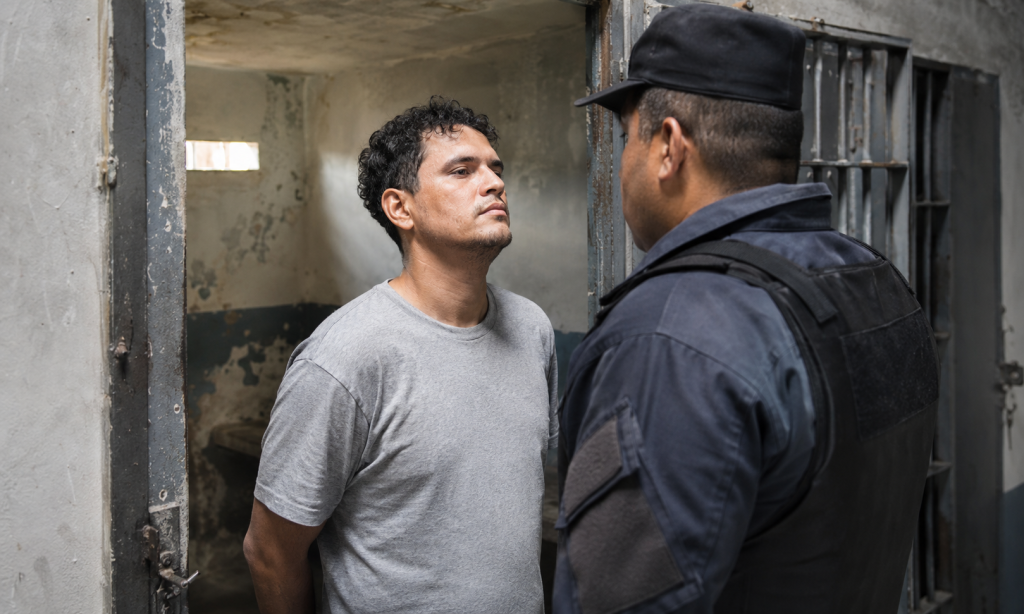
I told them that if we had been born into one another’s circumstances, our positions might have been reversed. I reminded them that what they were doing was wrong, and that no uniform erased moral responsibility.
Once, they chained me, beat me, sprayed me, and told me to “change my attitude.”
Other men had been left restrained for days.
I told them I would never change it.
They released me within hours.
Defiance always carried risk. Tactical compliance was sometimes necessary. If a man had a rifle pointed at me, I could move where he ordered.
But physical compliance was not the same as moral surrender.
Moral surrender was seeing a young Venezuelan beaten for laughing at or disrespecting a guard, then remaining silent inside yourself.
Resistance could be as simple as speaking to him afterward:
“What they did was wrong. You did not deserve it. Their violence does not define you. They were weaker for doing it.”
That message spread.
The same struggle appeared on a larger scale when I began organizing a collective hunger strike for June 1.
It was impossible to know precisely how many prisoners would participate. That uncertainty was created deliberately.
The prison constantly moved and sequestered people to break communication, disrupt cohesion, and prevent us from understanding our collective strength. Sometimes a prisoner would suddenly disappear from his section, creating the hope that he had been released when he had simply been moved somewhere else.
The administration offered inducements. Prisoners were promised more food or better treatment if they refused to participate.
The staff also threatened us directly:
“We’ll put you on tubes. We’ll put catheters in you. We’ll feed you anyway.”
Their reaction told us something.
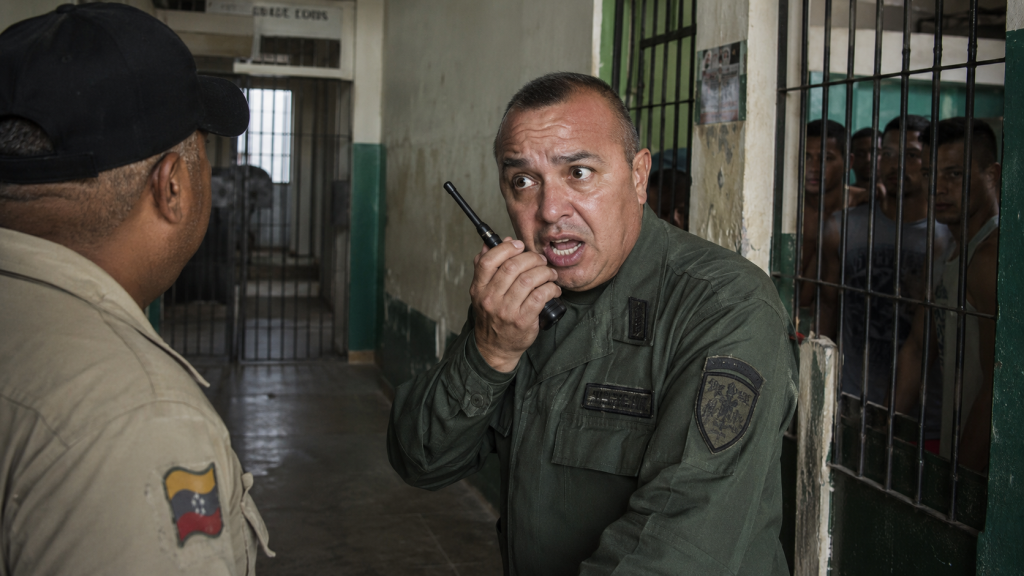
The possibility of coordinated refusal terrified the institution.
A prison depends on making every person feel alone. It survives by separating people physically, psychologically, and morally.
Collective agency breaks that spell.
I was released on May 20, before the planned June 1 action. Because I had organized it, the hunger strike did not proceed after I left.
But the prison’s response had already revealed how seriously it regarded the possibility of coordinated choice.
That is what I mean by orientation.
Orientation is the conscious act of participating in reality rather than accepting the role and identity imposed upon you.
It does not mean denying suffering.
It means refusing to let suffering write the final definition of who you are.
A guard can wear a mask, carry a rifle, and call himself “Hitler” while trembling before his supervisor.
A prisoner can be hooded, handcuffed, starved, and beaten while preserving authorship over his own conscience.
Some of the least free men I met carried the keys.
Some of the freest men I met slept on concrete.
An institution can occupy your time, your body, your environment, and nearly every outward choice.
The last territory it tries to occupy is the mind.
Preserving agency means refusing to surrender it.

_____________________________
Joseph G St Clair is a U.S. Air Force veteran, former airborne cryptologic linguist, four-tour Afghanistan veteran, polyglot, and graduate of UC Berkeley School of Law. His legal work has supported veterans, immigrants, and disabled veterans. He is the author of The Architecture of Gold, a philosophical work on agency, conscience, institutional power, moral injury, consciousness, and meaning. His writing draws on military intelligence, language, law, and the challenge of preserving moral sovereignty inside powerful systems.
The Architecture of Gold, by Joseph G St Clair (Amazon)
As the Voice of the Veteran Community, The Havok Journal seeks to publish a variety of perspectives on a number of sensitive subjects. Unless specifically noted otherwise, nothing we publish is an official point of view of The Havok Journal or any part of the U.S. government.
Buy Me A Coffee
The Havok Journal seeks to serve as a voice of the Veteran and First Responder communities through a focus on current affairs and articles of interest to the public in general, and the veteran community in particular. We strive to offer timely, current, and informative content, with the occasional piece focused on entertainment. We are continually expanding and striving to improve the readers’ experience.
© 2026 The Havok Journal
The Havok Journal welcomes re-posting of our original content as long as it is done in compliance with our Terms of Use.


