
The people who eventually died in a remote South American jungle were not looking for death. They were looking for hope.
Some were struggling financially and worried about how they would provide for their families. Others were lonely, discouraged, or searching for purpose in a world that seemed increasingly uncertain. Some longed to belong to a community that genuinely cared about people rather than merely talking about it. Others were drawn by dreams of social justice, equality, and the belief that ordinary people could build something better than the world they saw around them.
They came from different backgrounds and different walks of life. There were young couples trying to raise children, elderly widows looking for companionship, veterans carrying burdens they rarely discussed, and working-class families trying to make sense of a rapidly changing society. What united them was not fanaticism. It was a desire for meaning, belonging, and a better future.
Into their lives stepped a charismatic leader who seemed to offer exactly what they had been seeking. He spoke with conviction and confidence. He talked about helping the poor, caring for the forgotten, and building a community where people would be valued regardless of race, wealth, or social status. At a time when many felt disconnected and disillusioned, his message resonated deeply.

People began attending meetings. At first, there seemed to be little cause for concern. The gatherings were energetic and hopeful. Members found friendship and encouragement. They helped one another, shared resources, and spoke enthusiastically about creating a movement that could improve the lives of countless people. For many, it felt as though they had finally found a place where they belonged.
As the movement grew, so did the loyalty of its members. Friendships formed. Families became deeply involved. People volunteered their time and donated their money because they believed they were participating in something important. The leader became more than a spokesman for a cause. He became a trusted guide, someone whose judgment was increasingly accepted without question.
Inevitably, critics emerged. Former members raised concerns. Journalists began asking uncomfortable questions. Family members worried about the growing influence the movement seemed to exert over its followers. Yet criticism often had the opposite effect of what was intended. Members interpreted outside attacks as proof that their cause was threatening the established order. Every great reform movement, they reasoned, faces opposition. Every visionary leader attracts enemies. The criticism strengthened their commitment rather than weakening it.
Over time, the sacrifices required of members became greater. More time was demanded. More money was contributed. Relationships with skeptical friends and relatives began to deteriorate. Increasingly, members found themselves surrounded by people who shared the same beliefs, listened to the same leaders, and viewed the world through the same lens. The movement gradually became not just something they supported, but something that defined who they were.
Then came an extraordinary proposal from the leader. Rather than remaining in a society they viewed as corrupt and hostile, why not build a new community from the ground up? Why not leave behind the critics, the conflicts, and the disappointments of the outside world and create a society based on the movement’s ideals?
To many followers, the idea was inspiring. It sounded bold, courageous, and hopeful. Families sold possessions. People left jobs. Some separated from relatives who did not share their vision. They were not abandoning their lives, they believed; they were investing in a better future.
The destination was a remote settlement carved out of the jungle on the northern coast of South America. Life there would not be easy, but followers were assured that their sacrifices would be rewarded. They would build a model community, free from many of the problems they believed plagued the world they had left behind.
The reality proved far different.

The tropical heat was oppressive. The work was exhausting. Food was often scarce. Living conditions were crowded and uncomfortable. Isolated from the outside world and surrounded by dense jungle, many began to realize that the promised paradise was not materializing. Yet admitting failure was difficult. People had invested years of their lives, their savings, their reputations, and their relationships in the dream. To acknowledge that they had been misled would require confronting painful truths.
Meanwhile, control within the settlement became increasingly rigid. Criticism was discouraged. Doubts were treated as signs of disloyalty. Followers were warned constantly about enemies supposedly plotting their destruction. The outside world was portrayed as dangerous and hostile. Those who questioned the leadership risked being ostracized or punished. Fear gradually replaced hope as the dominant force holding the community together.
For some residents, escape became a desperate desire. For others, fear made leaving seem impossible. The same movement that had once promised freedom and purpose now felt increasingly like a trap.
Events finally reached a breaking point. A visiting congressional delegation arrived to investigate allegations that residents were being held against their will. During the visit, several members quietly expressed a desire to leave with the delegation. Their requests confirmed the fears of those who suspected that conditions inside the settlement were far different from what had been publicly portrayed.
As the delegation prepared to depart, violence erupted at a nearby airstrip. Gunmen opened fire, killing several people, including a U.S. congressman. The attack ensured that the settlement’s troubles could no longer remain hidden from the outside world.
Back at the compound, hundreds of residents were gathered together. Parents stood with their children. Families huddled in confusion and fear as their leader addressed them. The situation, they were told, was hopeless. Powerful enemies were coming, and everyone would suffer horribly at their hands. Families would be separated. Parents would be executed, raped, or imprisoned for life. There was no future. There was no escape. There was only one final option remaining.
Poison was prepared and distributed in fruit juice. Infants and small children were among the first victims. Parents watched as their sons and daughters died in their arms. Some complied willingly. Others resisted. Armed guards ensured that resistance would be difficult. Panic, grief, confusion, and despair spread through the crowd as the nightmare unfolded.

When it was over, more than 900 people lay dead beneath the tropical sky. Entire families had been wiped out. More than 300 of the victims were children.
The place was Jonestown, Guyana.
The date was Nov. 18, 1978.
The movement was the Peoples Temple.
And the man who led them there was Jim Jones.
Today, many people know Jonestown only through a casual expression that has entered popular culture. Few stop to consider the human tragedy behind those words. The victims were not born members of a cult. They did not wake up one morning intending to die in a jungle thousands of miles from home. They were ordinary people searching for hope, meaning, purpose, and belonging.
That is precisely why the story remains relevant nearly half a century later.
Nobody Joins a Cult
One of the most enduring myths about Jonestown is that its victims must have been gullible, uneducated, or somehow fundamentally different from the rest of us. It is a comforting belief because it creates distance between ourselves and the tragedy. If only foolish people fall victim to manipulation, then intelligent and rational people have nothing to fear.
History suggests otherwise.
The men and women who followed Jim Jones were not all the same. They represented a cross-section of society. Some were highly educated. Others were not. Some were wealthy. Others struggled financially. Some were deeply religious. Others were drawn by social and political ideals. Many were compassionate people who genuinely wanted to improve the lives of others. They volunteered, donated, served their communities, and sacrificed personal comfort for causes they believed were worthwhile.

The tragedy of Jonestown was not that bad people followed a bad man. The tragedy was that ordinary people gradually surrendered their ability to question a narrative they had come to embrace.
That process did not happen overnight.
Nobody joins a cult.
People join causes.
They join communities.
They join movements.
They join organizations that promise answers to problems they genuinely care about.
The early followers of Jim Jones were not told they would someday die in a jungle settlement. Had someone made such a prediction during those first meetings, they would have laughed at the absurdity of the suggestion. What attracted them was a message of hope, belonging, purpose, and change. The destination was hidden because even the followers themselves could not see where the road would eventually lead.
The same principle appears throughout history. Destructive movements rarely introduce themselves honestly. They do not advertise manipulation, control, or abuse. Instead, they present attractive goals that appeal to legitimate human desires. People are invited to join a mission, not a trap.
This is one reason intelligent people can become vulnerable. Intelligence does not eliminate the need for belonging. Education does not eliminate loneliness. Success does not eliminate fear. Every human being possesses emotional needs that can be exploited under the right circumstances.

The process often begins with a simple appeal to hope. Someone promises solutions to problems that seem overwhelming. They offer certainty in an uncertain world. They provide explanations that make complex issues appear simple. They identify villains responsible for society’s troubles and present themselves as uniquely qualified to lead people toward a better future.
At first, these ideas can seem reasonable. The leader may even address genuine problems. After all, the most effective falsehoods are often mixed with elements of truth. If a movement contained nothing but obvious lies, few people would follow it. The danger arises when trust in the messenger gradually becomes more important than evaluating the message.
As commitment deepens, questioning becomes more difficult. Followers invest time, money, relationships, and personal identity into the cause. They build friendships within the movement. They become emotionally attached to its success. Their reputation becomes linked to its credibility. At that point, admitting error is no longer simply an intellectual exercise. It becomes a personal loss.
Human beings are remarkably capable of defending beliefs they would have rejected years earlier if those beliefs become connected to their identity. We see this tendency in politics, religion, social movements, corporations, sports fandoms, and countless other areas of life. Once a person becomes emotionally invested, evidence alone is often insufficient to change their mind.
This does not happen because people are stupid. It happens because people are human.
The victims of Jonestown were not the first people to experience this phenomenon, nor would they be the last. History is filled with examples of ordinary individuals who slowly accepted ideas they once would have considered unthinkable. The process is usually gradual. Small compromises lead to larger compromises. Minor concessions become major commitments. Each step makes the next one easier to accept.
By the time the danger becomes obvious, many people have invested too much to turn back comfortably.
That reality should make us cautious whenever we examine the story of Jonestown. It is tempting to view the victims as people who lacked judgment while assuming we would have recognized the danger immediately. Such confidence may itself be a warning sign.
The more honest conclusion is that every human being is susceptible to persuasion, emotional influence, and group pressure. The question is not whether we can be influenced. The question is whether we recognize when it is happening.
The road to Jonestown did not begin with poison; it began with hope.
That is what makes the story so unsettling.

The very qualities that draw people toward noble causes, including compassion, idealism, loyalty, and a desire to make the world better, can also be exploited by those who seek power. When hope becomes detached from truth, when loyalty replaces critical thinking, and when belonging becomes more important than evidence, even good intentions can lead people down dangerous paths.
The lesson of Jonestown is not that we should stop caring about causes or communities. Human beings need both. The lesson is that every cause, every movement, every leader, and every narrative must remain open to questioning. The moment a person or organization becomes immune from scrutiny, the conditions for manipulation begin to take root.
The followers of Jim Jones were not looking for a cult.
They were looking for answers.
And that may be the most important lesson of all.
The Machinery of Manipulation
If Jonestown teaches us anything, it is that manipulation rarely begins with coercion. It begins with persuasion. People are not usually forced into destructive movements. More often, they are led there gradually, one small step at a time, by techniques that exploit normal human emotions and psychological tendencies.
Understanding those techniques is important because they did not disappear with Jim Jones. The same methods have been used by cult leaders, political movements, dictators, propagandists, extremist groups, fraudulent businesses, and countless others throughout history. The technology may change, the slogans may change, and the personalities may change, but the underlying mechanisms remain remarkably consistent.
One of the most powerful tools is fear.
Fear has a unique ability to override rational thought. When people believe they are facing an existential threat, they become more willing to accept extraordinary claims and support extraordinary actions. Leaders who wish to control others often cultivate a sense of permanent crisis. Followers are told that disaster is approaching, that enemies are everywhere, and that immediate action is required. The message may vary, but the underlying theme remains the same: be afraid, and trust us to protect you.
Fear also creates urgency. Urgency discourages careful thinking. A person who believes catastrophe is moments away rarely stops to verify facts or consider alternative viewpoints. The emotional response becomes more important than the evidence. Under such conditions, people often make decisions they would never make in calmer circumstances.
Closely related to fear is the creation of an enemy.
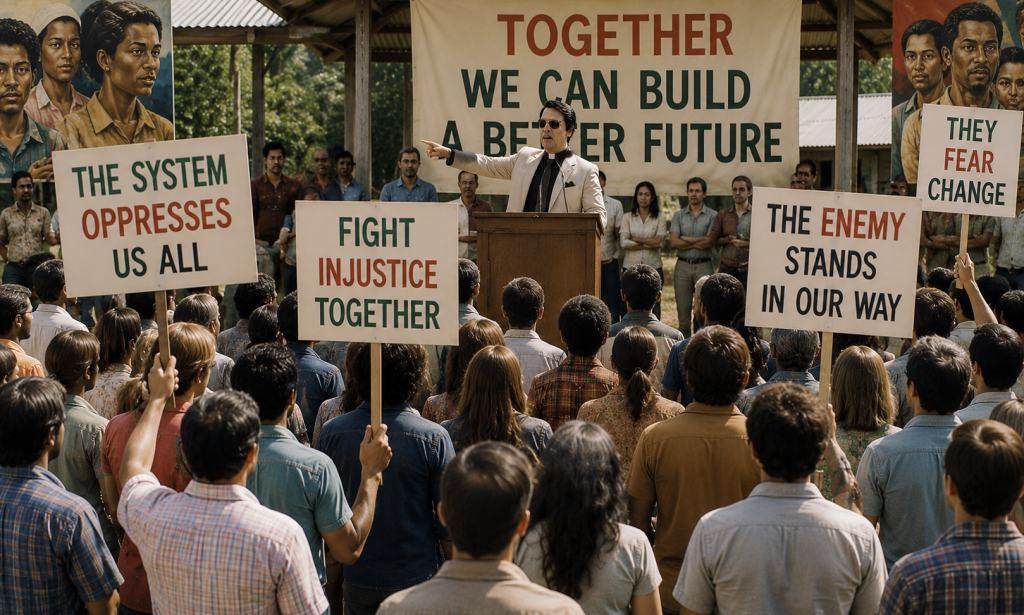
Movements gain strength when they define themselves against a common adversary. Sometimes those adversaries are real. Every society faces genuine problems and legitimate threats. The danger arises when complex issues are reduced to simple stories involving heroes and villains. In such narratives, opponents are no longer merely mistaken. They become evil. They are portrayed as enemies of progress, enemies of justice, enemies of freedom, or enemies of humanity itself.
Once people begin viewing opponents as fundamentally evil, extraordinary measures become easier to justify. Actions that would normally seem unacceptable can suddenly appear necessary. History repeatedly demonstrates that dehumanization often precedes abuse. When people stop seeing opponents as fellow human beings, moral restraints begin to weaken.
Another powerful technique involves controlling information.
Jim Jones isolated his followers physically. Most modern movements do not need to. Technology often accomplishes the same objective more efficiently.
Human beings naturally gravitate toward information that confirms what they already believe. We prefer voices that reassure us and communities that affirm our views. Left unchecked, this tendency can create informational echo chambers where people hear the same message repeatedly while alternative perspectives are filtered out or dismissed.
The result is not merely ignorance of opposing arguments. It is often a growing certainty that no reasonable opposing arguments even exist.
Within such environments, skepticism becomes increasingly rare. Members begin citing the same sources, repeating the same talking points, and reinforcing one another’s beliefs. Over time, the group’s confidence grows even as its exposure to contrary evidence shrinks.
Perhaps the most subtle form of manipulation involves identity.
People can change opinions relatively easily. Changing identity is much harder.
A person may initially support a cause because they agree with its goals. Over time, however, the cause can become intertwined with their sense of self. Their friendships, reputation, social standing, and personal meaning become connected to membership in the group. At that point, questioning the movement feels less like evaluating an idea and more like betraying a part of themselves.
This creates a powerful psychological trap. Evidence that contradicts the group’s narrative is no longer experienced as information. It feels like a personal attack. The stronger the emotional attachment, the more difficult it becomes to consider uncomfortable facts objectively.
Another mechanism that deserves attention is what psychologists call escalation of commitment.
People who have invested heavily in a decision often continue investing even when evidence suggests they should stop. No one wants to admit they have wasted years of effort, sacrificed relationships, or devoted resources to a mistaken cause. As a result, individuals frequently double down when confronted with contrary evidence.
This pattern can be observed in failed businesses, disastrous military campaigns, financial scams, and destructive movements throughout history. The greater the investment, the stronger the temptation to ignore warning signs.
By the time many followers of Jim Jones recognized the danger, they had already sacrificed too much to walk away comfortably. Their homes were gone. Their savings were gone. Their support networks had been severed. Their identities had become deeply connected to the movement. Leaving would have required admitting painful truths not only to others but also to themselves.
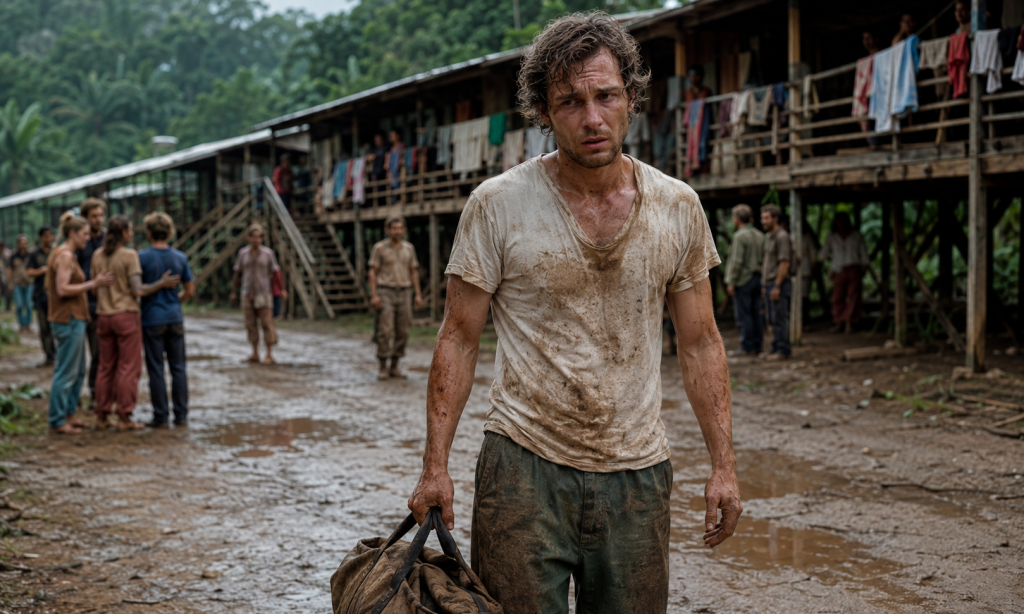
Perhaps the most dangerous aspect of manipulation is that it often feels virtuous.
People rarely believe they are surrendering their independence. They believe they are defending justice, protecting their families, saving their communities, preserving freedom, advancing equality, or fighting corruption. The goals may be noble. The danger lies not in caring deeply about important issues but in allowing emotion to replace critical thinking.
That is why manipulation is so effective. It often disguises itself as conviction. It presents conformity as courage and unquestioning loyalty as virtue. It encourages people to judge information not by whether it is true but by whether it serves the cause.
The victims of Jonestown did not arrive at their destination in a single step. They traveled there gradually, guided by fear, loyalty, isolation, identity, and escalating commitment. Each step seemed reasonable when viewed in isolation. Only in retrospect does the full path become visible.
The same psychological forces remain active today because human nature has not changed. We still seek belonging. We still fear uncertainty. We still prefer information that confirms our beliefs. We still struggle to admit when we are wrong.
The names may be different. The faces may be different. The technology may be different.
But the machinery of manipulation remains very much the same.
The Digital Jungle
The purpose of revisiting Jonestown is not to suggest that modern America is on the verge of another mass suicide. History rarely repeats itself in precisely the same form. The personalities change, the circumstances change, and the methods evolve. What remains remarkably consistent, however, is human nature. The same hopes, fears, loyalties, ambitions, and vulnerabilities that existed in 1978 still exist today. If there is a lesson to be learned from Jonestown, it is not that cults belong to the past. It is that the psychological forces that made Jonestown possible continue to operate in every generation.

The most obvious difference between 1978 and today is technology. Jim Jones needed church services, rallies, newsletters, and personal appearances to influence his followers. Modern movements possess tools far more powerful. Through social media, podcasts, online communities, video platforms, and twenty-four-hour news cycles, people can now be immersed in a particular worldview from the moment they wake up until the moment they go to sleep. The ability to shape perceptions, reinforce narratives, and maintain emotional engagement would have been unimaginable to most propagandists of previous generations.
Perhaps the most significant change is that physical isolation is no longer necessary. The residents of Jonestown were separated from the outside world by geography. Modern Americans can isolate themselves without ever leaving their homes. A person can spend hours each day consuming information from sources that share the same assumptions, reinforce the same beliefs, and promote the same conclusions. Opposing viewpoints are not necessarily censored; they are simply avoided. Over time, the result can be remarkably similar. Individuals become increasingly convinced that their understanding of events is unquestionably correct because they rarely encounter serious challenges to their assumptions.
This tendency is not confined to any particular political party, ideology, religion, or social movement. Human beings naturally prefer information that confirms what they already believe. We are drawn toward voices that reassure us and communities that affirm our opinions. Left unchecked, that preference can gradually create an informational bubble in which certain facts are emphasized while others are ignored. The danger is not merely ignorance of alternative viewpoints. The greater danger is developing the mistaken belief that no reasonable alternative viewpoints exist.
The Question We Should Ask Ourselves
One of the reasons the story of Jonestown continues to fascinate people nearly fifty years later is that it allows us to place ourselves at a comfortable distance from the victims. We read about a remote jungle settlement, a charismatic leader, and a tragedy that unfolded decades ago, and it is tempting to conclude that such an event could only happen to other people. We reassure ourselves that we would have recognized the warning signs, challenged the leader, and walked away long before the situation became dangerous.
Unfortunately, that confidence may itself be part of the problem.

The assumption that we are immune to manipulation is often the first step toward becoming vulnerable to it. Human beings possess a remarkable ability to recognize bias in others while remaining blind to it in themselves. Most people can easily identify propaganda aimed at their political opponents, misleading claims made by competing organizations, or emotional appeals directed toward groups they do not belong to. The challenge becomes far greater when the message supports our existing beliefs, reinforces our worldview, or advances causes we already favor.
This is one reason the lessons of Jonestown remain relevant. The tragedy was not the product of a unique flaw found only in the followers of Jim Jones. It emerged from ordinary human tendencies that exist in every generation. The desire to belong, the need for purpose, the fear of uncertainty, the comfort of certainty, and the attraction of simple explanations for complex problems are not weaknesses possessed by a few unfortunate individuals. They are characteristics shared by nearly all of us.
That reality suggests that the most important questions raised by Jonestown are not about the victims. They are about ourselves.
How often do we seriously examine information that challenges our assumptions? Do we actively seek out thoughtful arguments from people we disagree with, or do we consume only those sources that reinforce what we already believe? When was the last time we changed our minds about an important issue because the evidence led us in a different direction? Can we identify beliefs we once held strongly but later abandoned after learning new facts?
These questions are uncomfortable because they force us to evaluate not merely what we believe, but how we arrive at those beliefs. The health of a society depends not only upon the information available to its citizens but also upon their willingness to question, investigate, and think critically. When people become more interested in defending conclusions than examining evidence, the search for truth gradually gives way to the pursuit of validation.
Another useful question involves loyalty. Loyalty can be a virtue when properly directed. Families, friendships, military units, churches, and communities all depend upon a degree of loyalty and trust. Problems arise, however, when loyalty becomes unconditional. History repeatedly demonstrates that individuals, organizations, and movements perform best when they remain open to scrutiny. The moment criticism becomes unacceptable and questioning is viewed as betrayal, accountability begins to disappear.
This principle applies far beyond politics. It applies to religious institutions, businesses, social movements, media organizations, and even personal relationships. No leader is infallible. No organization is above criticism. No movement possesses a monopoly on truth. Healthy skepticism is not a threat to worthy causes; it is one of the primary safeguards that keeps worthy causes from drifting into error.
The digital age has made these challenges more significant than ever. Never before have individuals possessed such immediate access to information. Yet never before has it been so easy to surround ourselves exclusively with voices that tell us what we want to hear. Modern technology allows each of us to construct a personalized reality in which our assumptions are constantly reinforced and opposing viewpoints are easily ignored. While this may provide comfort, it does little to improve our understanding of the world.
Perhaps the most important lesson of Jonestown is not that people can be deceived. That has always been true. The more significant lesson is that deception becomes easier when individuals stop asking questions they do not want answered. Every movement, every ideology, every leader, and every institution benefits when followers abandon skepticism and replace it with unquestioning trust. The habit of asking difficult questions is often the first casualty of manipulation.

The victims who died in Jonestown did not arrive there because they lacked intelligence or because they were uniquely susceptible to influence. They arrived there because they were human. They hoped, trusted, believed, sacrificed, and committed themselves to a cause they thought would improve their lives and the lives of others. The tragedy was not that they possessed those qualities. The tragedy was that those qualities were exploited by someone who demanded loyalty while discouraging scrutiny.
That reality should leave us with a measure of humility. Before asking how hundreds of people could have followed a false narrative into disaster, we might first consider our own vulnerabilities. Every generation likes to believe it is wiser than the generations that came before it. History offers little evidence to support that assumption.
The story of Jonestown ultimately endures because it forces us to confront an uncomfortable truth. The line separating independent thought from manipulation is often thinner than we would like to admit. The people who crossed that line were not monsters, fanatics, or fools. They were ordinary human beings. So are we.
The most important question raised by Jonestown is not, “How could they?” It is, “Could we?”
And before you answer too quickly, think about some of the videos you have seen where people are inciting violence, destroying public property, taunting armed police officers, and placing themselves in front of four-ton moving vehicles.
_____________________________
Dave Chamberlin runs a consulting and training company and brings more than 40 years of civilian and military aviation experience to his work. He retired as a Chief Master Sergeant after 38 years as an aircraft crew chief in the U.S. Air Force and Air National Guard, and has also worked in technical, instructor, consultant, and leadership roles. He holds an FAA Airframe and Powerplant license and a master’s degree in aeronautical science, and his writing often focuses on military issues, especially those affecting aircraft maintenance personnel.
As the Voice of the Veteran Community, The Havok Journal seeks to publish a variety of perspectives on a number of sensitive subjects. Unless specifically noted otherwise, nothing we publish is an official point of view of The Havok Journal or any part of the U.S. government.
Buy Me A Coffee
The Havok Journal seeks to serve as a voice of the Veteran and First Responder communities through a focus on current affairs and articles of interest to the public in general, and the veteran community in particular. We strive to offer timely, current, and informative content, with the occasional piece focused on entertainment. We are continually expanding and striving to improve the readers’ experience.
© 2026 The Havok Journal
The Havok Journal welcomes re-posting of our original content as long as it is done in compliance with our Terms of Use.