On May 31, 2008, my squad was assigned as the Quick Reaction Force (QRF) for eastern Afghanistan in Nangarhar Province. While turning in documents at Brigade Headquarters on Forward Operating Base (FOB) Fenty, a loud boom erupted from the nearby road. Second Squad and I rushed to our vehicles, located between the airfield and the guard shack, hopped in, and sped out of the wire. Over the radio, an officer in the Tactical Operations Center (TOC) was screaming, “Ripcord One was hit near Checkpoint Three. Multiple KIAs. All available units get there now.” The road was Main Supply Route (MSR) One, and it ran east to west across Nangarhar Province and ended at the Pakistani border. FOB Fenty was one of several bases in Jalalabad that housed Sky Soldiers from the 173rd Airborne Brigade Combat Team (ABCT), and Checkpoint Three was located a few miles from the base. When I arrived on the scene, I saw the armored HMMWV in flames, with a thick black cloud covering the buildings in the background. The driver and medic were lying there dead. I thought to myself, What actions should I take next?
Actions on Contact
The only thing that mattered in those seconds was gaining control of the chaos. Immediately after assessing the situation, I had my squad move their vehicles and establish a secure perimeter, allowing the remaining teams from First Squad to shut down the area around the burning vehicle with precision. The dust hadn’t even settled before we had 360 established. With security in place, I, along with two of my team leaders, moved to the destroyed vehicle to conduct extraction.
When we opened the doors, the reality hit us like the blast we had just missed moments before: the driver and squad medic were killed instantly by the VBIED. As we processed that, we were told that the gunner had been ejected from the turret of his gun truck during the blast. At the same time, the team leader was still trapped inside the vehicle in the front passenger seat. The combat lock had jammed, and the door wouldn’t release. We ripped a door handle off another HMMWV to unlock the door from the outside. Once we broke the seal, we reached in, grabbed him, and pulled him out. We carried him to our medic, who immediately began treating him on the ground, packing gauze over wounds and checking his airway.
While rounds could have come in at any second, and the blast area was still a magnet for secondary devices, we loaded our casualties into our trucks and began a ground CASEVAC back to the airfield hospital. Our medic never stopped working on them during the entire drive.
Driving to the Airfield
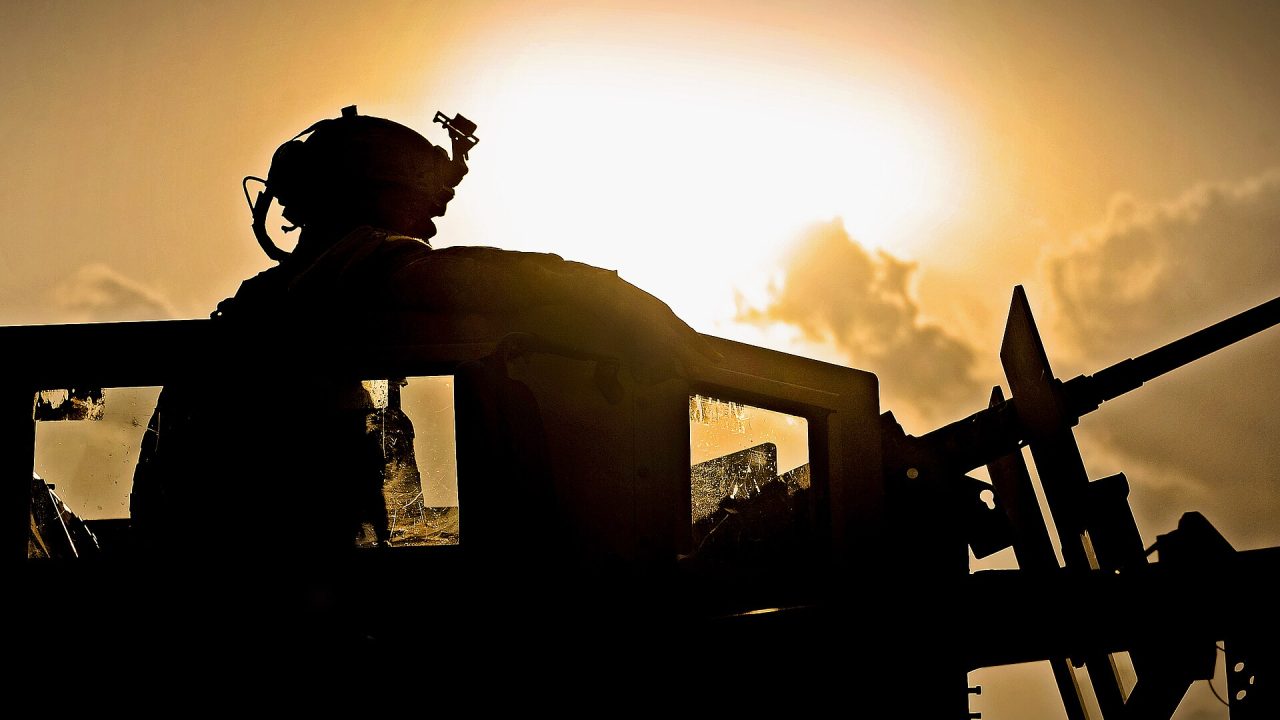
Once we cleared the site to the point that another unit could assume security, I instructed my driver to punch back toward Jalalabad Airfield. The sun was starting to dip, and we were driving straight into that orange Afghan haze. I remember looking at my gunner through the rearview mirror. He didn’t blink once the entire drive. He stayed in the turret like a statue of war, M240 pointed down MSR One, scanning left to right, over and over. Along the way, local traffic came to a standstill when they saw our convoy approaching because they knew something terrible had just happened. The entire drive felt quiet. It was as if the entire city was holding its breath.
At the Hospital
As we pulled through the gates of Jalalabad Airfield, word had already spread across the base that Ripcord One was down. The hospital staff had prepped for a mass casualty response, but nothing could have prepared them for the sight of our trucks rolling in covered in soot and blood. The moment we stopped, medics, nurses, and soldiers from nearby offices dropped everything they were doing and sprinted to the aid station. Over the loudspeaker, the word “Scalpel” was called three times, each one louder than the last. That was the signal for all available personnel to respond, and they came from every direction: MPs from the gate, supply soldiers working nearby, and aviation soldiers from the hangar.
They lifted our wounded out of the trucks, talking calmly, moving quickly, working in perfect rhythm. Within seconds, the entire facility was in motion: IVs were running, stretchers rolling, and trauma kits opening in unison. The chaos outside gave way to precision inside. As soon as our casualties were handed off, I gave the order to remount. We didn’t stay to rest or reflect. There was still work to be done. Once the last stretcher disappeared through the doors, my squad climbed back into our vehicles and rolled out the gate, heading straight back to the site of the explosion.
Battlefield Recovery
We didn’t stop working after the airfield. We pushed straight into recovery operations. Battlefield recovery is the part nobody ever writes down in the history books. Medics, surgeons, and mortuary affairs teams worked in tandem like a machine. I remember helping with the inventory of gear. We folded the uniforms carefully, removed patches, and logged every item with a pen that felt like it weighed twenty pounds. Battlefield recovery is where you see firsthand the true cost of war.
Every weapon, radio, piece of gear, and even personal effects had to be identified and documented. The disabled vehicle was towed back to base, its armor twisted and blackened, a grim reminder of the violence of that explosion. We accounted for the equipment of the injured and the fallen, collecting dog tags, watches, notebooks, and weapons with the same discipline we used on patrol. After that came the paperwork: sworn statements, witness reports, and battle tracking logs. Each of us had to put into words what happened that day, describing every second of what our eyes could barely comprehend.
Sleep didn’t come that night or the next few nights. Even after the site was cleared, the vehicles parked, and the reports filed, none of us could shut our minds off. Every time we closed our eyes, we saw the fire, the smoke, and the faces of men we couldn’t save. The smell of burning fuel and metal lingered on our uniforms long after it had dissipated from the air. That’s the part of war that lingers forever, not the missions themselves but the memories they leave behind.
Memorial and Veterans Day
In the days that followed, we held a memorial in Jalalabad. We lined up tight, rifles locked, with the Company, Battalion, and Brigade Command Teams on hand and the chaplain’s voice echoing against the T-walls. The men we lost that day were carved into the DNA of our brigade forever. Two killed and two wounded in action, all from the same squad of the MP platoon.
Memorial Day and Veterans Day have held a different meaning for me ever since that day. Memorial Day is for those who gave everything, for the ones who never came home, for the names etched into marble, and for the empty bunks left behind. It’s a day of remembrance, not celebration, a day when the sound of taps feels heavier, when silence says more than words ever could. Veterans Day, on the other hand, honors all who have served, past and present, the ones who stood watch in peace and fought in war, those who carried the weight of the uniform and lived to take it off. It’s a day of gratitude and recognition, but for many of us who’ve seen loss up close, that gratitude is mixed with the quiet ache of memory.
Every time these holidays pass, I don’t think about parades, free meals, or the flags lining Main Street. I think of MSR One. I think of the smoke rising over Jalalabad, the sound of “Scalpel” echoing over the airfield, and the faces of SGT Thornhill, SPC Finley, and PVTs Shields and Kammerdiner. For me, Memorial Day is a whisper for the fallen, and Veterans Day is a reminder of the brothers who lived on, carrying the stories of those who didn’t. Both days blend together now. They remind me of sacrifice, service, and how none of us ever really come home the same.
_____________________________
Sergeant Major (Retired) Daniel L. Dodds is a Military Police Senior Noncommissioned Officer. He has served in every leadership position from Patrolman to Battalion Command Sergeant Major. He is currently assigned as the Director of Operations Sergeant Major for the United States Disciplinary Barracks, the only Level III maximum-security prison in the Department of Defense. His civilian education includes an associate’s degree from Excelsior University and a Bachelor of Arts in Leadership and Workforce Development from the Army Command and General Staff College (CGSC). He is pursuing a Master of Public Administration from Excelsior University.
As the Voice of the Veteran Community, The Havok Journal seeks to publish a variety of perspectives on a number of sensitive subjects. Unless specifically noted otherwise, nothing we publish is an official point of view of The Havok Journal or any part of the U.S. government.
Buy Me A Coffee
The Havok Journal seeks to serve as a voice of the Veteran and First Responder communities through a focus on current affairs and articles of interest to the public in general, and the veteran community in particular. We strive to offer timely, current, and informative content, with the occasional piece focused on entertainment. We are continually expanding and striving to improve the readers’ experience.
© 2026 The Havok Journal
The Havok Journal welcomes re-posting of our original content as long as it is done in compliance with our Terms of Use.


