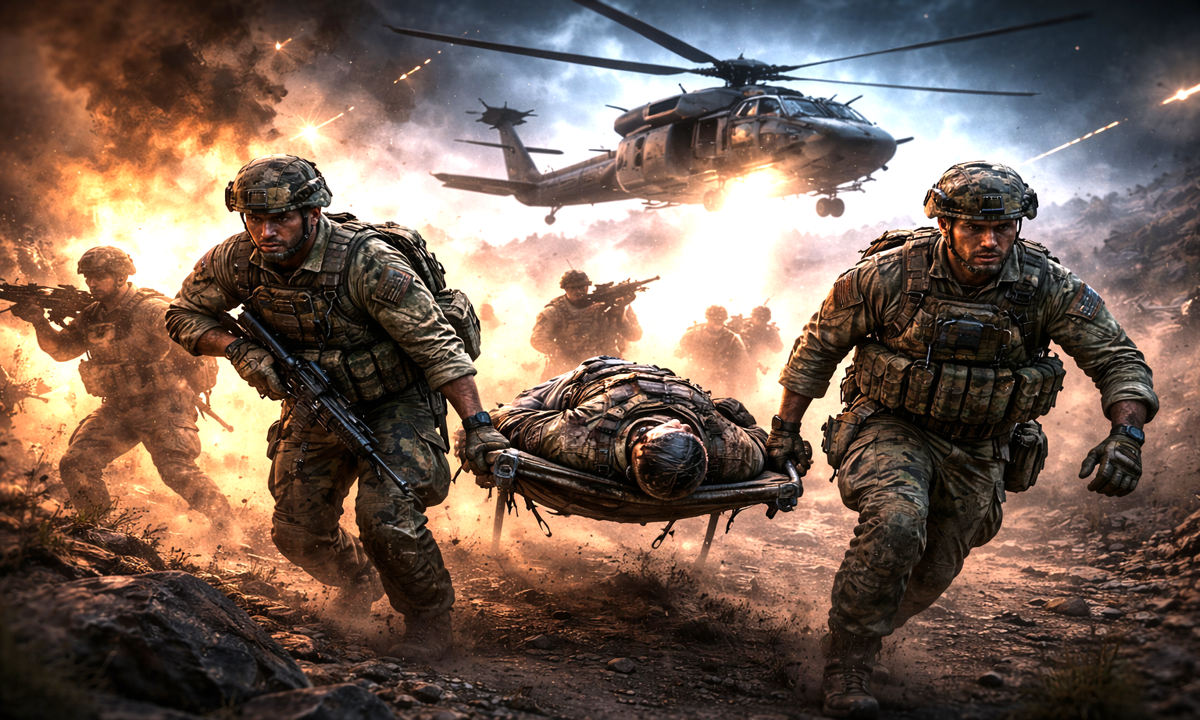
There are a lot of things about the US military that don’t make sense from the outside looking in.
Why we train the way we do.
Why we push people to the edge.
Why we demand standards that seem excessive.
And then there’s this one—the one that confuses people the most:
Why we’re willing to risk so much… for just one person.
To civilians, to analysts, to corporate-minded thinkers, it can look irrational. Cost-inefficient. Even reckless.
Risking aircraft, personnel, and mission objectives to recover a single service member—dead or alive—doesn’t fit neatly into a spreadsheet.
But that’s because it was never meant to.
It’s built into who we are.
Not Just a Motto
“I will never leave a fallen comrade.”
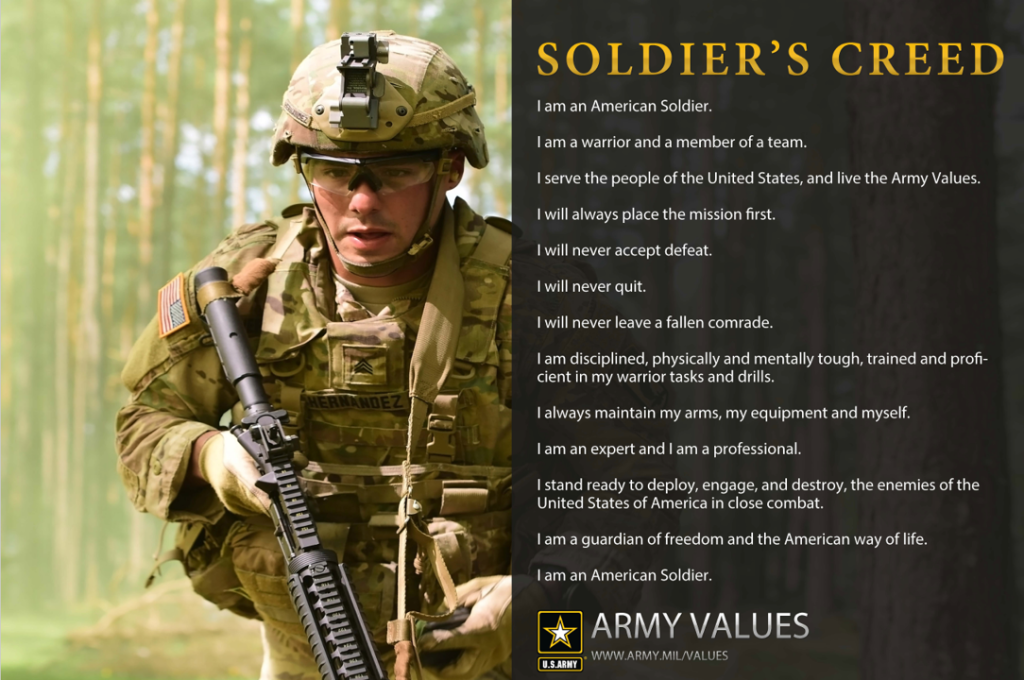
That line from the Soldier’s Creed isn’t a suggestion. It’s not aspirational language for recruiting posters.
It’s a promise.
And like all promises that matter, it’s expensive.
The recent rescue of a US Air Force officer shot down over Iran is a case study in that promise in action. A fighter jet goes down in hostile territory. One airman is recovered quickly. The other is injured, alone, and being actively hunted.
What follows isn’t hesitation, it’s escalation.
Hundreds of personnel. Multiple aircraft. Special operations forces. Intelligence assets. Deception campaigns. Firefights.
All to get one man back.
At one point, US forces even destroyed their own aircraft on the ground to prevent them from falling into enemy hands during the rescue. That’s not the first time we’ve done that. Hell, it’s not even the first time we did that in Iran.
From the outside, that looks extreme.
From the inside, it looks like Tuesday.
The Math Doesn’t Work—And That’s the Point
In the corporate world, everything is a calculation.
Inputs. Outputs. Risk vs. reward.
What’s the ROI on a rescue mission?
How many assets are you risking?
What’s the strategic value of one individual?
That mindset works in business.
It fails in war.
Because the military isn’t just managing resources—it’s managing trust.
That type of trust is hard to earn, and it’s even harder for people outside the profession to understand. Because they never earned, or felt, that sense of trust, they will never be able to comprehend why the US military, from the top down, will be willing to put so much on the line to get one person back.
And that’s OK.
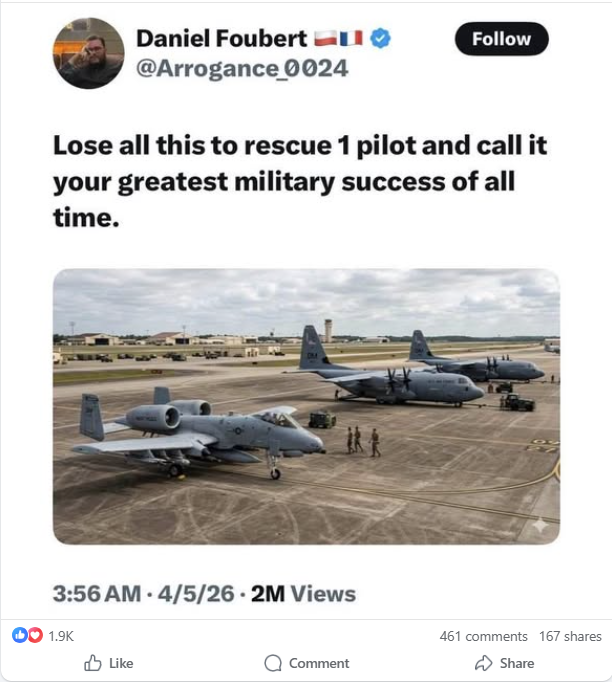
It’s OK, because they’re not like us. It’s OK because it’s our ethos, not theirs. It’s OK becasue every service member stepping onto a helicopter, into a convoy, or into a firefight carries an unspoken understanding:
If things go bad… they will come for me.
Not maybe. Not if it’s convenient.
They will come.
That belief isn’t soft. It’s not sentimental.
It’s combat power.
Because people fight differently when they know they’re not expendable.
What the Rest of the World Gets Wrong
Critics will say it’s emotional. That it clouds judgment. That it leads to unnecessary risk.
They’re not entirely wrong about the risk.
Combat search and rescue operations are some of the most dangerous missions the military conducts—complex, exposed, and often executed deep in enemy territory.
Aircraft get hit. Personnel get wounded. Missions go sideways.
In the Iran rescue, helicopters took fire. Additional aircraft were damaged or lost. And still—the mission continued.
Because the calculus isn’t just about the person on the ground.
It’s about every person watching.
Every pilot who straps into a jet tomorrow.
Every infantryman who steps off the ramp.
Every operator moving into denied territory.
They’re all paying attention.
And they’re all asking the same question:
Will they come for me?
Brotherhood Isn’t a Metaphor
“Leave no one behind” isn’t about optics. It’s not about headlines or political messaging.
It’s about brotherhood.
Not the watered-down version people throw around casually—but the real thing. The kind forged under pressure, where your life depends on the person next to you.
In that environment, abandoning someone isn’t just a failure.
It’s a fracture.
Once that trust breaks, everything else follows—discipline, cohesion, willingness to take risks.
You can’t order people to trust each other.
You earn it.
And one of the ways you earn it is by proving—over and over again—that no one is disposable.
Dead or Alive
Here’s the part that’s hardest for outsiders to grasp:
It’s not just about bringing people home alive.
It’s about bringing them home. Period.
Alive if possible.
Fallen if necessary.
Because closure matters. Because dignity matters. Because leaving someone behind—physically or symbolically—cuts deeper than most people realize.
There are missions that have been launched for remains decades after the conflict ended.
Not because it changes the outcome of the war.
But because it honors the promise.
Why It Still Matters
In an era of drones, cyber warfare, and long-range precision strikes, it’s easy to think war has become more distant. More clinical.
It hasn’t.
At its core, it’s still human.
Still built on trust. Still dependent on the willingness of individuals to step into danger on behalf of something bigger than themselves.
That willingness doesn’t come from policy.
It comes from belief.
And belief is reinforced by action.
Like sending in helicopters under fire.
Like launching a multi-domain rescue deep in hostile territory.
Like risking millions in equipment and the lives of others… for one.
It’s OK That They Don’t Understand, Because We Do
The rest of the world doesn’t have to understand it.
They don’t have to agree with it.
Because it wasn’t built for them.
It was built for the man on the ground, alone, evading, injured, listening for the sound of rotors in the distance.
It was built so that in his worst moment, he knows something with absolute certainty:
They’re coming.
No matter what.
I will never leave a fallen comrade.
_____________________________
Charles is the owner of The Havok Journal. He served more than 27 years in the U.S. Army, including seven combat tours in Iraq and Afghanistan with various Special Operations Forces units, two assignments as an instructor at the United States Military Academy at West Point, and operational tours in Egypt, the Philippines, and the Republic of Korea. He holds a doctorate in business administration from Temple University and a master’s degree in international relations from Yale University. For The Havok Journal, he writes largely on leadership, military and veteran issues, and current affairs.
As the Voice of the Veteran Community, The Havok Journal seeks to publish a variety of perspectives on a number of sensitive subjects. Unless specifically noted otherwise, nothing we publish is an official point of view of The Havok Journal or any part of the U.S. government.
Buy Me A Coffee
The Havok Journal seeks to serve as a voice of the Veteran and First Responder communities through a focus on current affairs and articles of interest to the public in general, and the veteran community in particular. We strive to offer timely, current, and informative content, with the occasional piece focused on entertainment. We are continually expanding and striving to improve the readers’ experience.
© 2026 The Havok Journal
The Havok Journal welcomes re-posting of our original content as long as it is done in compliance with our Terms of Use.


