Every homeowner loves spending a sunny afternoon on a beautiful deck. It is the perfect spot for weekend barbecues or a quiet morning coffee. Keeping that space safe and sturdy requires a bit of regular attention and care.
Small issues can grow into big problems if left alone for too long. A proactive approach saves money and keeps the structure looking great. This guide helps you navigate the common repairs needed to maintain your outdoor living area.
Checking For Structural Integrity
Safety starts with a close look at the base of the platform. One local maintenance guide suggests using a simple screwdriver to test the timber for soft spots.
If the tool sinks into the wood or the material feels spongy, that section likely has rot. Check the beams and joists beneath the surface to see if they look solid.
Looking for signs of decay early prevents the need for a full replacement. Water often pools in corners or where the deck meets the house.
Pay attention to these damp zones during your inspection. Soft timber cannot hold weight safely and must be replaced immediately. Keeping the frame in top shape is the most important part of the job.
Gather Up Materials
Success with any DIY project starts with having everything on hand. When you are finding a blind rivet supplier, one for nails and screws, and other hardware items, look for quality over price. Having a full kit prevents constant trips to the shop.
Organize your tools on a tarp so nothing gets lost in the grass. A standard repair kit often includes a hammer, a drill, and a circular saw.
You might need a pry bar to lift old boards without damaging the frame. Safety gear like gloves and eye protection, is necessary for every step. Having these items ready allows you to focus on the work itself. Preparation makes the entire process go much faster.
Choosing The Right Fasteners
The hardware you choose determines how long the repair lasts in the rain. One municipal resource recommends using stainless steel connectors and screws to fight off rust.
These parts handle the weather better than standard metal options found in bulk bins. Using the right metal prevents the wood from getting dark stains over time. High-quality fasteners stay tight even when the timber expands and contracts.
Avoid mixing different types of metals in the same area. Some metals react poorly with the chemicals found in treated timber. Using coated screws designed for outdoor use is a smart move for any builder.
Removing Damaged Sections
Taking out the old boards requires a steady hand and a bit of muscle. Cut the damaged pieces back to the center of the nearest joist for a clean fit. This provides a solid surface for the new timber to rest upon. Use a pry bar carefully to avoid cracking the surrounding healthy boards.
Keep the area clear of debris as you work through the project. Old wood and rusty nails can be a tripping hazard for anyone nearby.
Sweeping the frame helps you see the condition of the joists clearly. If you find more rot under the surface, address it now. A clean workspace makes the new installation much smoother.
Applying The Right Fix
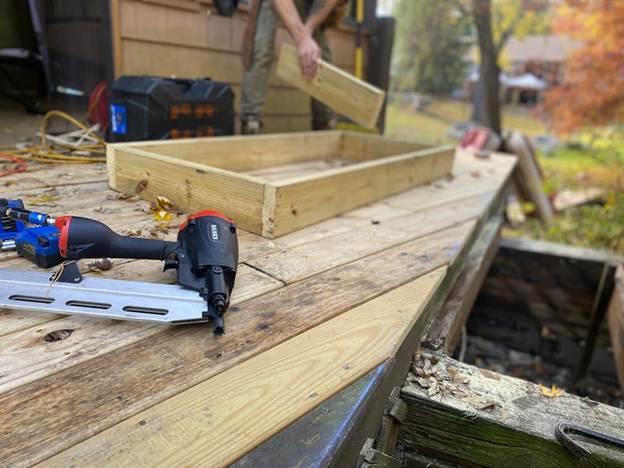
Installing the new boards is the most satisfying part of the repair process. Research on deck structures shows that using fast-setting repair materials often leads to more work later.
These quick-fix products might not last as long as traditional methods and steady construction. Taking your time with the repair helps the deck stay strong for many years. Follow these steps for a professional finish:
- Measure each gap twice before cutting the replacement boards.
- Leave a small space between planks for water drainage.
- Pre-drill holes to prevent the timber from splitting.
- Drive screws just below the surface of the wood.
Matching the new wood to the old grain takes a bit of effort. If the deck is older, the new timber will look brighter at first. Aligning the boards correctly prevents tripping hazards and creates a level surface. A well-installed board should feel completely firm under your feet.
Sanding And Finishing Touches
Rough edges can cause splinters and make the deck look unfinished. Use a power sander to smooth out the new sections and the areas around them.
Sanding removes any graying or sun damage from the older planks nearby. Wipe away the dust with a damp cloth before you start staining.
A fresh coat of sealer protects your hard work from the sun and rain. Choose a product that offers UV protection to keep the color from fading too quickly.
Applying the finish on a dry day ensures it soaks into the wood properly. Two thin coats usually work better than one thick layer of liquid.
Maintaining an outdoor space is a rewarding part of owning a home. Regular checks and small repairs keep the area safe for family and friends. Taking care of the structure today prevents expensive projects in the future.
Buy Me A Coffee
The Havok Journal seeks to serve as a voice of the Veteran and First Responder communities through a focus on current affairs and articles of interest to the public in general, and the veteran community in particular. We strive to offer timely, current, and informative content, with the occasional piece focused on entertainment. We are continually expanding and striving to improve the readers’ experience.
© 2026 The Havok Journal
The Havok Journal welcomes re-posting of our original content as long as it is done in compliance with our Terms of Use.