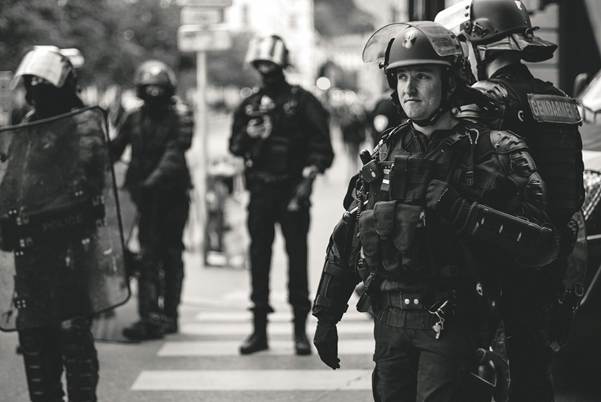
Modern society often evaluates decisions in hindsight. A situation unfolds in seconds, emotions rise, perceptions narrow, and reactions happen almost instinctively. Hours later, those same moments are replayed slowly in courtrooms, media coverage, workplace investigations, and public discussions where every movement appears calculated and deliberate.
The gap between real-time human reaction and retrospective judgment has become increasingly important in conversations surrounding law enforcement, military experience, civilian conflict, and legal accountability. High-stress environments fundamentally change how people process information, interpret threats, and respond to uncertainty. Yet many civilian systems still evaluate behavior through the lens of calm, controlled reasoning rather than physiological reality.
For veterans, first responders, security professionals, and individuals accustomed to operating in pressure-heavy situations, this disconnect can create serious consequences. Actions taken during moments of confusion, fear, or perceived danger are often interpreted differently once examined outside the intensity of the original environment. Understanding that distinction has become increasingly important not only in public discourse but also in legal defense strategy itself.
Why Stress Alters Human Decision-Making
Human performance changes dramatically under pressure. Elevated adrenaline levels narrow attention, increase reaction speed, and reduce the amount of information the brain can process simultaneously. In dangerous or emotionally charged situations, people frequently rely on instinctive responses shaped by training, experience, and survival mechanisms rather than deliberate reflection.
Military personnel and first responders are particularly familiar with this reality. Training environments are designed to condition rapid reactions because hesitation in high-risk scenarios can have catastrophic consequences. The body learns to prioritize immediate action over extended analysis.
However, civilian life operates differently. Situations that feel threatening or chaotic may still be judged according to standards that assume rational, measured behavior under ideal circumstances. This creates tension between how humans actually react under stress and how those reactions are later interpreted.
In many legal cases, the surrounding context matters just as much as the event itself. Moments involving fear, confusion, conflicting accounts, or rapidly changing circumstances are rarely as clear-cut as they later appear in reports or courtroom discussions. Reconstructing exactly what someone saw, understood, or believed in the heat of the moment can be incredibly difficult afterward. That is why people facing serious allegations often look for experienced legal support that can examine not only the facts on paper, but also the pressure, uncertainty, and human factors behind the situation, particularly in cases involving criminal defense in Alexandria, VA.
The legal process is rarely just about what happened. It is also about why events unfolded the way they did and whether surrounding circumstances influenced perception, intent, and judgment.
What Research Says About Stress, Judgment, and Escalation
Research into stress and cognitive performance continues to reinforce how dramatically human behavior changes under pressure. According to the National Center for PTSD, high-stress environments can significantly affect memory formation, threat perception, emotional regulation, and decision-making speed. These effects are especially pronounced in situations involving fear, confrontation, or uncertainty.
The relationship between stress and judgment is not limited to combat environments. Workplace conflicts, public altercations, domestic disputes, traffic incidents, and emotionally charged encounters can all trigger physiological responses that impair rational processing. Individuals may misinterpret body language, overestimate danger, or react defensively in ways they would not under calmer conditions. Importantly, these reactions do not necessarily indicate malicious intent. In many cases, they reflect how the human nervous system responds when it perceives risk.
This growing body of research has influenced conversations surrounding policing, military reintegration, trauma awareness, and criminal justice reform. Courts, attorneys, and investigators increasingly recognize that understanding human behavior requires more than reviewing isolated facts detached from environmental context.
The National Center for PTSD provides extensive research regarding stress exposure, trauma response, and behavioral effects in high-pressure situations through the U.S. Department of Veterans Affairs.
The Challenge of Translating High-Pressure Experiences Into Civilian Systems
One of the most difficult aspects of legal proceedings involving stressful incidents is the translation itself. A chaotic event experienced in real time rarely resembles the simplified narrative that later emerges through reports, statements, or public commentary.
Witnesses remember different details. Perceptions vary. Emotions influence interpretation. Video footage captures only limited angles. Even memory itself can become unreliable after intense stress exposure.
For veterans transitioning into civilian environments, these challenges can feel especially frustrating. Behaviors shaped by years of structured training and rapid-response conditioning may not always align comfortably with civilian expectations surrounding confrontation, communication, or conflict management.
This does not excuse unlawful behavior. Accountability remains essential in any functioning legal system. But fairness also requires recognition that human actions are influenced by circumstances, physiological responses, prior experiences, and environmental pressures. The strongest legal strategies often involve presenting a complete picture rather than reducing individuals to isolated moments detached from context.
Public Perception Often Forms Before Facts Fully Emerge
Another modern complication is the speed of public judgment. Social media, online commentary, and instant news cycles frequently shape narratives long before investigations conclude. A short video clip or partial account can rapidly influence reputations, careers, relationships, and future opportunities.
For individuals with military backgrounds, professional licenses, security clearances, or public-facing careers, allegations alone may carry long-term consequences even before legal outcomes are determined.
This environment places even greater importance on experienced legal representation and careful case management. Reputation protection, procedural accuracy, and strategic communication can become just as important as courtroom arguments themselves. The legal system may ultimately decide guilt or innocence, but public perception often develops much earlier and with far less nuance.
The Importance of Context in Legal Defense

Strong legal defense is not simply about disputing allegations. It often involves establishing context, identifying inconsistencies, examining procedural issues, and presenting the broader circumstances surrounding an incident.
That process becomes especially important in cases involving heightened emotions, perceived threats, or rapidly evolving confrontations. Understanding behavioral psychology, environmental stressors, and situational dynamics may significantly affect how events are interpreted.
Experienced attorneys frequently work with investigators, expert witnesses, and behavioral specialists to reconstruct timelines and evaluate whether stress, confusion, fear, or escalation influenced decisions made in the moment. In many cases, the central issue is not whether something happened, but whether the interpretation of intent accurately reflects the realities of the situation.
Rebuilding Stability After Legal Challenges
Legal difficulties rarely affect only court proceedings. They often disrupt employment, finances, relationships, mental health, and long-term personal stability. Individuals facing criminal allegations frequently experience isolation, anxiety, reputational damage, and uncertainty about the future.
For veterans and former service members, these pressures may compound existing transition challenges tied to identity, structure, or reintegration into civilian life. Recovery therefore involves more than legal resolution alone. Rebuilding stability may require professional support networks, mental health resources, family support, and opportunities to regain personal direction after prolonged uncertainty.
The broader conversation surrounding high-stress behavior and legal accountability continues to evolve. As research deepens public understanding of trauma, stress response, and human performance under pressure, legal systems are gradually becoming more aware of the importance of context alongside accountability. That balance matters. Fair legal outcomes depend not only on examining actions themselves, but also on understanding the conditions under which those actions occurred.
Buy Me A Coffee
The Havok Journal seeks to serve as a voice of the Veteran and First Responder communities through a focus on current affairs and articles of interest to the public in general, and the veteran community in particular. We strive to offer timely, current, and informative content, with the occasional piece focused on entertainment. We are continually expanding and striving to improve the readers’ experience.
© 2026 The Havok Journal
The Havok Journal welcomes re-posting of our original content as long as it is done in compliance with our Terms of Use.