
Photo by Hannah Olinger on Unsplash
Words are legal bricks for young minds. When kids look at a poem, they see an intimidating wall of text instead of an open construction site. Teaching the structural side of verse helps them see the structure behind the magic. When you turn structural concepts into hands-on projects, you change how kids view the written word.
Build Stanza Towers With Cardboard Blocks
Children love to stack things high and watch them tumble. Resources like Poetry Explained help instructors demonstrate how stanzas are created and make verses easier to digest. Stanzas are physical stacks that make structural boundaries visible. Every new block represents a fresh unit of thought.
Blue blocks can represent introductory thoughts, and yellow ones hold sensory details. Kids quickly learn that a poem needs a solid base to keep from collapsing. When they rearrange the blocks, they see how the narrative flow changes. Structural play turns an abstract language arts concept into a concrete building game.
Map Rhyme Schemes Using Colored LEGO Bricks
Rhyme patterns can feel abstract when they are just letters on a worksheet. Replacing those letters with interlocking plastic bricks gives students a tangible way to track matching sounds. Using visual building blocks helps 78% of young learners grasp stanza architecture faster. You assign a red brick to the “A” rhyme and a blue brick to the “B” rhyme.
As children assemble their color-coded towers, they physically construct the sonic pattern of the verse. They learn that structural balance relies on predictable rhythm and layout. Missing or wrong-colored bricks make towers look uneven.
Using plastic bricks teaches kids that structural choices are deliberate. Every piece has a designated slot that holds the entire form together. Children gain a deeper appreciation for the geometric beauty hidden inside written lines.
Sculpt Line Breaks With Colorful Wax Sticks
Deciding where a line ends is a major design choice in verse creation. Wax yarn sticks allow kids to bend, shift, and reshape the text right on their desks. Print out a prose paragraph and ask students to press the sticks down where they want the pauses to happen.
Hands-on tinkering reveals how line length changes the reading speed. Short lines create urgency like rapid footsteps. Moving the sticks around shows that text layouts are flexible and can be redesigned.
Kids enjoy peeling the wax sticks and trying different combinations. A single pause changes the emotional impact of a sentence. Physical manipulation removes the fear of making mistakes. If a break fails, students simply move the wax stick elsewhere.
Use Physical Objects For Metaphor Scaffolding
Spatial awareness helps kids understand how words occupy a page. Bringing tangible items into the classroom turns abstract comparisons into concrete structures. Over 65% of educators agree that physical manipulatives improve poetry retention.
You can hand a child an old key and ask them to build a stanza around what it opens. Here are a few ways to organize this tactile lesson:
- Gather a box of everyday items like keys, old clocks, and small pocket mirrors
- Have students select one item to serve as the structural anchor of their poem
- Ask them to stack lines around the object to create a physical protective shell of text
Every object supports the surrounding descriptions. Students learn to anchor their thoughts around a central focal point. The physical presence of the object keeps their writing focused and prevents drifting.
Design Graphic Poem Maps On Grid Paper
Grid paper turns writing into an architectural blueprint project. Children can plot their syllables as squares, mapping the footprint of their words. Tactile poetry design increases student engagement by nearly 40%.
Students shade in squares to represent stressed and unstressed beats before writing a single word. Blueprint methods treat the meter like a puzzle with fixed dimensions. Kids fill in the blanks once the structural boundaries are drawn. Predefined shapes remove the pressure of the blank page.
Cut And Rearrange Mentor Texts With Scissors
Deconstruction is a fantastic way to understand how a master craftsman works. Take a famous poem, print it in a large font, and let the kids cut it apart by line or stanza. Shuffling the pieces permits them to experiment with alternative structural designs.
They can paste the fragments onto poster boards in entirely new configurations. Watch the meaning change as the layout changes. They discover that the arrangement of lines dictates the entire emotional journey of the reader. Writers are editors who constantly rearrange their materials.
Moving sentences around shows kids that text is never permanent. They become active participants in the construction of meaning. Physical editing exercises build a strong sense of creative ownership and critical thinking.
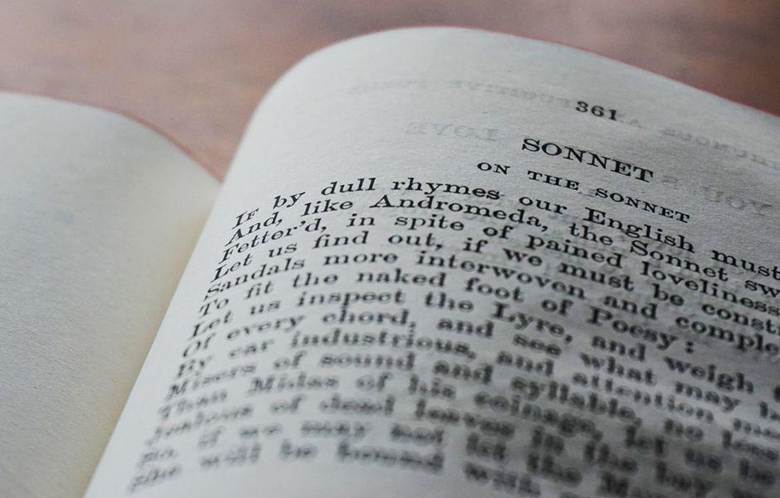
Image source: https://www.pexels.com/photo/sonnet-in-a-book-4079268/
Poetry transforms from a mysterious art form into an engineering challenge. When students realize they can shape text just like clay or wooden blocks, their confidence grows. They begin to experiment with form, rhythm, and spatial design in their own work. Interactive strategies give young writers the tools to design beautiful literary spaces.
Buy Me A Coffee
The Havok Journal seeks to serve as a voice of the Veteran and First Responder communities through a focus on current affairs and articles of interest to the public in general, and the veteran community in particular. We strive to offer timely, current, and informative content, with the occasional piece focused on entertainment. We are continually expanding and striving to improve the readers’ experience.
© 2026 The Havok Journal
The Havok Journal welcomes re-posting of our original content as long as it is done in compliance with our Terms of Use.


