
“He’s grown so much.”
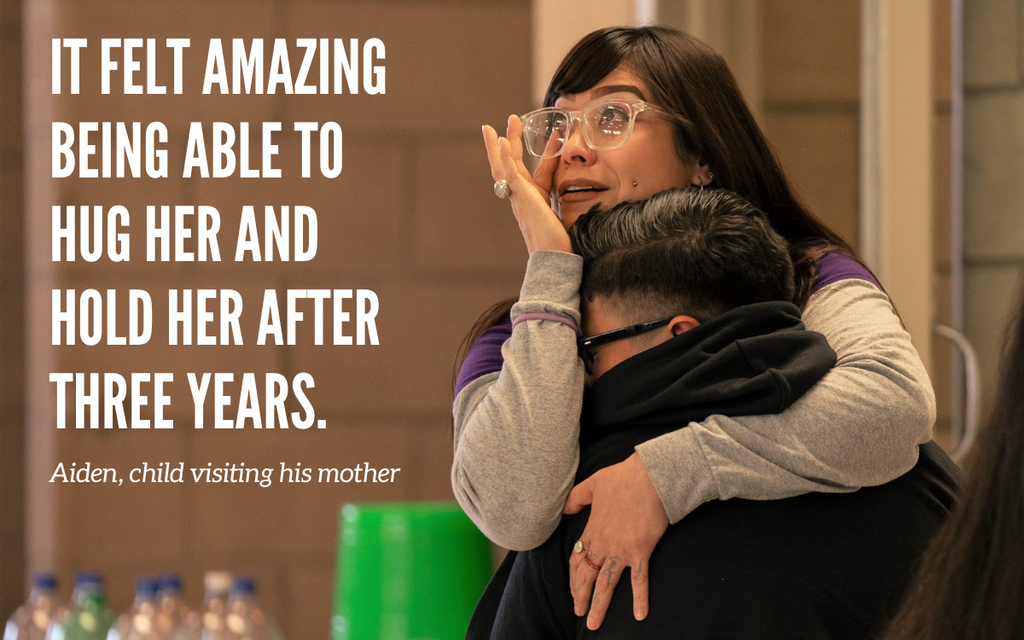
The young woman made that comment after she looked at her little boy. Her five-year-old son smiled back at her. It was his second visit to see his mom at the prison. The prior visit to the prison was over three weeks ago. The visit to see her in jail before that was four months ago. The young woman calls her son every day, but she seldom gets to physically interact with him. She is incarcerated at a facility that is a 90-minute drive from our home. That drive is not something we can do every day, or even every week.
The young woman may get transferred to a minimum-security prison soon. There is a facility like that much closer to our home. She might end up there. That would make visits easier. Even so, she still won’t have daily contact with her boy. That just isn’t possible. She won’t get to eat dinner with him. She won’t get to take him to school. She won’t get to tuck him into bed. She won’t get to do the innumerable little things that mothers do with their children every single day. She is going to miss so much of his childhood.
A caregiver who is with a child day in and day out doesn’t often notice the subtle changes in the boy or girl. The child develops almost imperceptibly. Suddenly, one day the caregiver looks closely at the child and realizes that they are staring at a stranger, somebody new. They are surprised by how the kid has grown. This older version of the child snuck up on them.
A person like the young woman notices the changes immediately because for her they are stark, because she has not been there for all of the little things. There are huge gaps in her experience with her son. Every visit is jarring in a way because she hasn’t been able to witness his entire growth process.
The real punishment involved with doing time is not what a person endures inside prison. The punishment is what that person misses on the outside.
_____________________________
Frank Pauc is a former Army aviator, a longtime trucking-company supervisor, and a contributor to The Havok Journal. A West Point graduate from the Class of 1980, he completed the Military Intelligence Basic Course and flight school, served with the 3rd Armored Division in West Germany and the 7th Infantry Division at Fort Ord, and left the Army in 1986. He later taught citizenship classes through Voces de la Frontera in Milwaukee, took part in peace and protest work, and writes largely about veterans, family, grief, and the long aftermath of military service.
As the Voice of the Veteran Community, The Havok Journal seeks to publish a variety of perspectives on a number of sensitive subjects. Unless specifically noted otherwise, nothing we publish is an official point of view of The Havok Journal or any part of the U.S. government.
Buy Me A Coffee
The Havok Journal seeks to serve as a voice of the Veteran and First Responder communities through a focus on current affairs and articles of interest to the public in general, and the veteran community in particular. We strive to offer timely, current, and informative content, with the occasional piece focused on entertainment. We are continually expanding and striving to improve the readers’ experience.
© 2026 The Havok Journal
The Havok Journal welcomes re-posting of our original content as long as it is done in compliance with our Terms of Use.


