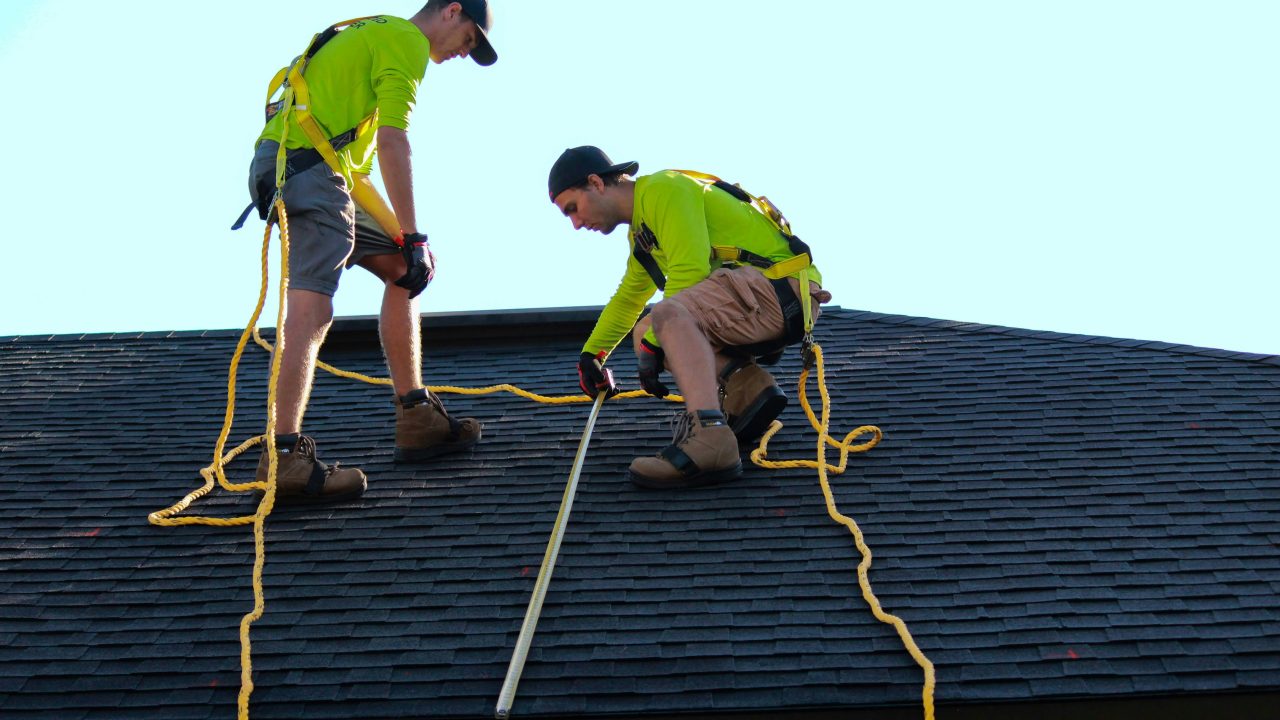
Photo by Raze Solar on Unsplash
A roof replacement or major repair is one of the more significant investments a homeowner makes, and it’s also one where the quality of the work is difficult to fully assess just by looking at the finished product. Asking the right questions before signing a contract helps ensure the work holds up for years rather than needing to be revisited sooner than expected.
Questions about licensing and insurance
- Are you licensed to perform roofing work in Washington State?
- What liability insurance do you carry, and can you provide proof?
- Do you carry workers’ compensation coverage for your crew?
- Will you obtain any necessary permits for this project?
Questions about experience and materials
- How many years have you worked specifically in this region?
- What roofing materials do you recommend for this specific home, and why?
- How do you account for moss and moisture in your installation approach?
- Can you provide references from recent projects of similar scope?
Questions about the estimate and timeline
- What exactly is included in this written estimate?
- How do you handle unexpected issues discovered once the old roof is removed?
- What’s the expected timeline for this project, and how does weather factor into scheduling?
- Will there be a single point of contact throughout the project?
Questions about warranties
- What warranty do you offer on labor, separate from the manufacturer’s material warranty?
- How long is that labor warranty, and what specifically does it cover?
- What’s the process if an issue comes up after the project is completed?
Among the most established seattle roofing companies, the willingness to answer these questions clearly and without hesitation is itself a useful signal. A contractor confident in their work, their pricing, and their process typically welcomes detailed questions, while vague or evasive answers, particularly around licensing, insurance, or warranty terms, are worth taking seriously as a red flag.
It’s also worth asking how a company handles unexpected issues discovered mid-project, such as rotted decking found once old shingles are removed. A reputable contractor should have a clear process for communicating these discoveries, including cost implications, before proceeding rather than simply presenting a surprise bill at the end of the project.
Finally, getting more than one estimate is generally worthwhile, not just for comparing price but for comparing how thoroughly each company explains their recommended approach. A significant difference in price between estimates often reflects a real difference in materials, scope, or quality of work, and understanding that difference before choosing helps avoid comparing estimates on price alone without understanding what’s actually included in each one.
Written estimates should be detailed enough to compare apples to apples across companies, specifying exact materials, underlayment type, and scope of work rather than a single lump-sum figure. If one estimate is vague where another is specific, it’s worth asking the vaguer company to clarify exactly what’s included before making a final decision based on price alone.
It’s also reasonable to ask about crew size and whether subcontractors will be used for any part of the project. Some companies rely entirely on in-house crews while others subcontract portions of larger jobs, and understanding this upfront helps set clear expectations about who’s actually accountable for the quality of the finished work.
Finally, ask how the company handles cleanup once the project is complete, including removal of old roofing material and a check for stray nails or debris around the property. A thorough cleanup process, clearly outlined before the project begins, reflects the same level of care that typically shows up in the quality of the roofing work itself.
A magnetic nail sweep of the yard and driveway after the old roof is torn off is a small but telling detail. Companies that build this step into their process as a matter of course tend to be more careful about the finer points of the job overall.
Buy Me A Coffee
The Havok Journal seeks to serve as a voice of the Veteran and First Responder communities through a focus on current affairs and articles of interest to the public in general, and the veteran community in particular. We strive to offer timely, current, and informative content, with the occasional piece focused on entertainment. We are continually expanding and striving to improve the readers’ experience.
© 2026 The Havok Journal
The Havok Journal welcomes re-posting of our original content as long as it is done in compliance with our Terms of Use.


