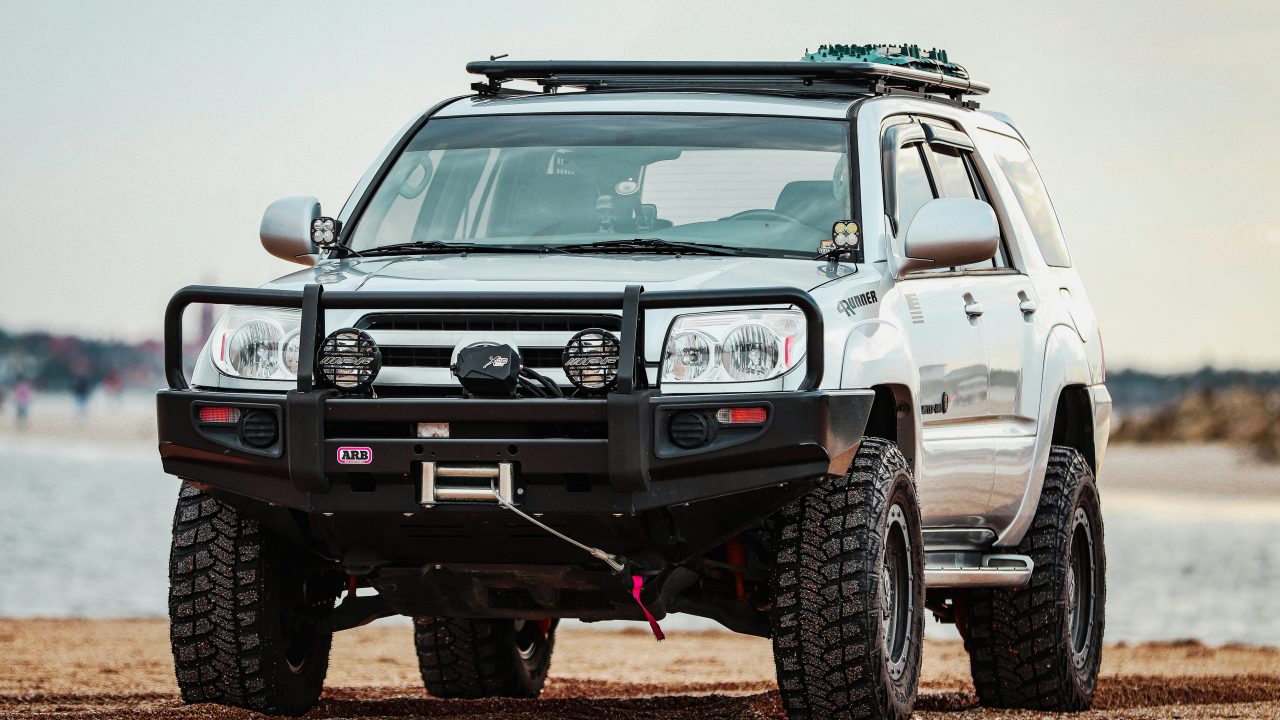
Photo by Lance Asper on Unsplash
A bull bar is not just a rugged addition to your 4×4, but it also affects its protection and safety, on-road capability, and off-road performance. Before rushing to the purchase, you should slow down and pay attention to several important aspects to ensure you get the setup that fits the way you really drive. This buying guide explains the considerations you should make.
Vehicle Compatibility and Fit
You should not presume that a single bull bar can be used for any 4×4 model. Make sure that the manufacturer has designed this unit to work specifically with the make, model, and year of your vehicle.
You run the risk of compromising the safety system and experiencing difficulties when mounting the bull bar if you do not take this precaution at all. Through the use of industry jargon, the term “a proper fit” refers to the capacity of the mounting points to align in the appropriate manner.
Material and Build Quality
Steel is an excellent material for providing maximum strength and stability for heavy-duty driving. Using bull bars made of aluminium not only ensures a reasonable level of strength but also helps save weight. Your driving habits should be the determining factor in selecting the best material.
Additionally, the quality of the material used plays a significant role. Particularly for a car operating in harsh conditions, the quality of the coating, welds, and finish is crucial.
Weight and Vehicle Performance
Unless compensated for accordingly, the heavier bars can lead to compromised suspension and braking and harm fuel mileage. You should also weigh in on the suspension compatibility of the bull bar.
A high-quality model keeps the weight of the front end in check to prevent it from loading up too much. Such a construction allows you to keep the handling predictable and the ride inviting.
Budget Versus Long-Term Value
A cheap bull bar may be poor in quality, unsustainable, or fail to comply with necessary requirements for fit and use. Eventually, this may result in more costs, as you will have to repair or change it. Thus, many who buy 4×4 bull bars consider the price, quality, and sustainability, and they prefer to pay extra for safety and peace of mind.
Airbag and ADR Compliance
Your safety is not worth taking a risk. A top-notch bull bar must be airbag approved and satisfy the Australian Design Rules. Non-compliant items might prevent airbags from deploying and lead to life-threatening outcomes in case of a crash. That is why you need to see the compliance information when buying the item.
Accessory Compatibility
Remember that a proper fit is essential for any driver. Besides, many drivers want to add lights, antennas, or a winch to their bull bar, so make sure that you know what the best mounting option is. Some designs place limitations on the add-ons you can install. Because of this, it’s best to choose a new bull bar with possible upgrades in the back of your mind.
Driving Environment and Use Case
Touring, off-road tracks, and urban driving have different requirements for the bull bar. If you’re only driving in the city, the one for remote travel is too much. This way, the real-world use does not get you to pay for more than you really need, making your vehicle fit for purpose and adequately protected.
Making a Confident Purchase Decision
In conclusion, purchasing a bull bar is an investment in your vehicle’s performance, not just an aesthetic decision. Being aware of compatibility, safety, and manufacturing characteristics can prevent you from making common errors or settling for something that is not quite what you need.
Buy Me A Coffee
The Havok Journal seeks to serve as a voice of the Veteran and First Responder communities through a focus on current affairs and articles of interest to the public in general, and the veteran community in particular. We strive to offer timely, current, and informative content, with the occasional piece focused on entertainment. We are continually expanding and striving to improve the readers’ experience.
© 2026 The Havok Journal
The Havok Journal welcomes re-posting of our original content as long as it is done in compliance with our Terms of Use.


