
Images online spread faster than you can imagine. And honestly, in most cases, they don’t stay where they were originally created to appear.
You may find a photo in a blog, social post, or article and still have no clear way to judge where it came from or whether someone has used it elsewhere.
That gap creates real problems for creators, researchers, students, and everyday users who need reliable visual proof.
So, to effectively track where an image appears on the internet and from where it originated, the SmallSEOTools Reverse Image Search is exactly what you need.
Keep on reading to learn how the tool works and how it aids effective image search.
What Is SmallSEOTools Reverse Image Search
SmallSEOTools AI Reverse Image Search is a popular and indeed one of the most reliable image search tools you can find across the internet.
All you have to do is just upload the reference image of what you are searching for. The tool will instantly scan the visual and compare it with other sources online to find possible matches.
The results of the image search include details such as the origin of the image, websites where it appears online, and a list of other similar visuals.
This makes it useful for verifying originality, checking misuse, and finding the source of an image.
How Does SmallSEOTools Reverse Image Search Work?
Here is a quick, simple step-by-step guide to help you use the image search tool effectively for image detection.
- Access the SmallSEOTools Reverse Image Search.
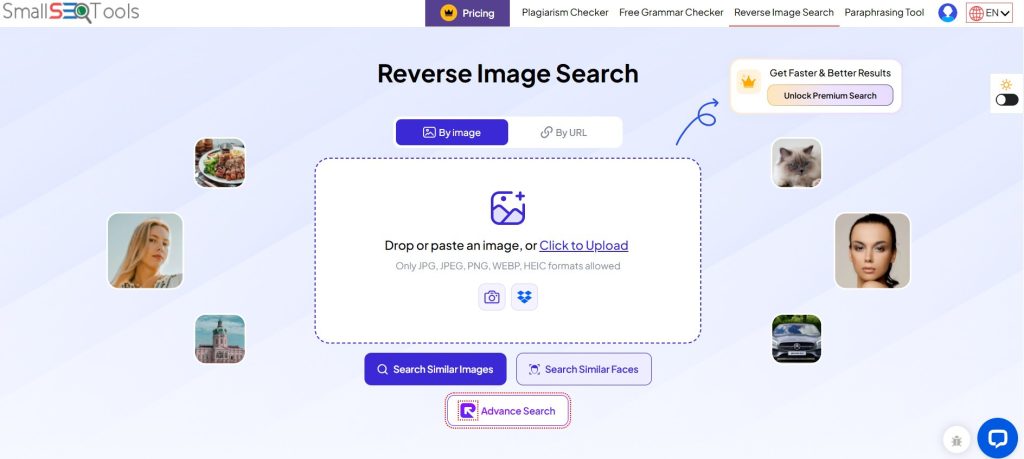
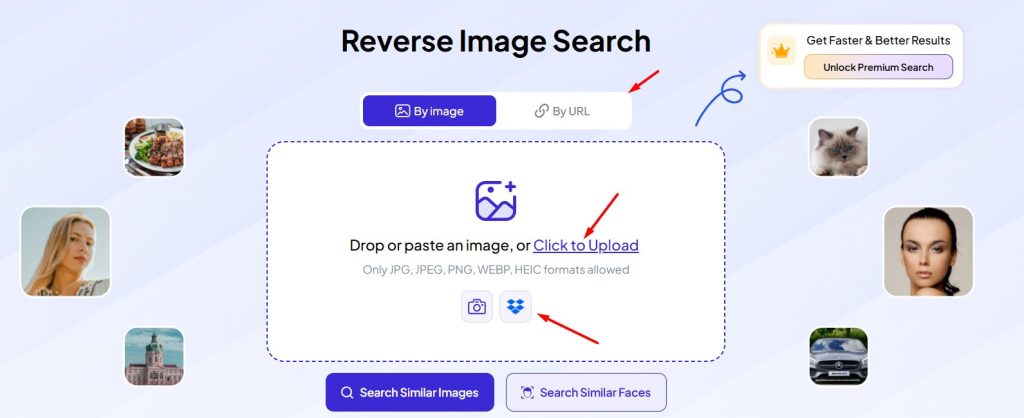
- Upload an image, paste a URL, or import from cloud storage.
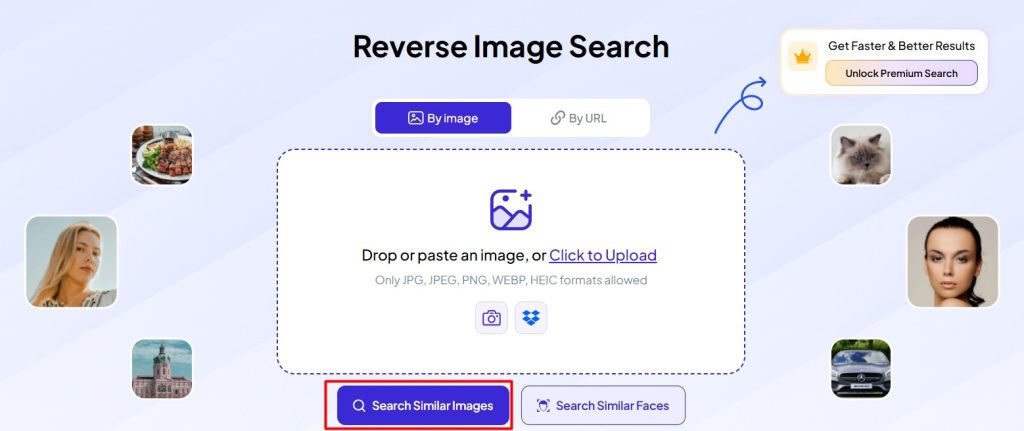
- Click “Search Similar Images” to start the process.
- The tool analyzes patterns, colors, shapes, and objects in the image.
- It displays exact matches, similar images, and source websites.
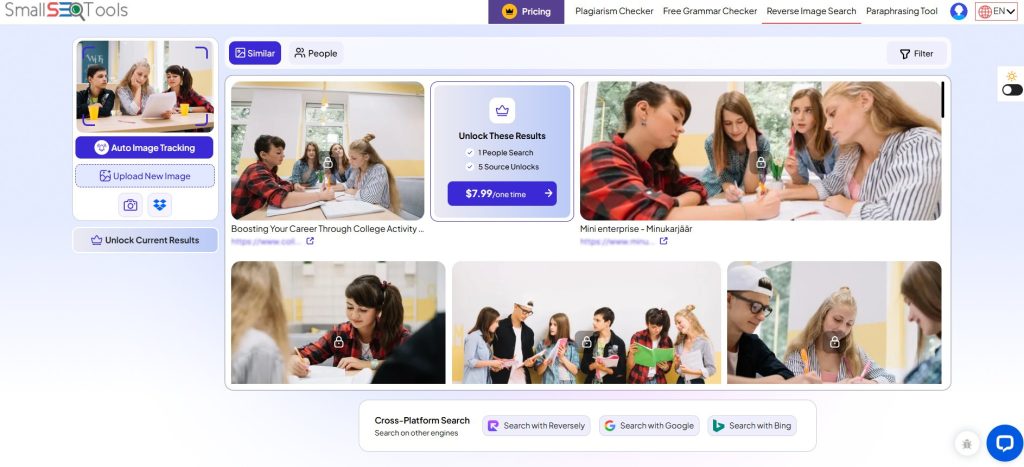
- Click results to check where and how the image is used.
How SmallSEOTools Image Search Helps You with Image-Related Queries?
1. Tracks Image Usage Across Websites
The tool is especially designed to help users quickly find where an image appears online. Therefore, as a content creator, the tool helps you check if your image appears on any platform without your acknowledgment.
2. Identifies Original Image Sources
Sometimes, finding the original source of an image becomes almost impossible.
Reason?
Because the visuals you see online aren’t just presented from the creator’s account to your page. However, in most cases, the images had been shared, manipulated, and used multiple times, at different places, before they reached you.
Therefore, using a reverse image search tool can really help you find the original source of the image, so you can easily understand what the image was created for and what its core purpose is.
3. Detects Image Plagiarism
As mentioned before, the tool helps you track down where an image appears online. Therefore, as a content creator, you can surely take help from the tool to effectively keep track of your visuals and check if someone is using your intellectual property without your permission.
4. Helps Verify Fake or Misleading Content
Not all the images you see online are authentic. However, you might be surprised to learn that images are the easiest to manipulate, and scammers often manipulate or edit them to change perspectives and spread misinformation.
So, to protect yourself from such scams, you can surely use the image search tool.
Here is how this works.
As you upload any image to the tool, the tool will instantly show you where it appears online. Thus, this gives you the opportunity to compare the search results and verify if the image is genuine or misused.
5. Supports Content Research and Idea Generation
Reverse image search doesn’t just help you track visuals online; in fact, you can also leverage the tool to search relevant visuals for your content.
Let me explain what I mean.
So, basically, as mentioned before, the tool helps you discover related visuals, right? So, thanks to this feature, you can surely rely on the tool to explore trends, analyze competitors, and gather inspiration. It allows you to build better content with strong visual support while ensuring originality and relevance in your work.
Conclusion
A reverse image search lets you find any visuals online using a reference image rather than text. Therefore, it can really help you save hours that you would otherwise waste on searching for the right keywords or terms. Instead of trusting what you see, you get the ability to question, confirm, and understand it. And honestly, SmallSEOTools Reverse Image Search fits naturally into this shift. It gives you control over images you use, share, or create without adding complexity to your workflow.
Buy Me A Coffee
The Havok Journal seeks to serve as a voice of the Veteran and First Responder communities through a focus on current affairs and articles of interest to the public in general, and the veteran community in particular. We strive to offer timely, current, and informative content, with the occasional piece focused on entertainment. We are continually expanding and striving to improve the readers’ experience.
© 2026 The Havok Journal
The Havok Journal welcomes re-posting of our original content as long as it is done in compliance with our Terms of Use.