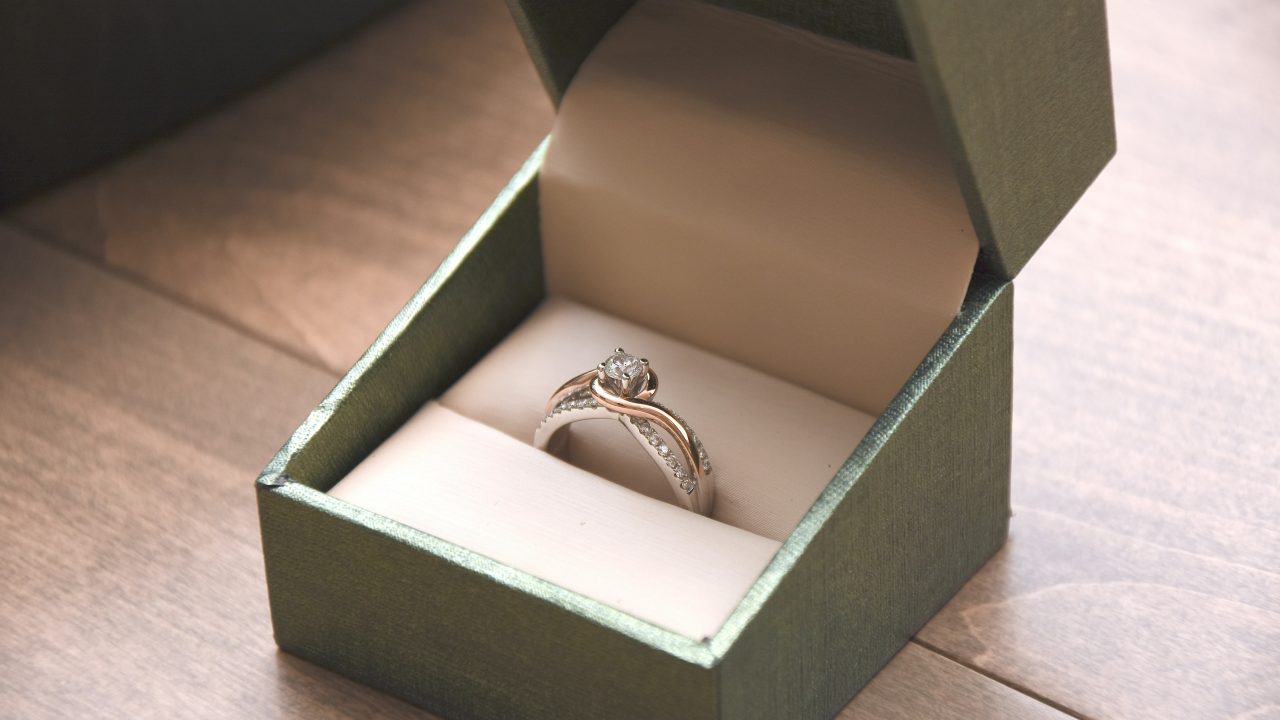
Photo by Jackie Tsang on Unsplash
You’ve trained for chaos. You’ve operated on little sleep, made decisions under pressure, and learned how to carry weight, literal and otherwise. So when it comes time to choose an engagement ring, you might be tempted to shrug it off as just another civilian ritual. Something soft. Something symbolic.
But here’s the truth: symbols matter. You know that better than most.
The patch on your shoulder, the flag on your chest, the insignia you earned, none of those made you who you are, but they represent everything you’ve endured to become it. An engagement ring works the same way. It’s not about flash or status. It’s about commitment, intention, and the promise you’re making when the world isn’t watching.
And yeah, you’re still going to want to get it right.
You’re Not Buying Jewelry, You’re Making a Statement
When you step into this process, you’re not just picking out something shiny. You’re choosing an object that your partner will wear every day. It becomes part of their identity, just like your service became part of yours.
That means the ring needs to reflect more than your budget. It needs to reflect your understanding of them.
Think about how you assess a situation in the field. You observe. You gather intel. You adapt. The same mindset applies here. What do they actually like? What do they wear daily? Are they minimalist or do they lean toward bold, expressive pieces?
Too many people default to what they think they’re supposed to buy instead of what actually fits the person they’re committing to.
The Numbers Behind the Tradition
You’ve probably heard the outdated rule about spending two or three months’ salary on a ring. Ignore it. That guideline was pushed by marketing campaigns decades ago, not by any real-world standard.
Here’s what actually matters:
- The average engagement ring cost in the U.S. hovers around five to six thousand dollars, but plenty of couples spend far less or far more depending on priorities
- Nearly 70 percent of couples today report having conversations about the ring before purchase
- Lab-grown diamonds now make up over 40 percent of engagement ring sales, offering a lower-cost alternative with similar appearance and durability
This isn’t about proving anything to anyone else. It’s about making a smart, intentional decision that aligns with your life, not someone else’s expectations.
Durability Isn’t Optional
If you’ve spent time in uniform, you understand the importance of gear that holds up under pressure. Rings are no different.
You want something that can take daily wear without falling apart. That means paying attention to the materials.
Diamonds are still the hardest natural substance, which makes them ideal for everyday use. But the setting matters just as much. A poorly constructed ring can lose stones or bend over time, especially if your partner leads an active lifestyle.
Look for:
- Secure prong or bezel settings
- Durable metals like platinum or 14k gold
- A design that doesn’t snag easily or sit too high on the finger
This isn’t about overengineering. It’s about making sure the ring survives real life, not just a display case.
There’s More Than One Way to Do This
Not every engagement ring needs to follow the same blueprint. In fact, some of the most meaningful choices come from stepping outside the standard mold.
You might consider vintage engagement rings if your partner values history and character. These pieces often carry a sense of craftsmanship and uniqueness that mass-produced designs lack. They’re not just rings, they’re artifacts with stories already embedded in them.
Others might lean toward modern designs, custom builds, or alternative stones like sapphires or moissanite. The point is, there’s no single “correct” answer. There’s only what fits your relationship.
The Conversation You Might Be Avoiding
Here’s where things get real.
A lot of people try to keep the ring a complete surprise. That might sound romantic, but it can also lead to a mismatch between what you choose and what your partner actually wants.
Communication isn’t weakness. You know that from experience. It’s how missions succeed, and it’s how relationships stay intact.
Having a conversation about preferences doesn’t ruin the moment. It strengthens it. It shows that you’re not just guessing, you’re listening.
If you’re not ready to ask directly, pay attention to cues. Notice what they comment on, what they save on social media, or what their friends are wearing. That’s your reconnaissance.
Budget Without Compromise
You’ve probably operated within constraints before. Limited resources, limited time, high expectations. Buying a ring is no different.
Set a budget that makes sense for your current situation. Not your future projections. Not what you think you’ll earn next year. Right now.
Then work within that framework.
You can prioritize different elements depending on what matters most:
- Stone size versus quality
- Metal type and durability
- Custom design versus ready-made options
There’s always a tradeoff. The key is making it consciously, not accidentally.
The Emotional Weight You Carry Into It
Let’s not pretend this is just a transaction.
For a lot of people who’ve served, commitment carries a different kind of gravity. You’ve seen what uncertainty looks like. You’ve experienced time apart, risk, and the reality that nothing is guaranteed.
That changes how you approach something like engagement.
This ring becomes more than a promise of a shared future. It becomes a symbol of stability in a world that hasn’t always offered it. It’s a decision to build something lasting, even when you know how fragile things can be.
And that’s not something you take lightly.
When It’s Time to Ask
The proposal itself doesn’t need to be elaborate. It doesn’t need to go viral. It just needs to be real.
You don’t need a perfect script. You don’t need a crowd. You need clarity.
Say what you mean. Say why you’ve chosen them. Say what you’re committing to.
The ring will be there, but it won’t be the focus. You will.
Final Thoughts: You Already Know What Matters
You’ve spent time in environments where the stakes were clear and the mission was defined. This isn’t that. It’s quieter, more personal, and in many ways, more complex.
But the core principles still apply.
Know your objective. Understand your partner. Make decisions with intention. And don’t get distracted by noise that doesn’t serve the mission.
At the end of the day, the ring is just a piece of metal and stone. What it represents, that’s where the weight is.
And that’s something you’re more than capable of carrying.
Buy Me A Coffee
The Havok Journal seeks to serve as a voice of the Veteran and First Responder communities through a focus on current affairs and articles of interest to the public in general, and the veteran community in particular. We strive to offer timely, current, and informative content, with the occasional piece focused on entertainment. We are continually expanding and striving to improve the readers’ experience.
© 2026 The Havok Journal
The Havok Journal welcomes re-posting of our original content as long as it is done in compliance with our Terms of Use.


