Editor’s note: In-text citations have been removed to align with The Havok Journal’s formatting. Full references remain listed at the end.
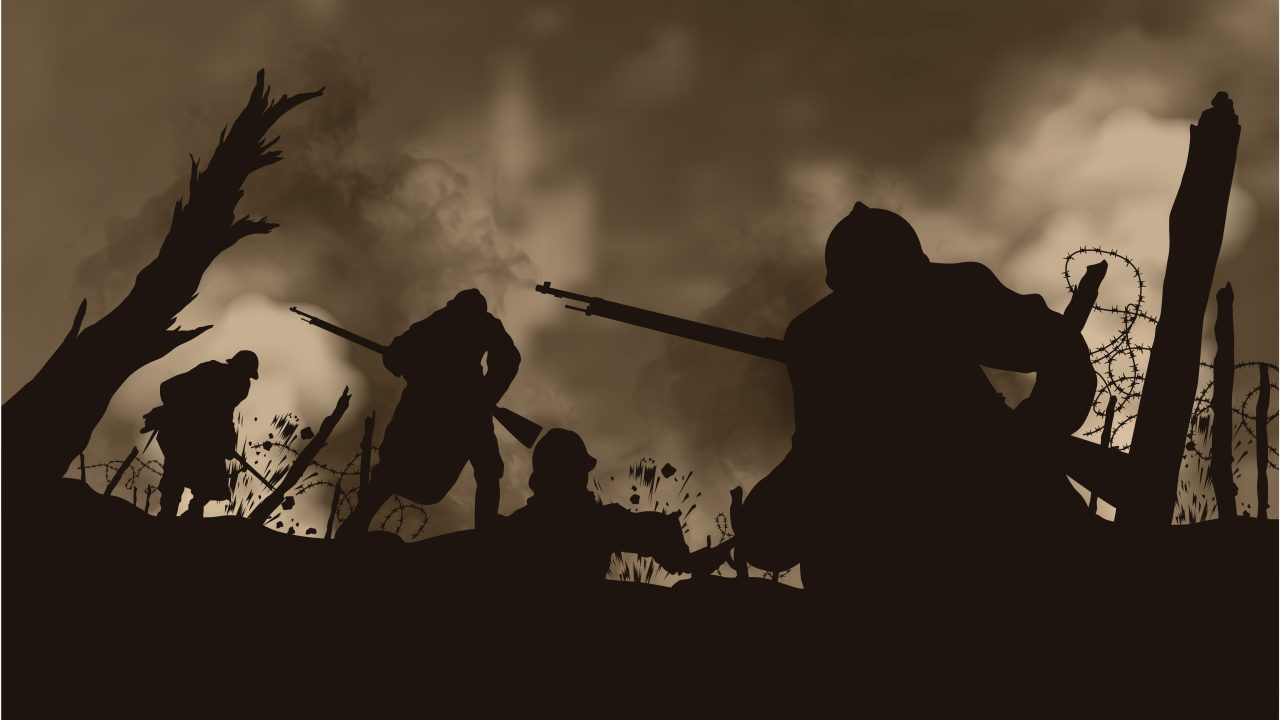
The Battle of Verdun, fought from February 21 to December 18, 1916, stands as one of the longest and bloodiest engagements in modern military history. Located in northeastern France, Verdun became the site of a grueling confrontation between the French and German armies during World War I. What began as a calculated offensive by the German High Command transformed into a symbol of French national resistance and a harbinger of the attritional warfare that came to define the First World War.
This paper explores the origins of the battle, analyzes its significance from both French and German perspectives, discusses the tangential connection to American involvement in the war, and evaluates how Verdun shaped future military doctrine.
Origins of the Battle: Planning the Unthinkable
By the end of 1915, World War I had devolved into a bloody stalemate along the Western Front. Despite massive offensives, neither side had achieved a decisive breakthrough. In this context, German Chief of the General Staff Erich von Falkenhayn proposed a new strategy: rather than seeking territorial gains, he aimed to “bleed France white” through a war of attrition.
Verdun, a historic fortress city with minimal strategic value but immense symbolic importance to the French, was selected as the target. The Germans believed that the French would be compelled to defend Verdun at all costs due to its cultural and national significance. Thus, the Germans planned to use artillery superiority and targeted offensives to inflict maximum casualties, anticipating that the French would continue to pour men into a hopeless defense.
The German plan, known as Operation Gericht (German word for “Judgment”), relied on the assumption that France would commit to an unsustainable defense, thereby weakening itself irreparably. The offensive began on February 21, 1916, with a massive artillery bombardment that included over one million shells in the first nine hours. The German army quickly overran key forward French positions, including Fort Douaumont, one of Verdun’s main defensive strongholds.
The French Response: “They Shall Not Pass”
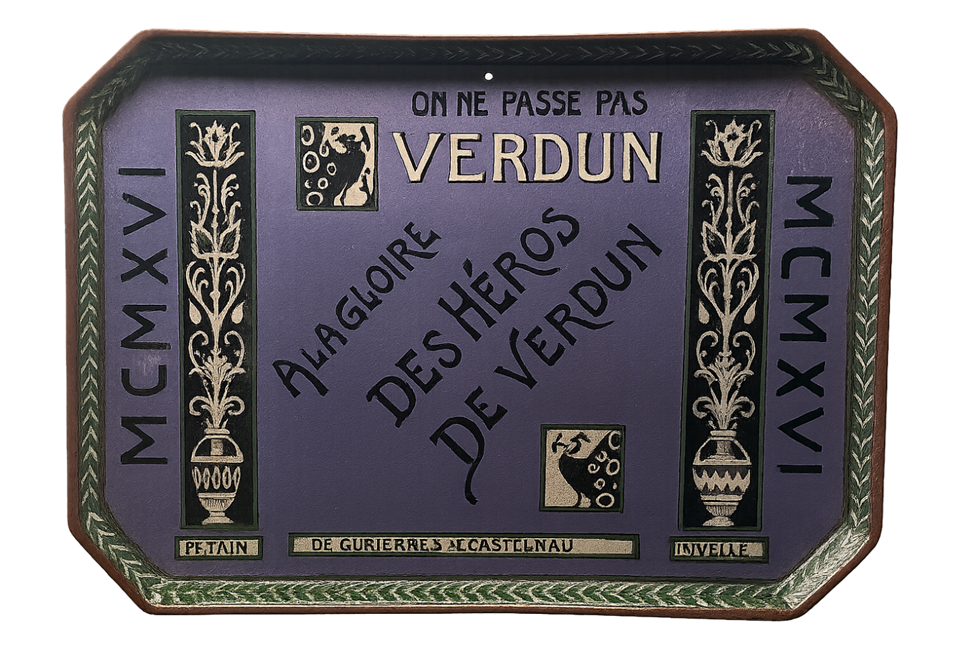
Despite early German successes, the French response was immediate and resolute. General Philippe Pétain, who would later become a controversial figure during World War II, assumed command of the defense. Pétain implemented a methodical rotation system known as the “noria,” which enabled French units to cycle in and out of the front lines, reducing battle fatigue and sustaining morale. Over 70 divisions passed through Verdun during the battle, with some serving brief but intense tours of duty.
Pétain’s leadership and insistence on maintaining logistical supply lines, especially the vital “Voie Sacrée” (Sacred Way) road that supplied the front, were critical in sustaining French resistance. Morale was also buoyed by the rallying cry “Ils ne passeront pas!” (“They shall not pass!”), which became emblematic of French defiance.
The battle soon degenerated into a war of attrition, with both sides suffering catastrophic losses. Artillery dominated the battlefield, causing an estimated 70% of all casualties. Conditions were nightmarish: soldiers fought in mud-filled trenches under constant shellfire, with little food, water, or medical care. By December 1916, the French had regained most of the ground lost earlier in the year, but at a terrible cost.
Strategic Importance: A Tale of Two Nations
From the German perspective, Verdun was a strategic gamble intended to weaken France irreparably. Falkenhayn believed that France’s deep national pride would compel it to defend Verdun regardless of the cost. If the French bled themselves dry defending the fortress, Germany would gain the upper hand on the Western Front. However, this strategy underestimated French resilience and overestimated the logistical capabilities of the German army. As the battle wore on, German losses mounted, and the supposed offensive became a quagmire. Worse, it drained resources and attention from the Eastern Front and the planned Somme offensive in mid-1916.
For the French, Verdun became a symbol of national unity and resistance. While the original plan may have been reactive rather than preemptive, once the battle commenced, the French high command understood the political and emotional weight of the site. President Raymond Poincaré and military leadership emphasized the defense of Verdun as essential to the preservation of national honor. The battle also served as a testing ground for new artillery tactics, troop rotations, and decentralized command structures. Pétain’s approach, focusing on morale, logistics, and artillery, marked a departure from earlier rigid French doctrines like offensive to the extreme, which had proven disastrous in 1914.
America’s Involvement: Indirect Connections through Strategy and Morale
Although the United States did not officially enter World War I until April 1917, the Battle of Verdun had a subtle but critical influence on American public opinion and strategic orientation. American observers, including military attachés and journalists, closely followed the events at Verdun, interpreting the prolonged battle as emblematic of the horrors of modern war. The scale of carnage shocked the American public and gradually eroded the illusion that the war was a quick and decisive affair.
More importantly, Verdun underscored the brutal nature of trench warfare and modern firepower, prompting the U.S. Army to study the battle’s implications carefully. After the U.S. declaration of war, the American Expeditionary Forces (AEF) under General John J. Pershing were determined to avoid being mired in similar battles of attrition. Pershing insisted on independent American operations, often against the advice of French and British commanders, precisely because he feared the U.S. Army would be consumed in stalemates like Verdun.
In addition, Verdun’s psychological and symbolic resonance influenced American propaganda. French endurance at Verdun was highlighted in U.S. recruitment posters, Liberty Bond drives, and Red Cross campaigns as evidence of what was at stake in the fight against German militarism. Verdun thus contributed to shaping both American strategic preferences and the ideological justification for entry into the war.
Military Lessons and the Evolution of Warfare
The Battle of Verdun had a profound impact on future military strategy. Several key lessons emerged from the protracted conflict, altering the course of World War I and influencing doctrines in the interwar period and beyond.
- The Primacy of Artillery
Verdun confirmed that artillery was the dominant force on the modern battlefield. Over 60 million shells were fired during the ten-month battle, and artillery accounted for the majority of the 700,000 casualties. This led to innovations in counter-battery fire, creeping barrages, and the use of heavy and super-heavy guns. Later battles, including the Somme and Passchendaele, would apply these artillery lessons with mixed results. - The Limits of Attritional Strategy
While Falkenhayn sought to wear down the French, the plan backfired and bled both sides. The failure of this strategy demonstrated that attrition alone could not yield victory unless accompanied by mobility, coordination, and decisive strategic objectives. The mutual exhaustion of Verdun and the concurrent Somme offensive effectively ended Falkenhayn’s career and prompted the German shift toward defense in depth and stormtrooper tactics in 1917–1918. - Logistics and Troop Rotation Systems
Pétain’s success in organizing an efficient supply and rotation system along the Sacred Way demonstrated the importance of logistics and soldier morale in sustained operations. These innovations laid the groundwork for the more structured rest-and-relief cycles in later war and peacetime militaries. - Symbolic Warfare and National Will
Verdun illustrated the power of symbolism in warfare. The determination to hold a location due to its cultural and emotional significance, rather than its intrinsic strategic value, became a defining feature of nationalistic conflict. This would reemerge in places like Stalingrad during World War II, which bore striking similarities to Verdun in duration, casualties, and symbolic meaning.
Conclusion
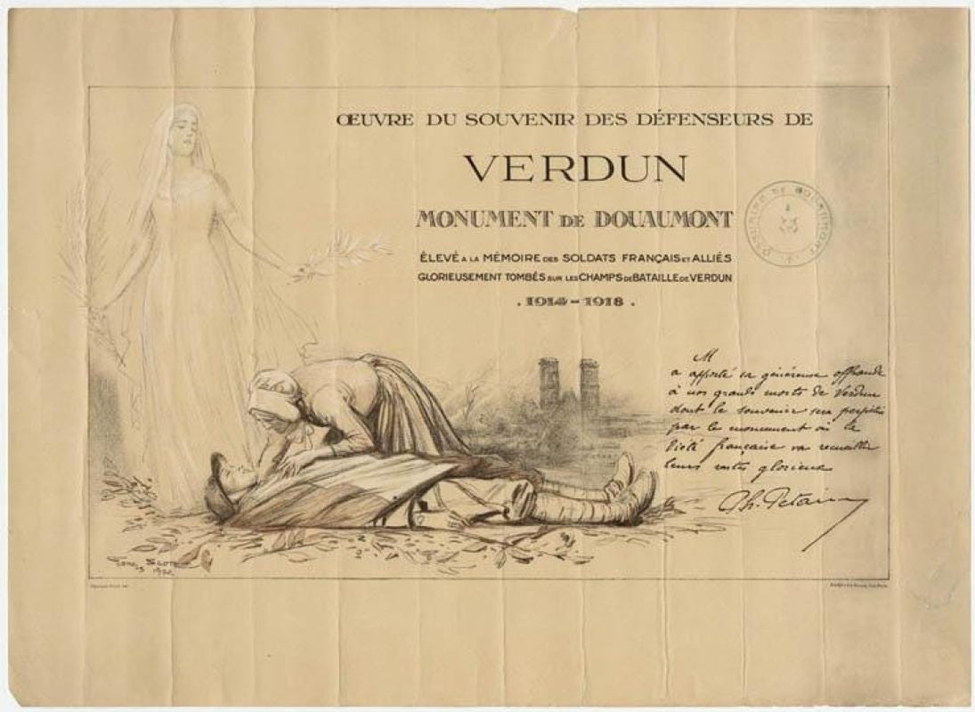
The Battle of Verdun was not merely a military engagement but a crucible of modern warfare. Initiated as a German effort to bleed the French dry, it devolved into a mutual slaughter that came to symbolize national resolve, the horrors of industrial war, and the futility of attritional strategy. While the United States was not directly involved in the battle, the lessons of Verdun deeply influenced American military thinking and contributed to its eventual involvement in World War I.
Strategically, Verdun exposed the limitations of traditional offensives in the face of entrenched positions and industrial firepower. Tactically, it spurred the evolution of artillery doctrine, logistics management, and troop rotation. Psychologically, it forged a national mythos that shaped the French identity for decades and provided the Allies with a rallying point for unity. Ultimately, Verdun did not break France as Falkenhayn had intended; instead, it strengthened its resolve and forever changed the nature of modern warfare.
References
Beevor, A. (1999). Stalingrad: The Fateful Siege, 1942–1943. Viking Press.
Doughty, R. A. (2005). Pyrrhic Victory: French Strategy and Operations in the Great War. Harvard University Press.
Horne, A. (1962). The Price of Glory: Verdun 1916. Penguin Books.
Lengel, E. (2008). To Conquer Hell: The Meuse-Argonne, 1918. Henry Holt and Co.
Lupfer, T. (1981). The Dynamics of Doctrine: The Changes in German Tactical Doctrine During the First World War. U.S. Army Command and General Staff College.
Smith, L. (1994). Between Mutiny and Obedience: The Case of the French Fifth Infantry Division during World War I. Princeton University Press.
Strachan, H. (2004). The First World War: Volume I: To Arms. Oxford University Press.
_____________________________
Sergeant Major (Retired) Daniel L. Dodds is a Military Police Senior Noncommissioned Officer. He has served in every leadership position from Patrolman to Battalion Command Sergeant Major. He is currently assigned as the Director of Operations Sergeant Major for the United States Disciplinary Barracks, the only Level III maximum-security prison in the Department of Defense. His civilian education includes an associate’s degree from Excelsior University and a Bachelor of Arts in Leadership and Workforce Development from the Army Command and General Staff College (CGSC). He is pursuing a Master of Public Administration from Excelsior University.
As the Voice of the Veteran Community, The Havok Journal seeks to publish a variety of perspectives on a number of sensitive subjects. Unless specifically noted otherwise, nothing we publish is an official point of view of The Havok Journal or any part of the U.S. government.
Buy Me A Coffee
The Havok Journal seeks to serve as a voice of the Veteran and First Responder communities through a focus on current affairs and articles of interest to the public in general, and the veteran community in particular. We strive to offer timely, current, and informative content, with the occasional piece focused on entertainment. We are continually expanding and striving to improve the readers’ experience.
© 2026 The Havok Journal
The Havok Journal welcomes re-posting of our original content as long as it is done in compliance with our Terms of Use.


