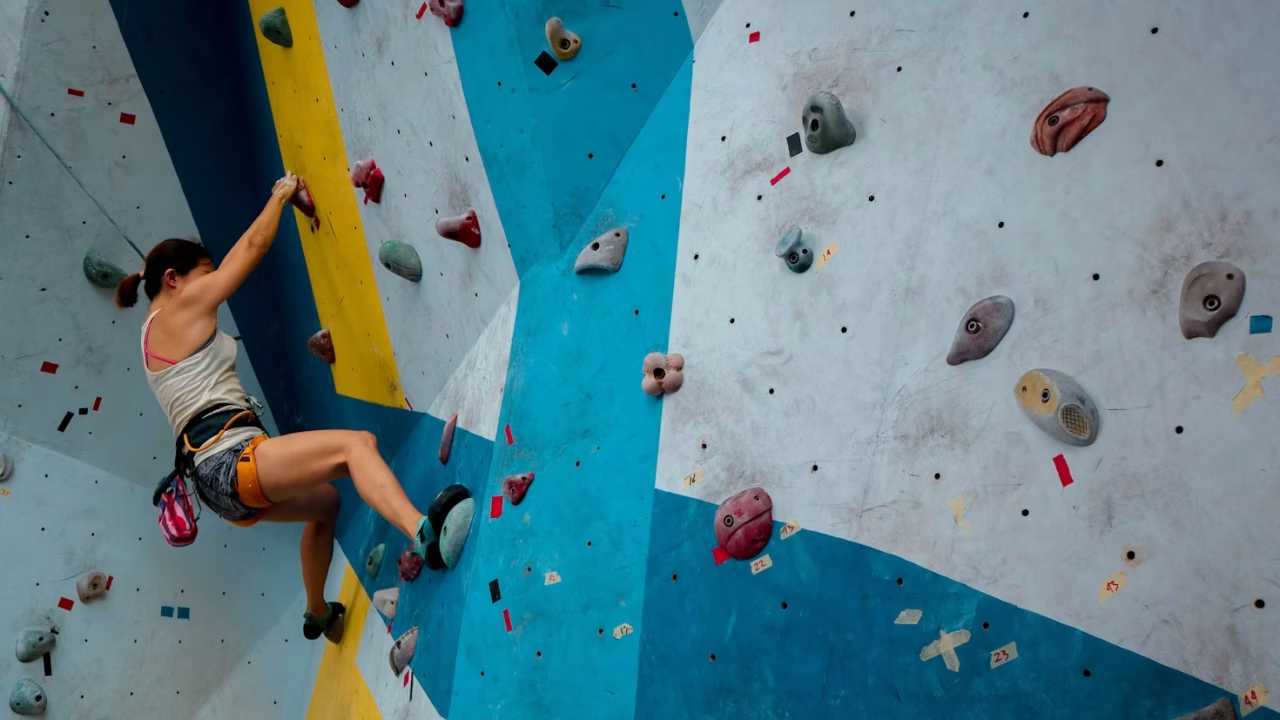
If there’s one activity that more people need to get into, it’s rock climbing. The simplicity of the experience and the flow state it brings can be surprisingly addictive. This year, Denver will be the host of the IFSC (International Federation of Sports Climbing). This is already raising a lot of attention to the sport, especially from locals.
Sure, when they’re just starting out, they’ll probably have their fair share of falls and need visits to a holistic chiropractor in Denver. But, would you believe us if we told you it’s worth it? Data from Global Market Insights shows that climbing gyms are growing in popularity. By 232, climbing gyms will reach a market value of $6.1 billion.
People assume that you need to be a highly motivated individual to engage in activities like rock climbing. That’s simply not true. In this article, let’s find out why everyone ought to give rock climbing a chance.
What Climbing Does For Your Mind
The best part about climbing is that it overhauls how your brain functions in real time. Every route you take, whether on a gym wall or a boulder out in the wild, is basically a moving puzzle.
You’re calculating reach, balance, friction, and movement while suspended midair. You have no choice but to be completely present. In that moment, nothing exists outside the wall: no to-do list, no stress, no overthinking.
This enforced focus creates something similar to mindfulness meditation, except it’s kinetic and full of adrenaline. That’s why many people with anxiety or ADHD find unexpected relief in climbing. It channels energy into a state of calm urgency.
One study involving indoor climbers aged 18–25 found that participants overwhelmingly saw climbing as boosting social connection, mental health, and mindfulness.
Climbing also resets your relationship with failure. You’re supposed to fall. In fact, falls are how you learn to trust the rope, your instincts, and your problem-solving ability.
That experience of failing safely builds risk tolerance, which helps you make gutsier decisions in your day-to-day life. The “What’s the worst that can happen?” mindset can be a game-changer for most people.
The Physical Benefits No One Talks About
Climbing may not get you swole like a bodybuilder, but it does build “carry-a-kayak-up-a-hill-with-a-smile” muscles. You won’t always notice the changes visually at first, but you’ll feel them in your core, your back, your forearms, and even your feet. The kind of strength you build from climbing is deeply functional. You’re engaging stabilizer muscles that most people don’t even know they have.
As expert climber Renee Blount explains, if you can climb a set of stairs, you likely have the skills to give rock climbing a try. “Climbing is for everyone,” claims Blount, who grew up with a breathing condition that kept her from other sports.
What’s especially unique is how it targets grip and connective tissue strength. Tendons and ligaments, which are often neglected in typical weightlifting routines, get robust over time. This is a huge bonus for joint health, especially as you age. Plus, your proprioception, or the ability to know where your body is in space, improves drastically.
As for the injuries, it’s just like any other sport or intensive activity. Injuries are something that can always happen. A 2023 retrospective study of 284 climbers in New York gyms found 43% had at least one climbing‑related injury, with 32% of those lasting 12+ weeks. However, only 38% sought medical care, meaning the others probably recovered with rest.
Most people will go years without any issues. If you do get injured, it’s probably going to be from something minor like a sprained ankle. As Governor’s Park Chiropractic notes, ankle injuries typically recover quickly with traditional rest, ice, compression, and elevation methods.
So, don’t worry too much about it. Honestly, the gym bro who deadlifts heavy weights is probably more at risk of injury than someone at a safety-first climbing gym.
The Community You Didn’t Know You Needed
Here’s the hidden gem of climbing: the people. Walk into any climbing gym and you’ll feel it. There’s this strange mix of focus and friendliness. Strangers will offer tips mid-route, lend you chalk, or cheer you on when you’re stuck. There’s an unspoken rule in climbing spaces: we all fall, and we all help each other get back up.
Unlike the flex-and-ego vibe of some traditional gyms, climbing gyms tend to foster humility. You could be an elite climber working next to someone trying their very first V0, and both are respected equally. Why? Because the struggle is mutual. Everyone’s pushing their own limit, and that shared experience levels the playing field.
You also learn to trust people. When you belay someone, you’re responsible for their safety. That kind of interdependence creates fast bonds. And because the vibe is more about progress than perfection, it’s incredibly beginner-friendly. You don’t need to know anyone to show up and be welcomed in.
Some of your closest friendships might start in silence: spotting a stranger, helping them back down, or just laughing after a shared fall. That’s the kind of community that rock climbing builds. It’s refreshingly unpretentious, tight-knit, and worth every fall to the crash pad.
Frequently Asked Questions
1. Is rock climbing difficult for beginners?
Not really! It might look intimidating, but most climbing gyms have beginner-friendly routes that are easy to get started with. You’ll fall a few times, sure, but that’s part of the fun. You don’t need to be super fit or experienced to enjoy it.
2. Can I teach myself rock climbing?
You can learn a lot on your own, especially in a gym with bouldering walls. But for rope climbing, it’s safer and way better to learn from a class or an experienced climber. Watching tutorials helps, but having someone check your technique is important.
3. Is 27 too old to start rock climbing?
Definitely not! Tons of people start in their late 20s, 30s, or even 40s, and get really good. You’re still young with plenty of energy and recovery ability. Plus, climbing isn’t just about strength—it’s also about technique, balance, and mindset, which improve with age.
All things considered, try climbing at least once in your life. Not to become a climber or chase a new identity, but just to see what your body and brain do when handed a wall and told, “Figure it out.”
You’ll be surprised at how much of your usual mental noise fades into the background. And even if you walk away thinking, “That was awkward,” you’ll probably also feel sharper, lighter, and weirdly proud. That alone makes it worth a shot.
Buy Me A Coffee
The Havok Journal seeks to serve as a voice of the Veteran and First Responder communities through a focus on current affairs and articles of interest to the public in general, and the veteran community in particular. We strive to offer timely, current, and informative content, with the occasional piece focused on entertainment. We are continually expanding and striving to improve the readers’ experience.
© 2026 The Havok Journal
The Havok Journal welcomes re-posting of our original content as long as it is done in compliance with our Terms of Use.