This first appeared in Objective Arete and is republished with permission.
Humans began capturing their thoughts and experiences through the earliest forms of writing, traced back to cave paintings—an extraordinary testament to our ancestors’ creativity and communication skills. These ancient artworks, found in places like Lascaux and Chauvet in France, thrill us with vivid depictions of what the world may have looked like hundreds of thousands of years ago. They offer glimpses into the lives of our prehistoric ancestors, showcasing the animals they hunted, the tools they used, and possibly their spiritual beliefs.
This was a simpler time—an era defined by a nomadic lifestyle in which humans were primarily hunters and gatherers. Their existence revolved around the natural rhythms of the environment, and survival depended on instinct, intuition, and a profound understanding of their surroundings. Each sunrise and sunset marked a cycle of life intimately connected to the land and its resources.
The cave paintings served as records of their existence and a means of storytelling; they conveyed messages about clan histories, successful hunts, or spiritual concepts. These early artists expressed their emotions and thoughts in ways that transcended language, laying the groundwork for the evolution of communication. Art became a canvas for human experience, reflecting a deep-seated need to document, share, and connect with others.
In this primal era, language was likely in its infancy, yet the desire to convey meaning and emotion was profoundly present. Through these early forms of expression, we can trace the beginnings of human culture and the development of more complex systems of writing and communication that would emerge in later civilizations. The evolution from cave paintings to written language highlights humanity’s intrinsic need to understand, interpret, and ultimately leave a mark on the world.

The Spoken Word
The power of the spoken word is undeniable; it has been a foundational element in the evolution of human civilization. Language, as a form of expression, has been instrumental in shaping cultures, belief systems, and entire societies.
Words can unite people under common visions and ideals, forming the bedrock of religions that guide moral principles and inspire devotion. For instance, religious texts and other sacred writings have provided spiritual guidance, fostering communities and influencing laws and social norms throughout history. These religious texts have been a source of hope, comfort, and direction for billions, helping to shape individual lives and collective destinies.
Words can also be destructive. Propaganda, hate speech, and divisive rhetoric have instigated conflicts and wars, leading to the downfall of empires. The consequences of miscommunication or manipulation can be devastating, illustrating the weight words carry in creation and destruction.
Storytelling techniques, both written and spoken, have captured human experiences, passed down traditions, and educated generations. They have inspired movements for social change, instigated revolutions, and transformed societies.
Words are powerful tools that can create bonds and understanding, but they also possess the potential to incite chaos and division. Understanding their impact encourages us to choose our words wisely, recognizing that they can shape not only our lives but also the lives of countless others.
The spoken word represents one of human civilization’s earliest and most vital forms of communication. Long before the advent of written language, oral traditions were the primary means of transmitting stories, knowledge, culture, and history across generations. By sharing experiences through storytelling, communities formed bonds, imparted lessons, and shaped collective identities. As societies evolved, the spoken word became a critical tool in rituals, ceremonies, and public discourse, influencing social structures and cultural norms.
My Spoken Word
Your spoken word can serve as a powerful anchor, influencing your identity and decisions at a subconscious level. This singular word reflects your values, aspirations, and the essence of who you are. It encapsulates your core traits and acts as a guiding principle that shapes your actions and reactions in various aspects of life.
When my wife asked me what one word defines me, I immediately responded with “determined.” This word embodies my approach to life and challenges. It signifies an unwavering commitment to my goals and a steadfast resolve to overcome obstacles. Being determined means that I don’t easily give up, even in the face of adversity. It inspires me to push through difficulties, remain focused, and strive for success, ensuring that I always put forth my best effort, no matter the circumstances.
Having a personal spoken word can also impact how others perceive you. When you embody the characteristics of that word, it radiates in your interactions, influencing relationships and forging connections. When I convey my determination, it signals to others my dedication and reliability, inspiring trust and respect. This sense of consistency can profoundly impact my personal and professional relationships, as people come to recognize me as resolute and goal-oriented.
This personal word serves as a touchstone in moments of uncertainty or self-doubt. Recalling that word can inspire motivation and remind me of my intrinsic qualities when faced with challenges. It is a powerful mantra, encouraging me to tap into my inner strength and stay true to my principles.
A personal spoken word can empower you to live authentically, aligning your actions with your values. It becomes a source of strength that fuels your ambitions and shapes your journey, allowing you to navigate life confidently and purposefully. In this way, my word “determined” not only defines me but also drives me to pursue my dreams relentlessly and inspire others along the way.
The personal spoken word “determined” resonates deeply with my life experiences, reflecting the resilience and strength I’ve cultivated from a young age. From surviving a civil war in my childhood to my time in the military, this word encapsulates the unwavering spirit that has guided me through adversity and shaped my identity.
Growing up amidst the chaos and uncertainty of civil war in both Lebanon and Liberia when I was a kid instilled in me a fierce determination to survive and thrive. The challenges I faced in those formative years forged a deep understanding of what it means to persevere in the face of overwhelming odds. I am sure my mind has blocked many memories of escaping the Civil War, but I still vividly remember certain things I saw.
Every hardship became a lesson in resilience, teaching me that survival requires grit and tenacity. This foundational experience laid the groundwork for the values I uphold today, reinforcing my commitment to overcoming challenges no matter the circumstances.
Shortly after September 11, 2001, I joined the military, and this sense of determination became even more pronounced. Being the only member of my family to join the military, my determination drove me to hone my skills, persist through rigorous training, and embrace the sense of duty to serve and protect. I learned that determination is about personal achievement and being part of something greater than oneself: working as a team to accomplish missions and support fellow service members.
Each moment in my life, from my childhood survival to my military service, has reinforced the power of being determined. This word has been my guiding light, pushing me to rise above physical, emotional, or situational obstacles. It has encouraged me to advocate for myself and others, drawing from my experiences to inspire those around me, especially in times of struggle.
Living with determination means approaching life’s challenges with courage and resolve. It shapes my relationships, work ethic, and how I confront adversity. When I encounter setbacks, I tap into that inner strength, reminding myself of my journey and the battles I’ve already conquered. The word “determined” defines my identity and propels me forward, embodying the resilience nurtured from my past and guiding me in my future endeavors.

Call to Action: Finding your Spoken Word
Finding your spoken word is a deeply personal journey requiring introspection and self-discovery. It involves reflecting on your experiences, values, and the qualities that define you at your core. Take the time to explore the moments in your life that have shaped you—both the triumphs and the challenges. Consider the traits you admire in others and those that resonate with your true self. What word captures the essence of your identity, your drive, and your purpose?
“The two most important days of your Life are the day you are born and the day you figure out why” – Mark Twain
Think of this quote and allow yourself to be vulnerable and honest. Sometimes, your spoken word may emerge from your hardships; other times, it may stem from the aspirations that ignite your passion. Embrace this exploration as a journey rather than a destination; it’s an ongoing reflection of who you are becoming.
Once you identify your spoken word, let it guide you in everyday life. Write it down, say it out loud, and allow it to echo in your mind, particularly during moments of doubt or difficulty. This word becomes your compass, helping you navigate challenges with clarity and confidence.
Discovering your spoken word ultimately empowers you to live authentically and intentionally. It aligns your actions with your values and cultivates a deeper connection to yourself and others. When you embrace your spoken word, you define your own path and inspire those around you to seek their own words of power. In a world where communication is paramount, finding and embodying your spoken word is an act of bravery that reverberates, inspiring others to rise and embrace their unique journeys.
_________________________________________________________________
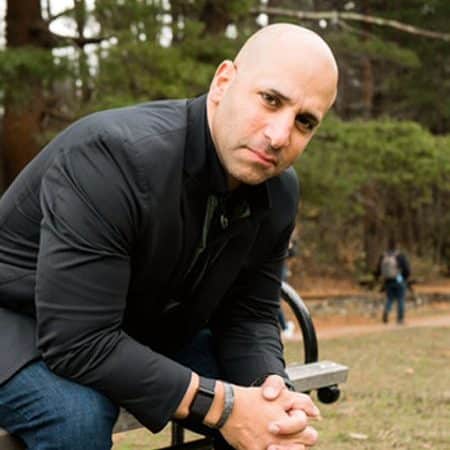
Ayman Kafel and his family survived civil wars in Africa and Lebanon before immigrating to the United States in 1988. Following the tragic events of September 11, 2001, Ayman enlisted in the Army and deployed to Iraq in 2005, where he conducted over 20,000 miles of combat patrols and military missions. His proficiency in Arabic allowed him to effectively coordinate and collaborate with various Army units.
In October 2007, Ayman began his law enforcement career as a police officer in the Commonwealth of Massachusetts, initially serving with the MBTA Transit Police Department. In 2011, he transferred to the Attleboro Police Department, where he has held multiple roles, including uniform patrol officer, detective, and DEA task force officer. He has also served as a DEA SRT Operator, assistant team leader, and Metro-SWAT Operator, and he remains an active member of the SWAT team.
Throughout his career, Ayman has led and participated in numerous complex investigations, successfully capturing and prosecuting high-level criminals. In November 2022, he was promoted to the rank of Sergeant and currently serves as a Patrol Division Sergeant on the day shift.Throughout his career, Ayman has led and participated in numerous complex investigations, successfully capturing and prosecuting high-level criminals. In November 2022, he was promoted to the rank of Sergeant and currently serves as a Patrol Division Sergeant on the day shift.
Ayman is a writer for The Havok Journal, where he has published over 100 articles covering topics such as law enforcement issues, his military experiences in Iraq, and the challenges of PTSD within the law enforcement community. His work has also appeared in The Epoch Times. Recently, he was featured on BBC Arabic to share his insights and experiences in Iraq.
Additionally, Ayman has published a book titled The Resolute Path and founded Project Sapient, a podcast, training, and consulting company.
Follow Project Sapient on Instagram, YouTube, and all podcast platforms for engaging content.
Contact: ayman@objectivearete.com
Project Sapient: https://projectsapient.com/
YouTube: https://www.youtube.com/channel/UC8cO-sLPMpfkrvnjcM8ukUQ
As the Voice of the Veteran Community, The Havok Journal seeks to publish a variety of perspectives on a number of sensitive subjects. Unless specifically noted otherwise, nothing we publish is an official point of view of The Havok Journal or any part of the U.S. government.
Buy Me A Coffee
The Havok Journal seeks to serve as a voice of the Veteran and First Responder communities through a focus on current affairs and articles of interest to the public in general, and the veteran community in particular. We strive to offer timely, current, and informative content, with the occasional piece focused on entertainment. We are continually expanding and striving to improve the readers’ experience.
© 2026 The Havok Journal
The Havok Journal welcomes re-posting of our original content as long as it is done in compliance with our Terms of Use.

