
By Chris Frueh, PhD
“Trying to fit all warriors into the typical DSM PTSD paradigm or blaming violence is totally out of touch with who we are. The absence of mission, the loss of brothers and sisters, the frustrations of civilian society are what strain the mind for many of us. Without intending to sound callous, the violence is not what bothers me; it is not the reason many are angry or short with people. When one spends years in a never-ending life or death situation, perspective changes. There’s a lifting of the veil of life, and perhaps this heightened sense is stuck in drive. I and many others would do it again!”
—Aric Gray, U.S. Army Special Forces (Ret.), former director of the Office of Protective Medicine, U.S. Department of State
___________________________
In the year 410 A.D., a Visigoth army led by King Alaric laid siege to Rome, finally entering the city when the Salarian Gate was left open in what was probably an act of betrayal. For three days the Germanic tribesman pillaged the city, raping, torturing, robbing, and murdering the people within its walls. Civilians, children, slaves, and aristocrats were all savaged. When the Visigoths left, they took with them all of the silver, gold, and precious jewels they could find. They also took human captives, some of whom would be ransomed, while others would be kept or sold into slavery.
In 1937, after taking the Chinese city of Nanking, the conquering Imperial Japanese Army committed mass rape, murder, torture, arson, and looting as part of a massacre of civilians and soldiers that lasted for six weeks. Estimates of the “Rape of Nanking” suggest the Japanese Army murdered at least two hundred thousand and raped twenty thousand.
Conquering armies throughout human history have often behaved thus.

People are killed in war, sometimes in astonishing numbers. The Mongol invasion of the Punjab ended in 1298 when twenty thousand Mongols were killed in one day of battle. The wounded were beheaded where they lay, while other survivors were taken to Delhi where they were publicly trampled to death by elephants.
At the Battle of Agincourt in 1415, over six thousand French troops were killed on the field, many of them under a shower of arrows. The Battle of Gettysburg in 1863 resulted in forty-five thousand casualties for both sides combined, although some estimates surpass fifty thousand. In 1864, the Union Army suffered seven thousand casualties at Cold Harbor within the first thirty minutes of their frontal assault on Confederate lines. On the first day of the Normandy Invasion on July 6, 1944, the Allies sustained 4,414 killed in action; later that year, they suffered nineteen thousand losses during the Battle of the Bulge, between December 1944 and January 1945.
The atomic bombs dropped on Hiroshima and Nagasaki in 1945 resulted in 130,000 to 220,000 deaths, mostly civilians. The months-long Siege of Baghdad in 1258 resulted in an estimated two million casualties—again, most of whom were civilians. The Battle of Stalingrad had an estimated 2.5 million casualties.
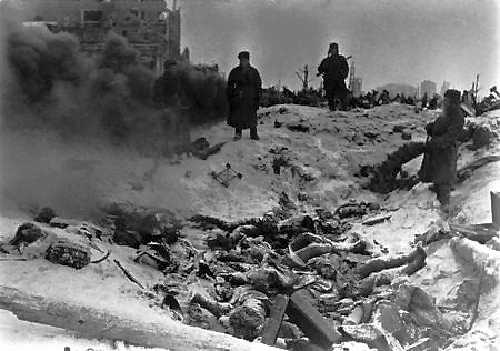
War is Monstrous
The Holocaust. The “Killing Fields” of Cambodia from 1975 to 1979. The 1994 Rwandan genocide, with eight hundred thousand killed in one hundred days. The Armenian genocide from 1915 to 1917. The Holdomor—Stalin’s intentionally created famine that killed an estimated 3.5 to five million Ukrainian citizens between 1932 and 1933. Mao’s “Great Leap Forward” from 1958 to 1962 led to an estimated fifty-five million deaths, primarily through starvation.
During the thirteenth century, the Mongol invasions of Eurasia resulted in the violent deaths of forty to one hundred million people. This was probably more than 10 percent of the entire human population on earth at the time. The An Lushan Rebellion from 755 to 763—a civil war attempting to overthrow the Tang Dynasty—resulted in an estimated thirty-six million deaths, up to two thirds of the total Chinese population.
The European powers’ conquests of territory in South America, North America, and Africa resulted in tens of millions killed through war, famine, and disease. The Spanish Conquistadors wrested control of most of South America in the early sixteenth century, causing an estimated twenty million deaths, mostly due to yellow fever. Up to 95 percent of the indigenous population was wiped out as a consequence.
Military forces have committed atrocities, crimes against humanity, often on a colossal scale. Estimates suggest about half a million “gladiators” perished in the Colosseum across six centuries of Roman world dominance. After crushing the Spartacus-led slave rebellion between 73 and 71 BC, the Roman general Marcus Crassus ordered six thousand surviving slaves to be crucified to death along both sides of the Appian Way, from Naples to Rome—140 miles. Their tortured bodies were left to rot in the sun for all to see.

Military societies throughout history have practiced human sacrifice and cannibalism, from Egypt under the pharaohs to Hawaii before the arrival of Captain Cook and other European explorers and missionaries in the late eighteenth century. The Aztecs are thought to have sacrificed over one million people on their altars, including an estimated eighty thousand in 1487.
Horrific practices continue. Even today, many countries and militant groups around the world use fighters so young that Western democracies consider them to be children. “Child soldiers” are typically kidnapped, brainwashed, and forced to participate in executing and torturing prisoners, sometimes even their own parents, as part of their initiation.
America has its own history of brutality and war crimes. The GWOT included the mistreatment of prisoners in Abu Ghraib and the massacre of civilians in Haditha. If we look back further in our history, we see institutionalized slavery, the Andersonville Prison, Sherman’s march to the sea, Wounded Knee, Fort Pillow, Balangiga in the Philippines, the fire-bombing of Dresden, No Gun Ri in Korea, My Lai in Vietnam, and many other incidents.
During the years I worked at the VA, from 1991 to 2006, my patients were mostly veterans of World War II, Korea, Vietnam, and Desert Storm. Many of them described witnessing and committing atrocities that would shock middle America. Some recounted such events without emotion, others through heaving sobs. Almost to a man, they acknowledged they had never spoken of these experiences with anyone after coming home.
Since the GWOT our enemies in Iraq and Afghanistan have often resorted to ancient barbaric practices, including crucifixion, stonings, beheadings, mounting heads for public display, violently raping children, women, and men, using children as shields or suicide bombers, enslaving women and children, torturing family members, executing prisoners, and many other brutalities I don’t need to list. I’ve heard accounts of these horrors by American service members who witnessed them—often in real-time via live video surveillance feeds.

Sometimes American Soldiers Responded in Kind
And yet. The three largest Abrahamic religions—Judaism, Christianity, and Islam—share the common perspective that human life involves a choice between good and evil as dictated by divine law. The Ten Commandments given to Moses (known as Prophet Musa in Islam) on Mount Sinai are a list of God’s inviolable laws and are fundamental aspects of Judaism, Christianity, and Islam. You probably already know them:
- Thou shalt have no other gods before me.
- Thou shalt not make unto thee any graven image.
- Thou shalt not take the name of the Lord thy God in vain.
- Remember the sabbath day, to keep it holy.
- Honor thy father and thy mother.
- Thou shalt not kill.
- Thou shalt not commit adultery.
- Thou shalt not steal.
- Thou shalt not bear false witness against thy neighbor.
- Thou shalt not covet.
Common to virtually every ancient civilization and major world religion—Judaism, Christianity, Islam, Buddhism, Hinduism, Taoism, Zoroastrianism—is some variation of what we refer to as the Golden Rule: Do unto others as you would have them do unto you. This concept of reciprocity requires a level of empathy, the ability to compassionately understand and honor the perspectives and rights of others.
Most religions allow for the concept of “righteous” killing, often including combat, self-defense (especially of one’s home and family), and capital punishment for violent crimes. The “just war” doctrine is thought to be as old as warfare itself, though Augustine of Hippo first used the phrase and wrote about it in The City of God from 426 AD. For Augustine, an early Christian theologian, Christians should be pacifists—although war could be necessary and just if it was defensive in nature and fought to restore long-term peace. Writing over a thousand years later, Thomas Aquinas, in his Summa Theologicae from 1485, expanded on Augustine’s writings in an effort to outline a framework and the necessary principles of a “just” war.

In the twentieth century, the Geneva Conventions of 1929 and 1949 were drafted to define basic rights of prisoners, civilians, and soldiers in war. They established an ethical and legal framework of protections afforded to noncombatants in a war zone, as well as protections for wounded or captured combatants. They have been formally ratified by 196 countries, covering almost the entire world. The Geneva Protocol from 1925 prohibits the use of biological and chemical weapons in war.
The historical record of war throughout human history shows that the “just” war conventions are not followed by all belligerents. This means that honorable soldiers in war will inevitably be confronted with situations, choices, and actions that profoundly conflict with the collective religious, moral, and legal values of human society.
Combat inevitably means killing, which is almost certainly the greatest taboo of all human behaviors. Soldiers also face a wide range of related existential issues that can have lasting effects on them.
The “fog of war,” especially that of modern war with its long-range killing, has led to incidents of “friendly fire,” or “blue on blue.” During the airborne invasion of Sicily in July 1943, Allied naval gunners and shore batteries misidentified and fired on Allied C-47s crossing overhead from North Africa. Of 144 transport planes, twenty-three were shot out of the sky and thirty-seven more sustained heavy damage. American casualties, most from the 82nd Airborne Division, included eighty-eight killed in action, sixty-nine missing in action, and 162 wounded in action. Apart from its scale, this is not an isolated incident.
Soldiers throughout our species’ history of warfare have always been confronted with the specter of their own death, the violent death of comrades, the aftermath of atrocities, impossible choices in combat such as attacking positions that may hold civilians, failures to act or errors that lead to the deaths of others, changing places or roles with another soldier who later dies in the subsequent operation, and being betrayed by their own nation and the society they fought for.

Even when it is fought righteously, war has always been—and continues to be—deeply horrifying
Prototypical categories of existential concerns faced by combatants of the GWOT include, but are almost certainly not limited to, the following:
The Horror of Killing Other Humans
Taking a human life is one of the most universally prohibited acts. In his seminal book On Killing, Lieutenant Colonel David Grossman argues that killing is so traumatic for most soldiers that a deeply ingrained instinct resists it—even in life-or-death situations. Though some of the combat studies supporting his conclusions have been criticized, there is no doubt that modern military training employs exercises designed to override this reluctance and desensitize soldiers to killing the enemy. This is especially true in special operations.
The Thrill of Killing Other Humans
In his 1936 short story On the Blue Water, Ernest Hemingway wrote, “There is no hunting like the hunting of man, and those who have hunted armed men long enough and liked it, never care for anything else thereafter.” Many special operators have privately confided—often for the first time outside their closest comrades—that they enjoyed killing and now miss it. Some express no regret, only wishing they had killed more. More than one has described the ecstasy of taking a life with bare hands, a hammer, a knife, or whatever tool was at hand. The feel, the smell, the heat, the sights and sounds, and the raw emotional arousal all contribute to the intensity of the experience.
A taste for killing may be more common than we acknowledge—a fact that brings an ongoing, soul-doubting dilemma. Even in the most “just” of operational careers, how does one reconcile killing men, enjoying it, and missing it with the reality of being tethered to a Judeo-Christian-Islamic prohibition against killing?

Impossible Choices
All soldiers on or near the battlefield face difficult, often impossible choices. War is volatile, uncertain, complex, and ambiguous. Decisions must be made under extreme pressure, often in split seconds, with adrenaline surging. It is impossible to make the “right” call every time.
Should you pull the trigger? Fire on a target with potential civilian casualties? Shoot an approaching woman or child? Protect a local at the risk of comrades’ lives or operational security? Sacrifice yourself to save a comrade? Perform a “mercy” killing? There are no do-overs in combat.
Loss, Grief, and Rage
Casualties are unavoidable in war. Soldiers are wounded, killed, or go missing. High-risk training involving demolitions, parachuting, diving, helicopters, and physical exhaustion also leads to casualties. Military special operators, with years or decades of experience, often lose many comrades—leading to a steady beat of ramp ceremonies, funerals, casualty affairs duties, and attending to Gold Star families.
This constant exposure to loss fuels grief and rage, yet there is little time to process these emotions. The next mission, the next training evolution, the next ridgeline—there is always something demanding focus. Many soldiers master compartmentalization to maintain “front sight focus.” But when they finally step away from military life, they are often unprepared for the tidal wave of unresolved emotions that follows.

Guilt, Moral Injury, Shame, and Survivor’s Guilt
Killing, accidents, failures to act, errors, surviving when others didn’t, sins of omission, impossible choices, atrocities—soldiers must live with their past actions, often tormented for years after service. There is no easy way to reconcile the deeply ingrained imperative not to kill with the realities of war.
Perhaps the most haunting experience is the suffering or death of a child. In the GWOT, U.S. soldiers witnessed children brutalized by insurgents, indigenous communities, and even their own parents. Many now look at their own children and see the eyes of a mortally wounded child who died in their arms.
How does a soldier respond when their child asks about the war? When asked if they ever killed someone? One friend, a highly productive civilian today, wrote to me:
“Here I am, a somewhat broken human being with lots of questions for the powers-that-be about why I went and slaughtered our ‘enemies.’ Why, oh why, was it okay to see the atrocities and even commit some myself in the name of self-preservation and mission first? How could I ever explain that to my son, or to society as a whole?”

Loss of Empathy
Prolonged exposure to war desensitizes soldiers to human suffering, injury, and death. Seeing the fiftieth violently killed human body does not affect a man the way seeing the first one does. Over time, the impact dulls.
This desensitization extends to their own mortality. Soldiers become accustomed to extreme danger. If death becomes mundane, how does one maintain empathy beyond that point?
Loss of Faith in God and Humanity
A devout friend once called me from deployment, telling me that his base was “not a target-rich environment for Christianity.”
Has there ever been a combat soldier who didn’t despair, wondering, How could God allow this to happen? War inevitably affects faith. Some find their beliefs strengthened. Others question them—or lose them altogether. The realities of war can feel like a violation of God’s commandments, shaking one’s spiritual foundation.
Combatants have seen both the absolute worst and best of human behavior—“Heaven and Hell at the same time.” Many describe their war experience as a “battle between Good and Evil,” an experience that forever alters their perception of humanity.
End of Service Experiences
A high percentage of military careers end on a disappointing note. Acute or chronic injuries lead to forced medical retirement. Officers who fail to achieve key promotions are often pushed out. Selection for Tier One units is highly competitive, and many elite candidates fail to make the cut. Others fall afoul of commanders or face ostracization from their unit, leading to abrupt, bitter departures.
In 2016, I attended a retirement ceremony for a friend at the SEAL Heritage Center at Little Creek. It was powerful and moving—but I was surprised to learn how rare such ceremonies are. Many operators leave quietly, too angry or disillusioned for formal farewells.
Loss of Purpose and Mission
Many veterans struggle with the mundane routine of civilian life. The daily grind feels empty after years of life-and-death stakes. Think back to Hemingway’s quote—after hunting armed men, it is hard to care about anything else.
The military is physical, intellectual, and exhilarating. It involves sanctioned violence and powerful tools. It is filled with people you trust, love, and share a mission with. How does one transition from that to sitting behind a desk? Where do elite warfighting skills fit in peacetime? Does the new mission matter? Can you find others who meet your standards?
How do you handle the well-intentioned but ignorant civilians and VA system that see you as a victim?
Loss of Tribe
For tens of thousands of years, human survival depended on tightly bonded tribal communities. Everyone had a role, and shared struggles forged deep connections.
Soldiers experience this in the brotherhood of their squad, unit, and command. They train, fight, and survive together, forming bonds few civilians can comprehend. When a soldier leaves service, that tribal connection is nearly impossible to replace.

Childhood Trauma
Many of my colleagues and I have noted that a strikingly high percentage of warfighters report extensive histories of childhood trauma. These childhoods often involved some combination of physical abuse, witnessing domestic violence, sexual abuse by parents or older siblings, parental neglect, early drug use, criminal activity, brushes with law enforcement, gang involvement, and poor scholastic performance. Many soldiers also acknowledge growing up without a father figure.
For some, the military provides a path toward becoming a man, and special operations offer a way to achieve excellence against all odds. Perhaps combat serves as a means to expunge old demons. Derek Nadalini, a retired U.S. Army Ranger and Delta operator, refers to this as the “ambition of shame.” But what happens when the military career is over? Sometimes, those childhood demons remain unresolved, and now, with time to reflect, the soldier is forced to confront them. This can manifest as a toxic mix of unprocessed childhood and adult traumas, including loss, grief, rage, and anxiety.
National and Societal Betrayal
After the war is over and the swords have been beaten back into plowshares, soldiers and veterans are often left feeling betrayed by the nation and society they fought for. To varying degrees, this has been true after every major American war, dating back to the nation’s founding.
American Revolutionary War
Officers from the American Revolution were first granted a federal pension in 1781, while enlisted soldiers had to wait until 1818—and only then if they were indigent. It wasn’t until 1832, nearly half a century after the war ended, that service pensions were granted to all enlisted soldiers.
World War I
In 1932, twenty thousand unemployed World War I veterans, known as the “Bonus Expeditionary Forces,” marched on Washington, D.C., demanding the bonus payments they had been promised. They camped in shantytowns for two months before being forcibly driven out by U.S. Army troops under General Douglas MacArthur, along with Majors Dwight D. Eisenhower and George S. Patton. The troops advanced on unarmed veterans with fixed bayonets and tanks.
World War II
During my time at the VA Medical Center in Charleston, South Carolina (1991–2006), I had the privilege of working with veterans from every era since the early 1940s. World War II veterans, then in their seventies and eighties, mostly scoffed at the idea that they had ever personally received a parade upon returning home. Virtually all of them believed the American public had little understanding of their actual wartime experiences or appreciation for how those experiences affected them.

Vietnam War
Many Vietnam War veterans believe they won all their battles but lost the war due to weak national politicians and generals. Restrictive rules of engagement, flawed logistics, and poor strategic decisions held them back. It was also the first “TV war,” with nightly broadcasts of its most horrific moments streaming into American living rooms. The public, horrified by the realities of war, rapidly turned against it. Many veterans and historians argue that this sharp loss of public support led to the war’s failure.
This time, returning soldiers weren’t just neglected—they were openly reviled. Some were spit on. Others faced hostility from segments of the U.S. population that blamed them for the war itself.
POWs
Former prisoners of war endured additional frustrations. Around 2000, I had the privilege of collaborating with the South Carolina chapter of a national POW foundation on a small research project. All but one of the former POWs were World War II veterans. I attended their monthly meetings, banquets, and annual conferences. They were resilient men, yet they carried the frustration of being forgotten by the nation they had served.
I also worked with Mike McGrath, then-president of NAM-POWs. At the time, McGrath had written a letter to the VA secretary, pointing out that the system had roughly 10,000 Vietnam-era POWs on its rolls when, in reality, only 800 POWs—662 military and 138 civilians—had been repatriated from Hanoi. McGrath could name every one of them in alphabetical order from memory. He was furious that thousands of men were fraudulently receiving POW benefits from a VA that failed to verify service records.

Global War on Terror
The GWOT is no different. The sheer number of disheartening elements in this prolonged conflict makes it hard to know where to begin. Among the most alienating and demoralizing issues for service members are:
- Shifting rules of engagement
- The first Iraq pullout, which left the field open for ISIS
- After-action reports that covered up unpleasant truths
- The military politics surrounding awards for valor
- Politicized military criminal justice prosecutions
- Exaggerated accusations of “white extremism” in the ranks
- The DOD-wide vaccine mandate, which many service members resisted
- Degraded military budgets and neglected technological capabilities
- The Kabul withdrawal, which led to the abandonment of strategic territory, matériel, and—most importantly—Afghan allies closely connected to American soldiers
Books have been and will continue to be written about these and other betrayals. Yet, with the so-called “end” of the GWOT, U.S. politicians and citizens seem to have simply moved on. A nation indifferent to the sacrifices of its soldiers now appears to be following an agenda that feels deeply un-American to many veterans. They see a country with a shrinking workforce participation rate, declining religious faith, failing public schools, an obsession with identity politics, and an increasing inability to meet the physical fitness standards required for military service.
In the face of all this, many soldiers ask themselves: “Is this what I fought for? Is this what my comrades died for?”
What does one do with existential burdens such as these? They don’t lend themselves to medical interventions, or necessarily even to psychological ones. Combatants often have no one to talk to about these things. Understandably, they don’t want to put terrible images into the minds of their civilian friends or family members. They also worry about legal repercussions. Few social workers and psychologists are well-prepared to listen or respond in useful ways. Some soldiers believe that only a higher power can help, and of these, some turn to religious or ecumenical counseling. Many warriors have found peace through a psychedelic journey with ibogaine, 5-MeO-DMT, ayahuasca, or psylocibin. Still others claim benefit from ketamine infusion, an FDA-approved treatment for depression. Most also look outward, continuing their life of service to community.
This essay was by far the one of the hardest pieces I’ve ever attempted to write. Although, as a civilian, I may lack confidence in my ability to address these issues usefully, or in a manner that is universally helpful, I will remind soldiers of this: you served for your comrades, your family, and your country, and your service carried the will and authority of a democratic nation behind it.
Please don’t secretly hold on to the burden of existential angst alone. Plant a tree, say a prayer, or volunteer your time to a cause. Coach youth sports. Use your skills to help organizations that rescue victims of human trafficking. Try daily journaling. Adopt a dog or a cat. Join a softball league. Write a song. Resist the massive pull to numb yourself with alcohol or drugs. Don’t compartmentalize and pretend the issues aren’t there. Try to find someone—friend, mentor, pastor, therapist—who you can open up to, even if just a little bit.
_______________________________
This first appeared in The Havok Journal on March 25, 2025.
B. Christopher Frueh, Ph.D. is a novelist, clinical psychologist, and professor of psychology at the University of Hawaii. He has over thirty years of professional experience working with veteran and military communities; has conducted clinical trials, epidemiological, and neuroscientific empirical studies; and has co-authored over 325 scientific publications. This article was adapted from his book titled Operator Syndrome (2024; Ballast Books).
Buy Me A Coffee
The Havok Journal seeks to serve as a voice of the Veteran and First Responder communities through a focus on current affairs and articles of interest to the public in general, and the veteran community in particular. We strive to offer timely, current, and informative content, with the occasional piece focused on entertainment. We are continually expanding and striving to improve the readers’ experience.
© 2026 The Havok Journal
The Havok Journal welcomes re-posting of our original content as long as it is done in compliance with our Terms of Use.


